Alcohol Standard Drink Calculator
Why This Matters
The article explains that 1.5 oz spirits, 5 oz wine, and 12 oz beer all contain the same ethanol. This calculator shows equivalent units to understand why no alcohol type is safe with medications.
Input Your Consumption
Enter amounts above to see equivalent alcohol units
Total Standard Units:
0
Important: The article states that any amount of alcohol can interact dangerously with medications. Even 1 standard unit may be unsafe for certain drugs like benzodiazepines or antibiotics.
When you take a pill, you expect it to work the way it’s supposed to. But what if something in your glass is quietly sabotaging it? Alcohol doesn’t care if it’s a shot of whiskey, a glass of wine, or a cold beer - when it meets your medication, the risks are real, and they’re not always what you think.
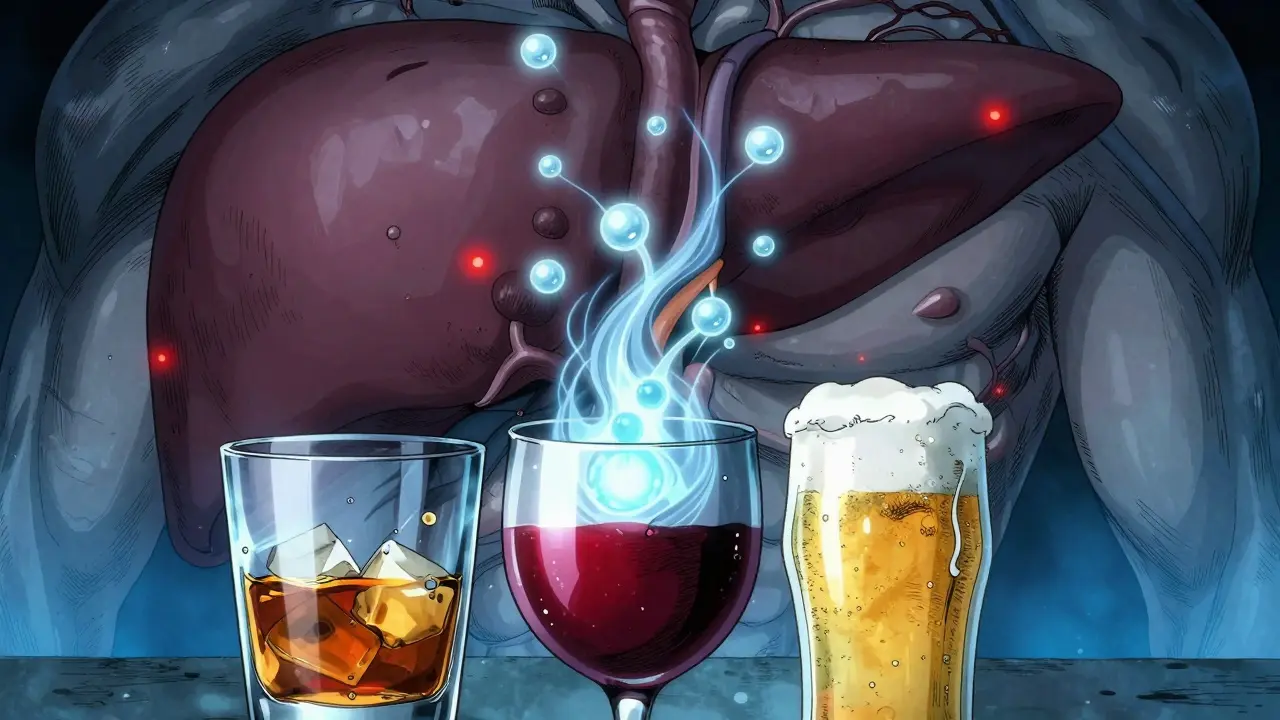
Here’s the hard truth: it’s not about how fancy the drink is. It’s about how much ethanol is in your bloodstream. A standard drink - 1.5 ounces of spirits, 5 ounces of wine, or 12 ounces of beer - all contain roughly the same amount of alcohol. That means the risk of dangerous interactions is the same, no matter what you’re drinking. Yet most people believe beer is safer because it’s "lighter," or that red wine is somehow medicinal. Neither is true when you’re on medication.
Why Alcohol and Medications Don’t Mix
Your liver doesn’t distinguish between a vodka soda and a bottle of beer. It processes both the same way - through enzymes like alcohol dehydrogenase and aldehyde dehydrogenase. But here’s the problem: those same enzymes are also responsible for breaking down dozens of common medications. When alcohol and drugs fight for space in your liver, one of them gets delayed, slowed down, or even ignored. That can mean your medication builds up to toxic levels, or it doesn’t work at all.
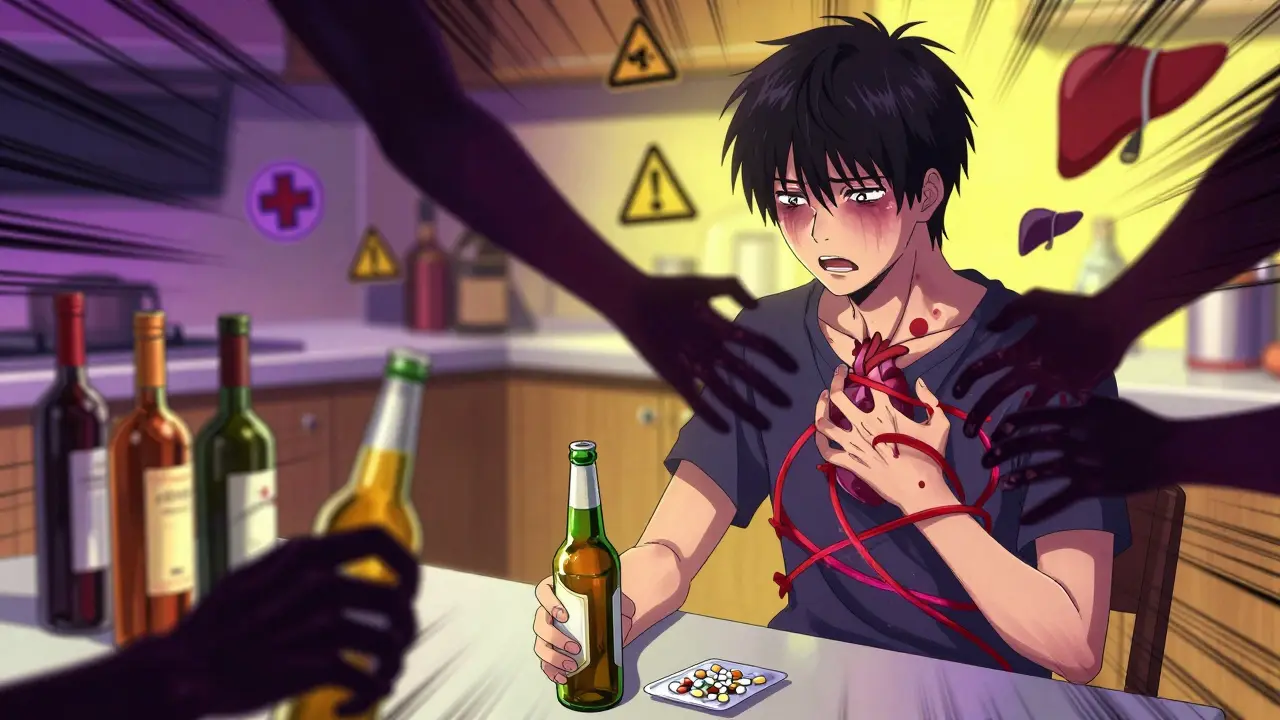
Take benzodiazepines, for example. These are often prescribed for anxiety or sleep. When combined with alcohol - any type - they can turn from helpful to deadly. A single drink can boost sedation by 300% to 500%. That’s not just drowsiness. That’s slowed breathing, loss of coordination, coma, or even death. The Illinois Poison Center found this effect is just as dangerous whether the alcohol comes from a sip of wine or a shot of gin.
Spirits: The Fastest Path to Danger
Spirits pack the most punch in the smallest volume. One shot of 40% alcohol equals a whole can of beer. But here’s what makes spirits especially risky: people drink them fast. A shot is gone in seconds. That means your blood alcohol level spikes quickly, overwhelming your liver’s ability to keep up with both the alcohol and your medication.
Emergency room data shows 68% of alcohol-medication overdose cases involve spirits. Why? Because people think, "I only had one shot." But that one shot delivers the same ethanol as a full beer - and it hits your system like a sledgehammer. When paired with opioids, sleep aids, or antidepressants, that rapid spike can trigger respiratory failure. The faster you consume it, the worse the interaction. Intravenous ethanol studies show a 40% greater severity in drug interactions when alcohol enters the bloodstream quickly - exactly what happens with spirits.
Wine: The "Healthy" Myth
Red wine gets a bad rap for being unhealthy, but it’s often wrongly seen as safe with meds. It’s not. Wine contains polyphenols and tannins - natural compounds that can interfere with blood thinners like warfarin. One Mayo Clinic study found that red wine increased bleeding risk by 15% compared to the same amount of ethanol from spirits. Why? Because those plant compounds also thin the blood. So you’re getting a double whammy: alcohol + natural anticoagulants.
And then there’s metronidazole - an antibiotic often used for infections. Drinking wine while on it can trigger a disulfiram-like reaction: flushing, pounding heart, vomiting, nausea. It’s terrifying. And 82% of users who’ve experienced this say they didn’t know wine was risky. They thought only "hard liquor" was dangerous. That misconception leads to real hospital visits.
Beer: The Silent Killer
Beer seems harmless. Low alcohol, right? But here’s the catch: people drink more of it. A few beers over dinner? That’s three, four, even five standard drinks. The CDC reports that beer accounts for 52% of total alcohol consumed in the U.S. - and 47% of unintentional medication interactions come from beer. Why? Because it’s easy to lose count.
Combine beer with NSAIDs like ibuprofen or naproxen, and you’re asking for stomach bleeding. Alcohol irritates the stomach lining. NSAIDs do too. Together, they can cause ulcers or internal bleeding without warning. One GoodRx survey of over 8,000 users found 63% had experienced stomach pain or black stools after "just a few beers" with painkillers. They didn’t realize the danger until they were in the ER.
The Real Culprit: Total Ethanol, Not the Bottle
Experts agree: it’s not the type of alcohol. It’s the dose. Dr. Emily Chen of the American Pharmacists Association says, "The type of alcohol matters less than the total ethanol dose and timing relative to medication administration." A blood alcohol level of 0.05% from wine has the same effect as that same level from beer or spirits.
That said, there are nuances. Spirits raise BAC faster. Carbonated drinks - like champagne or mixed cocktails - empty from the stomach quicker, speeding up absorption. Dark spirits contain congeners - impurities that can worsen nausea and vomiting when mixed with antibiotics. But none of that changes the bottom line: if your medication says "avoid alcohol," it means all alcohol.
What Medications Are Most at Risk?
Some drugs are far more dangerous with alcohol than others. Here’s the short list:
- Benzodiazepines (Xanax, Valium, Ativan): Risk of respiratory failure, coma
- Opioids (OxyContin, Vicodin, fentanyl): Increased sedation, fatal overdose risk
- Antidepressants (SSRIs, SNRIs): Higher chance of dizziness, liver damage, suicidal thoughts
- Antibiotics (metronidazole, tinidazole, linezolid): Disulfiram reactions - flushing, vomiting, heart palpitations
- NSAIDs (ibuprofen, naproxen): Stomach bleeding, ulcers
- Acetaminophen (Tylenol): Liver failure - just two drinks can triple your risk
- Warfarin: Increased bleeding, bruising
And here’s something most people don’t know: even "non-alcoholic" beer (0.5% ABV) can interact with certain medications. The FDA warns that trace alcohol can still matter with drugs like metronidazole or disulfiram. So if you’re told to avoid alcohol entirely - that includes anything labeled "non-alcoholic."
How to Stay Safe
The safest move? Don’t drink at all while on medication. But if you do, here’s how to reduce risk:
- Know your standard drinks: 1.5 oz spirits = 5 oz wine = 12 oz beer
- Never mix alcohol with sedatives, painkillers, or antibiotics
- Wait at least 4 hours after taking medication before drinking - but even then, it’s risky
- Use apps like GoodRx’s "Alcohol Check" to scan your meds and get real-time warnings
- Ask your pharmacist: "Does my medication have an alcohol warning?" - and ask if it matters what kind
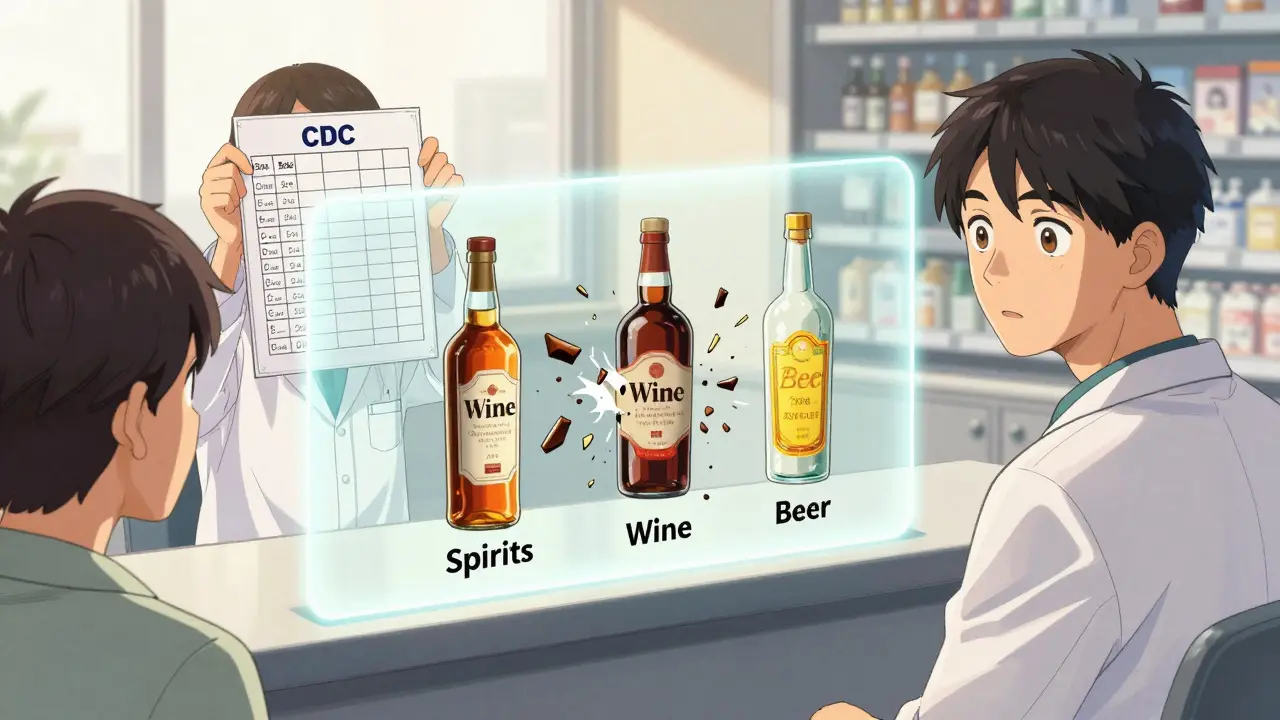
- Use visual aids: CDC drink charts show exactly how much alcohol is in each beverage
Studies show patients who use these charts understand their risk 89% of the time - compared to just 38% without them. That’s the difference between walking away safe and ending up in the hospital.
What’s Changing in 2026?
Health systems are catching up. In 2023, the FDA approved a new tool for pharmacies that generates beverage-specific interaction warnings. By 2024, Medicare Part D requires pharmacists to counsel patients on alcohol risks for 27 high-risk medications - including exact guidance on spirits, wine, and beer. EHR systems like Epic now flag alcohol interactions during prescription entry.
But awareness still lags. Only 18% of adults know non-alcoholic beer can be risky. Only 23% of patients get clear advice about alcohol types when prescribed medication. And 78% of adverse event reports on Reddit involve people who thought "just one shot" was fine.
By 2025, every major electronic health record will show real-time alerts for beverage-specific alcohol risks. But that won’t help if you don’t know what to look for. The science is clear: your liver can’t tell the difference between a glass of wine and a shot of whiskey. So why should you?


Posts Comments
Oliver Calvert February 17, 2026 AT 11:13
Let me cut through the noise: it's not about what you're drinking, it's how much ethanol hits your liver.
One standard drink = one risk profile. Period.
Wine isn't medicine, beer isn't safe, and spirits aren't the devil - they're just ethanol in different packaging.
The real issue? People think "I only had one" means "I'm fine."
Your liver doesn't care if it's a sip from a wine glass or a shot from a tumbler.
It's processing the same molecule.
Stop romanticizing one and demonizing another.
Just don't mix it with meds.
Simple.
And if you're on metronidazole? Even non-alcoholic beer is a bad idea.
That 0.5% ABV? It's enough to trigger a reaction.
Pharmacists have been saying this for years.
Why are we still having this conversation in 2025?
John Haberstroh February 18, 2026 AT 06:53
I used to think red wine was my little medicinal treat until I started taking Lexapro.
One glass felt like being hit by a truck - dizzy, nauseous, heart pounding like I’d run a marathon.
Turns out, it wasn’t the wine. It was the combo.
Now I just sip water and stare at my pills like they’re aliens.
Also, non-alcoholic beer? Yeah, I didn’t know that could mess with meds either.
Wild how we think we’re being smart when we’re just being lazy with our own biology.
Kancharla Pavan February 18, 2026 AT 20:08
You people are still debating wine vs beer vs spirits like it's a wine tasting competition?
Look at the data - 63% of stomach bleeds from NSAIDs + beer?
That’s not a coincidence, that’s negligence.
And you think red wine is "healthy"?
It’s a polyphenol bomb that thins your blood AND depresses your CNS.
Combine it with warfarin? You’re playing Russian roulette with your internal organs.
And don’t get me started on people who drink "just one shot" with opioids.
One shot. One death. One funeral.
It’s not a myth. It’s a statistic.
Stop lying to yourselves.
Your liver doesn’t care about your Instagram aesthetic.
guy greenfeld February 19, 2026 AT 20:54
I’ve been saying this for years - the government doesn’t want you to know that alcohol manufacturers fund half the studies that say "moderate drinking is fine."
They’re not protecting you - they’re protecting profits.
That "standard drink" metric? Designed by big liquor.
And now they’re pushing those "alcohol check" apps?
It’s a distraction.
Real solution? Ban alcohol entirely.
It’s a neurotoxin.
Period.
Medication or not - your body is not designed to process it.
They’re just selling you the illusion of safety.
Tony Shuman February 21, 2026 AT 16:17
Okay, but let’s be real - if you’re on antidepressants and you drink, you’re already choosing chaos.
Why are we acting like this is some shocking revelation?
People who mix meds and alcohol aren’t ignorant - they’re self-sabotaging.
And now we’re making a whole guide about it?
Like we didn’t already know?
It’s not the alcohol type. It’s the person.
They want to feel better.
They’re just doing it wrong.
Blaming the beer? Please.
James Lloyd February 23, 2026 AT 15:17
I work in pharmacy.
Here’s what nobody tells you: the timing matters more than the type.
Taking a pill at 8 AM and having a beer at 6 PM? Low risk.
Taking a pill at 8 PM and drinking at 9 PM? High risk.
Your liver metabolizes alcohol and meds simultaneously - it’s a bottleneck.
Waiting 4 hours helps, but doesn’t eliminate risk.
And yes - even non-alcoholic beer can trigger reactions with metronidazole.
It’s not a myth.
It’s chemistry.
Just read the label.
And if your pharmacist doesn’t mention it? Ask.
They’re trained to tell you.
PRITAM BIJAPUR February 24, 2026 AT 17:39
We are all just trying to survive this life - and sometimes, a glass of wine is the only comfort we have.
But you're right - it’s not about the bottle. It’s about the body.
Our liver is a silent hero - working 24/7 to detoxify everything we throw at it.
Alcohol? Medication? Sugar? Stress?
It takes it all.
And when we ignore its limits? We betray it.
So maybe the real question isn’t "what can I drink?"
But "how can I honor my body?"
Not with guilt.
Not with fear.
But with awareness. 🌿❤️
Adam Short February 25, 2026 AT 18:52
In the UK, we’ve known this for decades.
They banned alcohol ads during medical broadcasts in the 90s.
Here in America? You’re selling cocktails with antidepressants like it’s a TikTok trend.
It’s cultural decay.
One shot? One death.
One glass of wine? One ER visit.
It’s not rocket science.
It’s basic biology.
Why are we still pretending this is controversial?
Because you’d rather drink than admit you’re not in control.
Wake up.
Digital Raju Yadav February 26, 2026 AT 11:42
This entire post is a distraction.
Real problem? Pharma companies profit from people who mix meds and alcohol.
They sell you pills.
They sell you "safe" drinking guidelines.
They sell you apps.
They sell you rehab.
It’s a $200 billion cycle.
Alcohol? It’s just the trigger.
The real poison? The system that profits from your ignorance.
Stop blaming whiskey.
Blame the system that let you believe "one shot" is okay.
Logan Hawker February 27, 2026 AT 08:04
I mean... honestly?
It’s not even about the ethanol.
It’s about the *intent*.
Are you drinking to manage anxiety? To numb trauma? To escape?
That’s the real pharmacological interaction - not the liver’s enzyme competition.
And let’s be real - if you’re asking whether "wine is safer," you’re already in a cycle of self-medication.
So maybe the question isn’t "what drink?"
But "why am I drinking?"
And if you can’t answer that?
Maybe you need therapy.
Not a chart.
Not an app.
Just… a human.
With a couch.
And zero judgment. 😌
Write a comment