When you’re managing medications for patients, a simple mistake can lead to serious harm. That’s why documenting safety alerts on your medication list isn’t just paperwork-it’s a lifeline. Every time someone gets insulin, an opioid, or a blood thinner, there’s a risk. And if that risk isn’t clearly marked, tracked, and acted on, someone could end up in the ER-or worse.
Why Safety Alerts on Medication Lists Matter
Not all medications are created equal. Some are safe when used correctly but can cause catastrophic harm if given wrong. These are called high-alert medications. The Institute for Safe Medication Practices (ISMP) lists 19 categories, including insulin, neuromuscular blockers, anticoagulants, and oral methotrexate. A dosing error with one of these can kill a patient in minutes. Research from the World Health Organization shows that when safety alerts are properly documented and paired with action, medication errors drop by up to 50%. But here’s the catch: if you just write "Caution: High Risk" on a chart and move on, you’re not doing enough. Documentation needs to be specific, actionable, and monitored.What Counts as a Proper Safety Alert
A good safety alert doesn’t just warn-it tells you what to do next. The ISMP’s 2024-2025 guidelines spell this out clearly:- For neuromuscular blockers: The container label must say: "WARNING: CAUSES RESPIRATORY ARREST - PATIENT MUST BE VENTILATED". No variations. No abbreviations.
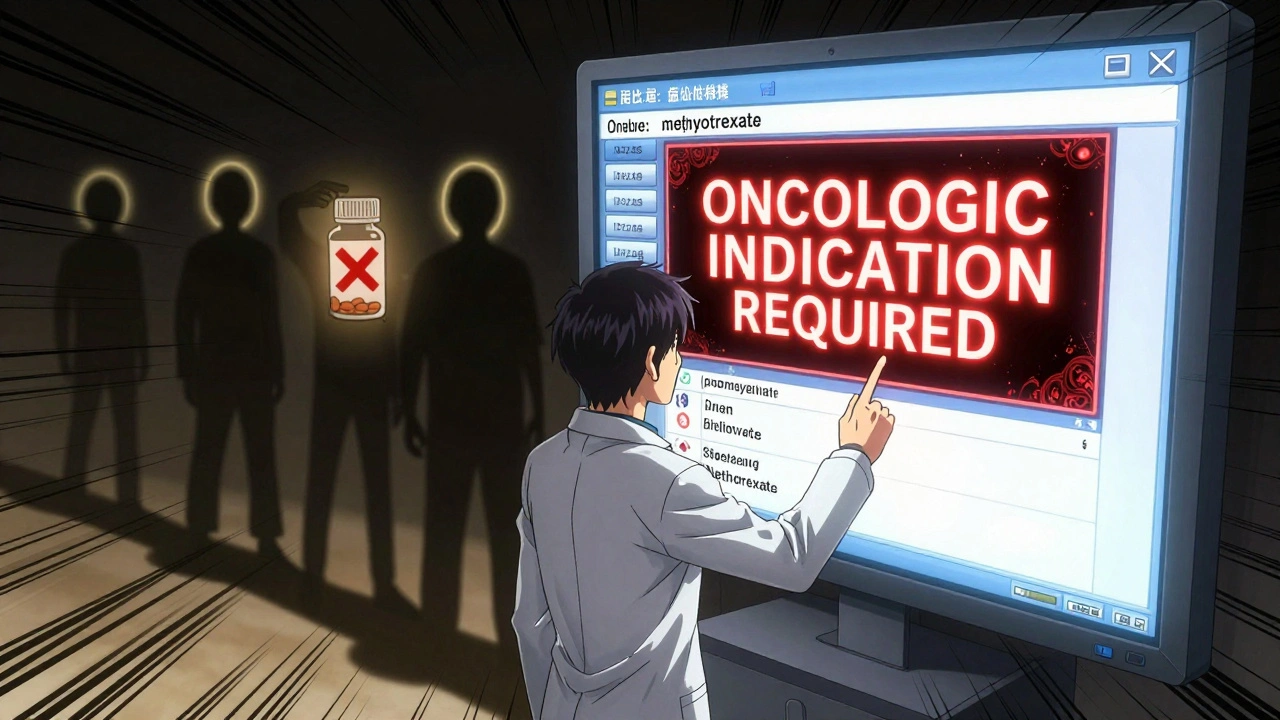
- For oral methotrexate: Electronic systems must force prescribers to select an oncologic indication and default to weekly dosing. Daily dosing must require manual override with documented justification.
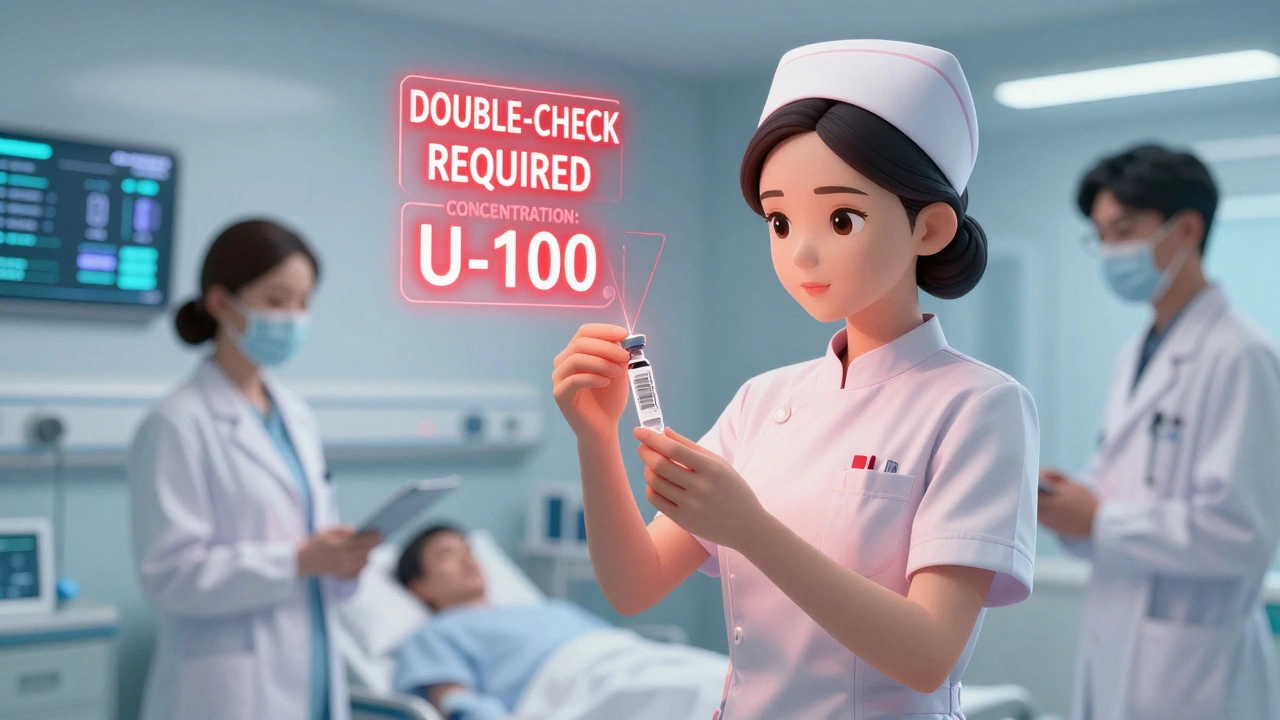
- For insulin: Documentation must include concentration (e.g., U-100), barcode scanning confirmation, double-check by a second clinician, and proof the patient understands how to use it.
How to Build Your Documentation System
Setting this up doesn’t mean buying expensive software overnight. Start small. Focus on one high-alert medication at a time.- Identify your top 3 high-alert meds based on your patient population. For a general hospital, that’s usually insulin, opioids, and heparin.
- Create a checklist for each. What steps must happen every time it’s ordered, dispensed, or given? Write them down. Include who does what and where it’s documented.
- Integrate into your EHR. If you use an electronic system, configure hard-stop alerts. Don’t rely on pop-ups that can be clicked away. Make the system require a reason if someone tries to bypass it.
- Train everyone. Nurses, pharmacists, doctors-even the person who delivers meds to the floor. Everyone needs to know what the alert means and what they’re supposed to do.
- Track compliance. Monitor how often barcode scans happen. How many alerts get bypassed? Aim for 95% scanning compliance. If bypass rates go above 5%, investigate why.
What Not to Do
Too many facilities make the same mistakes:- Alert overload: If your system throws up 15 alerts per order, staff will start ignoring them. Dr. Robert Wachter’s research shows compliance drops to 31% when alerts exceed 15 per order. Curate your alerts. Only keep the ones that prevent death.
- One-time documentation: Writing "insulin alert documented" in a chart once doesn’t help. You need to prove it was checked every single time. Audit trails matter.
- Ignoring external alerts: The FDA releases about 120 drug safety communications a year. If your team isn’t checking MedWatch and updating internal lists monthly, you’re using outdated info. That’s a ticking time bomb.
The Real Cost-and Real Savings
Yes, setting this up costs money. The ECRI Institute estimates the average hospital spends $285,000 a year maintaining these systems. But here’s what they save: $1.2 million annually from prevented adverse drug events. That’s a net gain of over $900,000. And it’s not just about money. A 2022 survey by the Institute for Healthcare Improvement found that 78% of hospitals with full documentation systems reported better staff safety culture. Nurses feel more confident. Pharmacists feel heard. Doctors trust the system. In contrast, facilities with partial systems saw only a 22% reduction in errors-not nearly enough. The difference between success and failure isn’t technology. It’s consistency.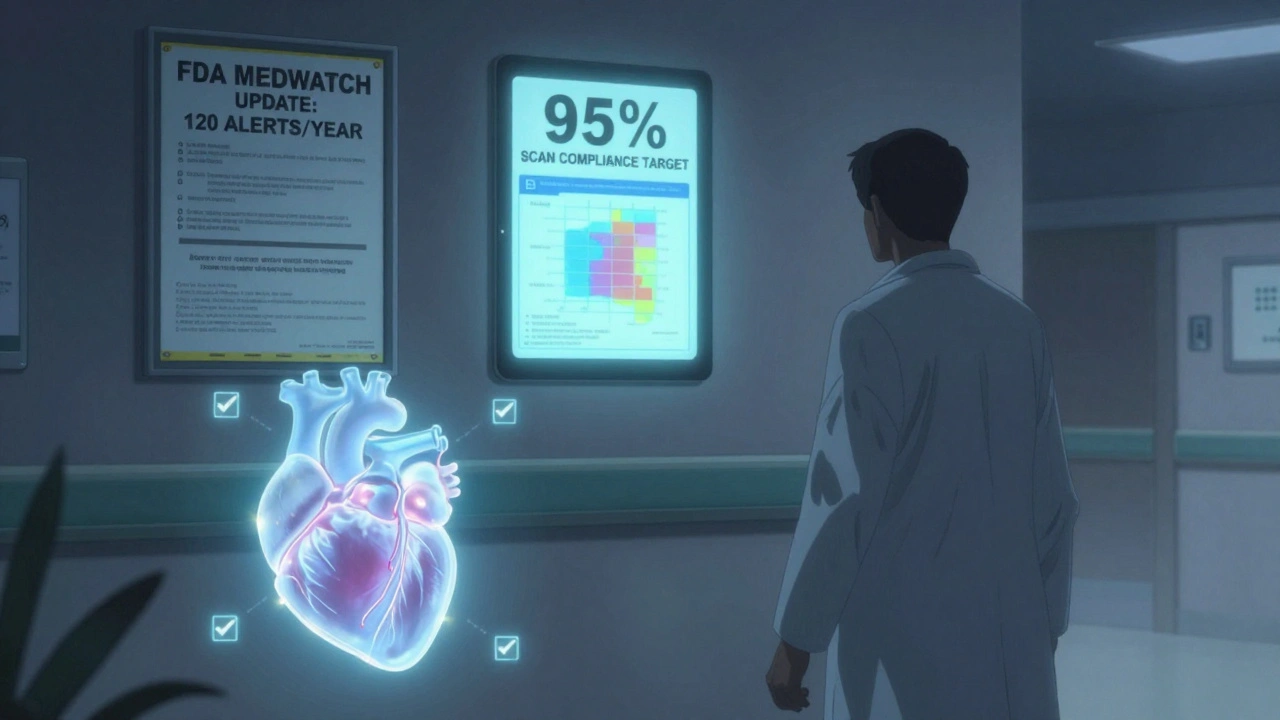
What’s Changing in 2025
The rules are getting stricter. Starting January 1, 2024, the Joint Commission requires documented proof of risk mitigation for high-alert meds. Miss it, and your accreditation is at risk. In 2025, Medicare’s Hospital Value-Based Purchasing Program will start tying reimbursement to how well you document these protocols. That’s $2.1 billion on the line. New tools are helping. The FDA’s Sentinel Initiative now auto-feeds safety alerts into hospital systems, cutting manual entry by 80%. Epic Systems is rolling out an AI module in Q2 2025 that auto-prioritizes alerts based on your facility’s error history. But don’t get too excited yet. A 2024 JAMA study found early AI systems missed 18% of critical alerts. Human oversight is still required.Where to Start Today
You don’t need to fix everything tomorrow. Pick one high-alert medication. Pick one step in the process. Make it better.- If you’re in a hospital: Start with insulin. Audit the last 10 orders. Did every one have a double-check documented? Was the concentration labeled? Was the patient educated?
- If you’re in a pharmacy: Look at your neuromuscular blockers. Is the warning label on every vial? Are staff trained to verify ventilation readiness before administration?
- If you’re in a clinic: Add a checkbox to your electronic form: "Safety alert reviewed and documented for [medication]." Make it mandatory.
Final Thought
Documenting safety alerts isn’t about checking boxes. It’s about creating a culture where everyone knows: if something can kill, it must be treated like a loaded gun. Every label, every alert, every signature is a promise-to the patient, to the team, to yourself. Start small. Stay consistent. Never assume someone else has it covered. Because in medication safety, someone always has to be the one who checks.What medications are considered high-alert?
High-alert medications are drugs that carry a higher risk of causing serious harm if used incorrectly. According to the Institute for Safe Medication Practices (ISMP), these include insulin, opioids, anticoagulants, neuromuscular blockers, intravenous potassium or sodium chloride for injection, chemotherapy agents, and oral methotrexate. The full list has 19 categories and is updated every two years.
Do I need to document safety alerts for every medication?
No. Only high-alert medications require formal safety alert documentation. Regular medications like antibiotics or blood pressure pills don’t need the same level of documentation unless there’s a specific risk identified by your facility or a regulatory alert. Focus your effort where the risk is highest.
Can I rely on electronic alerts alone?
No. Electronic alerts are helpful, but studies show up to 49% of them get bypassed if there’s no clear documentation protocol. Alerts must be paired with mandatory steps-like double-checks, barcode scans, or written confirmations-that are recorded in the patient’s record. Alerts alone are not enough.
How often should safety alert documentation be reviewed?
Your facility’s medication safety committee should review all safety alert data at least quarterly. Any error that caused patient harm must be analyzed immediately. Also, update your documentation whenever new safety alerts come from the FDA, ISMP, or your pharmacy system-ideally monthly.
What if my staff says documenting alerts takes too much time?
Time is the biggest barrier, especially in understaffed settings. But the solution isn’t to skip documentation-it’s to streamline it. Use electronic audit trails that auto-log alerts and checks. Train staff to document during routine steps (like scanning a barcode) instead of adding extra tasks. One hospital reduced documentation time by 65% just by integrating checks into existing workflows.
Is there a template I can use to start?
Yes. The ISMP provides free worksheets for implementing their Targeted Medication Safety Best Practices. The AHRQ Medication Safety Toolkit also includes printable checklists for insulin, opioids, and anticoagulants. Start with one of these templates, adapt it to your workflow, and test it for a month before rolling it out.
What happens if I don’t document safety alerts properly?
In the short term, nothing may seem to happen. But if a patient is harmed and your documentation is incomplete, you could face legal liability, loss of accreditation from the Joint Commission, or reduced Medicare reimbursement starting in 2025. More importantly, you’re putting patients at risk unnecessarily.
How do I know if my documentation system is working?
Track three things: 1) Scanning compliance rate (target: 95%+), 2) Alert bypass rate (target: under 5%), and 3) Reduction in medication errors over time. If your bypass rate drops and your error rate falls, your system is working. If staff report feeling safer and more confident, that’s a sign too.


Posts Comments
Annie Gardiner December 7, 2025 AT 02:34
Okay but let’s be real - how many of these ‘safety alerts’ are just corporate box-ticking designed to make administrators feel safe while nurses get burned out? I’ve seen the same insulin checklist signed by five different people in 12 seconds while the patient was left unattended. It’s performative safety. We’re not protecting patients - we’re protecting liability reports.
Rashmi Gupta December 8, 2025 AT 04:52
India’s public hospitals don’t even have barcode scanners. We write alerts on sticky notes. Sometimes the notes get lost. Sometimes the patient gets the wrong dose. Sometimes they die. And then we get a ‘sensitivity training’ seminar. This guide? Beautiful. Useless here. But thank you for writing it anyway.
Kumar Shubhranshu December 9, 2025 AT 20:14
Alerts are useless without enforcement. No one gets fired for bypassing. Everyone gets praised for working fast. Fix the culture not the checklist
Mayur Panchamia December 11, 2025 AT 08:51
America thinks it owns healthcare innovation - but we in India have been doing safety protocols with 3 nurses and 1 pen since 1998! You spend $285K on software? We spend ₹1200 on ink and discipline. Your system is bloated. Our system is alive!
Kenny Pakade December 11, 2025 AT 17:20
This whole thing is a scam. The Joint Commission doesn’t care about patients - they care about billing codes. If you want real safety, stop letting bureaucrats design your workflow. Let the nurses run the hospital. They know what’s real.
Gwyneth Agnes December 13, 2025 AT 15:01
If you skip a single step, someone dies. That’s not opinion. That’s fact. Stop making excuses.
Ashish Vazirani December 14, 2025 AT 19:32
Let me tell you about the time I worked in a rural clinic where the pharmacist cried because he had to choose between documenting an alert or saving a child’s life - because the system forced him to do one before the other. This isn’t about protocols. It’s about broken systems crushing good people. I’ve seen nurses quit because they couldn’t bear the guilt anymore. This isn’t a checklist. It’s a funeral dirge for compassion.
Kay Jolie December 15, 2025 AT 12:01
What’s fascinating here is the epistemological dissonance between institutionalized risk mitigation and phenomenological clinician experience. The ISMP framework operates under a positivist paradigm - assuming that compliance = safety - yet ethnographic studies (see: Kleinman, 2023) reveal that procedural adherence often correlates inversely with situational awareness. In other words, the more rigid the checklist, the more the cognitive load fractures clinical intuition. We’re optimizing for auditability, not agency.
Max Manoles December 16, 2025 AT 00:12
I’ve implemented this exact system in three hospitals over the last five years. The key isn’t the tech - it’s the pharmacist champion. One person, empowered, with authority to pause orders, review bypasses, and coach staff. That’s the magic ingredient. Everything else - EHR configs, labels, audits - flows from that. Without that person, you’re just building a beautiful graveyard of compliance paperwork.
Arjun Deva December 16, 2025 AT 01:33
They’re lying. The FDA and Joint Commission are in cahoots with Big Pharma. These ‘high-alert’ labels? They’re just a way to push expensive branded drugs. Insulin? They made generics harder to prescribe. Methotrexate? The same. They want you to depend on their overpriced EHR alerts so you never question why a $100 vial is needed when a $2 one works. This whole guide? A corporate Trojan horse. Wake up.
Write a comment