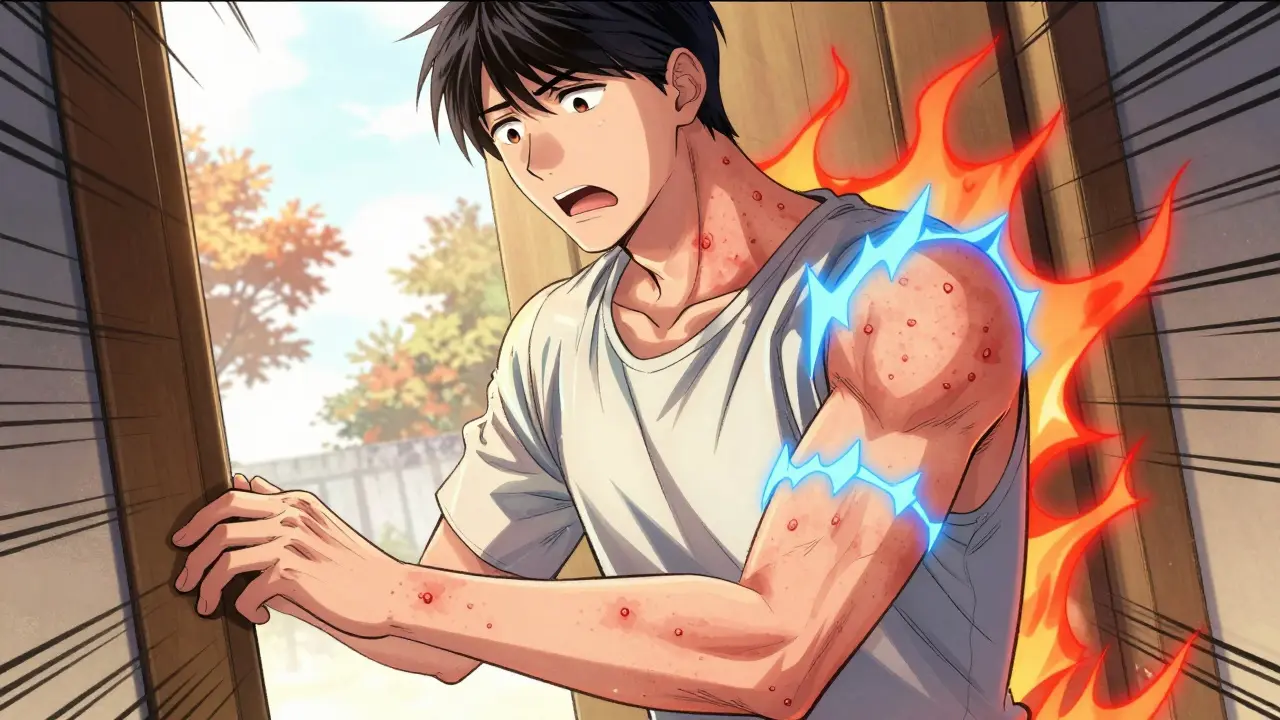
Imagine stepping out of a warm house into a crisp autumn morning. Within minutes, your skin burns. Red, itchy welts rise where the air hits you. You aren't just sensitive to the cold; you have cold-induced urticaria, a condition where the immune system reacts aggressively to low temperatures by triggering histamine release in the skin. It is not merely an annoyance. For some, it can be dangerous. This guide explains what happens inside your body, how doctors diagnose this specific type of physical urticaria, and the modern treatments available to keep you safe.
What Is Cold-Induced Urticaria?
Cold-induced urticaria (CU) is a form of chronic inducible urticaria. Unlike allergic reactions to food or pollen, CU is triggered by physical stimuli-specifically, a drop in temperature. When your skin cools down, mast cells in the dermis degranulate. They release histamine, prostaglandins, and leukotrienes. These chemicals cause blood vessels to leak fluid into surrounding tissues, creating the characteristic red, swollen hives.
The reaction typically starts within 5 to 30 minutes of exposure. The itching often worsens as the skin warms up again. Most cases are acquired, meaning they develop later in life, usually between ages 18 and 25. About 95% of these cases are idiopathic, which means no underlying disease causes them. However, in rare instances, CU can be secondary to infections, insect bites, or blood disorders like cryoglobulinemia. There is also a rare inherited form called Familial Cold Autoinflammatory Syndrome (FCAS), which requires different medical management.
| Type | Description | Key Characteristic |
|---|---|---|
| Localized Reflex CU | Hives appear only on the area exposed to cold. | Confined to contact points (e.g., hands holding ice). |
| Reflex CU | Widespread hives after localized cold exposure. | Systemic response from a small trigger area. |
| Cold-Dependent Dermographism | Hives form after scratching cold skin. | Requires mechanical stimulation plus cold. |
| Systemic CU | Generalized symptoms after extensive exposure. | Can lead to anaphylaxis if large body surface area is cooled. |
Symptoms and Warning Signs
The hallmark symptom is the hive itself. But CU affects more than just your skin. If you hold a cold drink, your lips might swell. If you walk in the wind, your face may redden and itch. In severe cases, the reaction becomes systemic. This means your entire body reacts, not just the exposed skin.
Watch for these serious signs:
- Lightheadedness or fainting
- Wheezing or difficulty breathing
- Rapid heartbeat (palpitations)
- Severe headache
These systemic symptoms indicate that your blood pressure may be dropping due to widespread vasodilation. This is a medical emergency. Swimming in cold water is particularly risky. If you jump into a lake below 20°C (68°F), the sudden full-body cooling can trigger massive histamine release, leading to anaphylactic shock and drowning. Always test the water first.
Diagnosis: The Ice Cube Test
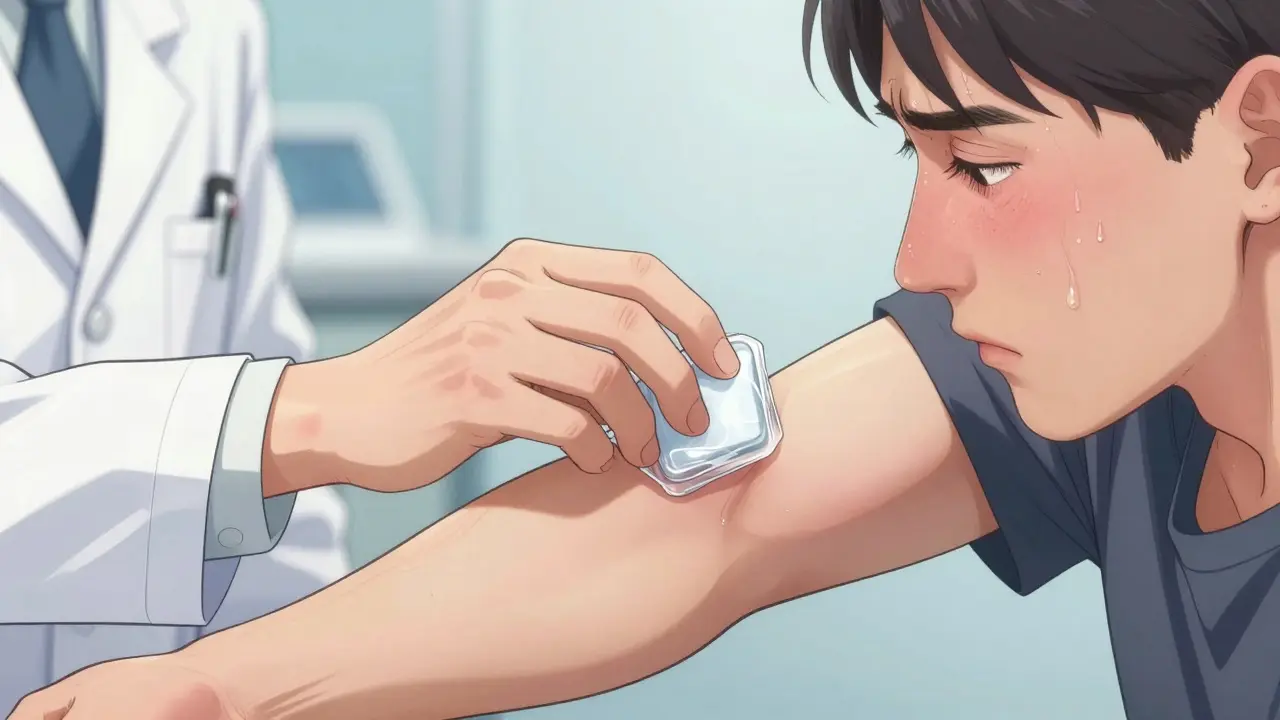
You cannot diagnose CU based on symptoms alone. Many conditions mimic cold sensitivity. Doctors use the "ice cube test" to confirm the diagnosis. Here is how it works:
- A healthcare provider places an ice cube wrapped in a thin plastic bag on your forearm.
- They leave it there for 5 to 10 minutes.
- They remove the ice and observe the skin as it warms.
If a raised, red, itchy welt forms at the site of the ice cube within 10 minutes, the test is positive. This method has a 98% sensitivity for acquired CU. Your doctor may also order blood tests to rule out secondary causes like lupus or hepatitis. Keeping a diary of your symptoms helps identify your personal temperature threshold. Some people react to air as warm as 20°C, while others tolerate near-freezing temperatures.
Treatment Options and Medications
There is no cure for acquired cold-induced urticaria, but you can manage it effectively. Treatment follows a step-up approach.
First-Line: Antihistamines
Second-generation non-sedating antihistamines are the standard starting point. Drugs like cetirizine (Zyrtec), loratadine (Claritin), and desloratadine (Clarinex) block histamine receptors. If the standard dose does not work, guidelines allow increasing the dose up to four times the normal amount. For example, you might take 40mg of cetirizine daily instead of 10mg. This high-dose strategy controls symptoms in 50-60% of patients.
Second-Line: Biologics
If antihistamines fail, doctors prescribe omalizumab (Xolair). This monoclonal antibody targets IgE antibodies involved in allergic reactions. Clinical trials show it reduces CU symptoms by 60-70% in resistant cases. It is administered via injection every four weeks.
Emergency Preparedness
If you have experienced systemic reactions, carry an epinephrine autoinjector (EpiPen). Know when to use it. If you feel throat tightness, dizziness, or widespread swelling, inject immediately and call emergency services. Do not wait.
Daily Management and Safety Tips
Living with CU requires behavioral adjustments. Prevention is easier than treatment. Here are practical steps to reduce flare-ups:
- Layer Up: Wear moisture-wicking base layers under wool or synthetic insulation. Avoid cotton, which retains dampness and chills the skin faster.
- Warm Food and Drink: Avoid ice cream, iced coffee, and frozen fruits. Throat swelling from cold foods can obstruct your airway.
- Test Before Swimming: Dip one hand in the water for five minutes. If you get hives, do not enter. This simple test prevents 85% of severe aquatic reactions.
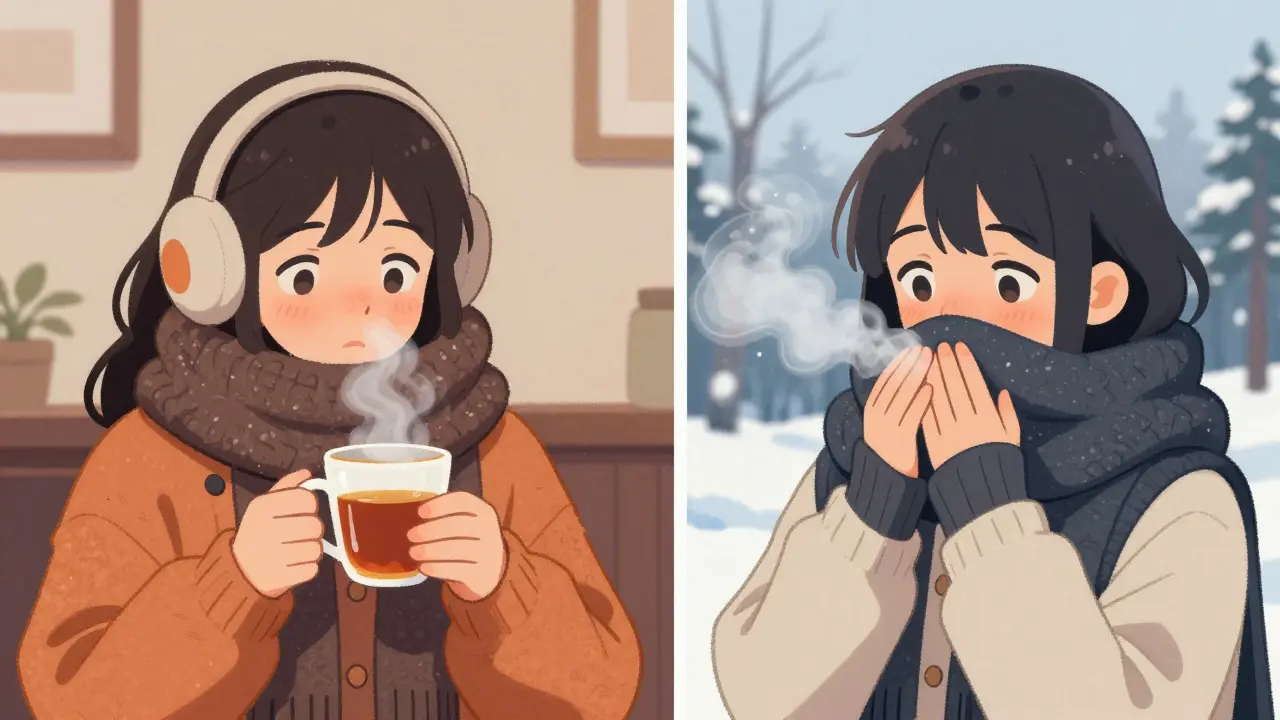
- Use Warm Air: Cover your mouth and nose with a scarf in winter. Breathing cold air directly can trigger facial hives and respiratory discomfort.
- Monitor Temperature: Wearable sensors like the 'Cold Alert' device can predict reactions before hives appear by monitoring skin temperature drops.
For medical procedures, inform your anesthesiologist about your CU. Operating rooms must stay above 21°C (70°F), and IV fluids should be pre-warmed to body temperature to prevent intraoperative reactions.
Prognosis and New Research
Will it go away? For many, yes. The European Urticaria Registry reports that 35% of CU patients experience spontaneous remission within five years. Acute-onset cases have a higher remission rate (62%) compared to chronic presentations.
New treatments are emerging. Berotralstat (Orladeyo), originally approved for hereditary angioedema, showed a 58% reduction in CU symptoms in recent phase 3 trials for patients who did not respond to Xolair. Researchers are also studying low-dose naltrexone and targeted interleukin-1 inhibitors for genetic forms of the disease. While these options are not yet standard care, they offer hope for those with severe, refractory cases.
How long do hives last after cold exposure?
Hives from cold-induced urticaria typically appear within 5-30 minutes of exposure and last about 30 minutes during the rewarming phase. If symptoms persist longer, consult a doctor to rule out other conditions.
Is cold-induced urticaria hereditary?
Most cases (95%) are acquired and not hereditary. However, a rare genetic form called Familial Cold Autoinflammatory Syndrome (FCAS) exists. FCAS usually presents in infancy and requires different treatment, such as interleukin-1 inhibitors.
Can I swim if I have cold urticaria?
Swimming is dangerous for CU patients due to the risk of full-body anaphylaxis. Never jump into cold water without testing. Dip a hand in for five minutes first. If you react, stay out. Always carry an epinephrine autoinjector and swim with a partner who knows your condition.
What is the best medication for cold hives?
High-dose second-generation antihistamines like cetirizine or loratadine are the first-line treatment. If these fail, omalizumab (Xolair) injections are highly effective for severe cases. Epinephrine autoinjectors are essential for emergency situations.
Does cold-induced urticaria go away on its own?
Yes, about 35% of patients experience spontaneous remission within five years. Acute cases have a better prognosis (62% remission rate) than chronic cases. Regular follow-ups with an allergist help monitor progress and adjust treatment.