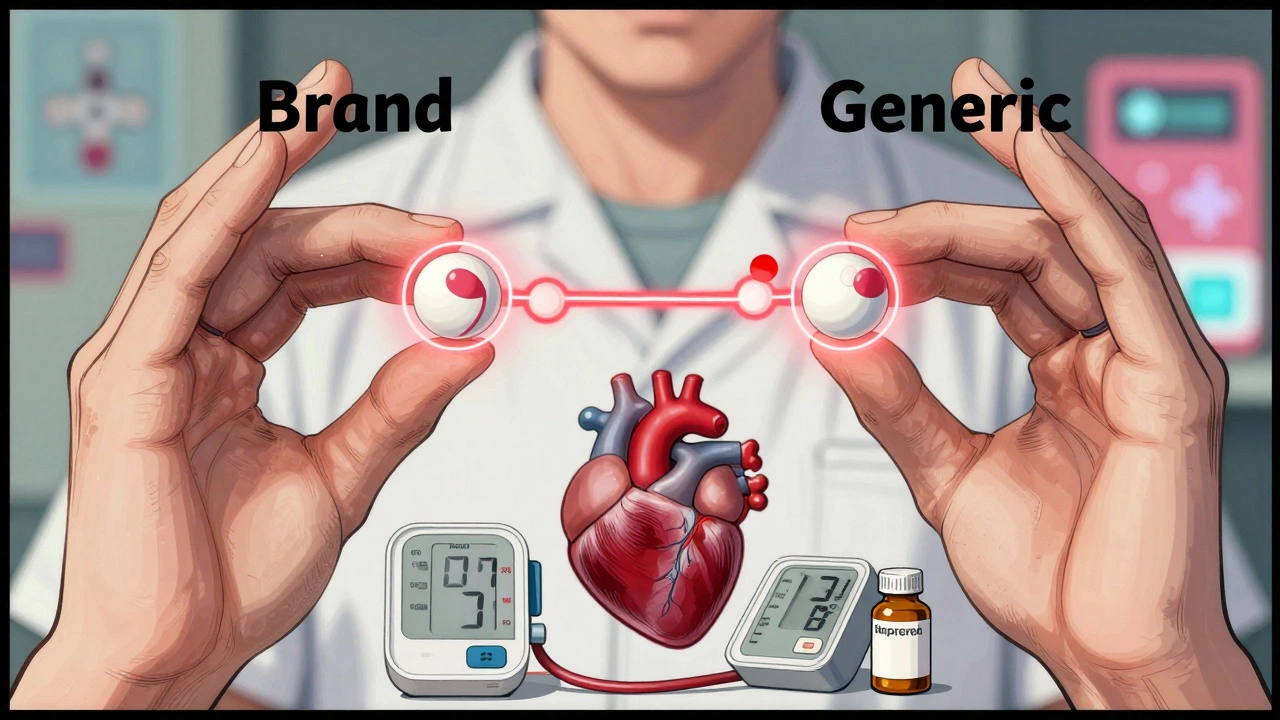
When you pick up a prescription, you might see two options: the familiar brand-name pill or a cheaper generic version. Many people wonder - does switching to a generic change how the drug interacts with other medicines you’re taking? The short answer: no. The risk of drug interactions is essentially the same for generic and brand-name medications. But why does this myth persist? And when should you pay attention to the details?
What Makes a Generic Drug the Same?
A generic drug isn’t a copy. It’s required by law to contain the exact same active ingredient, in the same strength, and delivered the same way as the brand-name version. That means if you’re taking a generic version of lisinopril, you’re getting the same molecule that lowers blood pressure as the brand-name Zestril. The U.S. Food and Drug Administration (FDA) doesn’t allow a generic to hit shelves unless it proves it delivers the same amount of medicine into your bloodstream at the same rate. That’s called bioequivalence. To prove this, manufacturers run tests on healthy volunteers. They measure how much of the drug enters your blood (AUC) and how fast it peaks (Cmax). The FDA says the generic must fall within 80% to 125% of the brand-name drug’s numbers. That’s a 45% range - but in reality, most generics land within 5% of the original. This isn’t guesswork. It’s science. And it’s why the FDA considers them therapeutically equivalent.Drug Interactions Depend on the Active Ingredient
Drug interactions happen because of what the medicine does in your body - not what’s in the capsule around it. If you’re on warfarin and start taking ibuprofen, the risk of bleeding goes up because both affect how your blood clots. That risk doesn’t change whether you take brand-name Coumadin or generic warfarin. The active ingredient is identical. So does the way it interacts with other drugs, foods, or supplements. The FDA’s Center for Drug Evaluation and Research says it clearly: differences in fillers, dyes, or coatings won’t change how the drug works or how it interacts with other medications. That’s backed by data. A 2020 study in Scientific Reports looked at 17 cardiovascular drugs and found patients on generics had fewer heart attacks and deaths than those on brand-name versions. That’s not a fluke. It’s because generics are just as effective - and often more widely used, meaning doctors have more real-world experience with them.What About Those Weird Side Effects After Switching?
You’re not imagining things if you feel different after switching from brand to generic. But it’s rarely because the drug itself changed. More often, it’s because your body noticed the pill looks different. A 2022 Consumer Reports survey found that 18% of people thought generics had different interaction risks - but only 4% actually experienced a change. That gap points to something called the nocebo effect: if you believe a change will cause problems, your brain can make you feel it. There are exceptions. Some people react to inactive ingredients. Lactose, for example, is a common filler. If you’re lactose intolerant, a generic version with lactose might give you stomach upset - but that’s not a drug interaction. It’s a food sensitivity. Same with dyes. A rare allergic reaction to a colorant in one brand doesn’t mean the drug is less safe. It just means you’re sensitive to something in the shell, not the medicine inside. Pharmacists at major hospitals now check both active and inactive ingredients when a patient reports new symptoms after a switch. They use the FDA’s Orange Book, which lists all approved generics and their excipients. If you’ve had a reaction before, tell your pharmacist. They can find a version without that ingredient.
Narrow Therapeutic Index Drugs: The One Exception
Some drugs have a razor-thin line between helping and harming. These are called narrow therapeutic index (NTI) drugs. Examples include warfarin, levothyroxine, and phenytoin. For these, even small changes in blood levels matter. That’s why the FDA requires tighter bioequivalence standards for NTI generics - 90% to 111% instead of 80% to 125%. Still, studies show no increase in adverse events when switching between approved generics of these drugs. The American College of Clinical Pharmacology says bioequivalent products can be expected to have the same interaction potential. That said, if you’re on one of these medications and your doctor recommends sticking with the same brand or generic, it’s not because one is safer. It’s to avoid unnecessary switches. Consistency matters more than the label.Why Do People Still Worry?
The fear isn’t irrational. It’s shaped by experience. When a new generic hits the market, complaints about side effects often spike for the first few months. WebMD data shows a 37% increase in complaints - then they drop back to normal after six months. Why? Because when a new version arrives, people notice it. They look for problems. And sometimes, they find them - even if they weren’t there before. Reddit threads and pharmacy forums are full of stories: “I switched to generic Ambien and felt drowsier on sertraline.” “My generic thyroid med made me jittery.” These aren’t lies. But they’re rarely caused by the drug’s interaction profile. More often, they’re caused by stress, changes in sleep, diet, or even the placebo effect working backward. The truth? The vast majority of patients - over 80% - report no difference in how their medications work or interact after switching to generics. That’s not marketing. That’s real-world evidence.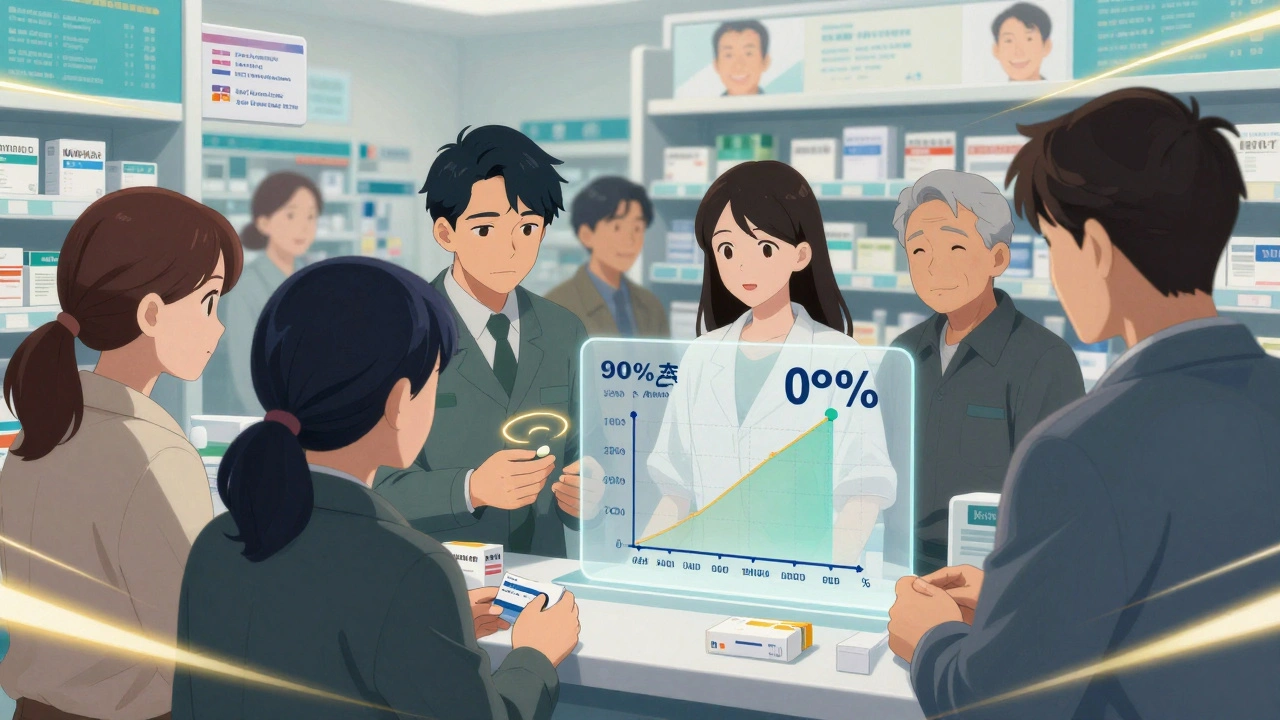
What Should You Do?
If you’re on a generic medication and you’re stable - no side effects, no weird reactions - keep taking it. There’s no reason to switch back to the brand-name version just because you’re worried about interactions. If you’ve just switched and feel off, don’t panic. Talk to your pharmacist. Ask: “Is this the same active ingredient?” “Could any of the fillers be causing this?” They can check the formulation and suggest an alternative if needed. If you’re on a narrow therapeutic index drug and your doctor wants you to stay on one brand, ask why. Is it because of proven instability? Or just habit? Many doctors stick with the same version out of tradition, not science. You have the right to ask for data.The Bigger Picture: Generics Save Lives
Over 90% of prescriptions in the U.S. are filled with generics. They save the healthcare system over $1.6 trillion a decade. That’s not just money. It’s access. People who can’t afford brand-name drugs often skip doses or stop taking them entirely. Generics fix that. And studies show better adherence leads to fewer hospitalizations, fewer complications, and fewer dangerous drug interactions overall. The FDA, EMA, and global health agencies agree: generic drugs are not second-rate. They’re science-backed, rigorously tested, and just as safe. The risk of drug interactions doesn’t go up because the label says “generic.” It goes up when people don’t take their meds - and that’s a risk generics help reduce.Bottom Line
Drug interactions depend on the active ingredient - not the brand name. Generic and brand-name versions of the same drug carry the same interaction risks. The inactive ingredients might differ, but those rarely cause interaction problems. The data is clear. The science is solid. And the savings are massive. Unless you’re one of the tiny fraction of people who react to a specific filler, there’s no reason to fear switching to a generic. In fact, you’re more likely to stay on your meds - and stay healthy - if you take the version you can afford.






Posts Comments
sagar bhute December 3, 2025 AT 08:29
Generics are just corporate fraud dressed up as savings. I switched to generic lisinopril and my BP went haywire for two weeks. Your 'science' ignores real people's bodies. The FDA doesn't test for long-term cumulative effects. You're just repeating what Big Pharma wants you to believe.
Cindy Lopez December 4, 2025 AT 00:33
The article is well-researched, grammatically correct, and cites credible sources. However, the conclusion oversimplifies the nocebo effect by implying patient-reported side effects are purely psychological. This dismissive framing undermines trust in patient autonomy.
Ignacio Pacheco December 4, 2025 AT 03:59
So let me get this straight - you’re telling me that a pill with different dyes and fillers, manufactured in a different country under different quality controls, can be ‘therapeutically equivalent’ to the original? And you’re surprised people are skeptical? The FDA’s 80–125% range sounds like a tolerance for a high school chemistry lab, not a life-or-death medication standard.
Jim Schultz December 4, 2025 AT 14:28
I'm sorry, but this whole 'generics are just as good' narrative is a dangerous myth perpetuated by insurance companies and pharmacy benefit managers... Seriously, who even trusts the FDA anymore? They approved opioids, let's not forget. And now you want me to believe that a generic version of levothyroxine - which requires microgram precision - is interchangeable? Please. My endocrinologist told me to stick with Synthroid, and he's not a shill. He's a doctor. He sees the data. The data says: don't switch unless you want to be in the ER with a TSH of 12.5.
Vincent Soldja December 6, 2025 AT 01:39
Studies show no difference. End of story.
Makenzie Keely December 7, 2025 AT 00:02
Let me tell you something - I’m a pharmacist in rural Ohio, and I’ve seen firsthand how generics save lives. People who couldn’t afford their meds were skipping doses, skipping refills, skipping doctor visits. Then generics came in - and suddenly, Grandma was taking her blood pressure pills every day. Her stroke risk dropped. Her kidney function stabilized. That’s not marketing. That’s human impact. Yes, some people feel weird when the pill looks different - and we listen. We check the fillers. We swap them out. But the active ingredient? Always the same. Always safe. Always effective. Don’t let fear make you choose illness over affordability.
Francine Phillips December 7, 2025 AT 23:37
I switched to generic metformin last year. Felt fine. No issues. Just cheaper.
Katherine Gianelli December 8, 2025 AT 12:38
Hey - if you’ve ever felt off after switching meds, I get it. I’ve been there. That weird jittery feeling? That foggy brain? It’s not just in your head - but it’s not necessarily the drug either. Sometimes it’s stress. Sometimes it’s sleep. Sometimes it’s just your body adjusting to a new shape, size, or color of pill. You’re not broken. You’re not crazy. You’re just human. Talk to your pharmacist. Ask for the same generic, or a different one. There are 12 versions of levothyroxine out there - one might just feel right. You deserve to feel like yourself again. And you’re not alone in this.
Joykrishna Banerjee December 9, 2025 AT 19:10
Let me elucidate the epistemological fallacy embedded in this article: the conflation of bioequivalence with therapeutic equivalence is a classic case of reductionist scientism. The FDA’s 80–125% AUC/Cmax window is statistically permissive - not clinically rigorous. In pharmacokinetics, we know that even a 5% deviation in Tmax can trigger clinically significant interactions in NTI drugs, especially when polypharmacy is involved. Moreover, the 2020 Scientific Reports study you cite is a retrospective observational analysis - riddled with confounding variables including socioeconomic adherence bias. And let’s not forget that the Orange Book does not mandate disclosure of all excipients - only those deemed ‘significant’ by regulatory fiat. In India, where I practice, generics often contain unregulated fillers like talc or microcrystalline cellulose from unverified sources. This is not science - it’s regulatory theater. And you, dear author, are part of the system that normalizes pharmaceutical negligence under the banner of ‘cost-efficiency.’
Write a comment