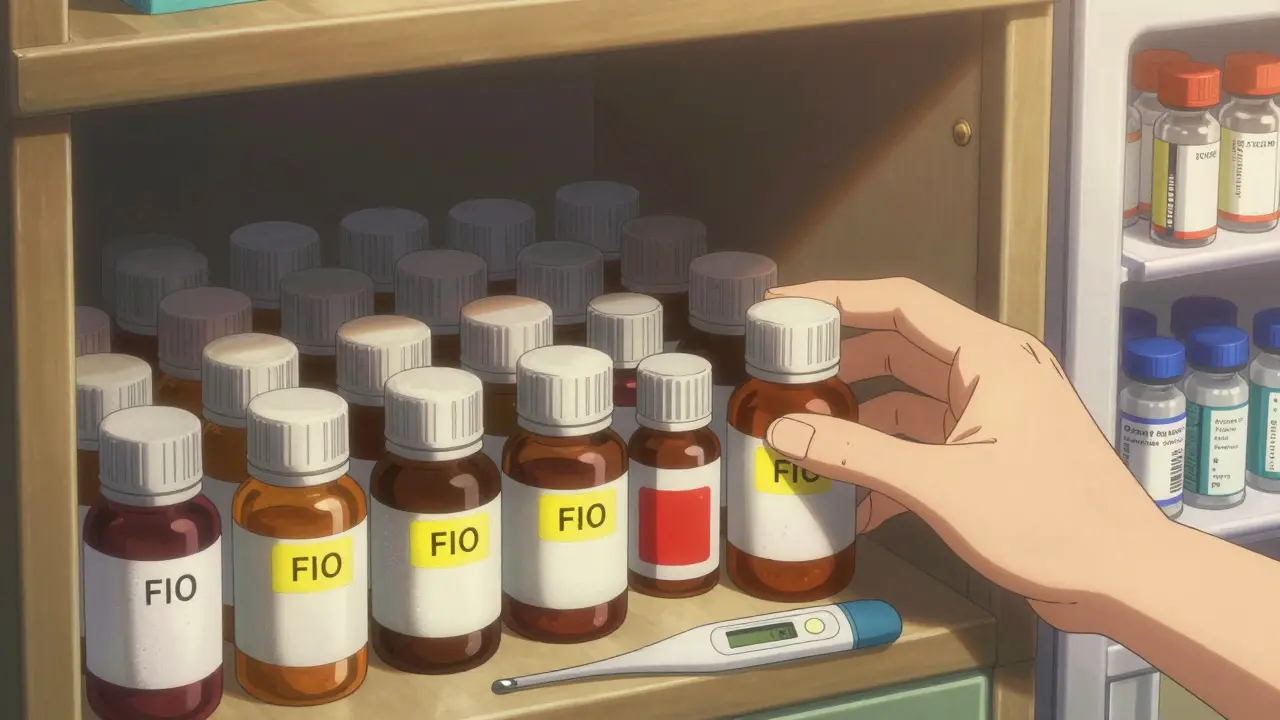
Every year, medication waste costs the U.S. healthcare system over $20 billion. That’s not just money down the drain-it’s pills that could’ve helped someone, refrigerated biologics that spoiled because no one checked the fridge, and opioids flushed down toilets because proper disposal options weren’t clear. The good news? Most of this waste is avoidable. You don’t need a billion-dollar system to keep medications fresh and reduce waste. You just need the right habits, simple tools, and a shift in how you think about expiration dates.
Expiration Dates Aren’t Always the Full Story
Many people assume that if a pill says it expires in June 2025, it turns useless on June 1, 2025. That’s not true. The FDA has found that over 90% of medications remain stable and effective well past their labeled expiration dates-sometimes for years. The expiration date is more of a manufacturer’s guarantee of full potency under ideal storage, not a hard cutoff for safety. That doesn’t mean you should keep every old bottle forever. But it does mean you shouldn’t toss a bottle of amoxicillin just because the date passed by two months. Check the condition: Is the tablet cracked? Discolored? Smells weird? If not, it’s likely still good. The real danger isn’t expired meds-it’s unnecessary disposal. The EPA estimates that 43% of healthcare facilities still dump hazardous drugs in the trash, contaminating water supplies and soil. Proper disposal matters more than rigid date-following.Store Medications Right-Temperature and Light Matter
A pill sitting in a hot bathroom cabinet or a sunny windowsill degrades faster than you think. Insulin, thyroid meds, and many antibiotics need to stay between 36°F and 46°F. If your fridge is set too cold (below 34°F), some liquids freeze and break down. If it’s too warm (over 50°F), potency drops. Room-temperature drugs like aspirin, metformin, or blood pressure pills should be kept between 68°F and 77°F. Humidity is another silent killer. Keep meds in their original bottles with the desiccant packet inside. Don’t transfer pills to pill organizers unless you’re using them for daily doses-long-term storage in plastic containers exposes them to air and moisture. Use a small digital thermometer in your medicine fridge. Check it weekly. If the temperature spikes above 50°F for more than a few hours, call your pharmacist. One rural clinic lost $8,200 in insulin and vaccines last year because their fridge thermostat failed-and no one noticed until it was too late.Use FIFO-It’s Simple, Cheap, and Works
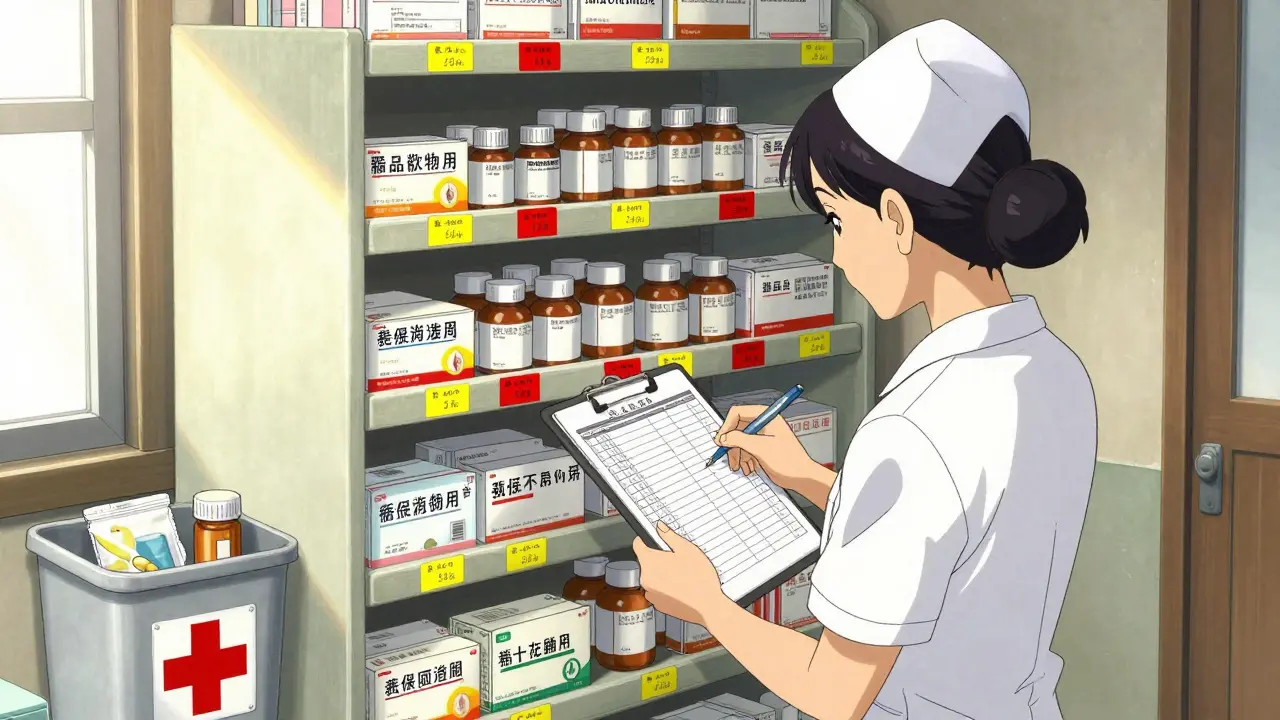
FIFO stands for First-In, First-Out. It’s the same principle grocery stores use: put new stock behind the old. Apply it to your medicine cabinet, clinic shelves, or pharmacy inventory. Here’s how:- When you get a new prescription, place it behind the old one.
- Always take the oldest bottle first.
- Label new bottles with the date received.
- Do a quick weekly check: Are any meds within 30 days of expiring?
Prescribe and Dispense Smaller Amounts
One of the biggest waste drivers? Overprescribing. Doctors often hand out 30-day or 90-day supplies of chronic meds-even when patients don’t need them. Dr. Sarah Thompson at Mayo Clinic found that for patients on long-term medications like statins or antidepressants, prescribing a 14-day or 21-day supply first reduces waste by up to 37%. Why? Because many patients stop taking meds after a few weeks due to side effects, cost, or confusion. If they get a small amount upfront, they’re more likely to follow up with their provider before refilling. Pharmacies can help too. Split-fill programs let patients get half their prescription now, the rest later. If they don’t come back for the second half, you know something’s wrong-maybe they can’t afford it, or they had a reaction. That’s not waste-that’s early intervention.Track What You Have-Even If You’re a Small Clinic
You don’t need Epic or Cerner to manage inventory. A simple spreadsheet works if you’re a solo practitioner or small clinic. Create a list with these columns:- Medication name
- Strength and form (e.g., 10mg tablet)
- Lot number
- Received date
- Expiration date
- Quantity on hand
- Location (fridge, cabinet, etc.)
Know When to Use Tech-and When Not To
Barcode scanners, cloud-based systems like Omnicell or Epic’s Pharmacist Dashboard, and automated alerts are powerful. But they’re not for everyone. If you’re a hospital with 20+ providers and 500+ daily med transactions? Tech is essential. Kaiser Permanente cut expired med incidents by 42% after implementing real-time tracking. But if you’re a solo family practice with 30 patients a week? A $12,000 software license is overkill. You’ll spend more on training and IT support than you save in waste reduction. Stick with color-coded labels, weekly audits, and FIFO. The real win? Systems that talk to each other. If your EHR alerts you when a patient’s prescription is about to expire, and your pharmacy knows what’s in stock, you avoid double prescriptions. NIH data shows electronic systems reduce duplicate orders by 27%-that’s direct waste prevention.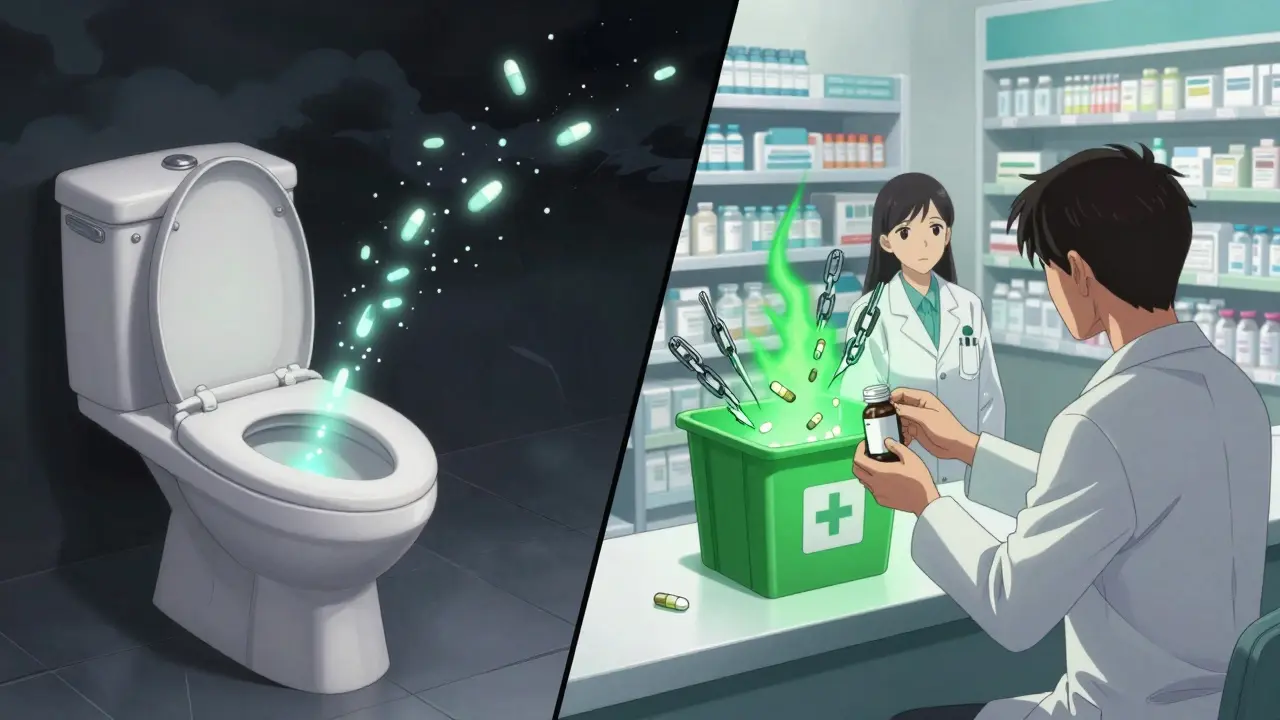
Dispose of What You Can’t Use-Safely
If a med is expired, damaged, or no longer needed-don’t flush it. Don’t toss it in the trash. Use a take-back program. As of January 2023, there are over 11,000 authorized collection sites across the U.S.-in pharmacies, hospitals, and police stations. The FDA’s updated guidelines now include 15 specific opioids that can be flushed only if no take-back option is available. For everything else, use a collection box. If you’re a patient, ask your pharmacist: “Do you have a take-back bin?” If you’re a provider, put one in your office. It’s not just safe-it’s required under the EPA’s 2023 Pharmaceutical Waste Rule if you generate more than 2.2 pounds of hazardous waste per month.Train Your Team-Even If It’s Just You
The WHO says staff training is the single most important factor in reducing waste. Facilities with formal training programs see 28% less waste than those without. What to cover:- How to read expiration dates correctly
- Storage requirements for common meds
- How to spot degraded pills or liquids
- When to call the pharmacy about a potential spoilage
- How to use take-back programs
What’s Next? The Future Is Predictive
By 2026, AI will predict which patients are likely to stop taking meds before they refill-and automatically trigger a smaller refill. Systems will flag which drugs in your inventory are most likely to expire next month based on usage trends. That’s coming fast. But right now, the best tool you have is attention. Check your fridge. Label your bottles. Talk to your patients. Don’t assume a date means useless. And never, ever flush meds unless it’s on the FDA’s emergency flush list. Waste isn’t inevitable. It’s a system failure. Fix the system-not the pills.Can I still use medication after its expiration date?
Yes, in many cases. The FDA has found that most medications remain safe and effective for years beyond their labeled expiration date if stored properly. However, you should never use pills that are discolored, cracked, or smell unusual. Liquid medications like insulin or eye drops should be discarded on the expiration date, as they’re more prone to contamination.
What’s the best way to store medications at home?
Keep them in a cool, dry place away from sunlight and moisture. Avoid bathrooms and kitchens. Refrigerated meds (like insulin) should stay between 36°F and 46°F. Use the original container with the desiccant packet inside. Don’t transfer pills to plastic pill organizers for long-term storage.
How can I reduce waste if I run a small clinic?
Start with simple, low-cost steps: use FIFO (first-in-first-out) for inventory, label meds with expiration dates, do a weekly 10-minute audit, and prescribe smaller quantities for chronic conditions. Use color-coded stickers for meds expiring soon. Avoid expensive software unless you have over 20 providers. Manual systems work well for small teams.
Is it safe to flush old medications down the toilet?
Only if they’re on the FDA’s flush list-currently 15 specific opioids like fentanyl patches and oxycodone. For all other medications, flushing harms water systems. Use a drug take-back program instead. Over 11,000 collection sites exist across the U.S., and most pharmacies offer them for free.
Why do some pharmacies still throw away unused meds?
Many do it out of habit, fear of liability, or lack of training. Some think expired meds are dangerous to give away-even if they’re still effective. Others don’t know about take-back programs or how to handle returns. Proper education and clear policies can cut this waste by half. The EPA and WHO both emphasize training as the key to change.





Posts Comments
John Rose January 28, 2026 AT 17:23
Really appreciate this breakdown. I never realized most meds are still good past the expiration date-just need to check for discoloration or weird smells. I’ve been tossing perfectly fine antibiotics because of the date, and now I feel like an idiot. Simple habits like FIFO and weekly fridge checks? That’s the kind of low-effort, high-reward stuff we need more of in healthcare.
Mark Alan January 29, 2026 AT 03:31
OMG THIS IS A DISASTER 😭🇺🇸 We’re flushing life-saving meds like they’re toilet paper while China and Germany are hoarding stockpiles. Why is no one talking about how this is a national security issue?? Also, I just flushed my old Xanax because I didn’t know better-RIP America’s dignity.
Amber Daugs January 29, 2026 AT 04:03
Ugh. Of course someone wrote a 2000-word essay on how to not be lazy with your medicine. 🙄 People don’t need ‘FIFO’-they need to stop being irresponsible. If you can’t remember when you last refilled your blood pressure pills, maybe you shouldn’t be taking them. And yes, if it says ‘expires 2025,’ then it’s expired. Stop making excuses. Your grandma didn’t need a spreadsheet to survive.
Ambrose Curtis January 30, 2026 AT 18:26
Yo I’m a paramedic and this is 100% spot on. We had a guy come in last week with 17 bottles of expired insulin he’d been keeping in his glovebox because ‘it still looked fine.’ Spoiler: it wasn’t. But here’s the thing-most people don’t know shit about storage. A $5 digital thermometer in the fridge? Game changer. Color-coded labels? My clinic started using them and we saved $12k in 6 months. No fancy software, just dumbass discipline. Also, don’t toss pills in the trash-take ‘em to Walgreens. They’ve got bins in the back. And yeah, if your amoxicillin’s not moldy or powdery, it’s probably still good. Don’t be a hero, but don’t be a fool either.
Robert Cardoso January 31, 2026 AT 18:08
Let’s deconstruct the fallacy here. The FDA’s ‘90% remain stable’ claim is based on accelerated aging tests under controlled conditions-conditions that do not reflect real-world storage in humid bathrooms or hot cars. Furthermore, stability ≠ safety. Degradation products can be toxic, even if potency is retained. The EPA’s 43% statistic is misleading-it refers to healthcare facilities, not households. And ‘FIFO’ only works if you have a centralized inventory, which most households do not. This article conflates systemic waste with individual behavior, and in doing so, dangerously normalizes the use of expired pharmaceuticals. If you’re using expired insulin, you’re gambling with your life. There is no ‘probably still good.’ There is only risk and consequence.
Katie Mccreary February 2, 2026 AT 02:14
Why do people keep meds they don’t need? Just stop buying so much. You’re not a hoarder, you’re a consumer. Also, your fridge is probably too warm. Just admit it.
SRI GUNTORO February 3, 2026 AT 22:05
In India, we never throw away medicine. We share with family. If it’s expired, we still take it-what else can we do? Your system is broken. You waste because you have too much. We survive because we have nothing. This article is for rich people who don’t know hunger.
Kevin Kennett February 4, 2026 AT 08:53
Big thanks to the OP for this. I run a tiny clinic with 2 nurses and a part-time pharmacist. We started doing the weekly 10-minute audit and color-coded stickers-no budget, just printed labels from a home printer. We’ve cut our waste by 35%. The best part? Patients noticed. One guy came back and said, ‘You guys actually care.’ That’s worth more than any software. And yeah, if your insulin looks clear and isn’t clumpy? It’s probably fine. But if you’re unsure? Call your pharmacist. They’re not just there to fill scripts-they’re there to keep you alive. Let’s stop pretending this is just about money. It’s about dignity.
Write a comment