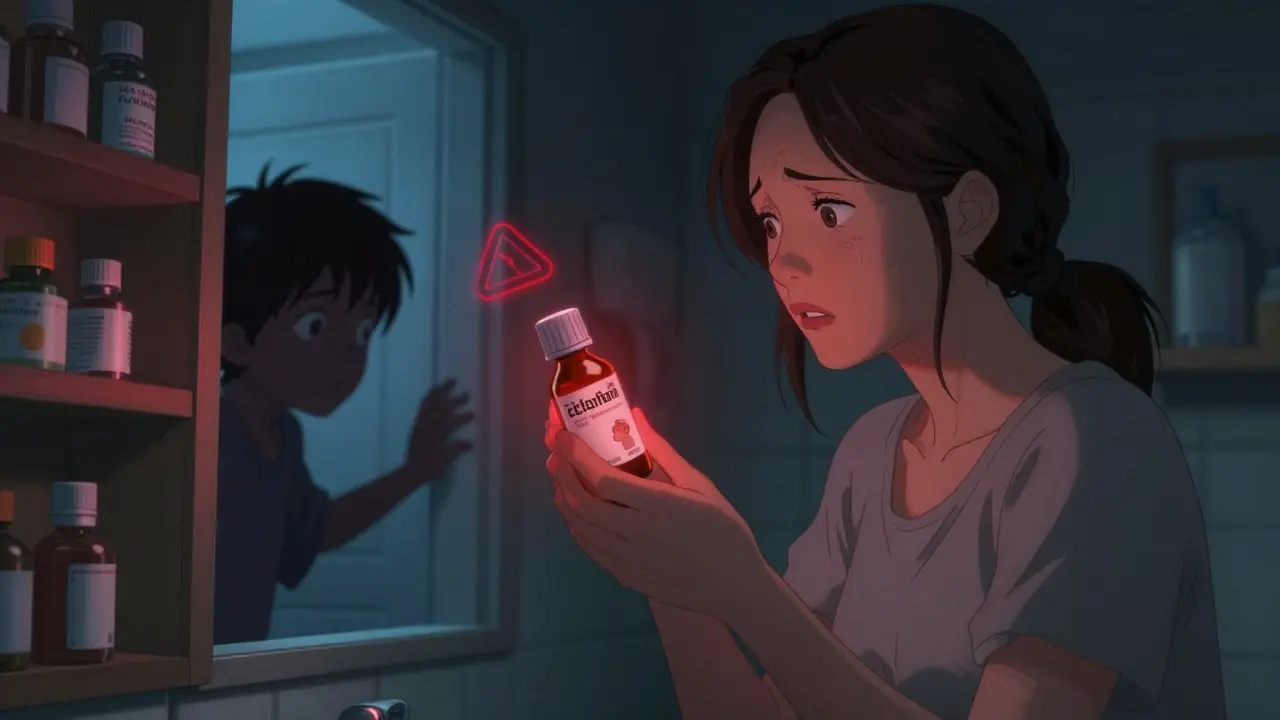
Every parent has been there: you find an old bottle of children’s liquid acetaminophen in the back of the medicine cabinet, and you wonder-is it still okay to use? The expiration date is past. The label says ‘do not use after.’ But the bottle looks fine. The liquid hasn’t changed color. Maybe it’s just less effective? Maybe it’s still safe?
Here’s the hard truth: expired pediatric medications are not just weaker-they can be dangerous. Unlike adult medicines, children’s bodies are still developing. Their livers, kidneys, and immune systems can’t handle degraded chemicals the way an adult’s can. A medication that’s slightly off-potency in an adult might be harmless. In a child, it could cause poisoning, allergic reactions, or long-term harm.
Why Expired Kids’ Medicines Are Riskier Than You Think
The FDA warns that expired medications may not work as intended-or worse, they may break down into harmful substances. For children, the risks are even higher.
Liquid antibiotics, for example, lose up to 87% of their effectiveness within 14 days after expiration, according to University of Michigan Pediatric Trauma research. But it’s not just about potency. These liquids can grow bacteria after expiration. A 2021 Johns Hopkins study found that one-third of expired children’s antibiotics showed signs of contamination after just two weeks past the date.
Insulin? It degrades at 1.5% per month after expiration. For a child with diabetes, that small drop can mean life-or-death differences in blood sugar control. Nitroglycerin, used for heart conditions, loses half its strength within three months. Epinephrine auto-injectors-critical for severe allergies-retain only 65% effectiveness six months past expiration. That’s not a minor risk. That’s a failure when every second counts.
And then there are the hidden dangers. Expired benzocaine teething gels have caused 127 cases of methemoglobinemia in children between 2018 and 2022-a rare but deadly blood disorder that stops oxygen from reaching tissues. Tetracycline antibiotics, when expired, can permanently stain a child’s teeth and stunt bone growth at rates 3.7 times higher than with properly stored versions.
Even common OTC meds like antihistamines can flip their effects. Expired children’s Benadryl doesn’t just make kids sleepy-it can cause hyperactivity, hallucinations, and seizures, according to Dr. Richard M. Rosenfeld of SUNY Downstate Medical Center.
Most Parents Don’t Realize the Danger
A 2023 survey by Contemporary Pediatrics found that only 1 in 5 parents knew expired pediatric meds were unsafe. The rest? They thought they were just less effective.
Reddit threads like r/Parenting are full of comments like: “I always gave my kid expired Tylenol. It just didn’t work as well.” That’s a dangerous myth. The American College of Medical Toxicology says clearly: no expired medication should be given to any child under 12. Why? Because children’s bodies process drugs differently. Their metabolic systems can’t predict how degraded chemicals will react. The outcome? Unpredictable, sometimes severe, toxicity.
And it’s not just about the meds themselves. Storage matters just as much. Acetaminophen suspensions lose 22% of their potency if stored above 86°F for 30 days. That’s a typical closet or bathroom shelf in summer. Most parents don’t check expiration dates until they’re about to give the medicine. One survey found 78% of parents wait until the moment of use to look at the date. That’s like checking your car’s brakes only when you’re already speeding down the highway.
How to Store Pediatric Medications Safely (Before They Expire)
Prevention starts with smart storage. Here’s what actually works:
- Keep all meds out of reach. The Consumer Product Safety Commission found that 62% of children aged 4-5 can open child-resistant caps in under a minute. That’s not child-resistant-it’s child-tempting. Store all medications, even vitamins and topical creams, in locked cabinets above 5 feet. CDC data shows 78% of poisonings happen when meds are stored below this height.
- Use original containers. Only 58% of parents do this. But removing labels means you lose dosage instructions, expiration dates, and warnings. You also can’t prove what the medicine was if your child accidentally swallows it.
- Use the right measuring tool. The FDA found that 42% of parents use kitchen spoons to dose liquid meds. That leads to 38% dosage errors. Always use the dropper, syringe, or cup that came with the medicine. Never guess.
- Check temperatures. Don’t store meds in the bathroom or near the stove. Heat and moisture destroy potency. A cool, dry drawer is better than any medicine cabinet above the sink.
- Lock it up. Only 22% of households use locked cabinets. But CDC modeling shows this cuts poisoning risk by 76%. It’s the single most effective step you can take.
How to Dispose of Expired Pediatric Medications Safely
Once a medication is expired, your job isn’t to use it. It’s to get rid of it-safely.
The FDA and DEA agree: never flush meds unless they’re on the flush list. Only 15 specific drugs-mostly opioids and other high-risk controlled substances-are safe to flush. For everything else, flushing pollutes waterways. The USGS detected 82 pharmaceutical compounds in 80% of U.S. rivers and streams. That’s why the EPA now recommends take-back programs over flushing.
Here’s the right way to dispose of expired pediatric meds:
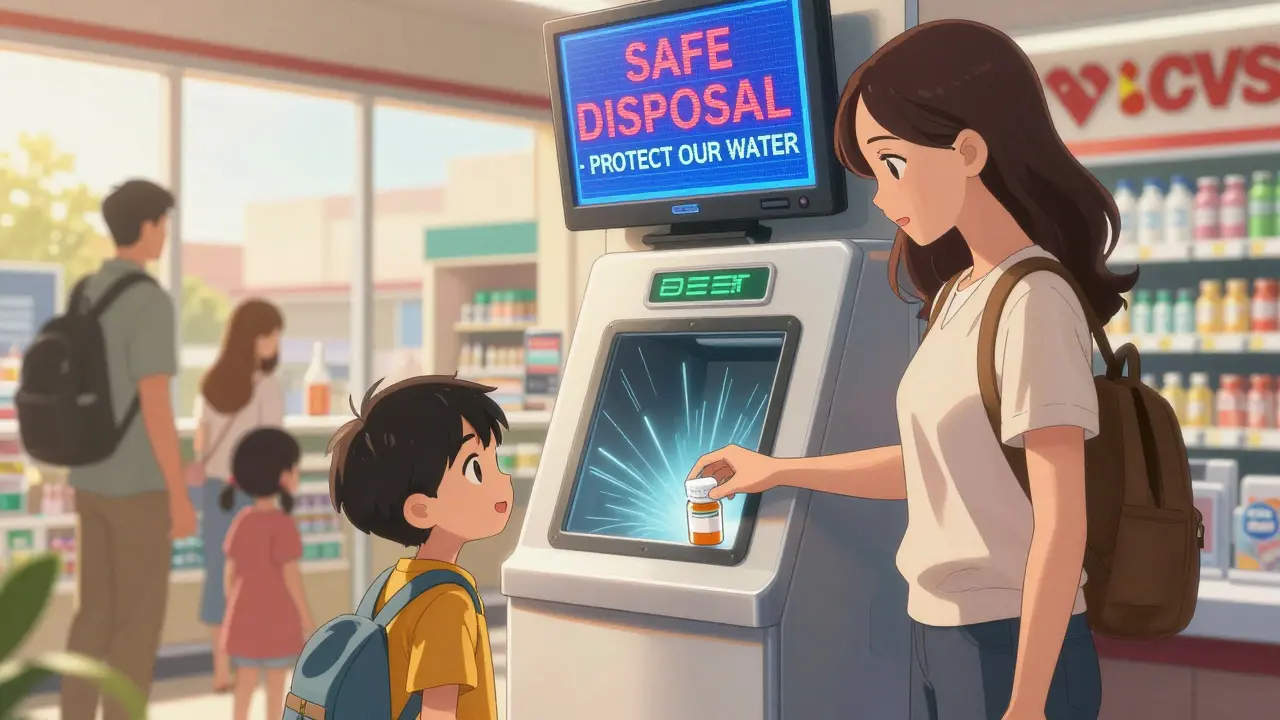
- Find a take-back location. The DEA runs over 16,700 permanent disposal sites at pharmacies, hospitals, and police stations. You can find one near you by visiting dea.gov or calling 1-800-882-9539. Walgreens and CVS now have disposal kiosks in over 12,400 locations nationwide.
- Use a take-back event. The DEA’s National Prescription Drug Take Back Day happens twice a year. In October 2023, they collected over 1 million pounds of expired meds. Yet only 14% of parents use these events. Don’t be one of them.
- If no take-back is available, trash disposal is the next best option. Remove the medicine from its original container. Mix it with something unpalatable-used coffee grounds, cat litter, or dirt. Use a 2:1 ratio (two parts grounds, one part medicine). Put it in a sealed plastic bag or container. Scratch out all personal info on the bottle with a permanent marker. Then throw it in the trash.
- For liquid meds, add absorbent material. Pour the liquid into cat litter, sawdust, or paper towels. Let it soak in. Seal it. Trash it. This prevents accidental ingestion by kids or pets.
- Never recycle the bottle. Even if it’s plastic, it’s contaminated. Trash it with the medicine.
What You Should Never Do
- Don’t give expired meds to another child. Even if they have the same symptoms. Dosing is based on weight and age. You don’t know if the medicine is still active.
- Don’t flush meds unless they’re on the FDA’s flush list. Flushing pollutes water and harms wildlife.
- Don’t store meds in pill organizers. These don’t have expiration dates or warnings. You can’t tell what’s inside.
- Don’t wait until the medicine is “almost empty” to dispose of it. The risk doesn’t disappear with less volume. A half-empty bottle of expired antibiotic is just as dangerous as a full one.
Build a Medication Safety Routine
One-time cleanups aren’t enough. You need a system.
- Check expiration dates monthly for liquids. They degrade faster. Keep a small calendar or phone reminder.
- Check solids quarterly. Pills, chewables, and creams last longer but still expire.
- Dispose immediately after use. If your child finishes a course of antibiotics, don’t keep the leftovers. Toss them the same day.
- Make it a family habit. Involve older kids in checking dates. Teach them that medicine isn’t candy.
- Ask your pediatrician at every visit. Only 31% of providers talk about disposal during well-child visits. But research shows that when they do, parents dispose of meds correctly 63% more often.
What’s Changing in 2026
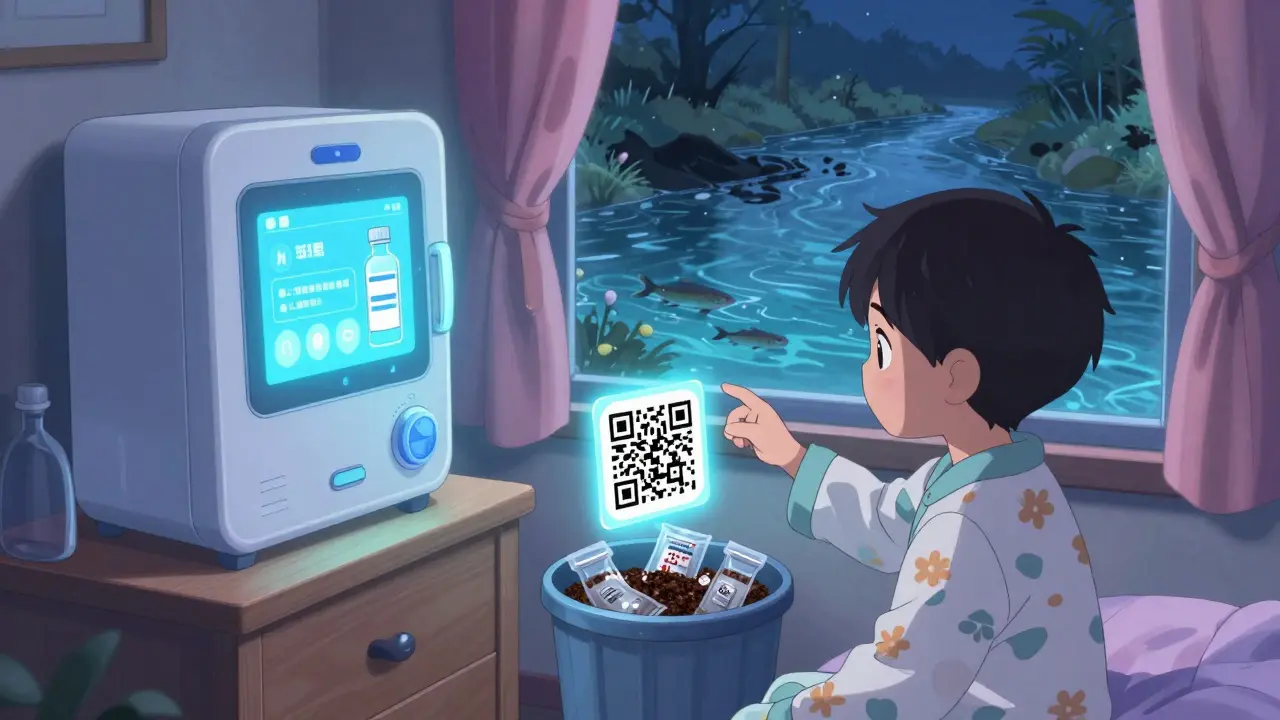
The landscape is shifting. The CDC’s National Action Plan aims to cut pediatric medication-related ER visits by 50% by 2027. Expired meds account for 28% of those cases. New federal legislation (H.R. 2883) is moving through Congress to standardize disposal rules nationwide. Smart medicine cabinets that track expiration dates and send alerts are now available-and the market is projected to hit $4.7 billion by 2026.
Some pharmacies are testing QR codes on pediatric prescriptions. Scan it, and your phone shows disposal instructions. Others are using biodegradable packaging that breaks down in 90 days if thrown in the trash. These aren’t sci-fi ideas-they’re here, and they’re growing.
The goal? To make safe disposal as normal as recycling. Because every expired bottle in the cabinet is a potential emergency waiting to happen.
Can I still use expired children’s Tylenol if it’s only a month past the date?
No. Even if it’s only a few weeks past the expiration date, children’s acetaminophen can lose potency and degrade into harmful compounds. The FDA and American Academy of Pediatrics strongly advise against using any expired medication for children. The risk of ineffective treatment or unexpected toxicity isn’t worth it.
What if I can’t find a drug take-back site near me?
If no take-back location is available, mix the expired medication with an unpalatable substance like used coffee grounds or cat litter (use two parts grounds to one part medicine). Place it in a sealed plastic bag, scratch out all personal information on the container, and throw it in the trash. Never flush unless it’s on the FDA’s flush list.
Are child-resistant caps enough to keep kids safe?
No. Consumer Product Safety Commission testing shows 62% of children aged 4-5 can open child-resistant caps in under a minute. These caps slow access but don’t prevent it. The only reliable protection is storing all medications in a locked cabinet, out of sight and reach.
Can I donate unused pediatric medications?
No. Federal law prohibits the donation or reuse of prescription or OTC medications, even if unopened. Medications must be dispensed directly from licensed pharmacies under strict controls. Expired or unused meds should be disposed of through take-back programs or proper trash disposal.
Why do some parents keep expired meds for ‘just in case’?
Many believe expired meds are harmless if they look fine. Some think it’s cheaper than buying new ones. But studies show 70% of homes have unused pediatric OTC meds, and 47% of parents admit they’ve given expired medicine at least once. The risk of accidental poisoning, especially from grandparents’ homes, far outweighs any perceived benefit.
If you’ve been holding onto expired pediatric meds out of habit, now is the time to act. Clear out your cabinet. Check every bottle. Use a take-back site. Lock what’s left. Teach your kids that medicine isn’t candy. One cleanout can prevent a trip to the ER-and maybe save a life.


Posts Comments
Kipper Pickens January 25, 2026 AT 15:48
The degradation kinetics of pediatric liquid formulations are non-linear and highly pH-dependent, especially in acetaminophen suspensions where hydrolytic cleavage of the amide bond accelerates above 30°C. The FDA’s stability data shows a 12% potency loss per month at 25°C, but in a humid bathroom environment, that jumps to 27%-and that’s before microbial colonization kicks in. We’re not talking about ‘less effective’-we’re talking about subtherapeutic dosing with a side of endotoxin exposure.
And let’s not forget the excipients. Propylene glycol, sorbitol, and benzoates? They’re not inert. In kids with mitochondrial disorders, even trace amounts of degraded benzoate can trigger metabolic acidosis. This isn’t theoretical. I’ve seen it in the ER.
Parental intuition is great for cuddles, not pharmacology. If it’s expired, it’s not a ‘maybe.’ It’s a no.
Also, QR code dispensing systems? Long overdue. My hospital’s pilot program cut accidental ingestions by 41% in six months. The tech exists. We just need to mandate it.
Aurelie L. January 27, 2026 AT 03:02
I gave my 3-year-old expired Tylenol once. He screamed for 4 hours. I didn’t know why. Now I do.
I threw out every bottle that week.
Joanna Domżalska January 27, 2026 AT 20:37
So we’re scared of expired meds but okay with giving kids sugar water in a dropper labeled ‘medicine’? The real danger isn’t the chemical breakdown-it’s the myth that medicine is something you need to control. You don’t need a bottle. You need a doctor. And a nap.
Also, why are we treating kids like lab rats? If it’s not perfectly stable, don’t give it. But let’s stop pretending the system isn’t broken. We’re all just winging it until the ER lights up.
Locking cabinets? Cute. But what about the 60% of parents who can’t afford a lock? Or the ones who live in 300 sq ft apartments with no shelves? This advice is for people who have space, money, and time. Most of us don’t.
So yeah. Expired meds are bad. But the system that makes us keep them? Worse.
Faisal Mohamed January 28, 2026 AT 10:17
Bro. 🤯
Expired pediatric meds = biological landmines. I had a cousin who got methemoglobinemia from teething gel that was 8 months past date. He was in the NICU for 11 days. His mom didn’t even know the bottle had an expiration date.
Also-QR codes on prescriptions?? YES. I scanned mine last week and it auto-scheduled a drop-off at my local CVS. 🚀
And for real-why are we still using plastic bottles that last 500 years but the medicine inside expires in 12 months? That’s not sustainability. That’s irony with a side of guilt.
Also, if you’re still storing meds in the bathroom? 🙃 You’re not a parent. You’re a hazard. Go re-read the part about humidity. I’ll wait.
rasna saha January 30, 2026 AT 07:10
This was so helpful. I’ve been keeping old bottles ‘just in case’-I didn’t realize how dangerous that was. I just cleared out my drawer and took everything to the pharmacy today. Thank you for writing this with so much care. 💛
Also, the part about mixing with coffee grounds? I’ll try that. My cat hates coffee, so it’s perfect-she won’t even sniff it.
Skye Kooyman January 30, 2026 AT 14:42
My kid took a sip of expired cough syrup once. We didn’t know it was expired. He was fine. But I threw everything out after that.
Now I check every bottle every Sunday. It’s just part of the routine. Like brushing teeth.
Also-why do pharmacies still give meds in bottles you can’t read in the dark? That’s a design flaw.
James Nicoll February 1, 2026 AT 00:15
So we’ve turned parenting into a compliance checklist with a side of pharmaceutical fearmongering.
‘Don’t flush!’ ‘Lock it!’ ‘Check the date!’ ‘Use the syringe!’
Meanwhile, half the country can’t afford to replace a $15 bottle of Tylenol. The system tells you to dispose of medicine like it’s radioactive waste, then charges you $80 for a new prescription at the pharmacy that doesn’t even have it in stock.
Yeah, expired meds are risky. But so is a healthcare system that treats kids like inventory and parents like negligent criminals.
Also, ‘don’t donate’? Cool. So if I have a half-full bottle of amoxicillin and my neighbor’s kid has strep and no insurance? I should just toss it? That’s not safety. That’s capitalism with a baby hat.
Uche Okoro February 1, 2026 AT 14:07
While the empirical data presented is statistically robust and aligns with CDC pharmacovigilance protocols, the underlying sociopolitical framework remains unaddressed. The burden of safe disposal is disproportionately externalized onto caregivers-predominantly women-without concurrent infrastructure investment or policy enforcement.
The DEA’s take-back network is geographically biased toward urban centers; rural communities in Appalachia and the Deep South have <1.2 sites per 100,000 residents. Meanwhile, pharmaceutical manufacturers enjoy liability exemptions under the 2018 Drug Supply Chain Security Act.
Until we mandate extended producer responsibility (EPR) for pediatric formulations-requiring manufacturers to fund and operate return logistics-we are treating symptoms, not causes.
Also, the term ‘child-resistant caps’ is a misnomer. They are child-delay-resistant. The CPSC’s own data confirms 62% of children under 5 can access them in under 60 seconds. This is performative safety. We need tamper-evident, biometric-locking containers integrated with cloud-based expiration tracking. The technology exists. The will does not.
Write a comment