
Medication Shortage Impact & Resilience Calculator
Input your facility's specific parameters to estimate the annual financial burden of drug shortages and receive a tailored resilience score.
Facility Parameters
Average number of drugs currently in shortage affecting your formulary.
ASHP recommends 14–30 days. Safety-net hospitals often hold 8–12 days.
Frequency of multidisciplinary substitution drills.
Number of approved vendors for critical sterile injectables.
Estimated additional labor hours dedicated to managing shortages.
Analysis Results
Enter your facility details and click Calculate to see your estimated annual costs and resilience score.
Resilience Score:
0
/ 100
Annual Cost
$0
Projected Error Reduction
0%
Low Risk
Recommendations
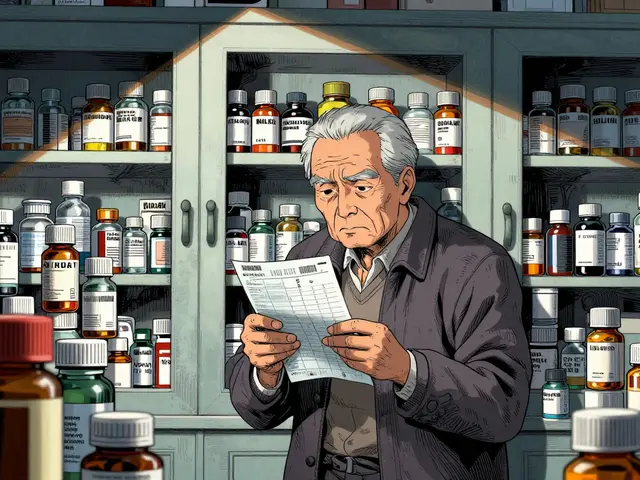
Imagine a surgeon standing in an operating room, ready to save a life, only to find the anesthesia drug missing from the cart. This isn't a rare glitch; it's a recurring reality for many healthcare providers. Medication shortages are situations where the national supply of a drug is inadequate to meet current or projected demand, a definition formally established by the FDA's Center for Drug Evaluation and Research (CDER). While the problem has existed for decades, it has evolved into a systemic crisis that impacts patient safety, hospital budgets, and physician workflows. If you manage a pharmacy, run a clinic, or work in supply chain logistics, understanding how to navigate these gaps is no longer optional-it’s critical for keeping care continuous.
The Current Landscape of Drug Scarcity
To manage what you can’t see, you first need to understand the scale. The American Medical Association (AMA) declared drug shortages an "urgent public health crisis" in 2023, noting that 80% of U.S. hospitals were affected. But the numbers tell a more nuanced story. In 2012, the American Society of Health-System Pharmacists (ASHP) reported 117 active shortages. By 2016, regulatory tweaks brought that number down to 23. However, the trend reversed sharply, rebounding to 98 documented shortages by 2020 and reaching 287 in 2022 according to FDA tracking. Today, the average duration of a shortage has stretched from 6.2 months in 2015 to nearly 10 months in 2022. For oncology drugs, the wait can exceed 14 months. This isn't just about running out of pills; it's about a fragile supply chain where 80% of active pharmaceutical ingredients (APIs) come from overseas, primarily China and India. When one link breaks, the whole system feels the strain.
Why Do Drugs Disappear? Identifying Root Causes
You might assume shortages happen because companies stop making drugs. Often, it’s more complicated. Dr. Janet Woodcock, former Acting FDA Commissioner, highlighted that manufacturing quality problems have consistently topped the list of reasons for shortages. In 2022, these issues accounted for 46% of all shortages, down from 62% between 2013 and 2017, but still the dominant factor. A single batch failure at a generic sterile injectable facility can wipe out months of supply. Since 63% of all drugs in shortage are generic sterile injectables-including baseline cancer therapies, IV antibiotics, and morphine-the vulnerability is concentrated in specific product types. Additionally, economic incentives play a role. The HHS White Paper on Supply Chain Vulnerabilities notes that Medicaid inflation rebates for outpatient generics create disincentives for manufacturers to invest in production reliability. If price increases are neutralized by rebates, why would a manufacturer spend millions to upgrade quality control? Understanding this economic friction helps explain why some shortages persist despite high demand.
Building a Proactive Response Team
Reactive measures fail when every hour counts. The Mountain Plains Regional Drug Handicapping and Rehabilitation Services (MPRDHRS) Demonstration Project Report from December 2024 outlines a specific composition for multidisciplinary teams that can act within 72 hours of identifying a shortage. Your team needs more than just pharmacists. You need purchasing and finance personnel with the liquidity to act quickly, IT staff who can implement data collection systems tracking medication error rates with 95% accuracy, and risk management professionals who can conduct patient safety assessments within 24 hours. Communications specialists must be ready to deliver updates within 4 hours of any decision point. Why such speed? Because 87% of hospital pharmacy directors report learning of shortages only when orders fail to arrive. By the time they know, the damage is often done. A proactive committee that meets weekly during normal operations but convenes within 4 hours of a shortage identification can shift the paradigm from panic to protocol.

Practical Strategies for Clinical Alternatives
When a drug vanishes, what do you give the patient instead? This is where clinical judgment meets logistical reality. Substitution is common but risky. In March 2023, Reddit discussions in r/pharmacy documented cases where pharmacists substituted morphine with hydromorphone due to shortages. While clinically viable, this transition resulted in a 15% increase in medication errors during the switch. To mitigate this, hospitals should maintain a pre-approved list of therapeutic equivalents for critical medications. The ASHP recommends maintaining buffer inventories of 14-30 days for critical meds, though financial constraints limit this to 8-12 days for 65% of safety-net hospitals. If you can’t stockpile, you must standardize. Create clear protocols for substitution that include dosage conversion charts and monitoring parameters. Train nursing staff on these alternatives through quarterly simulation exercises. Hospitals implementing these simulations saw 33% fewer medication errors during actual shortages. It’s not just about having the drug; it’s about knowing exactly how to handle its absence without compromising safety.
Navigating Regulatory and Supply Chain Realities
The U.S. approach to shortages relies heavily on voluntary manufacturer notifications under Section 506C of the FD&C Act. Compliance has been low, hovering around 65% as reported by ASHP in 2022. Compare this to France and Canada, which implemented mandatory reporting systems that reduced shortage duration by 37%. The U.S. Department of Health and Human Services (HHS) established a Supply Chain Resilience and Shortage Coordinator role in 2022 to strengthen coordination, but structural changes take time. Meanwhile, global dependencies remain a threat. With 80% of APIs manufactured overseas, geopolitical shifts or natural disasters in key regions can trigger cascading failures. Manufacturers are encouraged to develop Risk Management Plans (RMPs) that include hazard identification and supply chain mapping. For healthcare leaders, this means diversifying suppliers wherever possible. Dual sourcing-having two approved vendors for critical items-is a basic but effective strategy. It costs more upfront but saves lives downstream.
| Strategy | Effectiveness | Cost Impact | Implementation Time |
|---|---|---|---|
| Mandatory Reporting Systems | Reduced duration by 37% | Low administrative cost | Policy-dependent (long-term) |
| Strategic Stockpiles | Reduced impact by 52% (Germany model) | High capital expenditure | Immediate upon funding |
| Dual Sourcing | Prevents total supply loss | Moderate procurement overhead | 3-6 months for qualification |
| Simulation Training | 33% fewer medication errors | Low (staff time) | Quarterly cycles |

Economic Implications and Resource Allocation
Shortages aren't just a clinical headache; they're a financial drain. Hospitals spend an average of $218,000 annually managing each shortage, totaling approximately $1.2 billion industry-wide. Where does this money go? Overtime for pharmacists, expedited shipping fees, and the hidden cost of delayed procedures. The AMA’s 2023 member survey revealed that 43% of physician practices reported shortages directly impacting treatment decisions, with 17% delaying necessary procedures. For rural communities and safety-net hospitals serving Medicaid and uninsured patients, the impact is steeper. 78% of these facilities report having to cancel or delay procedures due to medication unavailability. When budgeting for 2026, consider allocating funds not just for inventory, but for contingency planning. This includes investing in IT systems that track real-time usage and supplier reliability scores. It’s an investment in resilience, not just storage.
Future Directions and Emerging Solutions
Is there hope? Yes, but it requires systemic change. The Brookings Institution’s 2023 policy analysis recommends advanced manufacturing technologies that could reduce facility changeover time from weeks to hours. If implemented across 50% of production capacity, this could decrease shortage frequency by 40%. The FDA’s draft guidance on manufacturer notifications, expected to finalize soon, projects a 25% improvement in early shortage detection. Long-term, the Congressional Budget Office projects that without significant policy changes, drug shortages will increase by 8-12% annually through 2030. The most vulnerable categories-oncology, anesthesia, and critical care medications-will see the steepest growth. To stay ahead, healthcare organizations must advocate for reimbursement reforms that reward manufacturing reliability. Dr. Scott Gottlieb argued that incentives throughout the supply chain must be reimagined. Until then, your best defense is a well-oiled, proactive internal process. Monitor the FDA’s Drug Shortage Database daily, keep your substitution protocols fresh, and train your team relentlessly. The drugs may not always be there, but your response can be.
What is the most common cause of medication shortages?
Manufacturing quality problems are the leading cause, accounting for 46% of shortages in 2022. These issues disproportionately affect generic sterile injectables, where a single batch failure can disrupt national supply chains.
How long do drug shortages typically last?
The average duration increased from 6.2 months in 2015 to 9.8 months in 2022. Oncology drugs experience the longest shortages, averaging 14.3 months.
What is the recommended buffer inventory for critical medications?
The ASHP recommends maintaining 14-30 days of buffer inventory for critical medications. However, financial constraints limit this to 8-12 days for 65% of safety-net hospitals.
How can hospitals reduce medication errors during shortages?
Implementing quarterly simulation exercises for multidisciplinary teams can reduce medication errors by 33% during actual shortages. Pre-approved substitution lists and standardized training are also critical.
Which countries have more effective shortage management systems?
France and Canada have implemented mandatory reporting systems that reduced shortage duration by 37% compared to the U.S. Germany’s strategic stockpiles reduced shortage impacts by 52% during the 2020-2022 period.






Posts Comments
Eunice Chen August 21, 2026 AT 15:31
typo alert but the point stands. we are so dependent on china and india for apis it makes my head spin. one factory fire and boom, no morphine. scary stuff.
Usha Ranji August 22, 2026 AT 02:37
It is interesting to see the data on generic sterile injectables. From a manufacturing perspective in India, the issue is often not just capacity but the regulatory burden that slows down batch releases. We see similar issues here when quality control fails, but the global impact is amplified because of the centralized supply chains. It is a complex web of logistics and compliance that needs attention beyond just the US borders.
sonia rockett August 23, 2026 AT 15:36
YES! finally someone talks about the proactive team aspect. I am so tired of reactive panic. You need IT people who can actually track usage in real time or you are flying blind. Stop waiting for the order to fail before you act. It is time to get aggressive with our supply chain diversification. We cannot keep relying on single sources for life-saving drugs. Let's fix this system now before another crisis hits.
Ella Mentry August 25, 2026 AT 06:37
Oh my gosh, did you guys read the part about the anesthesia drug missing from the cart? That literally happened to me last year and it was such a terrifying experience. I still have nightmares about it sometimes. The doctors were so stressed out and the patients didn't even know what was going on. It really shows how fragile our whole healthcare system is. I think we should all be more vocal about this because it affects everyone, not just the staff. It’s like walking a tightrope every single day in the hospital. Who else has had a close call like that? I feel like we need a support group for this kind of stress honestly.
Saher Ghattas August 25, 2026 AT 07:59
The narrative surrounding API dependency is largely constructed by pharmaceutical lobbyists seeking to justify price hikes. The true vector of disruption lies in the geopolitical maneuvering of state actors within the Sino-Indian economic blocs, which systematically throttle supply as a form of soft-power leverage. While the FDA cites 'quality issues,' the underlying mechanism is a deliberate decoupling strategy designed to force domestic re-shoring at premium valuations. The 46% figure for manufacturing defects is a red herring; it masks the intentional under-production caused by export restrictions. One must look beyond the surface-level compliance metrics to understand the macro-economic chess game being played. The 'voluntary notification' system is merely a facade for corporate opacity. Until the regulatory framework addresses the incentive structures favoring offshore production, the crisis will persist. It is not an accident; it is a feature of the current globalized supply chain architecture.
Darcy Galway August 27, 2026 AT 05:40
Good points. In Canada we also deal with this. It is hard when the drug is not there. We need better plans. Simple fixes help a lot. Thanks for sharing.
Jamaal Johnson August 28, 2026 AT 12:48
One must acknowledge the profound systemic fragility inherent in the contemporary pharmaceutical supply chain, a phenomenon that transcends mere logistical inconvenience to become a critical determinant of patient mortality and institutional fiscal stability. The juxtaposition of the 287 documented shortages in 2022 against the optimistic projections of advanced manufacturing technologies reveals a stark dissonance between policy aspiration and operational reality, particularly when one considers that 80% of active pharmaceutical ingredients remain tethered to overseas production hubs susceptible to geopolitical volatility. Furthermore, the reliance on voluntary manufacturer notifications, with a compliance rate hovering precariously around 65%, suggests a regulatory framework that is fundamentally ill-equipped to preemptively mitigate the cascading effects of supply disruptions, thereby necessitating a paradigm shift towards mandatory transparency mechanisms akin to those implemented in France and Canada. The financial implications, quantified at approximately $1.2 billion industry-wide annually, underscore the urgent need for strategic resource allocation that prioritizes resilience over immediate cost containment, a principle that remains elusive in the current landscape of budget-constrained safety-net hospitals. Consequently, the imperative for multidisciplinary coordination, encompassing pharmacists, IT specialists, and risk management professionals, is not merely advisable but existential, given that 87% of pharmacy directors only learn of shortages upon order failure, a reactive posture that invariably compromises clinical efficacy and patient safety. It is therefore incumbent upon healthcare leadership to advocate for reimbursement reforms that incentivize manufacturing reliability, while simultaneously investing in robust IT infrastructure capable of tracking real-time usage and supplier performance with unprecedented precision. The path forward demands a holistic approach that integrates clinical judgment with logistical foresight, ensuring that the absence of a specific medication does not translate into the absence of care. This is not merely a challenge of procurement; it is a test of institutional integrity and adaptive capacity in an era of increasing uncertainty.
Rachel Robinson Interiors August 30, 2026 AT 08:04
You make a great point about the IT systems. Tracking real-time usage is key. I think many hospitals underestimate how much data can help prevent these shortages. Keep up the good work highlighting these strategies. It is very helpful for us to see practical solutions rather than just problems.
Jesse Barlau September 1, 2026 AT 07:11
While the discussion regarding the 15% increase in medication errors during substitution is certainly valid, it is important to contextualize this statistic within the broader framework of human factors engineering and the inherent cognitive load placed on clinical staff during periods of high-stress resource scarcity, which often leads to a phenomenon known as 'alert fatigue' where the sheer volume of alerts and protocol changes can paradoxically reduce vigilance rather than enhance it. Furthermore, the recommendation for quarterly simulation exercises, while laudable in its intention to build muscle memory, requires a nuanced understanding of organizational culture and change management principles, as without a sustained commitment to debriefing and iterative refinement of these simulations, they risk becoming rote performances that do not truly translate into improved real-world decision-making capabilities under pressure. Additionally, the economic argument for dual sourcing, while sound in theory, must be weighed against the opportunity costs associated with maintaining multiple vendor relationships, including the administrative overhead of qualification audits and the potential for diluted purchasing power, which can sometimes negate the savings gained from avoiding total supply loss. Therefore, a balanced approach that integrates these various perspectives-clinical, logistical, economic, and cultural-is essential for developing a resilient shortage management strategy that is both sustainable and effective in the long term.
Write a comment