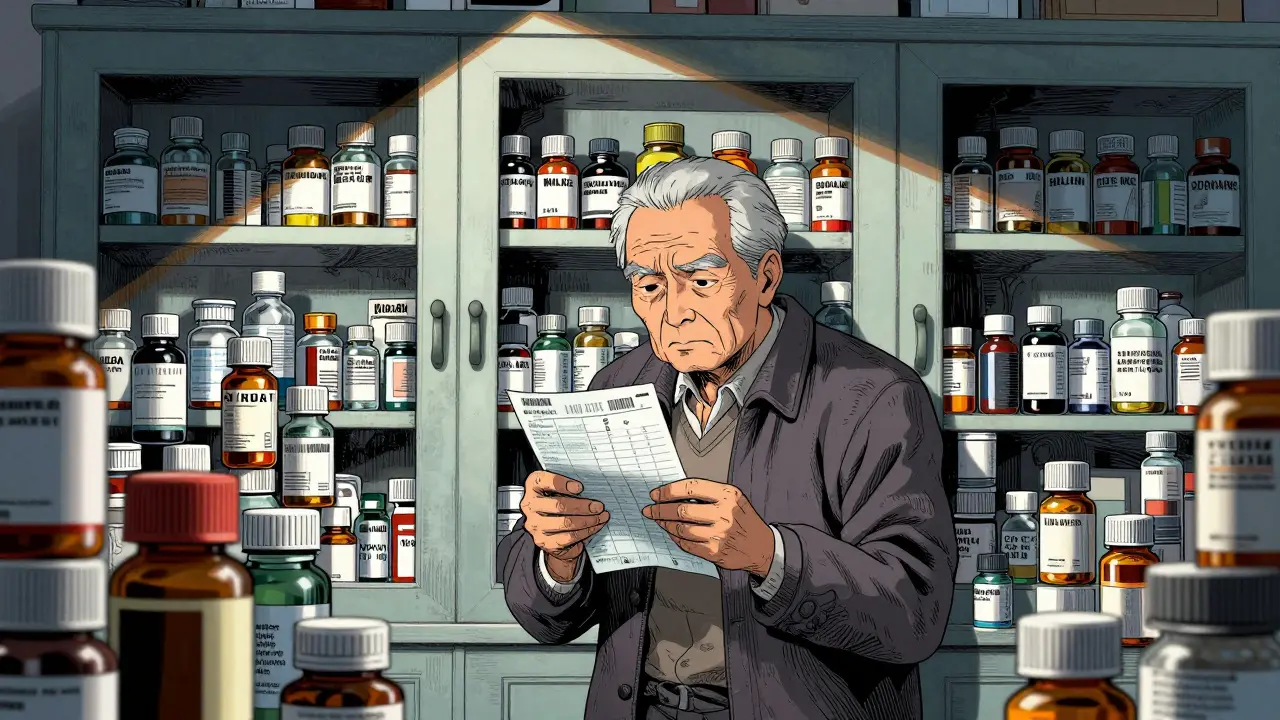
Pile up the pill bottles until they tower over your medicine cabinet, and suddenly the monthly budget feels tighter. It happens often: you take five different medicines, and each bill adds up to hundreds every month. Many people assume they have to stay on every prescription forever. That isn't always true. In fact, carrying too many medications often does more harm than good.
Deprescribing is the systematic process of identifying and discontinuing medications when their potential harms outweigh their benefits. It is not just about stopping; it is about optimizing what you actually need. Think of it as decluttering your medical life. By working closely with your healthcare team, you can reduce side effects and lower your spending without losing protection against illness.
Understanding the Burden of Too Many Pills
Before you can fix the problem, you need to see clearly why it exists. Doctors often prescribe treatments for multiple conditions, sometimes unaware that another specialist added another pill last week. This leads to a situation known as polypharmacy, which involves taking five or more medications daily. It affects roughly 41% of older adults, according to medical literature from internal medicine journals.
Why is this risky? Each additional pill increases the chance of interactions. One study noted that preventing a single hospitalization due to medication issues saves substantial costs-averaging thousands in emergency care alone. For patients on fixed incomes, these extra expenses can be devastating. The goal isn't to ignore your health, but to make sure every capsule or tablet serves a necessary purpose.
The Financial Case for Reducing Medications
You might worry that cutting back means sacrificing quality care. Actually, structured reviews often show the opposite. Large health organizations have tracked the results of medication reviews specifically focused on removing unnecessary drugs. For instance, data from major health networks indicates that eliminating inappropriate medications can save significant amounts annually per patient.
Consider the math: if you discontinue one non-essential medication costing $50 a month, that is $600 saved in a year. Multiply that by two or three redundant drugs, and you free up funds for food, travel, or other essentials. Furthermore, avoiding adverse events means fewer trips to the clinic and less time off work caring for yourself. The economic impact extends beyond personal savings; healthcare systems globally recognize that reducing drug load prevents expensive complications.
Preparing for Your Medical Appointment
Walking into a surgery without preparation rarely yields results. Time is precious during consultations, usually limited to fifteen minutes. To maximize this time, you should prepare before you sit down. Bring a brown bag review approach. This means collecting every single container you use-prescription bottles, vitamins, herbal supplements, and painkillers-and placing them in a bag to show your doctor.
Create a list alongside the physical items. Write down exactly what each medication is for, how much it costs, and any side effects you experience. Questions are vital. Ask directly: "Can this cause memory problems or falls?" or "Is this still helping my blood pressure after ten years?" Research suggests that physicians report discussions are far more productive when patients bring organized documentation to the visit. Being prepared signals that you are invested in your safety and willing to collaborate.
| Feature | Continuing Current Regimen | Structured Deprescribing |
|---|---|---|
| Monthly Cost | High and Cumulative | Limited and Targeted |
| Side Effects | Potentially Higher Risk | Significantly Reduced Risk |
| Hospitalization Risk | Increased likelihood of drug interactions | Lower risk of adverse events |
| Mental Clarity | Often impacted by sedating meds | Frequently improved after reduction |

Guidelines Safe Discontinuation Strategies
Never stop critical medicines on your own overnight. Abrupt withdrawal can be dangerous. Some drugs, like blood pressure medication or antidepressants, require a tapering schedule. This involves lowering the dose gradually over weeks or months. Your doctor or pharmacist monitors you during this phase to catch any withdrawal symptoms immediately.
Experts recommend stopping one medication at a time. Trying to drop everything simultaneously makes it impossible to tell which change caused a reaction. A typical process might span four to twelve weeks for a single agent. During this period, you track how you feel using a diary or app. Regular follow-ups are mandatory. If your condition remains stable without the drug, the dose reduction continues until it is gone entirely.
Relying on Trusted Criteria and Resources
Medical professionals rely on established standards to determine what is safe to stop. The Beers Criteria is a widely used list of drugs that may be inappropriate for older adults due to high risk of side effects. There are dozens of entries on this list, including certain sleep aids and bladder medications that might increase fall risks.
Community pharmacists also play a crucial role. They often have more time than your general practitioner to discuss details. Under schemes like the NHS Repeat Dispensing Service or private consultations, pharmacists can identify cheaper alternatives or redundant supplements. Research indicates pharmacists can help uncover over $1,000 in annual savings per patient through these consultations. Do not overlook their expertise when negotiating your regimen.

Safety Signals and Monitoring Protocols
Sometimes we are told that we need lifelong therapy, yet bodies change. A 2019 study highlighted that 12% of patients saw blood pressure rebound issues when antihypertensives were cut too fast. This highlights why monitoring is non-negotiable. You need a plan for what happens if symptoms return.
Look out for signs like dizziness, confusion, or returning pain. These could signal the dose was reduced too quickly. Keep open communication lines with your primary care physician. If you are feeling better, that is progress. If you feel worse, you may need to reverse the step temporarily. The ultimate goal is long-term stability, not speed.
Real Experiences with Medication Reduction
Stories from patient forums reveal the tangible benefits. A senior citizen recently shared that reviewing their medication list removed three unneeded drugs. She saved roughly £600 a year on the spot. Another user stopped a vitamin supplement costing nearly £100 monthly after blood tests proved levels were normal. These aren't outliers; they represent the potential for almost anyone managing chronic issues.
However, caution is still key. A survey found that nearly 20% of people attempting to stop drugs without supervision faced unexpected costs because they needed emergency attention. Self-directed stopping misses safety checks. Always involve a professional. When done right, the satisfaction rates from programs like structured medication management are incredibly high, with most participants reporting better overall health.
Questions About Deprescribing and Safety
Is it safe to deprescribe all my medications?
No, never attempt to stop all medications at once. Deprescribing is a selective process where a doctor evaluates each drug individually based on current benefit versus harm. Safety requires slow tapering and professional oversight.
How do I prepare for a medication review appointment?
Prepare a list of all prescriptions, over-the-counter drugs, and supplements. Gather the actual bottles in a bag. Write down side effects you notice and ask questions about necessity before the appointment.
What is the Beers Criteria?
It is a guideline tool listing potentially inappropriate medications for older adults. Doctors use it to identify drugs that pose higher risks of side effects compared to their benefits, such as certain sleeping pills or bladder medications.
Can I negotiate lower drug costs with my GP?
Yes, ask your doctor if a cheaper alternative or generic version exists. Sometimes switching brands or formulation types can maintain efficacy while significantly reducing out-of-pocket costs for the patient.
How long does the deprescribing process take?
Typically, reducing one medication takes between four to twelve weeks. This slow pace allows your body to adjust and prevents dangerous withdrawal symptoms or condition relapses.







Posts Comments
Rod Farren April 1, 2026 AT 15:53
Polypharmacy often leads to clinically significant drug-drug interactions that compromise metabolic clearance rates in hepatic pathways. When patients accumulate five or more distinct pharmaceutical agents the bioavailability of primary active compounds begins to decline sharply. Many practitioners overlook the cumulative anticholinergic burden which silently elevates fall risks during ambulation phases. We must consider the renal filtration rate before adjusting dosages for elderly populations receiving beta-blockers alongside diuretics. Tapering schedules require strict adherence to half-life kinetics to prevent withdrawal syndromes from resurfacing. Clinical guidelines suggest reducing one agent every four weeks rather than simultaneous discontinuation events. Monitoring vitals weekly ensures hemodynamic stability remains intact throughout the process. Some patients exhibit paradoxical hypertension responses when chronic sedatives are removed too rapidly without backup support. Pharmacists possess unique access to full dispensing histories allowing deeper analysis of duplicate therapies. Beers criteria lists specifically target drugs with high toxicity profiles relative to current therapeutic benefit indices. Adherence to structured protocols minimizes hospital admission rates due to medication adverse events significantly. Cost savings emerge naturally as redundant prescriptions get flagged during comprehensive medication reviews by specialists. Generic substitution options often provide identical therapeutic equivalence at lower financial burdens for insured members. Insurance formularies prioritize tiered pricing structures which incentivize moving toward safer drug classes automatically. Patient education materials must clarify the distinction between symptom suppression versus actual disease modification mechanisms. Long term outcomes improve drastically when polypharmacy is managed through systematic deprescribing initiatives led by geriatric experts.
Sharon Munger April 3, 2026 AT 14:12
I agree completely with what you wrote there about the safety protocols and it is important to listen to professionals who know the science behind it all. We all want to stay safe and healthy for our families so taking care is good and the tapering schedule makes sense to avoid bad reactions later on. Thank you for sharing such detailed info about the kidney function issues.
Julian Soro April 4, 2026 AT 03:53
It feels great to take control back over your health journey instead of just swallowing pills blindly. I found my own doctor was surprised when I brought the brown bag in with everything. Sometimes we forget that our bodies change and old prescriptions stop working well after a few years. Saving money on meds really adds up when you calculate the yearly costs of generic drugs alone. You have to advocate for yourself strongly because doctors are often rushed during short appointments. My energy levels went way up after stopping a few unneeded supplements that were causing fatigue. Listening to your own intuition about how the drugs make you feel is super important always. Building a partnership with your pharmacist can open doors to cheaper alternatives that work just as well. Don't rush the process because safety comes before savings every single time. Small changes lead to big improvements in quality of life down the road eventually. Trust your team but keep asking for updates on why each med stays on the list forever.
Russel Sarong April 6, 2026 AT 00:55
Oh wow this really hits home for me because my dad struggles with too many pills! It is absolutely terrifying to think about the side effects building up slowly! We have to be brave enough to speak up or else nothing changes ever! Safety is paramount and nobody should risk their life on guesswork! The fear of losing protection is real but the risk of harm is higher! Let us stand together against unnecessary medication overload! This community support means the world to those who feel unheard! Please keep spreading this message everywhere you go! It could save lives literally!
Jenny Gardner April 6, 2026 AT 17:47
This is exactly what so many of us have been struggling with for quite a long time now!!! I love reading these kinds of posts because they empower us to fight the system! Everyone notices how much the pharmacy bill goes up each year and it is insane honestly! We need to demand better care from our healthcare providers immediately! Share your stories if you saved money recently! It would help everyone see the real value here! Communication is key and we should all talk more openly! Keep fighting for what you deserve!
Owen Barnes April 8, 2026 AT 02:45
It is highly imperative that we maintain respect in these discusions regarding healthcare policy. Your enthusiasm is noteable but some points require more cluclation of cost factors. We shold not forget the regulatory framwork that limits rapid changes in prescription habits. Formal agreements between patient and doctor remain the safest path forward always. Mistakes in spelling aside the sentiment is correct about advocacy though.
Callie Bartley April 10, 2026 AT 00:37
Sure, let's all trust our own judgment over trained medical professionals who actually know best.
Molly O'Donnell April 11, 2026 AT 10:12
Wrong. Evidence based medicine supports patient involvement in decisions. Studies show improved outcomes with shared decision making models. Patients often spot redundancies better than overworked staff. Ignoring personal symptoms leads to worse health results eventually. Stop dismissing valid concerns.
Write a comment