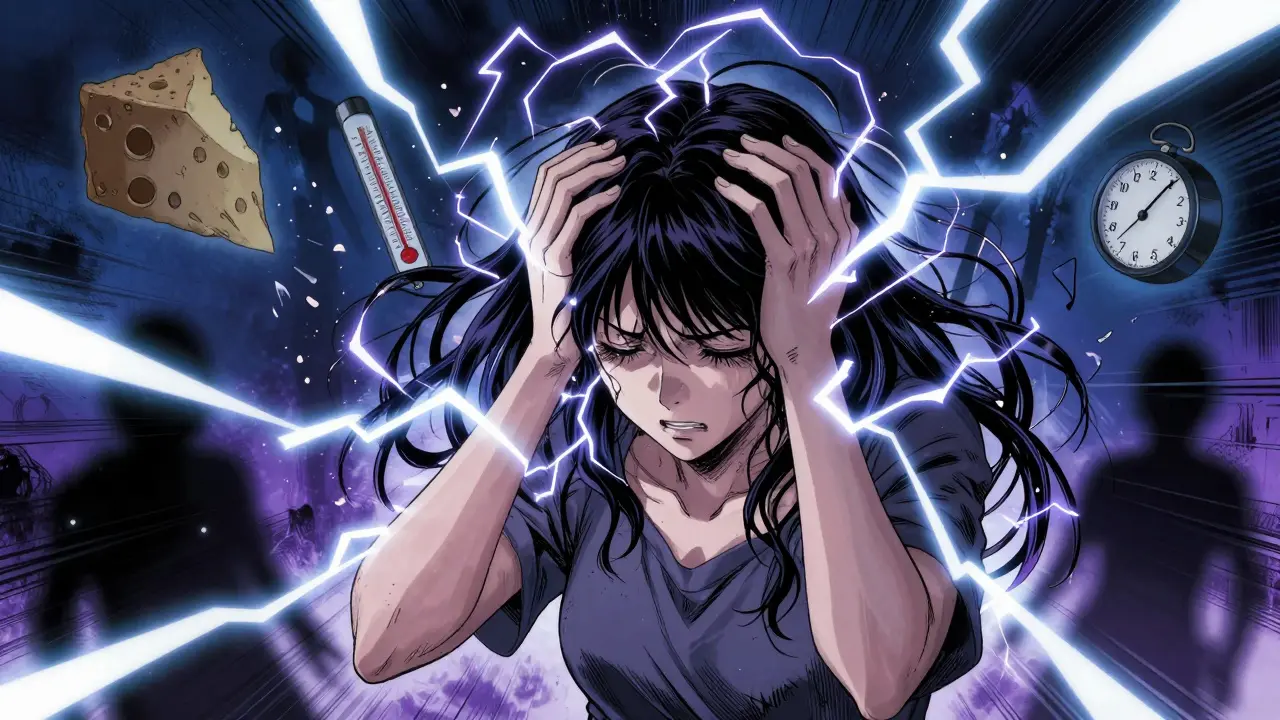
When a migraine hits, it’s not just a headache. It’s a neurological storm - pounding pain on one side of your head, sensitivity to light and sound, nausea, and sometimes a warning sign called an aura that makes you see flashing lights or feel numbness. For more than a billion people worldwide, this isn’t rare. It’s a regular part of life. And while there’s no cure, there are real, science-backed ways to stop attacks when they come and reduce how often they happen. The key is knowing which tools work for which situation - and when to use them.
What Makes a Migraine Different From a Regular Headache?
Not all head pain is the same. A tension headache feels like a tight band around your head. A migraine is deeper, throbbing, and often one-sided. It lasts between 4 and 72 hours. You can’t just push through it. Physical activity makes it worse. Bright lights or loud noises feel unbearable. Nausea is common. The International Classification of Headache Disorders (ICHD-3), updated in 2018 and still the gold standard, defines these symptoms clearly. Doctors don’t need an MRI or CT scan to diagnose it - they just need to hear your story. When you describe the pattern, the timing, the triggers, and the symptoms, a specialist can identify migraine with 95% accuracy.Preventing Migraines: The Long Game
If you’re having headaches 15 or more days a month, you’re likely dealing with chronic migraine. That’s when prevention becomes essential. The goal isn’t just to reduce pain - it’s to get your life back. Studies show that if you can cut your headache days by half, your quality of life improves dramatically. That’s measured using tools like the Migraine Disability Assessment (MIDAS), which tracks how often you miss work, school, or family time because of pain. Medications are the first line of defense. Beta-blockers like propranolol and metoprolol have been used for decades. They’re cheap, generic, and work for about half of people who try them. Anticonvulsants like topiramate are also common, but they come with side effects - brain fog, memory lapses, trouble finding words. One in two people stop taking topiramate within six months because of this. Valproate works too, but it’s not safe for women who might get pregnant. Then there’s the newer wave: CGRP monoclonal antibodies. These are injections - monthly or quarterly - that block a protein in the brain linked to migraine. Erenumab, fremanezumab, galcanezumab, and eptinezumab are the main ones. They cut migraine days by half for 50 to 62% of users. Side effects? Usually just mild injection site reactions. No brain fog. No weight gain. But they cost $650 to $750 a month. Insurance often denies them unless you’ve tried at least three older drugs first. Only 35% of eligible patients get them because of this barrier. For chronic migraine, Botox is FDA-approved. It’s not cosmetic here - it’s medical. You get 31 to 39 shots across your head and neck every 12 weeks. In clinical trials, it reduced headache days by nearly 8.5 per month. That’s more than two full days of relief. Non-drug options are growing fast. The Cefaly device is a headband you wear for 20 minutes a day. It sends gentle pulses to nerves above your eyebrows. In one study, 38% of users saw their migraine days drop by half. No pills. No side effects. The gammaCore device stimulates the vagus nerve in your neck with a handheld unit - you use it three times a day. Both are covered by some insurance plans, but not all. Mindfulness and stress reduction also help. An 8-week program of meditation and breathing exercises cut headache days by 1.4 per week in a 2022 JAMA Neurology study. It’s not a magic fix, but it’s a tool that works alongside everything else.Stopping a Migraine in Its Tracks
When the pain starts, time matters. The sooner you treat it, the better the chance it stops. Experts say treat within 20 minutes of the first sign - whether it’s the aura, the dull ache, or the nausea. For mild attacks, over-the-counter painkillers like ibuprofen (400 mg) or naproxen (500 mg) can help. They work for about 25% of people. Add caffeine (like in Excedrin Migraine) and the chance of relief goes up. But here’s the danger: if you use these more than 10 days a month, you risk turning episodic migraine into chronic. Medication-overuse headache is real. One in five people who rely on daily painkillers end up with daily headaches themselves. Triptans are the gold standard for moderate to severe attacks. Sumatriptan, rizatriptan, eletriptan - there are seven types. They work by narrowing blood vessels in the brain and blocking pain signals. About 40% of users are pain-free within two hours. But they’re not for everyone. If you have heart disease, high blood pressure, or a history of stroke, triptans can be dangerous. Side effects include chest tightness (reported by 63% of users) and drowsiness (45%). Newer options like gepants (ubrogepant, rimegepant) and ditans (lasmiditan) are changing the game. They don’t constrict blood vessels, so they’re safe for people who can’t take triptans. Rimegepant is also approved for prevention - the first drug that works both ways. In user forums, 74% say rimegepant is better tolerated than sumatriptan. But insurance still fights coverage. Anti-nausea drugs like metoclopramide or prochlorperazine are often given in ERs. They don’t stop the headache, but they stop the vomiting and let other meds work better. One study showed 70% of patients had nausea relief within 30 minutes. Never use opioids or barbiturates for migraine. The American Headache Society says they’re dangerous. They don’t work better than other options, and they lead to addiction and medication-overuse headaches. Yet, some doctors still prescribe them - especially in emergency rooms where quick fixes are tempting.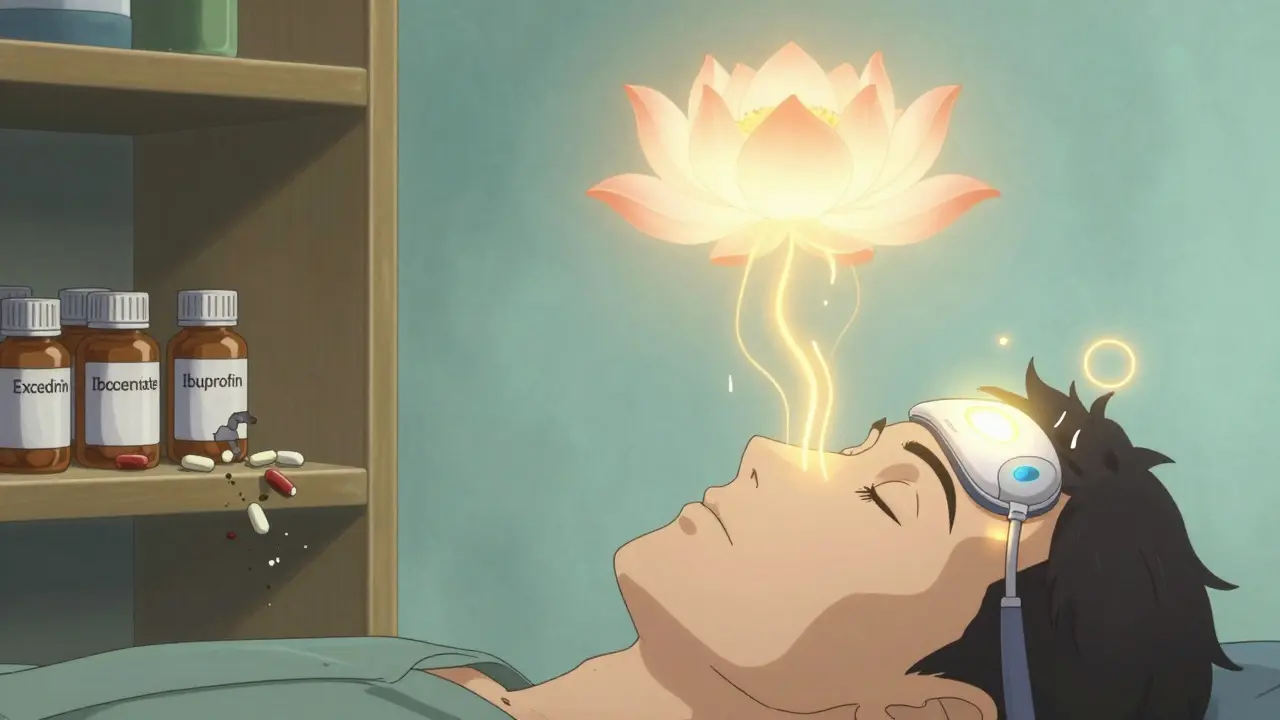
Real Stories, Real Challenges
People with migraine aren’t just statistics. In a 2023 survey of over 1,200 patients, 68% said keeping a headache diary helped them spot triggers. Common ones? Stress (89%), sleep changes (65%), weather shifts (72%), and foods like aged cheese or red wine (58%). One woman in Bristol said, “I didn’t realize my migraines spiked every time the barometric pressure dropped - now I know to rest on those days.” But access is uneven. One Reddit user wrote: “I got approved for rimegepant after six denials. Took three months. My employer’s plan won’t cover CGRP drugs unless I’ve tried 10 other meds first.” Another shared: “I used Excedrin every day for two years. Then I had headaches every single day. I had to detox for six months. It was brutal.” On the flip side: “Cefaly cut my migraines from 25 days a month to nine. No side effects. I’ve tried 12 pills. This was the first thing that worked.”What Works Best Together
The best outcomes come from combining approaches. The American Registry for Migraine Research tracked 5,217 people. Those who used both acute and preventive treatments had a 62% chance of cutting their headache days by half. Those who used only one? Just 45%. That means: if you’re on a monthly CGRP injection, you still need a rescue medication for breakthrough attacks. If you’re using triptans, you should also be tracking triggers and avoiding them. If you’re on topiramate, you might need to add a neuromodulation device to reduce the dose and cut side effects.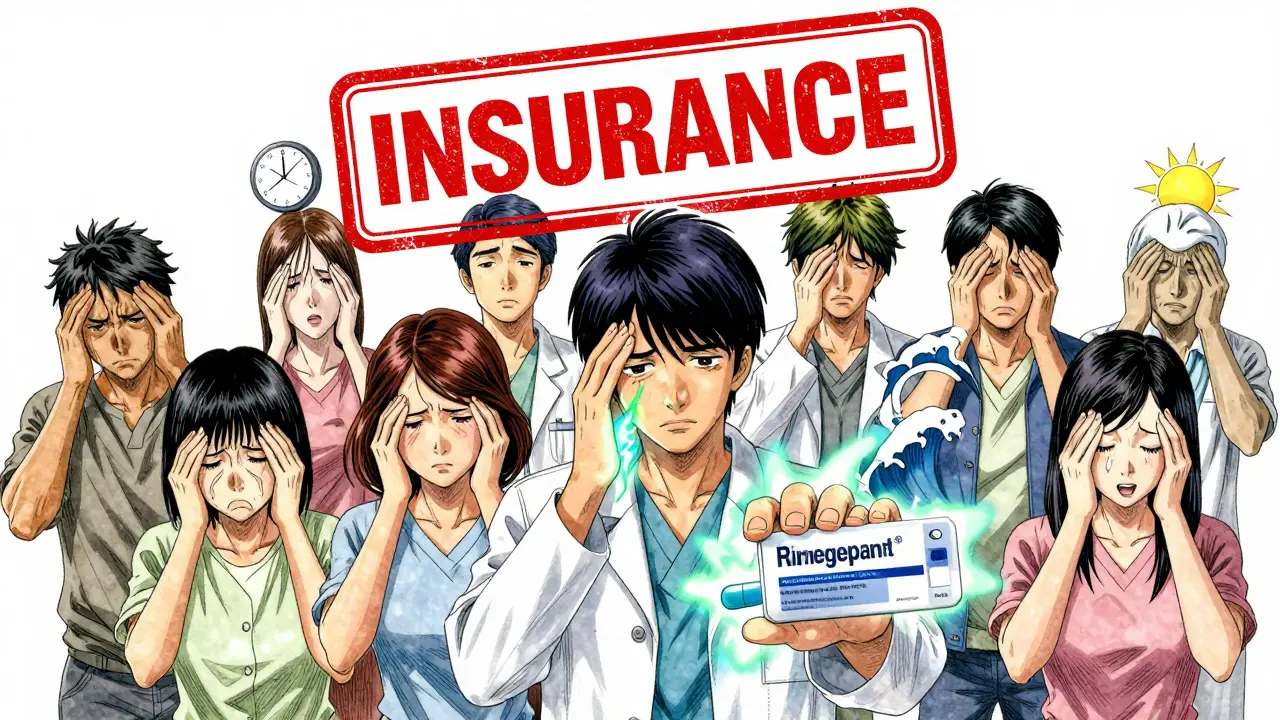
What’s Next?
The future is personalized. In 2023, the FDA approved atogepant - a pill that works as both an acute and preventive treatment. It’s the first dual-action CGRP blocker. Clinical trials showed 41% of users cut their migraine days by half. Wearables are getting smarter. Apps like Relieve use data from smartwatches to predict attacks before they start. In a 2023 trial, users saw a 32% drop in headache days just by acting on early warnings. Gene therapy and brain stimulation devices are in early testing. But the biggest hurdle isn’t science - it’s access. Insurance still blocks new drugs. Doctors aren’t always trained in migraine care. Only 4.5 million of the 40 million Americans with migraine see a specialist.What You Can Do Today
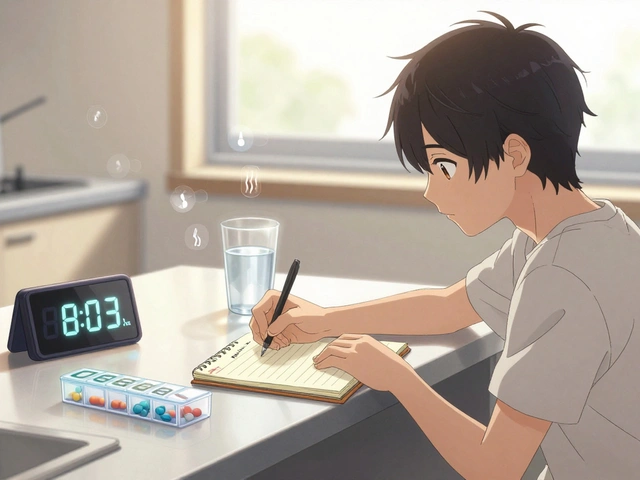
Start simple. Keep a daily log. Note: what you ate, how much you slept, your stress level, and when the pain started. Use an app - paper diaries get lost. After three months, patterns will emerge. Talk to your doctor about your treatment goals. Are you trying to cut your headache days in half? Or eliminate them entirely? That changes what options make sense. Don’t accept pain as normal. Migraine is a neurological disorder - not just bad luck. You deserve treatment that works. And with the right mix of prevention, acute care, and lifestyle changes, many people do get their lives back.





Posts Comments
Mike Rengifo December 18, 2025 AT 07:14
Been dealing with migraines since college. Cefaly was the first thing that actually helped. No brain fog, no pills. Just wear it for 20 mins and go about my day. Still use triptans when it hits hard but now I’m not dependent on them.
Kinnaird Lynsey December 19, 2025 AT 06:18
Interesting how everyone talks about drugs like they’re the only solution. Meanwhile, people are still getting prescribed opioids like it’s 1998. I mean… really?
Anna Sedervay December 19, 2025 AT 17:01
One must consider the epistemological framework underpinning migraine management. The pharmaceutical-industrial complex has co-opted neurology to commodify suffering, rendering patients dependent on exorbitantly priced monoclonal antibodies while ignoring the ontological roots of neural dysregulation in the context of late-stage capitalism. CGRP inhibitors are not cures-they are palliative distractions engineered to sustain profit margins.
Furthermore, the FDA’s approval of atogepant as a dual-action agent represents a performative gesture toward innovation, yet fails to address the systemic erosion of primary care infrastructure that renders even basic headache diaries inaccessible to the underinsured.
It is not the patient’s fault they cannot afford $700/month injections. It is the failure of a healthcare apparatus that conflates efficacy with marketability.
And yet, we are told to ‘just track your triggers’ as if stress and barometric pressure are choices.
How quaint.
Andrew Kelly December 20, 2025 AT 15:20
They say avoid cheese and wine but I’ve had migraines after eating kale smoothies. And I’m pretty sure my neighbor’s Wi-Fi router triggers them. You ever notice how the headaches always start when the cable guy comes over? Coincidence? I think not.
Also, the government is hiding the real cause. It’s the 5G towers. They’re pulsing at the exact frequency that agitates the trigeminal nerve. They’ve been doing it since 2015. Ask anyone who lived in Portland before the rollout.
benchidelle rivera December 21, 2025 AT 08:04
People keep saying ‘just use a diary’ like it’s magic. Have you ever tried keeping a daily log while working 60-hour weeks, caring for a toddler, and managing chronic pain? It’s not a lifestyle tip-it’s a privilege. And you know what? The fact that you think it’s that simple is why people like me get dismissed by doctors who think we’re just stressed.
Glen Arreglo December 23, 2025 AT 04:41
Look, I’ve been to three neurologists and they all gave me different advice. One said topiramate, one said Botox, one said ‘try yoga.’ Meanwhile, my insurance won’t cover the one thing that actually works-the CGRP drug-because I didn’t try 12 other pills first. That’s not medicine. That’s bureaucratic hazing.
And don’t get me started on the ‘non-drug options.’ I don’t have time to wear a headband for 20 minutes a day. I work two jobs. My migraine isn’t a wellness trend.
Chris Davidson December 23, 2025 AT 22:32
Triptans are overrated. I’ve been on them for 12 years. They work for maybe 30% of attacks. The rest? Just wait it out. The body clears it eventually. You don’t need to treat every single one. Let your nervous system reset. Overmedicating is the real problem.
Matt Davies December 24, 2025 AT 04:25
Man, I tried everything. Pills, patches, headbands, acupuncture, even that weird vibrating neck thing. Then I started walking 45 minutes every morning-no phone, just me and the birds. Turns out, moving your body and breathing fresh air does more than half the meds ever did. I’m not saying ditch the science, but don’t ignore the damn basics.
shivam seo December 26, 2025 AT 00:36
US healthcare is a joke. You need to be rich to get real treatment. In Australia we just take paracetamol and suck it up. If you can’t handle pain, maybe you shouldn’t be alive. I’ve had migraines since I was 14. Never saw a doctor. Still here.
Ashley Bliss December 26, 2025 AT 14:26
They say migraine is neurological. But what if it’s spiritual? What if it’s the soul screaming because we’ve forgotten how to rest? We’re not just treating pain-we’re treating a civilization that worships productivity over peace. I had my first migraine after I stopped saying no. That’s when I knew: the body doesn’t lie. It just screams louder when you’re too busy to listen.
And the drugs? They’re just bandages on a wound that’s been festering since the Industrial Revolution.
My aura was a golden light. That’s not a neurological glitch. That’s my soul trying to come home.
Isabel Rábago December 27, 2025 AT 06:19
Stop taking Excedrin every day. I did it for three years. Ended up with daily headaches. Detox was hell. But I’m finally free. You don’t need to suffer forever. Just stop the cycle.
Write a comment