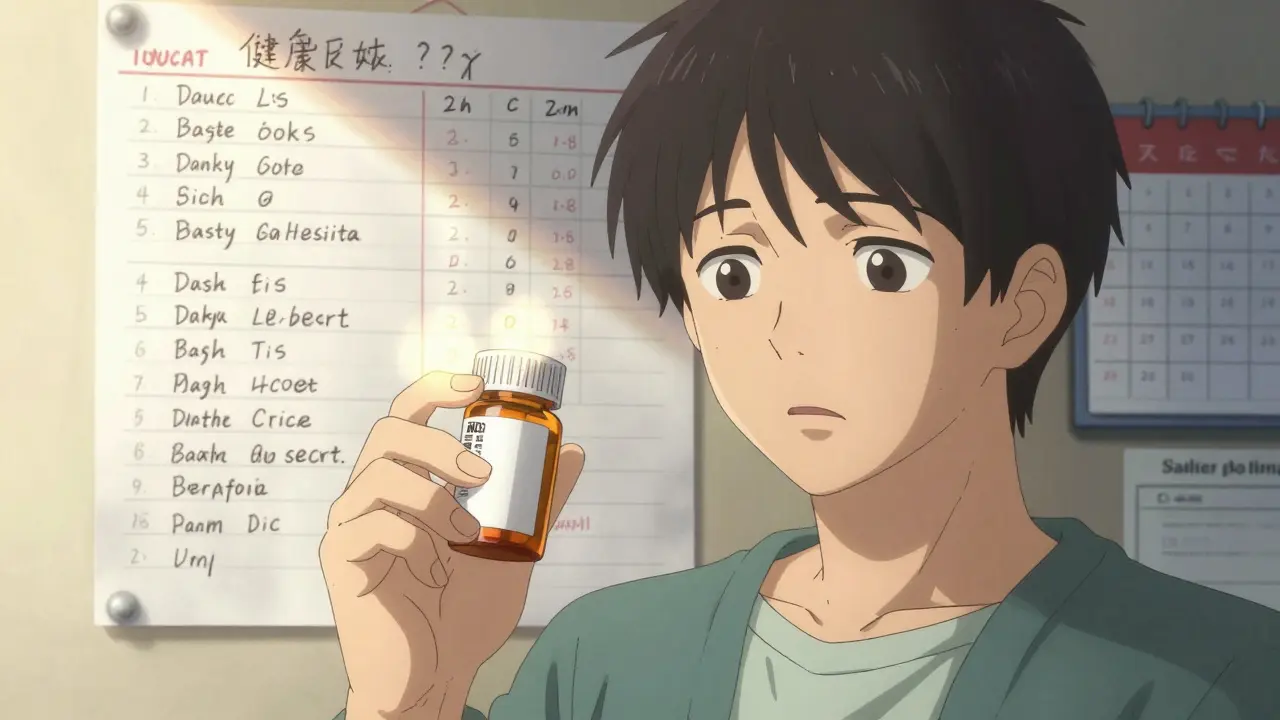
Switching from a brand-name drug to a generic version is one of the most common changes in modern healthcare. In the U.S., generics make up 92.6% of all prescriptions filled. In the UK, the NHS relies on them to keep costs down and care accessible. Most people switch without a hitch. But for some, even small changes in how a medicine works can trigger unexpected effects. That’s why monitoring your health after switching to generics isn’t optional-it’s essential.
Why Some People Notice a Difference
Generic drugs contain the same active ingredient as their brand-name counterparts. They’re required by law to deliver the same amount of medicine into your bloodstream at the same rate. The FDA calls this bioequivalence. For most drugs, that’s enough. But not all medicines are created equal.Drugs with a narrow therapeutic index leave little room for error. A tiny change in blood levels can mean the difference between effective treatment and dangerous side effects. These include:
- Warfarin (blood thinner)
- Levothyroxine (thyroid hormone)
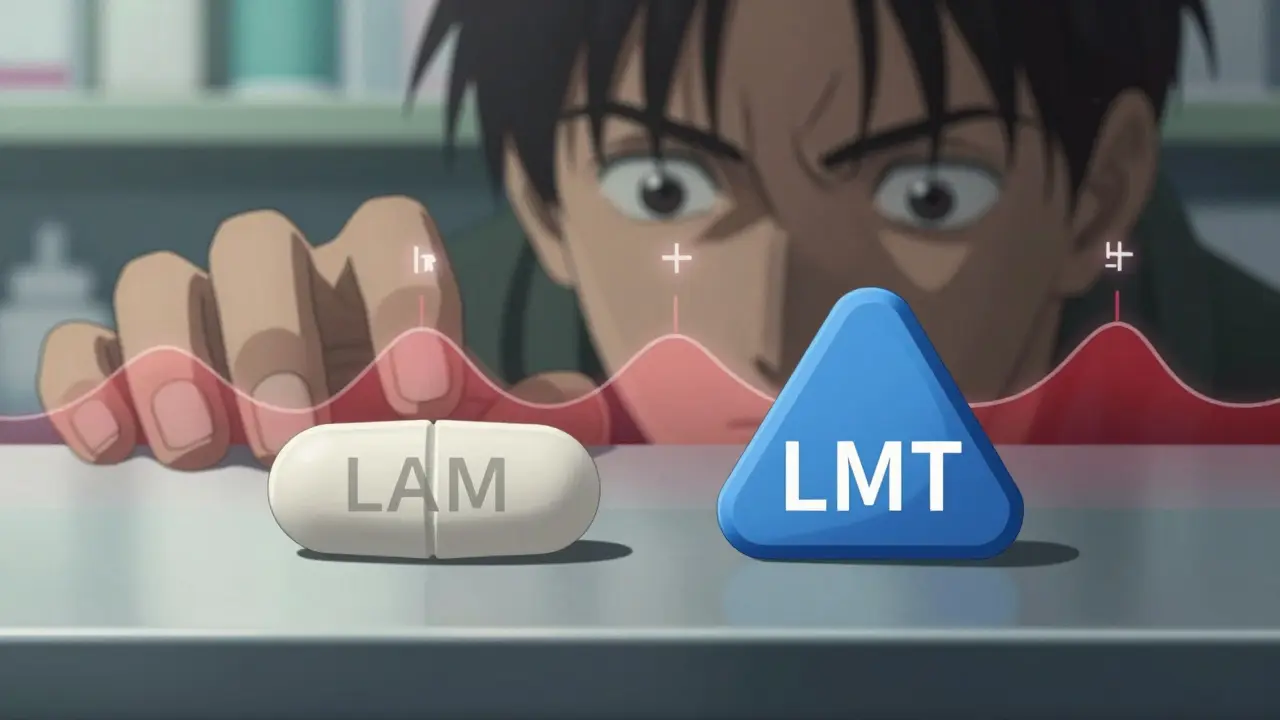
- Lamotrigine and carbamazepine (anti-seizure drugs)
- Some antidepressants like bupropion
- Certain heart medications like digoxin
Studies show that even with strict bioequivalence rules, a small percentage of patients report changes after switching. In one analysis of 42,000 patients, 7.3% noticed some variation in symptoms. Only 1.2% needed medical help. But for those people, those changes were real-and sometimes serious.
What to Track After the Switch
You don’t need to become a medical expert. But you should pay attention to how you feel-and keep a simple record.For the first 30 days after switching, write down:
- Any new or worsening symptoms (dizziness, fatigue, mood swings, tremors)
- Changes in how you sleep, eat, or move
- Any side effects you didn’t have before (rashes, nausea, headaches)
- Relevant measurements: blood pressure, blood sugar, heart rate, peak flow (if you have asthma), seizure frequency
For thyroid patients on levothyroxine: get your TSH levels checked at 4 and 8 weeks. For diabetics: check your HbA1c at 6 weeks. For people on seizure meds: log seizure counts daily for at least 30 days.
Don’t wait for a crisis. If you feel off-even a little-write it down. That note could be the key to catching a problem early.
Check the Pill, Not Just the Prescription
Generics come from different manufacturers. One company’s version of lamotrigine might have a slightly different filler than another’s. That’s legal. But those fillers can affect how fast the drug dissolves in your body.Every pill has a National Drug Code (NDC) printed on the packaging. It’s a 10- or 11-digit number. If your refill looks different-color, shape, size, or markings-check the NDC. If it changed from your last bottle, ask your pharmacist: “Is this the same generic as before?”
Some pharmacies switch manufacturers without telling you. You might get the same drug, but from a different factory. That’s fine-unless you’re one of the few people who reacts to a specific formulation. Keeping track of the NDC helps you spot patterns.
When to Call Your Doctor
You don’t need to panic. But you should act if:- Your symptoms worsen within 2 weeks of switching
- You develop new side effects that don’t go away
- Your condition becomes harder to control (e.g., more seizures, unstable blood sugar, higher blood pressure)
- You feel like you’re backsliding after feeling stable for months
Don’t stop taking your medicine on your own. Talk to your doctor first. They can order blood tests, adjust your dose, or switch you back. Many doctors will re-prescribe the brand-name version if there’s clear evidence it’s better for you.
For drugs like warfarin or levothyroxine, your doctor should schedule a follow-up within 14 days of the switch. If they don’t, ask for one. It’s your right.
Reporting Problems Helps Everyone
If you think a generic drug isn’t working right, report it. The FDA’s MedWatch system collects reports from patients like you. In 2022, over 1.2 million reports were filed. Only about 15% were about generics-but even a few detailed reports can trigger an investigation.When you report:
- Include the exact drug name and dose
- Write down the NDC and lot number from the bottle
- Describe what changed: symptoms, timing, severity
- State whether you switched from a brand-name or another generic
You can file online at www.fda.gov/medwatch or call 1-800-FDA-1088. The FDA responds to serious reports within 30 days. Your report might help someone else avoid the same issue.

What the Data Really Shows
Let’s be clear: the vast majority of people do just fine on generics. In a 2023 Consumer Reports survey of over 1,000 people who switched, 89% were satisfied. On Reddit’s pharmacy community, 78% said they noticed no difference at all.But those who did notice changes? They weren’t imagining things. The Institute for Safe Medication Practices documented 247 cases of possible issues between 2019 and 2022. Of those, 62% involved anti-seizure drugs. 28% involved heart or blood pressure meds. Only 17 cases were confirmed as true therapeutic failures-but each one mattered.
The FDA has never found a class of drugs where generics are systematically less effective. But they also don’t pretend everyone reacts the same. That’s why they monitor. That’s why they update guidelines. And that’s why your vigilance matters.
What You Can Do Right Now
If you’ve recently switched to a generic:- Check your pill. Compare the NDC to your last bottle.
- Start a 30-day log: symptoms, measurements, sleep, mood.
- Call your doctor if you’re on warfarin, levothyroxine, or an anti-seizure drug. Ask if you need a follow-up test.
- Don’t assume it’s all fine just because it’s cheaper.
- If something feels off, speak up. Write it down. Report it.
Generic drugs save billions every year. They’re safe. They’re effective. But they’re not magic. Your body is unique. Your response matters. Monitoring isn’t about distrust-it’s about taking control of your health.
What Comes Next
The FDA is working on new tools to make this easier. By 2025, they plan to use AI to scan every adverse event report linked to generics within 72 hours. The Drug Supply Chain Security Act is also rolling out, letting them track pills from factory to pharmacy.That means fewer bad batches. Faster alerts. Better safety.
But until then, you’re still the most important part of the system. Pay attention. Keep records. Ask questions. Your health isn’t a statistic. It’s your life.





Posts Comments
Gregory Parschauer January 15, 2026 AT 06:59
Let me be perfectly clear: if you’re switching to generics without monitoring your biomarkers like a damn lab technician, you’re not just irresponsible-you’re endangering your own life. The FDA’s ‘bioequivalence’ is a joke. It’s based on population averages, not individual physiology. I’ve seen people go from stable to seizure-prone in 72 hours because some pharmacist thought ‘it’s the same chemical’-like your liver doesn’t care about fillers, binders, or the goddamn manufacturing batch from a factory in Bangalore that’s 30 degrees hotter than the one in Ohio. This isn’t pharmacology. It’s Russian roulette with your neurochemistry.
Lethabo Phalafala January 16, 2026 AT 18:08
I switched my levothyroxine last month and felt like a ghost for two weeks-zombie energy, brain fog, crying over cereal commercials. I thought it was stress. Then I checked the NDC. It changed from 55111-0213-01 to 55111-0213-05. Same drug, different filler. I called my pharmacist. They said, ‘Oh, we switched suppliers.’ No warning. No consent. I cried. I’m not weak. I’m just human. And if you’re not tracking your symptoms like your life depends on it (because it does), you’re letting corporations decide how you feel. Don’t be silent. Write it down. Even if it’s just ‘I cried today.’ It matters.
jefferson fernandes January 16, 2026 AT 19:23
Yes, yes, yes-this is critical. I’m a pharmacist, and I see this every single day. Patients don’t realize that generics aren’t just ‘the same pill.’ They’re different formulations with different dissolution profiles. And the NDC? That’s your lifeline. Write it down. Take a photo. Compare every refill. If your pill looks different-color, size, imprint-it’s not the same. Even if the active ingredient is identical. I’ve had patients with epilepsy who had breakthrough seizures after a switch. We traced it to a change in the microcrystalline cellulose binder. It altered the release curve. Not because the drug was bad. Because the body is a system. And systems respond to subtle changes. Track. Log. Report. Don’t assume. Advocate.
Acacia Hendrix January 17, 2026 AT 10:48
It’s fascinating how the biomedical establishment continues to perpetuate the myth of therapeutic equivalence when the pharmacokinetic variance in generics-particularly for drugs with narrow therapeutic indices-is empirically demonstrable. The FDA’s bioequivalence thresholds (80–125% AUC and Cmax) are statistically permissible but clinically inadequate for sensitive populations. The pharmacogenomic heterogeneity of patient populations renders population-based metrics meaningless at the individual level. One must question the epistemological foundations of regulatory policy when it prioritizes cost-efficiency over individualized therapeutic outcomes. It’s not skepticism-it’s epistemic vigilance.
Adam Rivera January 17, 2026 AT 12:25
Hey, I’m from Texas and I’ve been on carbamazepine for 12 years. Switched generics last year-no issues. But I get it. My cousin had a bad reaction to a different batch of lamotrigine. She didn’t say anything for weeks because she didn’t want to be ‘that person.’ Then she had a seizure. Don’t be that person. Be the person who writes it down. Take a screenshot of the pill. Tell your doc. We’re all just trying to stay alive here. No shame in asking. No shame in tracking. You’re not annoying-you’re smart.
Rosalee Vanness January 19, 2026 AT 00:13
I’m going to be real with you-this post made me feel seen. For months, I thought I was losing my mind. I was on bupropion for depression, switched generics, and suddenly I couldn’t get out of bed. No energy. No joy. No motivation. I thought it was me. Like I was weak. Or lazy. Or broken. But then I noticed the pill looked different. Same shape. Same color. But the imprint was ‘G 14’ instead of ‘14 G.’ I called my pharmacy. They said, ‘Oh, we switched.’ I didn’t know I had a right to ask. I didn’t know I had a right to feel this way. So I started a journal. Every morning, I wrote down how I felt. And I kept going. Even on the bad days. Even when I cried. Even when I felt stupid for caring. And guess what? When I showed my doctor the log? She switched me back. Not because it was ‘better.’ But because I mattered. You matter. Your feelings aren’t ‘in your head.’ They’re your body speaking. Listen.
lucy cooke January 21, 2026 AT 00:12
Ah, the modern tragedy: the commodification of the human body. We are reduced to data points in a cost-benefit algorithm, our neurochemical uniqueness erased by the cold calculus of pharmaceutical capitalism. Generics are not ‘equivalent’-they are standardized approximations of biological harmony, and to pretend otherwise is to engage in a form of epistemic violence. The NDC is not just a number-it is the fingerprint of your body’s betrayal. Each batch, a silent experiment. Each pill, a gamble. And we are told to be grateful. To be quiet. To accept the sacrifice of our well-being for the sake of ‘affordability.’ But what is affordability when your soul is unmoored? When your seizures return? When your thyroid whispers in code? We must not normalize this. We must scream it into the void.
Trevor Davis January 22, 2026 AT 14:14
My grandma took warfarin for 15 years. Switched generics. Her INR went from 2.8 to 5.2 in 10 days. Almost bled out. She didn’t say anything because she didn’t want to ‘bother’ anyone. I found out because I noticed her bruising everywhere. We got her back on the brand. She’s fine now. But here’s the thing: she didn’t know to check the pill. She didn’t know what NDC meant. She didn’t know she had a right to ask. That’s the real problem. Not the generics. The silence. So if you’re reading this? Don’t be like her. Don’t be quiet. Write it down. Call your doc. Take a picture of the pill. You’re not being difficult. You’re being smart. And you’re not alone.
John Tran January 23, 2026 AT 13:42
Okay so like I switched my lamotrigine last year and i thought i was just getting sadder but then i noticed the pill was a diffrent color and then i looked up the ndc and it was diffrent and then i called my dr and they were like oh yeah we changed suppliers and i was like wait what?? and then i started having like these weird zaps in my head and i thought i was having a stroke but it was just the new generic and i went back to the old one and now im fine but like why dont they tell you?? like its not like its a new drug its just a diffrent version and you just get it without warning and then your brain is like what the hell is happening?? and then you feel crazy and then you dont know if its you or the pill and then you start doubting everything and its just like… why?? why cant they just tell you??
mike swinchoski January 25, 2026 AT 03:15
People are overreacting. If you can’t handle a generic, you’re weak. The FDA says they’re the same. End of story. If you’re having side effects, maybe you’re just anxious. Or you’re not taking it right. Or you’re one of those people who thinks every little change is a conspiracy. I’ve been on generics for 20 years. Never had a problem. Stop making this a thing. It’s just a pill. You’re not special. Just take it and stop complaining.
Trevor Whipple January 25, 2026 AT 08:58
LOL. You think you’re the first person to notice this? I’ve been posting about this since 2018. Every time a pharmacy switches a generic, people panic. But here’s the truth: 98% of people don’t notice anything. The other 2%? They’re either hypochondriacs or they have a rare metabolic quirk. The FDA doesn’t lie. The science is solid. If you’re having issues, get your blood tested. Don’t blame the generic. Blame your liver. Or your gut. Or your DNA. But don’t act like this is some big cover-up. It’s not. It’s biology. And biology doesn’t care how you feel about it.
sam abas January 26, 2026 AT 09:56
Let’s be real-this whole post is just fearmongering dressed up as ‘health advice.’ The data says 92% of people have zero issues. The 7.3% who ‘notice changes’? Probably just noticed they’re aging. Or stressed. Or got a cold. Or read too many Reddit threads. The FDA has reviewed over 10,000 generic applications. Not a single class has been found ‘systematically inferior.’ And yet, here we are, turning a 92.6% success rate into a horror story. You want to monitor? Fine. But don’t pretend this is a crisis. It’s a statistical blip. And you’re amplifying it for clicks. Or trauma. Or both.
vishnu priyanka January 27, 2026 AT 12:43
From India-where generics save lives daily. We don’t have brand-name drugs here. Not for most people. But we don’t have chaos. We have community. Grandmas swap pill photos. Pharmacists remember your name. Doctors ask, ‘How are you feeling?’ after the switch. Maybe the problem isn’t the generic. Maybe it’s the system that treats you like a number. Here, we talk. We share. We watch out. Maybe that’s the real lesson. Not the NDC. Not the bioequivalence. But the human connection. Check your pill? Yes. But also, call someone. Tell them how you feel. You’re not alone. We’re all just trying to stay alive.
jefferson fernandes January 28, 2026 AT 08:16
Replying to @6831: You’re right-98% don’t notice. But the 2%? They’re the ones who end up in the ER. Or lose their jobs. Or lose their minds. And they’re the ones who get told they’re ‘overreacting.’ That’s not science. That’s negligence. I’ve seen it. I’ve documented it. If you’re a pharmacist, you know this. If you’re a patient, you deserve to know this. This isn’t about fear. It’s about informed consent. You wouldn’t let someone change your insulin without telling you. Why treat other meds differently? It’s not about being ‘special.’ It’s about being human.
Write a comment