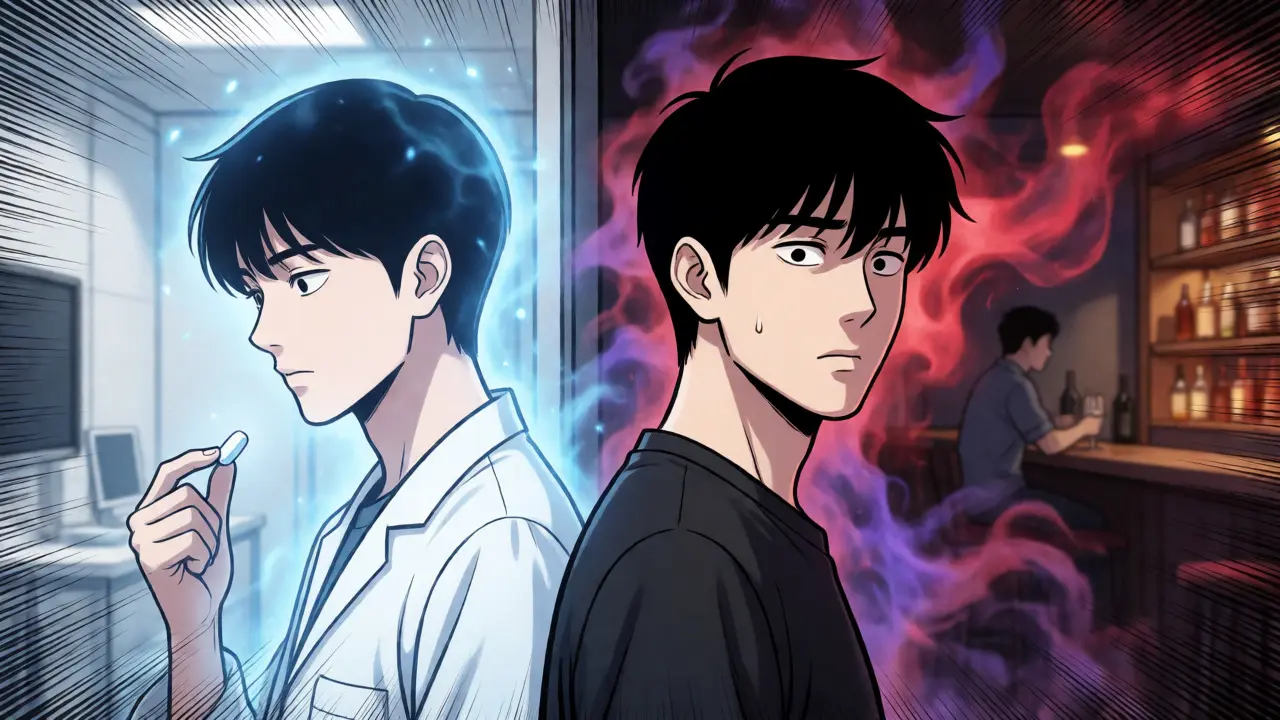
Antidepressant & Alcohol Risk Checker
Select your medication class to see the specific risks, severity level, and recommended precautions when consuming alcohol.
Critical
MAOIs
Nardil, Parnate
High
Bupropion
Wellbutrin
Mod-High
SSRIs/SNRIs
Zoloft, Prozac, Lexapro
High
Tricyclics
Amitriptyline, Imipramine
Result
Key Statistic:
Severity Level
Primary Effect
Recommendation
General Guidelines
- First 4-8 Weeks: Complete abstinence is crucial while your body adjusts.
- Efficacy Loss: Even one drink per day can reduce medication effectiveness by 35-50%.
- Abstinence Benefit: Patients who abstain show a 62% higher remission rate for depression.
- Consult Your Doctor: Individual factors (genetics, dosage) vary. Always check with your provider.
You pop your morning pill, maybe a sertraline or an escitalopram, to keep the mental fog at bay. Then Friday night rolls around, and you think one glass of wine won't hurt. It’s a common thought, shared by millions who take antidepressants for depression or anxiety. But here is the uncomfortable truth: mixing these medications with alcohol isn’t just a minor faux pas; it can be physically dangerous and emotionally destabilizing.
The problem isn't always obvious. You might not feel "drunk" in the traditional sense, but your brain chemistry is under siege. According to the National Institute on Alcohol Abuse and Alcoholism (NIAAA), about 20% of people with major depressive disorder also struggle with alcohol use disorder. That overlap creates a perfect storm for interactions that can lead to hospitalization or worse. Let's break down exactly what happens inside your body when these two substances meet, why some drugs are riskier than others, and what the current medical consensus really says.
The Brain Chemistry Clash
To understand the danger, you have to look at how both substances affect your central nervous system. Antidepressants work by tweaking neurotransmitters-chemical messengers like serotonin, dopamine, and norepinephrine. Alcohol, conversely, is a depressant. It slows down brain activity. When you combine them, you aren't canceling each other out; you are often amplifying negative effects.
For those taking SSRIs (Selective Serotonin Reuptake Inhibitors), such as Prozac or Zoloft, the liver gets overwhelmed. Both the medication and the alcohol compete for the same metabolic pathways. The result? You get drunk faster and stay drunk longer. Clinical observations from the Priory Group suggest that SSRIs can make users feel intoxicated 30-50% quicker than usual. This isn't fun; it's a sign that your body is struggling to process the alcohol, leading to severe dizziness, nausea, and impaired motor control.
It gets more complicated with older classes of drugs. Tricyclic antidepressants (TCAs) amplify alcohol's sedative power. There are documented cases where blood alcohol levels as low as 0.05%-barely above the legal limit in many places-caused respiratory depression in TCA users. Your breathing becomes shallow, your heart rate drops, and the risk of accidents skyrockets.
Class-by-Class Risk Assessment
Not all antidepressants carry the same level of risk when paired with a pint or a cocktail. Knowing which class you are on helps you gauge the immediate danger.
| Drug Class | Primary Interaction Effect | Severity Level | Specific Danger |
|---|---|---|---|
| MAOIs | Hypertensive Crisis | Critical | Blood pressure spikes >220/120 mmHg; stroke risk within 30 mins. |
| Wellbutrin (Bupropion) | Dopamine Flooding/Psychosis | High | Auditory hallucinations; 12% require ER intervention. |
| SSRIs/SNRIs | Amplified Intoxication | Moderate-High | 41% report worsened depression symptoms within 24 hours. |
| Tricyclics (TCAs) | Extreme Sedation | High | 3.2x higher incidence of falls and accidents. |
Monoamine oxidase inhibitors (MAOIs) like Nardil or Parnate are the most volatile. They interact with tyramine, a substance found in beer, red wine, and aged cheeses. If you drink while on an MAOI, your blood pressure can shoot up dangerously high, potentially causing a hypertensive crisis or stroke. This can happen within 30 minutes of consuming even moderate amounts of alcohol.
Then there is Wellbutrin (bupropion). Unlike SSRIs, it affects dopamine and norepinephrine. Mixing it with alcohol can trigger a "dopamine flood," leading to psychosis-like symptoms. Dr. David Baron, Chief Medical Officer at FHE Health, notes that this combination has led to cases of auditory hallucinations and delusions serious enough to require hospitalization. In fact, data suggests 1 in 8 patients experience temporary psychotic symptoms requiring emergency care.
The Efficacy Paradox
Here is a bitter pill to swallow: alcohol doesn't just add side effects; it steals the benefits of your medication. Research indicates that even one standard drink per day can decrease the effectiveness of antidepressants by 35-50% in nearly 78% of patients. You are essentially paying for a prescription that works half as well because of a nightly habit.
This reduction in efficacy often leads to a vicious cycle. You feel less relief from your depression, so you might increase your alcohol intake to cope, which further dulls the medication's effect. A study published in the Journal of Psychopharmacology found that low-level alcohol consumption reduced medication adherence by 32% and increased impulsivity by 27%. For someone already battling emotional regulation issues, this loss of impulse control can be devastating.
Conversely, avoiding alcohol entirely offers a tangible reward. Patients who abstain while on treatment show a 62% higher remission rate for depression. That is a massive difference in quality of life, yet many doctors fail to communicate this statistic clearly during appointments.
What Do Experts Actually Say?
Medical advice on this topic has shifted slightly in recent years. While the old rule was absolute abstinence, newer guidelines offer nuance, though they come with strict caveats.
The National Alliance on Mental Illness (NAMI) suggests that some physicians may allow stable patients to have one drink per day-defined strictly as a five-ounce glass of wine or a 12-ounce beer-but only if consumed with food. However, this is not a universal permission slip. Dr. Mark R. Gold from American Addiction Centers warns that alcohol can potentiate suicide risk, citing data showing a 2.7 times higher risk in patients who mix the two.
Dr. Michael Thase, a professor of psychiatry, offers a middle ground. He notes that occasional, moderate consumption might be acceptable for patients who have been stable on SSRIs for 8-12 weeks. But he emphasizes that this requires physician approval. The key word here is "stable." If you are still adjusting to a new dose or experiencing breakthrough symptoms, alcohol is likely off the table.
Real-Life Consequences
Statistics tell us the risks, but patient stories illustrate the reality. On mental health forums, consistent patterns emerge. One user described feeling completely drunk after just one beer while on Zoloft, suffering extreme dizziness and nausea for 12 hours. Another reported hearing voices telling them to harm themselves after two glasses of wine while taking Wellbutrin, resulting in a 24-hour ER visit.
A survey by the Depression and Bipolar Support Alliance found that 67% of respondents who combined antidepressants and alcohol reported worsened depression symptoms within 48 hours. Nearly 30% noted increased anxiety. Common complaints included uncontrollable emotional outbursts and intensified suicidal thoughts. Positive experiences are rare; only about 3% of user reports describe no negative impact, usually involving very limited consumption under doctor supervision.
Practical Guidelines for Safe Management
If you are prescribed antidepressants, how do you navigate social situations without compromising your health? Here are practical steps based on current clinical guidelines:
- The First 4-8 Weeks: Complete abstinence is crucial. This is when therapeutic effects are establishing, and your body is adapting to the medication.
- Know Your Limits: The standard "moderate drinking" definition (1 drink/day for women, 2 for men) does not apply to you. Even one drink can trigger interactions.
- Eat Before You Drink: If your doctor permits minimal consumption, never drink on an empty stomach. Food slows alcohol absorption, reducing peak blood alcohol concentration.
- Monitor Mood Changes: Keep a diary. If you notice increased irritability, sadness, or sleep disturbances the day after drinking, your body is signaling a negative interaction.
- Check Genetic Factors: New pharmacogenetic tests like GeneSight can analyze enzymes (CYP2D6, CYP2C19) to predict individual susceptibility to interactions. Ask your psychiatrist if this testing is relevant for you.
Remember, self-medicating residual anxiety with alcohol is a common trap. About 39% of patients admit to using alcohol to cope with side effects or lingering symptoms. Instead, discuss alternative coping strategies or therapy options with your provider. Cognitive behavioral therapy has shown a 47% success rate in reducing alcohol consumption among antidepressant users.
Frequently Asked Questions
Can I drink any type of alcohol while on antidepressants?
No single type is universally safe, but risks vary. Beer and red wine contain tyramine, which is particularly dangerous for those taking MAOIs due to the risk of hypertensive crises. Spirits mixed with sugary drinks can spike blood sugar and worsen mood crashes. Generally, clear spirits with soda water are often considered "lighter" but still carry the risk of amplified intoxication and reduced medication efficacy across all classes.
How long should I wait after taking my antidepressant before drinking?
There is no safe waiting period that eliminates the interaction risk. Antidepressants build up in your system over days or weeks. Taking your pill in the morning and drinking at night does not protect you. The medication is active in your bloodstream 24/7. The general recommendation is to avoid alcohol entirely, especially during the initial adjustment phase of treatment.
Why do I feel drunk faster on antidepressants?
This is primarily due to liver enzyme competition. Both alcohol and many antidepressants (especially SSRIs) are metabolized by the same cytochrome P450 enzymes in the liver. When the liver is busy processing the medication, it breaks down alcohol more slowly. This leads to higher blood alcohol concentrations remaining in your system for longer, making you feel intoxicated sooner and for a longer duration.
Is it okay to skip my antidepressant to drink alcohol?
Generally, no. Skipping doses can cause withdrawal symptoms or a return of depressive/anxiety symptoms, which alcohol will then exacerbate. Furthermore, because antidepressants have long half-lives, skipping one dose does not mean the drug leaves your system immediately. It is safer to maintain consistency with your medication schedule and avoid alcohol rather than trying to "time" the absence of the drug.
What should I do if I accidentally drank too much while on medication?
Stay hydrated and rest. Monitor yourself for signs of severe reactions like difficulty breathing, confusion, fainting, or irregular heartbeat. If you are on MAOIs and experience a severe headache, stiff neck, or chest pain, seek emergency medical attention immediately, as this could indicate a hypertensive crisis. For other classes, contact your doctor if symptoms persist beyond typical hangover effects.




Posts Comments
Jeremy Westcott September 4, 2026 AT 18:05
Look, the medical establishment loves to scare us with these "perfect storm" narratives because it keeps the pharmaceutical gravy train rolling. They tell you one glass of wine is dangerous, but they don't mention that alcohol has been used as a solvent for herbal remedies for millennia. It's all about control and profit margins. The liver enzyme competition thing? Sure, it happens, but humans have been metabolizing ethanol since we discovered fermentation. We didn't need SSRIs to survive then, and we certainly don't need them to enjoy a pint now. This fear-mongering is just another way to keep us dependent on synthetic compounds rather than trusting our own biological resilience.
Eric Schultze September 5, 2026 AT 18:06
The article fails to address the underlying societal decay that leads to this reliance on both psychotropics and alcohol in the first place. We are living in an era where moral fortitude has been replaced by chemical crutches. When you mix a depressant like alcohol with a serotonin modulator, you aren't just risking respiratory depression; you are signaling a complete collapse of individual responsibility. The data cited regarding suicide risk isn't just a side effect; it is the inevitable consequence of a society that refuses to confront its spiritual emptiness with anything other than a pill or a pour. We must be vigilant against this normalization of self-medication, which masks deeper issues of character and community failure.
Amanda SF September 7, 2026 AT 17:11
I simply cannot believe how many people still ignore the MAOI warnings. It is absolutely terrifying. I had a friend who thought she was invincible because she was on a newer SSRI, not realizing that cross-reactivity and liver stress can affect anyone. She drank two glasses of red wine at a dinner party and ended up in the ER with a hypertensive crisis that nearly caused a stroke. The doctors were furious, but honestly, the information is out there. If you are taking these medications, you are walking a tightrope without a net. It is not just about feeling drunk faster; it is about your blood pressure spiking to levels that can literally kill you within thirty minutes. People treat their brains like they are disposable, but the consequences are permanent and often fatal. Stop being so complacent about your health choices when lives are literally on the line.
Adam Viruet September 8, 2026 AT 07:12
Yeah, yeah, we get it, drinking while on meds is bad... but let’s be real here. Half the people commenting here are probably just looking for a reason to judge others. The article says "one drink won't hurt" is a common thought, well, maybe it doesn’t hurt everyone?? Some people metabolize things differently, duh. The stats are scary, sure, but they’re also vague. What about genetic factors?? Oh wait, they mentioned GeneSight at the end, so why bury the lead?? It’s all just fear marketing really. Also, did anyone notice the table formatting is kinda messy?? Whatever. Just take your pills and stay sober if you’re scared. Simple enough for most, apparently too hard for some. 🙄
Jenn Bell September 9, 2026 AT 02:38
This is such a helpful reminder! I’ve been on sertraline for six months now, and I was worried I’d never be able to enjoy a social gathering again. But reading about the "first 4-8 weeks" rule gave me hope. I’m past that window now, and my doctor actually cleared me for occasional moderate consumption with food. It feels good to know there’s a middle ground. We should celebrate small victories in mental health management rather than just focusing on the dangers. You’ve got this!
Aurelio Haney September 10, 2026 AT 21:49
It is quite judgmental to assume everyone knows their specific drug class interactions. Most patients are handed a bottle and a pamphlet and sent on their way. 😕 The article does a decent job breaking down the classes, but the tone feels a bit preachy. Not everyone has access to a psychiatrist who will discuss pharmacogenetics. For many, avoiding alcohol entirely is the only safe bet because they lack the resources to monitor subtle mood changes daily. We need more empathy for those struggling with addiction and depression simultaneously, not just rules. 😔
Kim Pender September 12, 2026 AT 03:01
People need to stop making excuses. If you take the pill, you follow the rules. It is simple logic. My uncle ignored the warning signs, kept drinking beer every night while on TCAs, and he fell down stairs twice last year. He claims it is just bad luck. It is not bad luck. It is poor decision-making. The body keeps score. If you mess with brain chemistry, expect consequences. There is no magic workaround for biology. Just put the drink down and take care of yourself properly.
Pramay Dattani September 12, 2026 AT 15:06
Why always US centric?? In India we have different genetics!! CYP2D6 variations are huge here. Your stats do not apply to Asian populations fully. We process alcohol differently due to ALDH2 deficiency often. So mixing meds might be even worse or sometimes better depending on gene. Why no mention of global diversity in studies?? Lazy research. Typical western bias. We manage fine with moderation usually. Do not generalize everyone based on American habits. Fix your data set next time.
Falgun R Patel September 12, 2026 AT 23:25
Perhaps we are viewing this through the wrong lens. Instead of seeing alcohol as a toxin to be avoided, consider it a mirror. It reveals what lies beneath the medication's surface. If one drink destabilizes you, perhaps the medication is masking symptoms that need addressing through lifestyle or therapy. True healing comes from understanding oneself, not just suppressing neurochemical imbalances. Let us approach this with compassion for our complex human nature.
Kimberley Odish September 14, 2026 AT 13:52
The emotional toll described in the patient stories is severely underestimated. It is not just physical danger; it is the psychological devastation of losing control. When you combine sedatives with antidepressants, you strip away the coping mechanisms people rely on. It creates a vacuum of vulnerability that is exploited by anxiety and despair. The statistics on worsened depression within 48 hours are merely the tip of the iceberg. Real suffering is silent, internal, and prolonged. This article touches on it, but fails to convey the sheer weight of that emotional burden on families and partners who watch their loved ones spiral.
Rebecca Makayla Crane September 15, 2026 AT 00:10
Omg yes!! 🍷 The part about Wellbutrin causing hallucinations is SO real. I tried a mimosa on a Sunday brunch after being on bupropion for a month and felt totally unhinged. Like, weirdly energetic but paranoid. 🤯 The article is spot on about the dopamine flood. Also, skipping doses is a big no-no. I learned that the hard way. 💊✨ Stay safe, besties!
Neil Sahli September 15, 2026 AT 00:13
Great info, but let's not forget the power of positive reinforcement! Every day you choose water over wine while on meds is a victory for your brain health. Keep pushing forward! You are stronger than the urge to numb out. Let's turn this challenge into a triumph of discipline and self-care. Go get 'em!
Write a comment