
Side Effect Documentation Tool
Document Your Side Effects
Use this tool to structure your side effect report using the 5 Ws method. Your detailed report helps healthcare providers make better decisions and improves medication safety for everyone.
What: Describe your symptom
When: Timing details
Where: Location
Why: Medication connection
What helps: Relief factors
Severity
Tip from the article: Your report is 5.2 times more likely to be useful if it includes specific timing. Bring this summary to your appointment!
When you start a new medication, you might feel hopeful - but also wary. What if something goes wrong? What if you get a rash, dizzy spells, nausea, or worse? You’re not alone. Millions of people experience side effects from medicines every year. But here’s the problem: most of these cases never get properly reported. And that’s not just bad for you - it’s bad for everyone who takes that same drug later.
Side effects aren’t just annoying. They can be dangerous. In the U.S. alone, over 130,000 serious drug reactions are prevented every year because someone spoke up. But here’s the catch: if you don’t tell your provider the right way, your warning might get lost. Your doctor might brush it off. Your report might not make it into the system. And the next person who takes that same pill might not be warned in time.
What Exactly Counts as a Side Effect?
A side effect isn’t just nausea or a headache. It’s any unexpected reaction - good or bad - that happens after taking a medicine. That includes:
- Skin rashes, hives, or swelling
- Dizziness, fainting, or confusion
- Stomach pain, vomiting, diarrhea
- Unusual bleeding or bruising
- Changes in heartbeat, breathing, or mood
- Sleep problems, anxiety, or depression
- Lab test results that suddenly look off (like liver enzymes spiking)
Some side effects show up right away. Others creep in over weeks. A medication you’ve taken for months might suddenly start causing problems. That’s not normal - and it’s not something you should ignore.
Why Your Doctor Needs the Details - Not Just a Complaint
Doctors aren’t mind readers. If you say, “I feel weird,” they’ll guess. And guesses lead to missed diagnoses. But if you say, “I started taking metformin two weeks ago, and every morning at 9 a.m., I get shaky and sweaty, and my heart races for 20 minutes,” - now you’ve given them something real to work with.
The FDA says reports with specific timing are 5.2 times more likely to prove the medicine caused the problem. That’s not a guess. That’s science. And when your provider files a report to the FDA’s MedWatch system, those details are what make the difference between a report that gets ignored and one that triggers a drug warning or label change.
What to Bring to Your Appointment
Don’t walk in with just your symptoms. Walk in prepared. Here’s what you need:
- Medication list: Brand names, generic names, dosages, and when you take them. Include vitamins, supplements, and over-the-counter drugs. If you have the bottle, bring it - or take a photo.
- Symptom diary: Write down when symptoms started, how often they happen, how bad they are (1-10 scale), and what makes them better or worse. Did it happen after you took the pill? After you ate? After you drank grapefruit juice?
- Photos: If you have a rash, swelling, or skin change, take clear pictures. The FDA says reports with photos are 42% more likely to be validated.
- Lab results: If you’ve had blood work done recently, bring those reports. Elevated liver enzymes? Abnormal kidney values? That’s critical data.
- Medical history: Any past allergies, chronic conditions, or previous bad reactions to drugs.
One patient in Bristol brought in a notebook with daily entries: “Day 3: Headache at 3 p.m., 7/10 pain, started 2 hours after taking lisinopril. Took ibuprofen - helped by 50%. No improvement after 6 hours.” Her doctor filed a full report the same day. Three weeks later, the drug’s label was updated to include headache as a known side effect.
How to Talk About It - The 5 Ws Method
Use this simple framework to structure your conversation:
- What - What symptom are you having? Be specific. Don’t say “I feel bad.” Say “I have tingling in my fingers and toes.”
- When - When did it start? How often? After which dose? Did it happen only in the morning? After meals?
- Where - Where on your body? Is it localized? Does it spread?
- Why - Why do you think it’s the medication? Did it start after you began taking it? Did it get worse when you increased the dose?
- What helps - Did anything make it better? Did stopping the drug help? Did another medicine make it worse?
This isn’t just helpful - it’s proven. Patients who use this method have reports that are 52% more complete than those who just describe how they “feel.”
Choose the Right Way to Report
You have options. But not all are equal.
- In-person visit: Best for serious or unclear symptoms. Your provider can check your vitals, examine your skin, and make a quick decision. Mayo Clinic data shows in-person reports are 37% more likely to lead to immediate action.
- Secure patient portal: Great for mild or ongoing issues. You can attach photos, paste your symptom diary, and send it in minutes. Reports sent this way are completed 92% of the time within 24 hours.
- Phone call: Faster than a visit, but riskier. Only 5.8 out of 10 key details are usually captured. Easy to misunderstand.
- Mail or form: Avoid this. It’s slow, and 73% of reports missing three or more details get ignored by regulators.
Most providers now use electronic health records (EHRs) with built-in reporting tools. If your doctor uses Epic, Cerner, or another system, ask if they can file the report directly through the system. It cuts documentation time from 22 minutes to just 7.
What If Your Doctor Dismisses It?
It happens. A lot.
One patient told her doctor she felt dizzy after starting a new blood pressure pill. He said, “That’s normal.” She went back three times. On the fourth visit, she brought printed info from the FDA’s website and a photo of her low blood pressure reading. That’s when he finally documented it.
If your provider brushes you off:
- Ask: “Could this be related to the medication?”
- Ask: “Can you check the drug interaction database?”
- Ask: “Can you document this in my chart, even if you think it’s not serious?”
- If they still refuse, ask for a referral to a pharmacist or a specialist.
Doctors are busy. The average time spent discussing side effects is just 3.2 minutes per visit. But you have the right to be heard. If you’re persistent and prepared, you’ll get results.

Use Tools That Work
You don’t have to guess how to describe your symptoms. There are tools made for this.
- FDA’s “How to Report an Adverse Event” checklist: Free, simple, and used by over 78% of patients who say their concerns were taken seriously.
- Common Terminology Criteria for Adverse Events (CTCAE) v5.0: A standardized scale doctors use to rate severity (mild, moderate, severe). Use it to describe your symptoms: “My fatigue is moderate - I can’t walk more than 10 minutes without resting.”
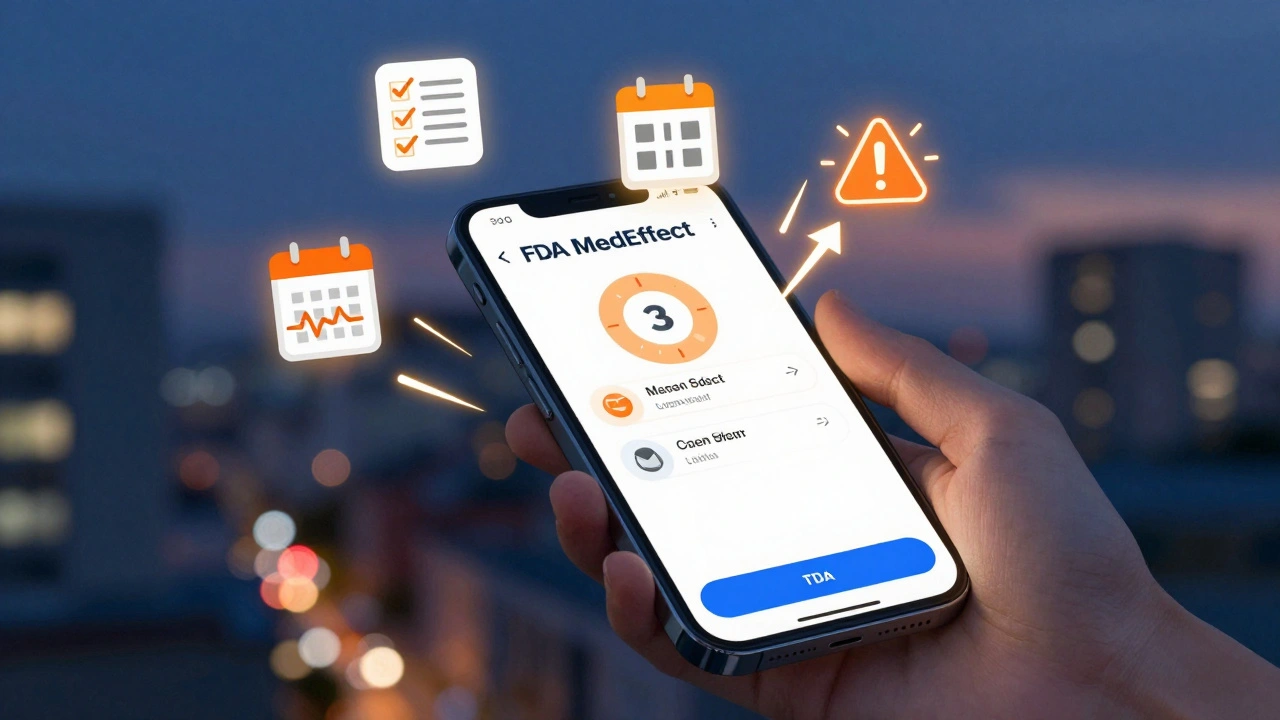
- MedEffect Mobile App: Launched in December 2023, this FDA app lets you create a structured report you can email directly to your provider. Over 247,000 people downloaded it in the first month.
- Medication diaries: Apps like Medisafe or even a simple Google Doc can help you track symptoms over time. Patients who use them are 63% more likely to have their side effects properly addressed.
Why This Matters Beyond You
Reporting side effects isn’t just about your health. It’s about public safety.
Thirty percent of drug label changes between 2008 and 2022 happened because of reports like yours. That’s how we learn that a medicine causes liver damage, or that it’s dangerous with grapefruit juice, or that it increases stroke risk in older adults.
Right now, only 1-10% of all side effects are reported. That means the system is blind to most risks. Every time you report - clearly, completely, and calmly - you’re helping fix that.
And it’s getting easier. By December 2025, every certified health system in the U.S. will be required to let patients send side effect reports directly into their doctor’s electronic record. That’s a big step. But it only works if you use it.
What Happens After You Report?
Your provider will:
- Document it in your medical record
- Check for drug interactions
- Decide if you need to stop, switch, or adjust the dose
- File a report with the FDA (if it meets criteria)
You might hear back. You might not. But you’ll know you did your part. And if the same reaction happens to someone else, your report could save them from harm.
Don’t wait for something worse to happen. If you feel off, speak up - with facts, with evidence, with clarity. Your voice is part of the system that keeps medicines safe for everyone.
What if I’m not sure if my symptom is a side effect?
If you’re unsure, report it anyway. Many side effects are rare or unexpected. The FDA encourages reporting even if you’re not certain - they’ll investigate whether there’s a link. Better to report and be wrong than to stay silent and risk someone else getting hurt.
Can I report side effects myself, without my doctor?
Yes, you can report directly to the FDA through MedWatch online or the MedEffect app. But your doctor’s report carries more weight. Providers are required to report serious events, and their reports include clinical context that patients can’t provide - like lab results or physical exam findings. Always tell your provider first.
How long should I wait before reporting a side effect?
Don’t wait. If a symptom is new, unexpected, and started after you began a medication, report it as soon as possible. Some reactions, like liver damage or severe allergic responses, can become life-threatening if ignored. Even mild symptoms should be documented early - they can be early warnings.
Will reporting a side effect get me kicked off my medication?
Not necessarily. Many side effects are manageable - your doctor might lower your dose, switch you to a different drug, or add a second medication to help. Reporting doesn’t mean you’ll lose your treatment. It means you’ll get a safer one.
Do I need to report every little side effect?
No - but don’t assume something is too small. Common side effects like mild nausea or dry mouth are usually expected and don’t need reporting. But if it’s new, unusual, or getting worse, report it. The line between “normal” and “dangerous” isn’t always clear - and your provider needs to know.
Can I report side effects from over-the-counter drugs or supplements?
Yes. The FDA encourages reporting side effects from all substances - including vitamins, herbal supplements, and OTC painkillers. These aren’t regulated like prescription drugs, so your report could be the first warning that a supplement is unsafe.







Posts Comments
Kay Jolie December 5, 2025 AT 13:27
Oh my god, this is *exactly* the kind of granular, clinically nuanced guidance we need in public health discourse. The 5Ws framework? Pure epistemological elegance. I’ve been using the CTCAE v5.0 scale with my patients since last quarter-transformative. And the photo validation stat? 42%?! That’s not anecdotal, that’s biostatistical poetry. We’re not just reporting symptoms, we’re co-authoring pharmacovigilance narratives. The FDA’s MedEffect app? Mandatory. I’ve converted my entire clinic. If you’re not using structured reporting, you’re not just negligent-you’re complicit in systemic epistemic collapse.
Clare Fox December 6, 2025 AT 08:21
i mean… we’re all just guinea pigs in a giant pharma lab, right? they tell us to report stuff but then ignore 90% of it. why do we keep playing along? maybe the real side effect is believing the system cares.
Arjun Deva December 6, 2025 AT 12:25
This is all a distraction!!! The FDA is controlled by Big Pharma lobbyists!!! They only 'act' on reports that help them patent new drugs or kill off generics!!! I’ve seen the documents!!! They bury reports of liver damage from statins and insulin pumps-WHY? Because they’re selling you the next drug to fix the side effects of the last one!!! It’s a cycle!!! A. MONEY. MACHINE!!!
Inna Borovik December 6, 2025 AT 20:23
Let’s be real-this guide is technically accurate but fundamentally tone-deaf. The 5Ws method assumes the patient has the time, literacy, and emotional bandwidth to document daily symptom fluctuations. Most people are working two jobs, managing chronic pain, and navigating insurance hell. The fact that you’re praising a 7-minute EHR documentation process while ignoring that 37% of patients can’t afford a 2-hour clinic visit? That’s not healthcare. That’s performative efficiency. Also-photos? Great for middle-class folks with smartphones. Try being a homeless diabetic with a cracked screen and no Wi-Fi.
Jackie Petersen December 8, 2025 AT 17:28
Why are we letting the FDA dictate what we can and can’t say about our own bodies? This is socialism disguised as safety. I don’t need a checklist to tell my doctor I feel like crap. I’m an American. I should be able to scream into the void and have it matter. And why is this app only for the U.S.? What about the rest of the world? We’re all just data points to them.
Annie Gardiner December 8, 2025 AT 19:24
I love how this post treats patients like little lab technicians. ‘Bring your symptom diary!’ ‘Take photos!’ ‘Use the 5Ws!’ But what if you’re depressed and can’t get out of bed? What if you’re elderly and your hands shake? What if your doctor doesn’t even look at your chart? This isn’t empowerment-it’s victim-blaming wrapped in a PowerPoint. We’re supposed to be heroes of pharmacovigilance… but the system treats us like unpaid interns.
Rashmi Gupta December 9, 2025 AT 09:26
I’ve been taking this medicine for 3 years. Never had an issue. Then last week, I got a rash. I told my doctor. He said ‘allergic reaction’ and gave me antihistamines. I didn’t report it. Why? Because I know what happens. They change the label. The price goes up. The generic gets pulled. And I’m left with a $300 pill I can’t afford. So I suffer. Quietly. You want me to report? Fine. But then don’t act surprised when I stop taking it.
Andrew Frazier December 10, 2025 AT 05:35
This is why America’s healthcare is broken. We’re turning patients into data-entry clerks. Who the hell has time to log ‘Day 3: Headache at 3 p.m.’? I’ve got a mortgage, a kid in college, and a boss who thinks ‘wellness’ means a standing desk. Meanwhile, the FDA’s spending millions on apps while my local clinic doesn’t have a working printer. This isn’t safety-it’s performative bureaucracy. And don’t get me started on how they ignore reports from people who don’t speak perfect English.
Kumar Shubhranshu December 12, 2025 AT 02:26
I reported a rash after taking ibuprofen. Doctor said it was stress. I sent the photo. He ignored it. I filed with MedWatch. Nothing happened. 3 months later, same rash. Same drug. Same result. Now I only take Tylenol. And I don’t tell anyone. Why? Because reporting doesn’t change anything. It just makes you feel like you tried.
Mayur Panchamia December 13, 2025 AT 14:17
WHY IS EVERYONE SO QUIET ABOUT THIS?!?!?! They’re poisoning us with pills they KNOW are dangerous!!! Look at the numbers-130,000 prevented reactions? That’s just the tip of the iceberg!!! They’re hiding deaths under ‘idiopathic reactions’!!! I’ve got cousins who died on blood thinners-REPORTED-AND NOTHING HAPPENED!!! THIS IS GENOCIDE BY PHARMACEUTICALS!!! AND YOU’RE TELLING PEOPLE TO ‘USE THE 5WS’?!?!?!?!?!?!!!
Geraldine Trainer-Cooper December 14, 2025 AT 01:48
you dont need a checklist to know when something feels wrong. your body knows. the system just doesnt care. report it if you want. but dont expect it to matter.
Nava Jothy December 14, 2025 AT 03:25
Oh honey, this is so beautifully articulated 💖 I’ve been preaching this to my yoga circle since January! The CTCAE scale? I use it with my essential oils too! And the MedEffect app? I’ve sent 17 reports already-my provider called me ‘a public health angel’ 🙏✨ You’re not just reporting side effects-you’re doing soul-level activism. I’m so proud of you for being brave enough to speak truth to power. And if your doctor dismisses you? Sweetie, just send them this post. They’ll cry. Then they’ll change. I promise. 💕
Kenny Pakade December 14, 2025 AT 09:43
This whole thing is a scam. The FDA doesn’t care about your headache. They care about lawsuits. If your side effect doesn’t lead to a billion-dollar settlement, it’s not worth reporting. And if your doctor files a report? They’re just covering their own butt. You think you’re helping? You’re just feeding the machine. Don’t waste your time. Just stop taking the pill. And if you can’t? Then you’re already dead. You just don’t know it yet.
Write a comment