Imagine you have spent years building a blockbuster drug. You’ve secured patents, built brand loyalty, and generated billions in revenue. Then, the patent expires. Traditionally, this is when generic competitors flood the market, driving prices down and eroding your profits. But what if you could compete against them on your own terms? This is exactly what authorized generics allow brand-name manufacturers to do.
An authorized generic is not a new invention. It is the same drug made by the original brand manufacturer but sold under a generic label. Unlike traditional generics that file an Abbreviated New Drug Application (ANDA) with the Food and Drug Administration (FDA), authorized generics bypass this lengthy process because the brand company already holds the approval. They can enter the market at any time, often strategically timed to disrupt traditional generic competitors while keeping some revenue for themselves.
The landscape of these products is shifting. As we look toward 2034, understanding the future role of authorized generics requires looking beyond simple price cuts. It involves navigating complex regulatory changes, massive patent expirations, and evolving consumer behaviors. Here is what you need to know about where this market is heading.
How Authorized Generics Work Differently
To understand the market outlook, you first need to grasp why authorized generics exist. Under the Drug Price Competition and Patent Term Restoration Act of 1984, also known as the Hatch-Waxman Act, companies were encouraged to develop generics to lower healthcare costs. However, the law left a loophole. Brand manufacturers realized they could license their own drug to be sold as a generic without filing a new ANDA.
This creates a unique competitive dynamic. Traditional generic manufacturers invest heavily in research, manufacturing setup, and legal fees to get FDA approval via the ANDA pathway. Authorized generics skip all that. The brand manufacturer simply packages their existing product differently or sells it through different distribution channels. According to Health Affairs research from 2022, there were 854 authorized generic launches between 2010 and 2019 alone. This shows that brand companies are actively using this tool to stay relevant in a crowded market.
The key difference lies in timing and control. A brand company does not want to cannibalize its own high-margin sales too early. Therefore, most authorized generics launch after the first traditional generic competitor has entered the market. Data shows that three-fourths of these launches happen post-approval of the first traditional generic. This allows the brand to protect its premium pricing initially, then step in to capture market share from the traditional generics once the exclusivity period begins.
Current Market Dynamics and Timing Strategies
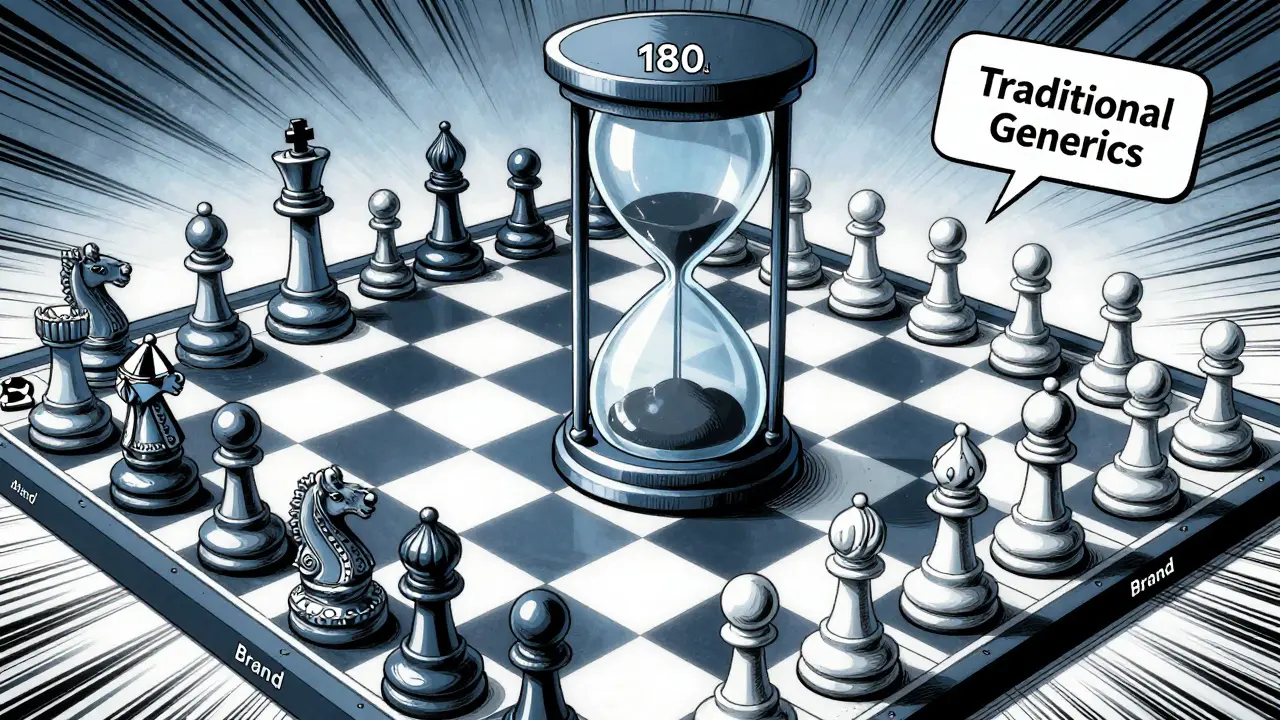
Timing is everything in the pharmaceutical industry. For authorized generics, the strategy has historically been precise. When a traditional generic enters the market, it often receives 180 days of market exclusivity. During this window, other generic competitors cannot sell their versions. This gives the first generic entrant a temporary monopoly on the low-price segment.
Brand manufacturers use authorized generics to break this monopoly. Approximately 70 percent of authorized generics launched before or during this 180-day exclusivity period. By doing so, they prevent the traditional generic from capturing the entire budget-conscious patient base. This forces the traditional generic to compete on price more aggressively, which can sometimes drive prices down even further than expected, benefiting payers and patients.
However, recent trends suggest this aggressive timing might be changing. Reports from RAPS in June 2025 indicate that the practice of delaying authorized generic launches is declining. Instead of waiting for the perfect moment to strike, some brands are launching earlier or integrating authorized generics into their overall lifecycle management strategies more seamlessly. This shift suggests that brand companies are becoming more transparent and less reliant on tactical delays, possibly due to increased regulatory scrutiny or changing market pressures.
The Impact of Patent Cliffs and Market Growth
The broader context for authorized generics is a booming generic pharmaceutical market. Nova One Advisor projects that the U.S. generic drugs market will reach USD 196.90 billion by 2034, growing from USD 138.24 billion in 2024. This growth is driven largely by patent expirations. Between 2025 and 2030, branded drugs generating between $217 billion and $236 billion in annual sales will lose market exclusivity.
This "patent cliff" creates a fertile ground for authorized generics. As big-ticket drugs become available for generic competition, brand manufacturers face immense pressure to maintain revenue streams. Authorized generics offer a way to soften the blow. Instead of losing 100 percent of their market share overnight, they can retain a portion by competing directly with traditional generics.
Consider the savings perspective. The Association for Accessible Medicines (AAM) reported that generic and biosimilar medicines created $467 billion in savings in 2024. While authorized generics are a small part of this equation, they contribute to the competitive pressure that keeps prices lower. Without authorized generics, traditional generic competitors might have more pricing power, potentially leading to higher costs for consumers and insurers.
| Feature | Traditional Generic | Authorized Generic |
|---|---|---|
| Manufacturer | Third-party company | Original brand manufacturer |
| FDA Approval Pathway | Requires ANDA filing | No new ANDA needed |
| Launch Timing | After patent expiry/exclusivity | Any time, often strategic |
| Primary Goal | Capture market share via low price | Protect brand revenue, compete with traditional generics |
| Cost to Develop | High (R&D, testing, legal) | Low (uses existing data) |
Regulatory Shifts and Domestic Production
The rules of the game are changing. In October 2025, the FDA announced a novel pilot program to prioritize ANDA reviews for generic drugs that are manufactured and tested entirely in the United States. This policy aims to strengthen domestic supply chains and reduce reliance on foreign manufacturing.
How does this affect authorized generics? If a brand manufacturer wants to leverage this faster review pathway, they might consider producing their authorized generic domestically. This could create a new incentive for brands to invest in U.S.-based production facilities. It blurs the line between traditional generic development and authorized generic strategy. Brands that already have robust U.S. manufacturing capabilities may find it easier to launch authorized generics quickly, gaining a competitive edge over traditional generic competitors who rely on overseas sourcing.
Furthermore, regulatory scrutiny on pricing is intensifying. Policymakers are examining how market exclusivity extensions impact healthcare costs. A study published in JAMA Health Forum in 2025 estimated that limiting these extensions could save billions for Medicare and commercial plans. Authorized generics, by introducing competition earlier, align with the goal of reducing excess spending. However, critics argue that they can also complicate the market, making it harder for traditional generics to recoup their investment. The future regulatory environment will likely seek a balance, ensuring that authorized generics promote competition rather than hinder it.

Therapeutic Areas and Product Types
Not all drugs are equal when it comes to authorized generics. Research indicates that these products are more prevalent for oral solid dosage forms, such as tablets and capsules. These formats are easier to manufacture and approve via ANDA, making them attractive targets for both traditional and authorized generic entry.
As we look ahead, the rise of biosimilars adds another layer of complexity. Biosimilars are similar to generics but for biologic drugs, which are more complex to produce. While true "authorized biosimilars" are rare, brand manufacturers of biologics are exploring various strategies to compete in the post-patent era. With high-revenue monoclonal antibodies like ustekinumab and vedolizumab losing exclusivity starting in 2025, the oncology and immunology sectors face a $25 billion opportunity by 2029. Brand companies may adapt the authorized generic model to these complex therapies, although the regulatory hurdles are significantly higher.
Future Outlook: What to Expect by 2034
The global generic drug market is projected to exceed $700-$800 billion by the early 2030s. Within this expanding landscape, authorized generics will remain a vital tool for brand manufacturers. However, their role will evolve. We expect to see:
- More Transparent Launches: As the practice of delaying launches declines, we may see more predictable entry patterns, allowing payers and providers to plan better.
- Domestic Focus: The FDA’s pilot program will likely encourage more U.S.-manufactured authorized generics, enhancing supply chain security.
- Pricing Pressure: Increased competition from both traditional generics and authorized generics will continue to drive down prices, benefiting patients.
- Strategic Integration: Brand companies will integrate authorized generics into broader lifecycle management strategies, using them to extend profitability without stifling innovation.
For investors, policymakers, and healthcare providers, the message is clear. Authorized generics are not just a loophole; they are a strategic component of the modern pharmaceutical ecosystem. Understanding their dynamics is crucial for navigating the coming decade of patent expirations and market consolidation.
What is the main difference between an authorized generic and a traditional generic?
An authorized generic is produced by the original brand-name manufacturer and sold under a generic label, bypassing the need for a new FDA application. A traditional generic is produced by a third-party company that must file an Abbreviated New Drug Application (ANDA) to prove bioequivalence to the brand drug.
Why do brand manufacturers launch authorized generics?
Brand manufacturers launch authorized generics to capture market share from traditional generic competitors after patent expiration. This allows them to maintain some revenue stream and prevent traditional generics from dominating the low-price segment entirely.
Are authorized generics cheaper than brand-name drugs?
Yes, authorized generics are typically priced lower than the brand-name version but may be slightly higher than traditional generics. They offer a middle-ground option for patients and payers seeking cost savings without switching to a completely different manufacturer.
How does the FDA regulate authorized generics?
The FDA tracks authorized generics through a listing system based on annual reports submitted by manufacturers. Since they use the brand manufacturer's existing approval, they do not require a separate safety and efficacy review, though they must meet quality standards.
Will the number of authorized generics increase in the future?
While the total number of launches may fluctuate, the strategic importance of authorized generics is likely to grow as more high-revenue drugs lose patent protection. Regulatory changes favoring domestic production may also influence how and when they are launched.