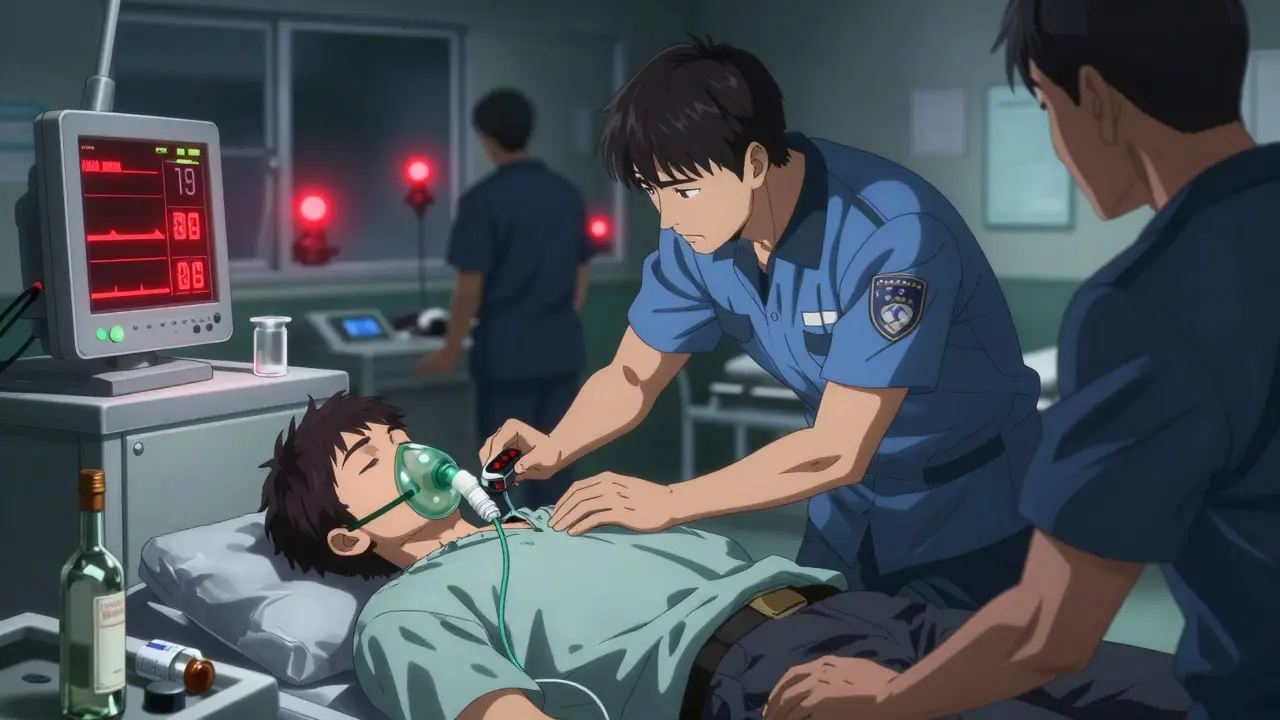
When someone overdoses on benzodiazepines, the biggest danger isn’t the drug itself-it’s what happens when it teams up with something else. A person might take a prescribed dose of alprazolam for anxiety, then drink a few beers or take an opioid painkiller. That’s when things turn dangerous. Isolated benzodiazepine overdoses rarely kill. But when mixed with opioids or alcohol, the risk of stopping breathing jumps by 15 times. In 2022, over 90% of benzodiazepine-related deaths involved other central nervous system depressants, according to CDC data.
What Happens During a Benzodiazepine Overdose?
Benzodiazepines work by boosting the effect of GABA, a brain chemical that slows down nerve activity. Too much of it, and your brain doesn’t send the right signals to your lungs. Breathing slows. Then stops. Heart rate drops. Consciousness fades. The Glasgow Coma Scale (GCS) is used to measure how deeply someone is sedated. A score of 8 or lower means they’re at serious risk and need immediate help from an anesthesiologist.
Most people who overdose on benzodiazepines alone don’t need a ventilator. In fact, 87% of pure overdoses cause only mild to moderate drowsiness. But if they’ve also taken opioids-like heroin, fentanyl, or oxycodone-their breathing can shut down completely within minutes. That’s why emergency teams always assume a mixed overdose until proven otherwise.
Emergency Response: ABCDE Protocol
There’s no magic antidote you can just give and walk away. The standard is the ABCDE approach, used by emergency services across the UK and Europe since 2015:
- Airway: Check if the person can protect their airway. Are they snoring? Gurgling? That’s a sign the airway is blocked. Position them on their side if they’re unconscious.
- Breathing: Count breaths. Less than 10 per minute? Prepare for intubation. Give high-flow oxygen (15L/min) through a non-rebreather mask-unless they have COPD and known CO2 retention, then use a Venturi mask.
- Circulation: Monitor heart rate and blood pressure. Hypotension can happen, especially with co-ingestants. IV access is critical.
- Disability: Use the GCS and Pasero Sedation Scale. Reassess every 15 minutes after any intervention.
- Exposure: Look for signs of other drugs. Needle tracks? Empty pill bottles? A bottle of vodka? This tells you if it’s a single-drug or mixed overdose.
Point-of-care glucose testing is required immediately. Hypoglycemia can mimic overdose symptoms. So is checking for acetaminophen and aspirin-common co-ingestants in suicide attempts.
When Is Flumazenil Used? (Spoiler: Rarely)
Flumazenil is the only drug that directly reverses benzodiazepines. It sounds perfect-until you look at the risks. It works fast, but it only lasts 41 minutes. That means you might wake someone up, only for them to fall back into sedation an hour later. And if they’ve been taking benzodiazepines regularly-say, for anxiety or insomnia-flumazenil can trigger violent seizures. Studies show a 38% chance of this happening in dependent users.
Even worse, flumazenil doesn’t touch opioids. So if someone took Xanax and fentanyl, giving flumazenil will only partially wake them up, leaving them vulnerable to respiratory arrest again. That’s why the American College of Medical Toxicology says flumazenil is appropriate in only 0.7% of cases. Most emergency departments stopped stocking it by 2022. A 2022 survey found only 12.3% of ER doctors had ever used it.
Doctors like Dr. Lewis Nelson at Rutgers say it plainly: “The risks outweigh the benefits in the ER.” The European Resuscitation Council and the American Heart Association have both removed flumazenil from their guidelines. It’s not a tool for routine use. It’s a last-resort option-only in pure benzodiazepine overdoses, with no history of dependence, and only if the patient is in respiratory failure despite full supportive care.
Activated Charcoal? Not Usually.
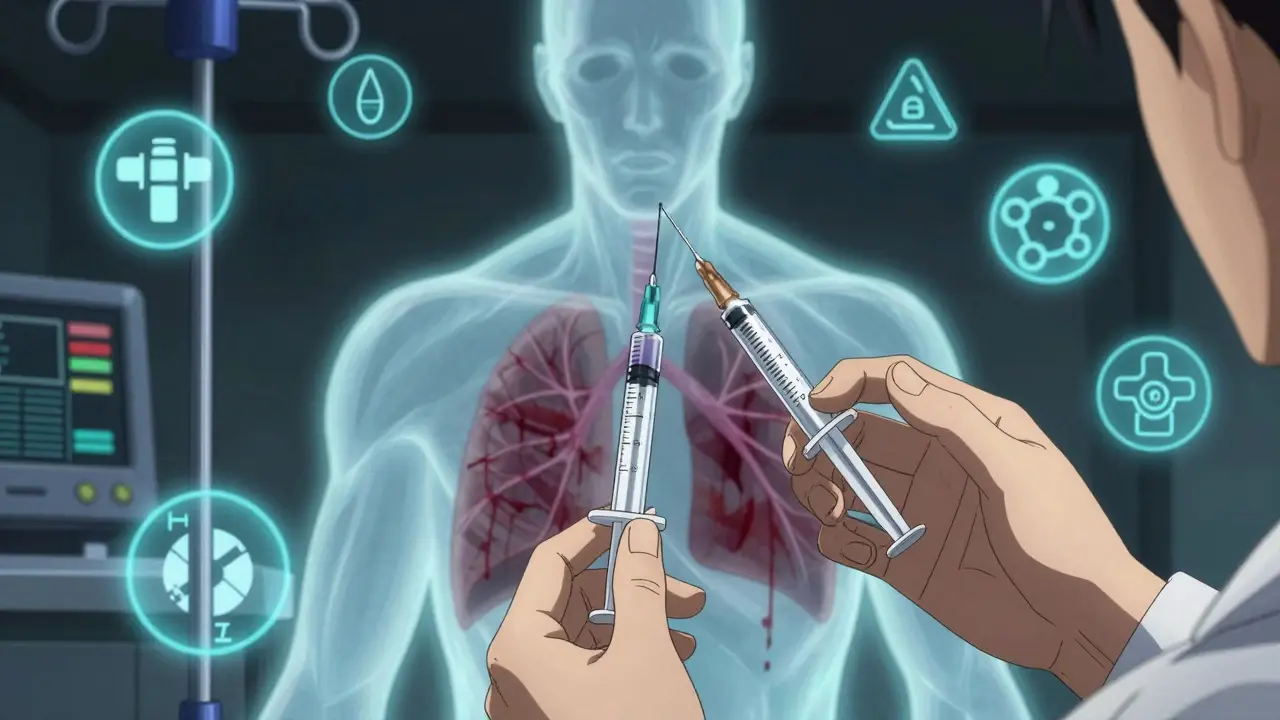
You might think activated charcoal would help. It works for some poisons. But benzodiazepines are absorbed in the gut within 30 to 60 minutes. If someone arrives two hours after swallowing pills, charcoal won’t make a difference. Emergency Care BC data shows it only reduces absorption by 45% if given within that first hour. After that? Zero benefit. And it can cause vomiting, which increases aspiration risk in sedated patients.
That’s why major guidelines-including BMJ Best Practice and StatPearls-state clearly: activated charcoal, whole bowel irrigation, and hemodialysis have no role in benzodiazepine overdose management. Don’t waste time on them.
How Long Do You Monitor?
People often think once someone wakes up, they’re fine. Not true. Sedation fades faster than coordination. Ataxia-loss of balance and muscle control-can linger for hours longer. That’s why patients who’ve overdosed are at risk of falling, even after they seem alert.
Asymptomatic patients should be observed for at least 6 hours. Symptomatic patients? Until all signs of CNS depression are gone. That’s usually 12 hours. But in older adults, or those with liver disease, it can take 24 to 48 hours. Alprazolam, in particular, has a longer-lasting effect and is 3.2 times more likely to require intubation than other benzodiazepines.
Continuous monitoring is non-negotiable. Pulse oximetry, ECG, blood pressure checks every 5 to 15 minutes. Document every change in respiratory rate and level of consciousness. A 2023 study showed that emergency residents need 17 supervised cases to become competent in managing these overdoses. This isn’t something you wing.
The New Threat: Illicit Benzodiazepines
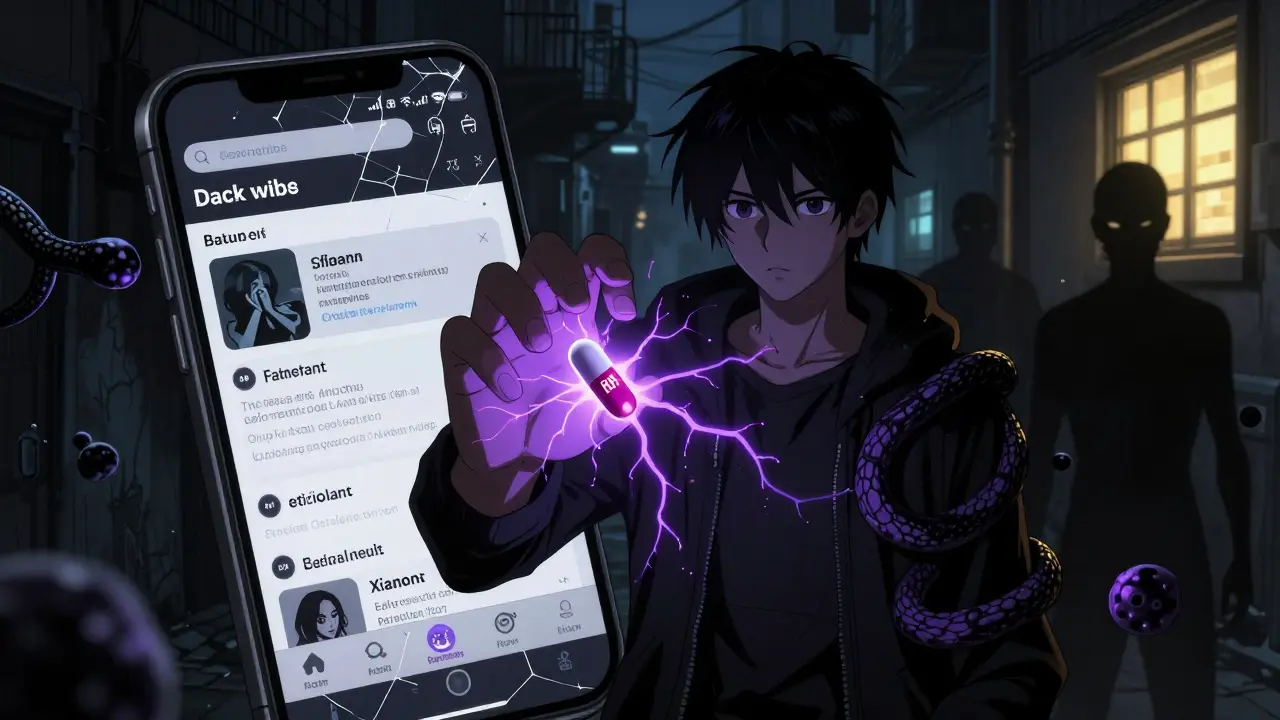
Most benzodiazepine overdoses used to come from prescription pills. Now, it’s different. Illicit labs are making fake versions-etizolam, clonazolam, bromazolam-that are 3 to 10 times more potent than diazepam. These aren’t on prescriptions. They’re sold online as “research chemicals” or mixed into counterfeit opioids.
California Poison Control reported that 68% of severe benzodiazepine overdoses in the Western U.S. now involve these illicit analogs. They hit harder, last longer, and are harder to detect on standard urine screens. The FDA approved the first continuous blood monitor for benzodiazepines in early 2023-BenzAlert™-but it’s still in trials. For now, clinicians have to rely on clinical signs alone.
The NIH is investing $4.2 million into developing longer-acting reversal agents. Until then, the best defense is awareness. Harm reduction programs in 37 U.S. states now train naloxone distributors to recognize benzodiazepine overdose signs too. Because if you’re giving out naloxone for opioids, you need to know that someone might also be sedated by something else.
What’s Changing in 2026?
Prescriptions for benzodiazepines have dropped 14.3% since 2019. But overdose cases have risen 27% in the same period. Why? Because more people are using them recreationally or mixing them with street drugs. The FDA now requires all benzodiazepine labels to warn about the deadly risk of combining them with opioids.
Emergency departments are shifting focus from reversal to prevention. Training staff to spot co-ingestants. Asking the right questions. Not assuming a patient is telling the whole truth. One ER director in Phoenix reported a 34% drop in transfers after implementing a strict 4-hour observation protocol and mandatory toxicology screening.
The future isn’t about better antidotes. It’s about better recognition. Better monitoring. Better systems. Because when someone overdoses on benzodiazepines, the answer isn’t a drug. It’s time, attention, and vigilance.
Can you die from a benzodiazepine overdose alone?
It’s extremely rare. Isolated benzodiazepine overdoses have a mortality rate of only 0.01% to 0.05%. Death usually happens when breathing stops for too long, which is uncommon unless the person has other health issues or took a massive dose. The real danger comes from mixing benzodiazepines with opioids, alcohol, or other depressants.
Why is flumazenil not recommended for most overdose cases?
Flumazenil reverses benzodiazepines but has a short half-life (41 minutes), meaning sedation can return. It also triggers seizures in people with chronic benzodiazepine dependence-up to 38% of cases. In mixed overdoses, it doesn’t affect opioids, so the person remains at risk of respiratory arrest. Most emergency departments no longer stock it because the risks outweigh the benefits.
How long should a patient be monitored after a benzodiazepine overdose?
Asymptomatic patients need at least 6 hours of observation. Symptomatic patients must be watched until all signs of central nervous system depression are gone-typically 12 hours. In elderly patients or those with liver disease, monitoring may last 24 to 48 hours. Ataxia (loss of coordination) often lasts longer than drowsiness, so discharge should not happen until the patient walks steadily and safely.
Is activated charcoal useful in benzodiazepine overdose?
Only if given within 60 minutes of ingestion. Benzodiazepines are absorbed quickly in the stomach and intestines. After that, charcoal won’t help. Major guidelines now state that activated charcoal, hemodialysis, and whole bowel irrigation have no role in managing benzodiazepine toxicity. Giving it later can cause vomiting and increase aspiration risk.
What are the new dangers in benzodiazepine overdoses today?
Illicitly manufactured benzodiazepines like etizolam and clonazolam are now the leading cause of severe overdoses. These are 3 to 10 times more potent than traditional ones and often mixed with fentanyl. They’re not detectable on standard drug screens, and they cause deeper, longer-lasting sedation. Cases have risen sharply since 2020, and experts predict a 40% increase in ER visits by 2025.


Posts Comments
Konika Choudhury January 11, 2026 AT 11:02
Benzodiazepines are just another tool the medical industrial complex uses to keep people docile and dependent
Darryl Perry January 11, 2026 AT 12:10
Flumazenil is obsolete. Supportive care is the only evidence-based approach. End of story.
Windie Wilson January 13, 2026 AT 02:46
So let me get this straight-we’re telling people to just wait and watch while someone stops breathing? And we call this medicine?
Daniel Pate January 14, 2026 AT 20:36
It’s fascinating how the body’s natural homeostatic mechanisms are so often ignored in favor of pharmacological interventions. The brain doesn’t need a chemical antidote-it needs time, silence, and space to rebalance. Flumazenil isn’t just risky-it’s philosophically misguided. We treat symptoms, not systems.
Jose Mecanico January 15, 2026 AT 05:52
Agreed. Monitoring is everything. I’ve seen too many patients discharged too early and end up back in the ER.
Monica Puglia January 16, 2026 AT 22:27
Yes!! 😊 I work in ER and we’ve cut our transfer rates by half just by sticking to the 6-12 hour rule. So simple, so effective.
Alice Elanora Shepherd January 17, 2026 AT 16:20
It is imperative, however, to note that the ABCDE protocol must be applied with meticulous attention to detail-particularly in elderly patients, where even minor deviations in respiratory rate can precipitate catastrophic outcomes. Furthermore, the presence of co-ingestants must be actively sought, not merely assumed.
Christina Widodo January 18, 2026 AT 20:53
Wait-so if someone takes alprazolam and vodka, they’re 15x more likely to stop breathing? That’s wild. Why isn’t this on every prescription bottle?
Jennifer Phelps January 19, 2026 AT 00:17
Illicit benzos are the real crisis nobody talks about. My cousin OD’d on clonazolam thinking it was Xanax. He’s lucky he’s alive
Amanda Eichstaedt January 20, 2026 AT 13:02
There’s a deeper issue here. We’ve turned human suffering into a pharmacological puzzle. We don’t ask why people are taking these drugs in the first place. We don’t ask about trauma, isolation, poverty. We just say ‘don’t mix’ and call it a day. The real overdose is the one we’re all taking-of capitalism, of loneliness, of neglect.
Alex Fortwengler January 21, 2026 AT 17:40
Flumazenil was banned because Big Pharma doesn't want you to have a real antidote. They'd rather keep you hooked on rehab centers and lifelong prescriptions. The FDA is in the pocket of the drug companies. Look at the timeline-right after they made billions off opioid prescriptions, they quietly killed flumazenil. Coincidence? I think not.
jordan shiyangeni January 22, 2026 AT 16:36
It is deeply troubling, and frankly, morally reprehensible, that emergency departments have abandoned the only pharmacological reversal agent available for benzodiazepine toxicity-flumazenil-on the basis of a few statistically marginal risks, while simultaneously ignoring the systemic failure of prescribers who routinely co-prescribe benzodiazepines with opioids, thereby creating a predictable, preventable catastrophe. This is not medicine. This is negligence dressed in clinical jargon.
Abner San Diego January 24, 2026 AT 14:57
They say monitoring is the answer, but let’s be real-hospitals are understaffed, nurses are burned out, and patients get left in rooms for hours. The system’s broken. We’re just putting band-aids on a hemorrhage.
Eileen Reilly January 24, 2026 AT 17:31
lol at the ‘BenzAlert™’ thing. Next they’ll make a smart pill that texts your mom when you OD. Meanwhile, the real problem is people are just desperate. No one’s talking about the trauma behind the pills.
Write a comment