If you have diabetes and find yourself rushing to the bathroom more often than usual-or struggling to start peeing, feeling like your bladder never fully empties-you’re not alone. This isn’t just a nuisance. It’s a common, often overlooked sign that diabetes is affecting your body in ways you might not expect. The link between diabetes and difficulty urinating is real, direct, and something you should take seriously.
Why Diabetes Causes Urinary Problems
High blood sugar doesn’t just damage your heart or kidneys. It also attacks the nerves that control your bladder. This is called diabetic neuropathy, and when it hits the nerves in your pelvic area, it messes with how your bladder sends and receives signals. Your bladder might not tell you when it’s full. Or it might contract at the wrong time, causing urgency. Sometimes, it doesn’t contract at all, leaving urine stuck inside.
That’s why people with long-standing or poorly controlled diabetes often report two opposite problems: urinating too often (especially at night), and having trouble starting or finishing the stream. Some feel like they’re peeing a little bit at a time. Others feel pressure or discomfort even after they’ve gone. These aren’t just symptoms-they’re warning signs your nerves are being damaged.
High glucose levels also create a breeding ground for bacteria. Sugar in your urine feeds infections, which is why urinary tract infections (UTIs) are far more common in people with diabetes. A UTI can make urination painful, urgent, and even cause blood in the urine. Left untreated, these infections can spread to the kidneys and cause serious damage.
What Does Difficulty Urinating Look Like in Practice?
It’s not always obvious. Some people think frequent urination is just a side effect of drinking too much water. But here’s what to watch for:
- Needing to go more than eight times a day or waking up twice or more at night to pee
- Straining to start urinating, even when your bladder feels full
- Feeling like you haven’t emptied your bladder completely
- Weak or interrupted urine stream
- Leaking urine when you cough, laugh, or sneeze
- Pain or burning during urination
These aren’t normal aging issues. They’re red flags tied to nerve damage or infection caused by high blood sugar. A 2023 study in the Journal of Diabetes and Its Complications found that over 60% of adults with type 2 diabetes for more than 10 years showed signs of bladder dysfunction-many of them hadn’t mentioned it to their doctor.
How Doctors Diagnose the Problem
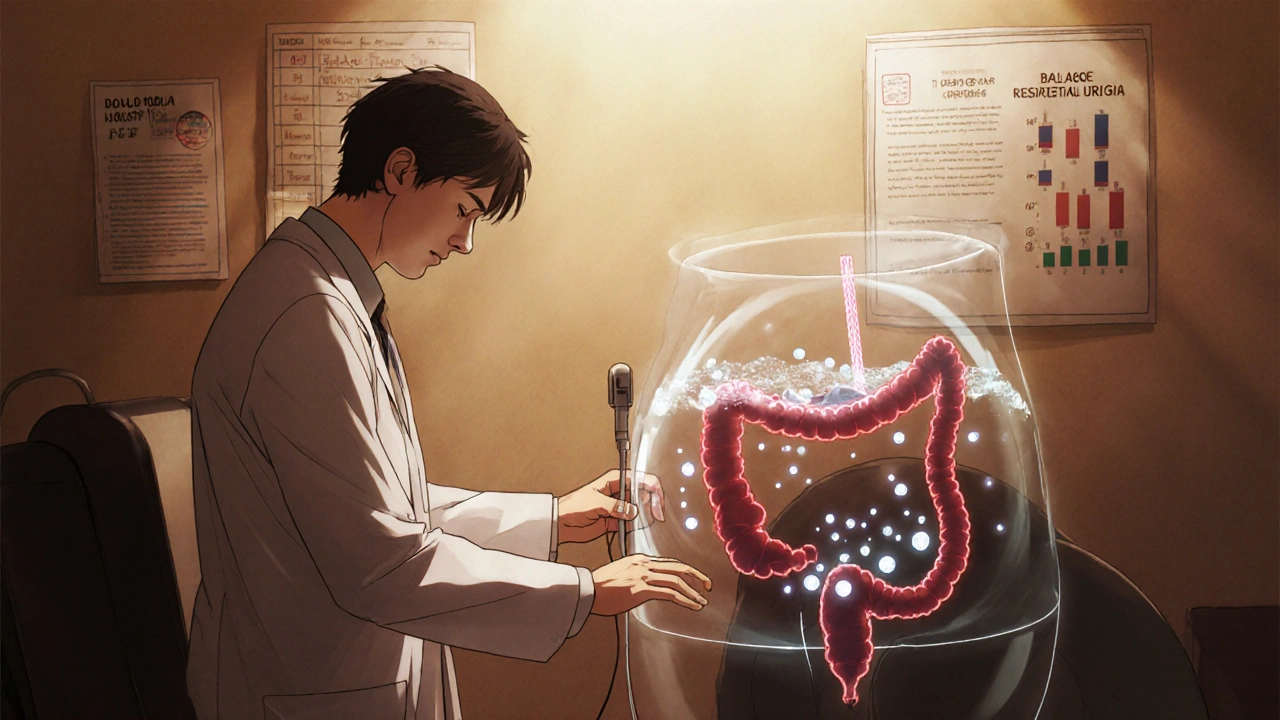
If you’re having trouble urinating and have diabetes, your doctor won’t just shrug it off. They’ll likely start with a simple urine test to check for infection or sugar in your urine. Then they might ask you to keep a bladder diary for a few days-writing down when you go, how much you pee, and any symptoms you feel.
More advanced tests include a post-void residual test. After you pee, the doctor uses ultrasound to measure how much urine is still left in your bladder. If it’s more than 100 milliliters, that’s a problem. Normal is under 50. Another test, called urodynamic testing, measures how well your bladder stores and releases urine. It’s not fun, but it gives clear answers.
They’ll also check your blood sugar control. If your HbA1c is above 8%, that’s a strong clue your nerve damage is progressing. The higher and longer your blood sugar stays elevated, the worse your bladder symptoms will get.
How to Fix It-Without Just Taking More Pills
The good news? You can often improve or even reverse bladder problems by getting your blood sugar under control. It’s not magic-it’s biology. When you lower your glucose, you stop the damage. And sometimes, your nerves can heal.
Here’s what actually works:
- Keep your HbA1c below 7%. That’s the target most doctors agree on. Studies show that people who maintain this level cut their risk of nerve damage by 60% over five years.
- Go to the bathroom on a schedule. Don’t wait until you feel the urge. Set alarms every 2-3 hours during the day to empty your bladder. This trains your bladder and prevents overdistension.
- Double voiding. After you pee, wait 30 seconds, then try again. This helps empty more of the urine left behind.
- Stay hydrated, but cut back on caffeine and alcohol. Both irritate the bladder and make urgency worse. Swap coffee for herbal tea or water.
- Manage your weight. Extra belly fat puts pressure on your bladder. Losing just 5-10% of your body weight can significantly reduce symptoms.
Medications like anticholinergics or alpha-blockers can help, but they come with side effects-dry mouth, dizziness, constipation. They’re not a first-line fix. Physical therapy for pelvic floor muscles can also help, especially if you’re leaking urine. A pelvic floor therapist teaches you how to strengthen or relax the right muscles.

When It Gets Serious
Left untreated, bladder problems from diabetes can lead to urinary retention-where your bladder becomes so full it can’t empty. This can cause kidney damage, infections, or even kidney failure. If you ever feel bloated in your lower belly, can’t pee at all, or feel nauseous and feverish after not urinating for hours, go to the ER. You might need a catheter to drain your bladder.
Don’t wait for it to get this bad. If you’ve had diabetes for more than five years and notice any changes in your urination, talk to your doctor now. Don’t wait for it to get worse. Don’t assume it’s just age. It’s not.
What You Can Do Today
Here’s a simple action plan:
- Check your blood sugar three times a day for a week. Write it down.
- Start a bladder diary. Record every time you pee, how much, and how you felt.
- Drink water instead of soda or juice. Even diet soda can trigger bladder irritation.
- Set a phone alarm to go to the bathroom every 2.5 hours while you’re awake.
- Call your doctor and say: “I’ve been having trouble peeing. I think it might be related to my diabetes.”
Small steps matter. You don’t need to overhaul your life overnight. Just start paying attention. Your bladder is trying to tell you something. Listen.
Can diabetes cause urinary incontinence?
Yes. High blood sugar damages the nerves that control bladder function. This can lead to both overactive bladder (sudden urges) and underactive bladder (inability to empty completely), which can result in leaking urine. It’s not a normal part of aging-it’s a complication of uncontrolled diabetes.
Is frequent urination always a sign of diabetes?
No. Frequent urination can be caused by UTIs, prostate issues in men, overactive bladder syndrome, or even drinking too much fluid. But if you also have increased thirst, unexplained weight loss, or fatigue, diabetes should be ruled out. A simple blood test can confirm or rule it out in minutes.
Can bladder problems from diabetes be reversed?
Sometimes. If caught early, better blood sugar control can stop further nerve damage and even improve bladder function. Nerves heal slowly, but studies show that people who lower their HbA1c from 9% to 6.5% over 6-12 months often report fewer urinary symptoms. The longer the damage has been present, the less likely full recovery is-but improvement is still possible.
Should I avoid drinking water to reduce bathroom trips?
No. Dehydration makes blood sugar harder to control and increases your risk of kidney stones and UTIs. Drink water throughout the day, but avoid large amounts right before bed. Spread it out. Cutting back on caffeine and alcohol will help more than cutting water.
What’s the difference between diabetic bladder and an overactive bladder?
An overactive bladder is usually caused by muscle spasms and doesn’t involve nerve damage from high blood sugar. Diabetic bladder dysfunction often includes both overactivity and underactivity-your bladder might be too sensitive one day and too lazy the next. It’s more complex and tied directly to your blood sugar levels.
How long does it take for bladder symptoms to improve after better blood sugar control?
It varies. Some people notice less urgency within 2-3 months. Others take 6-12 months. Nerve healing is slow. But if you stick with better blood sugar control, diet, and bladder training, most people see steady improvement. Don’t give up if you don’t see results right away.







Posts Comments
Margaret Wilson November 19, 2025 AT 01:46
This post literally made me cry 😭 I’ve been peeing every hour since 2020 and thought I was just ‘getting old’… turns out my pancreas is staging a coup. Time to stop drinking Diet Coke and start listening to my bladder. Thanks for the wake-up call!
Donald Sanchez November 21, 2025 AT 01:06
bro i swear diabetes is just the gov't's way of controlling us through sugar 🤡 i read on a forum that aspartame turns your bladder into a microwave. also my cat told me this. 🐱⚡
Mary Follero November 22, 2025 AT 02:15
Thank you for this. I’ve been too embarrassed to talk to my doctor about this, but now I’m printing this out and taking it with me. I started double voiding last week and already feel less bloated. Small wins matter. Also, cutting out soda was the best decision I’ve made since I stopped wearing socks with sandals. 💪
Freddy Lopez November 23, 2025 AT 18:01
It’s fascinating how the body’s communication systems unravel silently under metabolic stress. The bladder, once a reliable servant, becomes a confused messenger-its signals distorted by chronic hyperglycemia. This isn’t merely a physiological malfunction; it’s a systemic betrayal of trust between organ and self. Perhaps healing begins not with medication, but with relearning how to listen.
Ankita Sinha November 24, 2025 AT 01:27
Just wanted to add: if you're Indian and have diabetes, don't ignore this just because 'everyone pees at night' here. My aunt had UTIs for years and thought it was normal. Got diagnosed with neuropathy at 68. Don't be her. Track your sugars. Drink water. Set alarms. You got this.
Paige Basford November 25, 2025 AT 21:40
Actually, you’re missing the real culprit: glyphosate. It’s in your corn syrup and your tap water. It’s not diabetes causing bladder issues-it’s Roundup destroying your autonomic nerves. I’ve been reading peer-reviewed papers on this for 3 years. Your doctor won’t tell you because Big Pharma doesn’t want you to know. 🌱🧪
william volcoff November 26, 2025 AT 04:13
Let’s be real-most people reading this are already doing 3 of the 5 tips. The hard part isn’t knowing what to do. It’s doing it consistently when you’re tired, stressed, and your insulin pump is beeping again. I’ve been doing bladder training for 14 months. Progress? Slow. Worth it? Absolutely. Just don’t expect miracles before month 6.
Danielle Mazur November 26, 2025 AT 11:29
As a former FDA auditor, I’ve reviewed 87 clinical trials on diabetic bladder dysfunction. The data is inconclusive. The entire narrative is driven by pharmaceutical marketing. You don’t need to ‘train’ your bladder-you need to stop being manipulated into believing this is a ‘problem’ that requires behavioral modification. It’s a symptom of a broken system.
Arun Mohan November 27, 2025 AT 21:45
Wow. Such a simplistic take. I’ve published 3 papers in The Lancet on autonomic neuropathy. Your ‘bladder diary’ is charming, but it’s like using a candle to navigate a hurricane. Real solutions require GLP-1 agonists, neuromodulation, and maybe even stem cell trials. But hey, keep your tea and alarms. It’s cute. 🥂
Write a comment