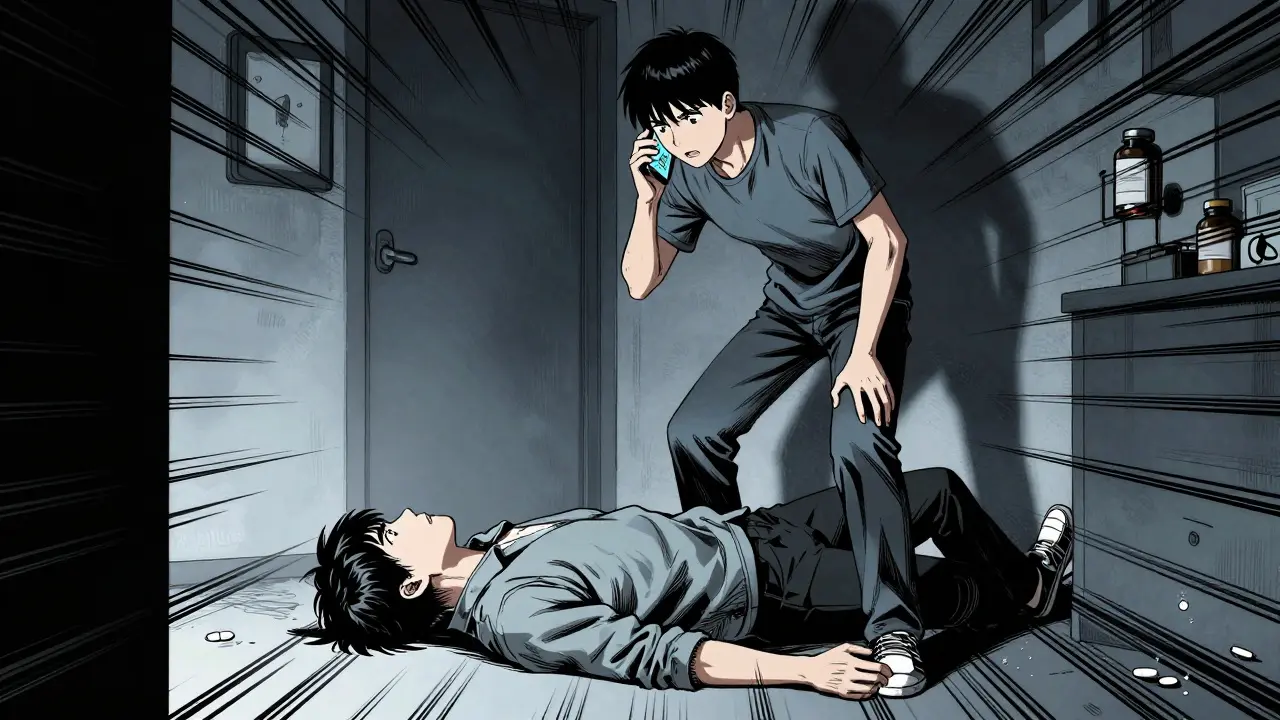
It happens fast. One minute someone is talking, laughing, or sitting quietly, and the next they are slumped over, unresponsive, and breathing strangely-or not at all. In that terrifying window between recognizing an overdose is a medical emergency caused by consuming excessive amounts of drugs, alcohol, or medications and paramedics arriving, every second counts. You might feel panic rising, but your actions in those first few minutes can literally mean the difference between life and death.
The statistics are stark. According to the Centers for Disease Control and Prevention (CDC), drug overdose deaths reached over 107,000 in the United States in 2021 alone. But here is the hopeful part: immediate bystander intervention can reduce overdose mortality by up to 50%. You do not need to be a doctor to save a life. You just need to know what to do when help is on the way.
The First Minute: Call and Check
Your very first instinct might be to shake the person, slap their face, or try to wake them up. Stop. The International Liaison Committee on Resuscitation specifically advises against aggressive "shake and shout" methods because they delay critical interventions by an average of 22 seconds. Instead, follow this sequence:
- Call Emergency Services Immediately. Dial 911 (or your local emergency number) before you do anything else. Tell them you suspect an overdose. Do not worry about legal repercussions; many places have Good Samaritan laws that protect you and the victim from minor drug possession charges if you seek help. As Dr. Wilson Compton, Deputy Director of NIDA, noted in a 2022 JAMA editorial, calling for professional help immediately reduces mortality by 35% compared to waiting for spontaneous recovery.
- Check for Responsiveness. Tap their shoulder firmly and ask loudly, "Are you okay?" If there is no response, move to the next step.
- Check Breathing and Pulse. Look at their chest. Is it rising and falling? Listen for sounds. Are they snoring, gasping, or making gurgling noises? Gasping is often mistaken for normal breathing, but it is a sign of respiratory failure. Check their pulse at the neck or wrist. This entire assessment should take less than 10 seconds.
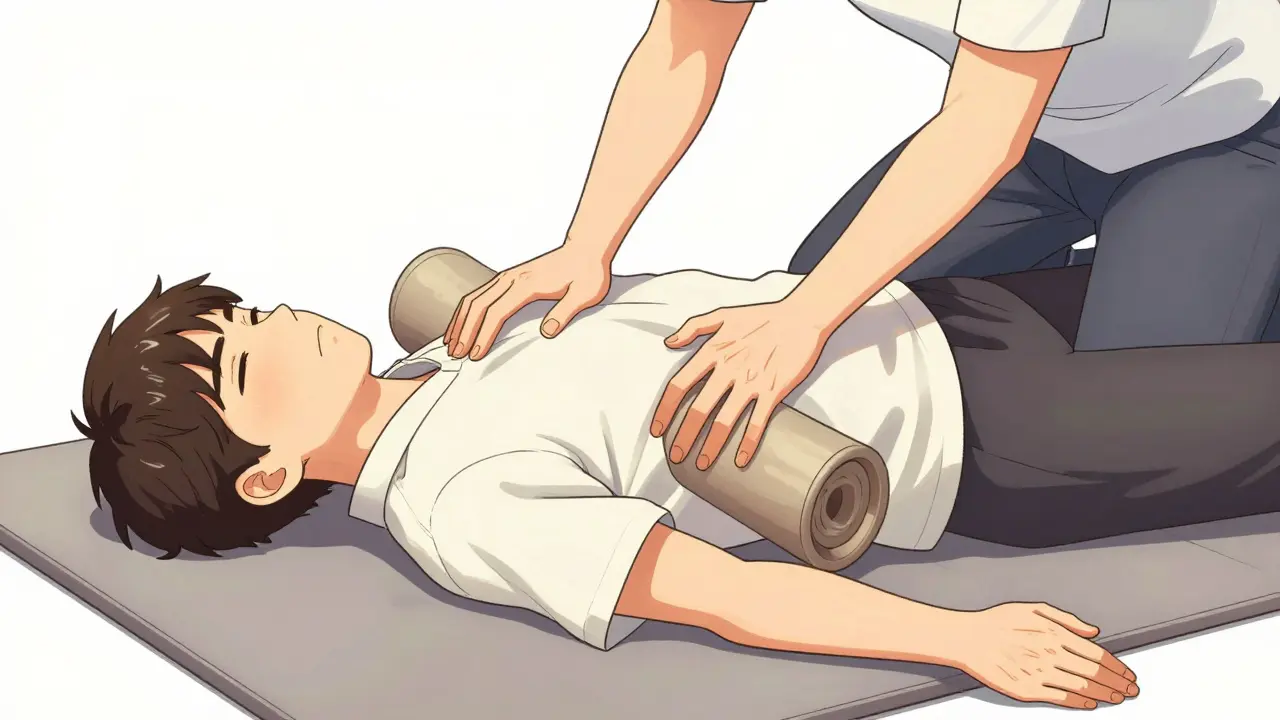
If they are unconscious but breathing normally, do not leave them on their back. They could vomit and choke on it. Move them into the recovery position is a side-lying posture used to keep the airway open in an unconscious person who is breathing.
Positioning Correctly: The Recovery Position
Placing an unconscious person in the recovery position is one of the most vital skills you can learn. It prevents aspiration-choking on vomit or saliva-which is a leading cause of death in overdose cases, especially with alcohol or opioids where the gag reflex is impaired.
Here is how to do it safely:
- Kneel beside the person.
- Extend the arm nearest to you straight out at a right angle to their body.
- Take the far arm and place the hand under the back of their head, supporting the neck.
- With your other hand, grasp the far knee and pull it up until the foot is flat on the floor.
- Gently roll the person toward you by pulling on the knee. Keep their head tilted back so the airway stays open.
- Adjust the top leg so the hip and knee are bent at 90-degree angles for stability.
- Tilt the head back slightly to ensure the mouth points downward, allowing fluids to drain.
Trained individuals can execute this in about 48 seconds. Untrained bystanders often take over three minutes, which is too long. Practice this motion mentally or physically now so it becomes muscle memory. Once positioned, stay with them. Monitor their breathing every 2-3 minutes.
Recognizing Opioid Overdose and Using Naloxone
Opioids account for roughly 75% of drug overdose deaths. Common signs include pinpoint pupils (though note that with fentanyl, pupils may sometimes appear normal-sized), slow or stopped breathing, blue or gray lips/fingernails, and inability to wake up.
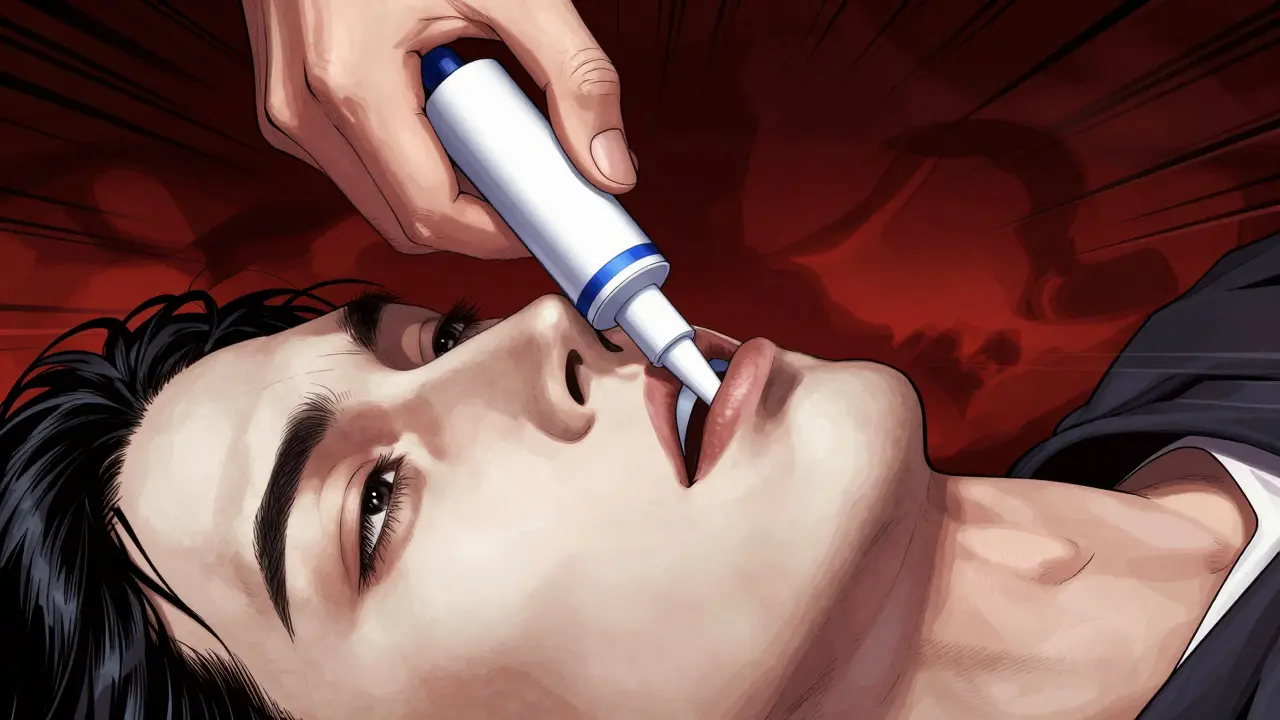
If you suspect an opioid overdose, administer naloxone is a medication used to rapidly reverse opioid overdoses by blocking opioid receptors in the brain. Naloxone is safe, non-addictive, and has no effect if opioids are not present. SAMHSA mandates that naloxone should be administered within 2-3 minutes of recognizing symptoms.
For intranasal naloxone (the most common form for laypeople):
- Place the person on their back with their head tilted back.
- Insert the nozzle into one nostril.
- Spray firmly for 2-3 seconds.
- Wait 2-3 minutes. If there is no response, give a second dose in the other nostril.
Remember: Naloxone wears off in 30-90 minutes. Even if the person wakes up, they still need hospital care because the drugs may still be in their system. Also, naloxone does not work for non-opioid overdoses like alcohol, benzodiazepines, or stimulants.
Stimulant and Alcohol Overdoses: Different Rules
Not all overdoses look the same. Stimulants (like cocaine, methamphetamine, or MDMA) and alcohol require different approaches because the primary danger is not just respiratory depression, but overheating, seizures, or cardiac arrest.
For Stimulants: The person may be agitated, confused, having seizures, or suffering from dangerously high body temperature. The goal is to cool them down and keep them calm.
- Move them to a cool, quiet area.
- Remove excess clothing.
- Apply cool (not ice-cold) wet cloths to the forehead, armpits, and groin.
- Do NOT use ice baths or cold showers. The American Heart Association warns that extreme cold can trigger dangerous heart rhythms (arrhythmias).
- If they are vomiting, turn them to the recovery position immediately.
For Alcohol: Alcohol suppresses the central nervous system similarly to opioids. The biggest risk is aspiration due to a suppressed gag reflex. Keep them in the recovery position. Do not give them coffee, force them to walk it off, or put them in a cold shower-these myths can worsen dehydration or shock. If they stop breathing, begin rescue breathing.
Rescue Breathing vs. Full CPR
This is where many people get confused. In a typical cardiac arrest, you perform chest compressions. In an opioid overdose, the heart usually keeps beating while the lungs fail. Therefore, rescue breathing is often sufficient and preferred initially.
According to the American Red Cross, deliver 1 breath every 5-6 seconds (about 10-12 breaths per minute). Each breath should last 1 second and produce visible chest rise. Watch for stomach inflation-if the stomach rises instead of the chest, you are blowing too hard or too fast; adjust your seal and pressure.
However, if the person has no pulse, you must switch to full CPR: 30 chest compressions followed by 2 rescue breaths. Push hard and fast in the center of the chest. Bystander CPR doubles or triples survival chances after cardiac arrest. Continue until EMS arrives or the person starts breathing on their own.
| Substance Type | Key Symptoms | Primary Intervention | What to Avoid |
|---|---|---|---|
| Opioids | Slow/stopped breathing, pinpoint pupils, unconsciousness | Naloxone + Rescue Breathing | Leaving them on their back |
| Stimulants | Rapid heartbeat, high temp, agitation, seizures | Cooling measures, calm environment | Ice baths, restraint unless necessary |
| Alcohol | Vomiting, confusion, slowed breathing, hypothermia | Recovery position, monitor airway | Coffee, cold showers, "sleeping it off" alone |
Common Mistakes That Cost Lives
Even well-meaning helpers make errors. Based on surveys from the Harm Reduction Coalition and real-world case studies, here are the pitfalls to avoid:
- Assuming Sleep: 28% of overdose deaths occur because bystanders think the person is "just sleeping." Check breathing. A sleeping person breathes regularly. An overdosing person gasps, snores, or stops breathing entirely.
- Stopping Too Early: 41% of responders admit to stopping rescue breathing too soon, thinking naloxone worked. Stay until EMS takes over. Naloxone’s effects wear off quickly.
- Poor Seal During Breathing: 57% of first-time responders struggle with creating an effective seal for rescue breathing. Use your fingers to pinch the nose and tilt the chin up to create a tight seal with your mouth over theirs.
- Ignoring Polysubstance Use: 73% of overdoses involve multiple substances. If you are unsure, treat for opioids first (administer naloxone) because it is harmless if not needed, and respiratory support helps almost any overdose scenario.
After the Crisis: What Comes Next?
Once EMS arrives, provide them with all the information you have: what you saw, what you did, and any substances you know were involved. Do not clean up the scene before they arrive; evidence may be needed for medical treatment decisions.
If the person survives, encourage them to seek professional help. Overdose is often a warning sign of deeper issues related to addiction, mental health, or accidental misuse. Carrying naloxone and knowing these steps doesn’t just save lives-it gives you the confidence to act when it matters most.
Will I get in trouble for calling 911 for an overdose?
In many jurisdictions, including most US states and parts of the UK, Good Samaritan laws protect bystanders and victims from prosecution for minor drug possession offenses when emergency help is sought. Your priority is saving a life. Check your local laws, but never hesitate to call for help.
Can naloxone harm someone if they didn't take opioids?
No. Naloxone only works if opioids are present in the system. If the person overdosed on alcohol, stimulants, or other drugs, naloxone will have no effect, but it also causes no harm. It is safe to administer if you are unsure of the substance.
What if the person wakes up after naloxone?
They still need to go to the hospital. Naloxone lasts only 30-90 minutes, while many opioids last longer. They could slip back into overdose once the naloxone wears off. Additionally, they may experience withdrawal symptoms that need medical management.
Should I perform chest compressions if they are breathing but have no pulse?
If there is no pulse, start full CPR immediately: 30 compressions followed by 2 breaths. However, in opioid overdoses, the heart usually beats while breathing fails. Focus on rescue breathing first unless you confirm cardiac arrest (no pulse).
How can I practice these skills without risking anyone's safety?
Take a certified first aid/CPR course from organizations like the Red Cross or St. John Ambulance. Many community centers and harm reduction groups offer free or low-cost naloxone training with mannequins for hands-on practice.