Levothyroxine Dosage Timing Planner
Standard recommendation: Empty stomach, 30-60 mins before breakfast.
Safe Time to Take Supplement:
4 Hour Gap--:--
Important: This tool is for educational guidance based on general clinical recommendations. Always follow your physician's specific instructions and report your exact timing during consultations.
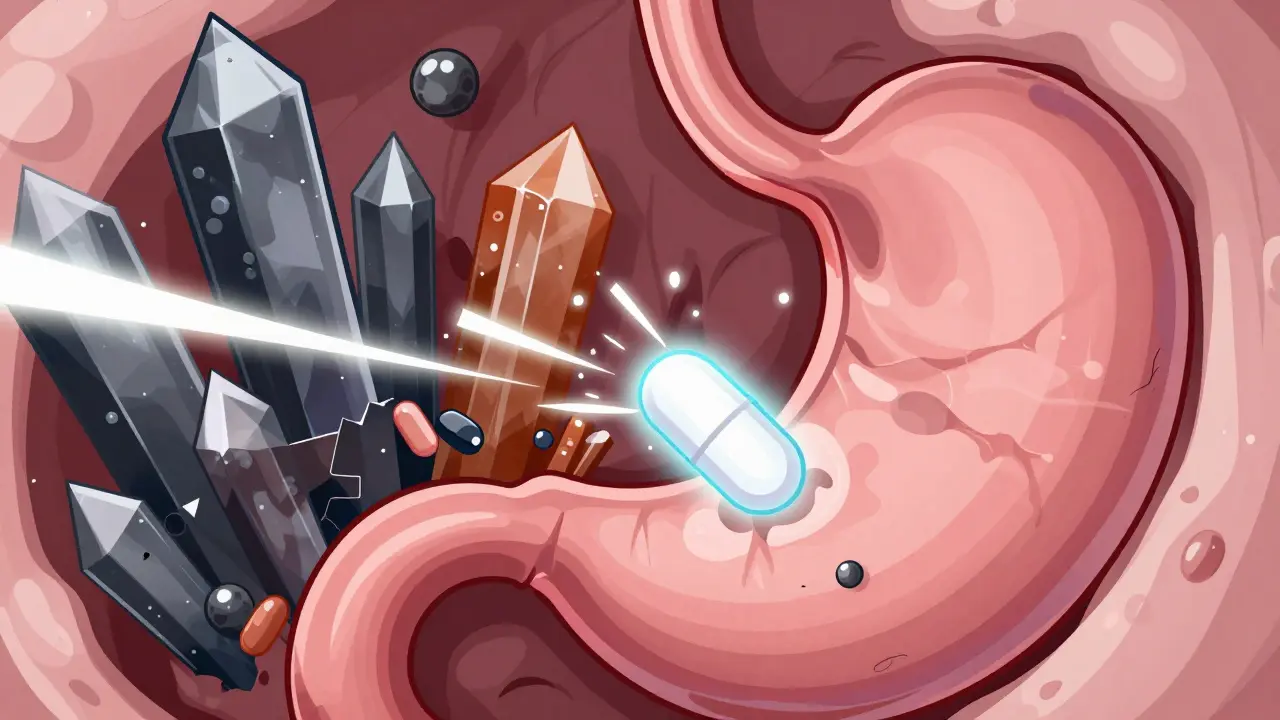
Taking your thyroid medication and a daily multivitamin might seem like a simple morning routine, but for millions of people, this habit is quietly sabotaging their health. If you're taking levothyroxine is a synthetic form of thyroxine (T4) used to treat hypothyroidism, you might notice your energy levels dipping or your brain fog returning, even though you haven't missed a dose. The culprit is often a hidden chemical battle happening in your gut between your medication and common minerals like calcium and iron.
The problem is that levothyroxine has what doctors call a "narrow therapeutic index." In plain English, this means the difference between a dose that works and one that doesn't is tiny. Even a 10% drop in how much your body absorbs can send your thyroid-stimulating hormone (TSH) levels spiking, pushing you back into a hypothyroid state. When you take calcium or iron at the same time, these minerals act like magnets, binding to the medication and creating insoluble complexes that your body simply cannot absorb. Instead of entering your bloodstream, the medicine is flushed out of your system.
The Chemistry of the Interaction
Why do these two specific minerals cause such a stir? It comes down to how they behave in the acidic environment of your stomach. Calcium, especially in the form of carbonate, creates a physical adsorption process where the levothyroxine sticks to the calcium molecules. A study published in the Journal of Clinical Endocrinology & Metabolism found that calcium carbonate, citrate, and acetate all reduced the absorption of the drug by 20-25%.
Iron is even more aggressive. Ferrous sulfate, a common iron supplement, forms a chemical bond with levothyroxine that is incredibly difficult for the body to break. In one clinical observation, nearly 79% of patients who added iron to their stable thyroid regimen saw their TSH levels rise, and over 64% actually felt hypothyroid symptoms return. Essentially, the iron "steals" the medication before it ever reaches your small intestine.
How to Properly Separate Your Doses
To keep your thyroid levels stable, you need to create a "buffer zone" of time. The goal is to let the levothyroxine dissolve and enter your bloodstream before any minerals arrive to interfere. The gold standard for administration is taking your medication on an empty stomach, 30 to 60 minutes before breakfast, with a full glass of water.
Once that is done, the timing for your supplements depends on what you're taking. For calcium, the general rule is a minimum 4-hour gap. If you take your thyroid pill at 6:00 AM, you shouldn't touch your calcium supplement until at least 10:00 AM. Many people find it easier to take their thyroid medication in the morning and move their calcium to dinner time.
Iron requires a similar, if not stricter, window. Research suggests waiting 2 to 4 hours after your thyroid dose before taking iron. Because iron can be even more disruptive than calcium, skipping the gap here often leads to more frequent dose adjustments by doctors. If you find the 4-hour window impossible with a 9-to-5 job, consider taking your thyroid medication as soon as you wake up and scheduling your supplements for a mid-afternoon break or evening.
| Supplement Type | Absorption Reduction | Recommended Gap | Clinical Impact |
|---|---|---|---|
| Calcium Carbonate | ~22.3% | 4 Hours | Moderate TSH increase |
| Calcium Citrate | ~21.8% | 4 Hours | Moderate TSH increase |
| Ferrous Sulfate (Iron) | Significant | 2-4 Hours | High risk of hypothyroid symptoms |

Real-World Challenges and Solutions
Let's be honest: remembering a 4-hour gap is hard. Life happens. You might forget your alarm, or a meeting might run long. Many patients report that maintaining this schedule is the most stressful part of their treatment. This struggle often leads to "yo-yoing" TSH levels, where your blood work looks great one month and terrible the next, simply because your supplement timing was inconsistent.
If you struggle with the clock, there are a few practical hacks. Smartphone alarms are the most effective tool, but a timed pill organizer can also help you visualize the gap. For those who simply cannot manage the timing or have severe malabsorption issues, there are alternative versions of the drug. Liquid levothyroxine (such as Tirosint) is often better absorbed and may reduce the severity of these interactions, though it typically costs more than the standard tablet.

Warning Signs Your Timing is Off
How do you know if your supplements are interfering with your meds? You can't always feel a 15% drop in absorption immediately, but your body will eventually give you clues. Keep an eye out for a return of classic hypothyroid symptoms: unexplained fatigue, feeling cold when others are warm, dry skin, or sudden weight gain.
The most definitive sign is found in your blood work. If your TSH levels are creeping up despite you taking your medication every day, it's time to look at your supplement log. A high TSH is a signal from your brain that the thyroid isn't getting enough hormone-possibly because the calcium or iron in your system is blocking the way.
Managing Your Long-Term Protocol
Consistency is more important than perfection. If you accidentally take your calcium and thyroid pill together one morning, don't panic, but do make a note of it. If it becomes a pattern, it will definitely show up in your lab results. When you visit your endocrinologist, be specific about exactly when you take each pill. Telling a doctor "I take them in the morning" isn't helpful; telling them "I take my thyroid pill at 7 AM and my iron at 11 AM" allows them to make accurate dosing decisions.
As science progresses, we're seeing new options. Some extended-release formulations are being designed to minimize food and supplement interference. While not everyone will need these, they provide a safety net for those whose lifestyles make strict timing impossible.
Can I take my thyroid medication with a multivitamin?
It depends on what's in the multivitamin. If it contains calcium or iron, you should wait at least 4 hours after your levothyroxine dose. Many multivitamins have these minerals, so it's safest to separate them entirely.
What happens if I take them together by mistake?
One-time mistakes won't cause a crisis, but they will reduce the amount of hormone your body absorbs for that day. If you do this consistently, your TSH levels will rise, and you'll likely feel the symptoms of hypothyroidism.
Is calcium citrate better than calcium carbonate for thyroid patients?
Not significantly. While some older data suggested a difference, more recent studies show that all three common forms-carbonate, citrate, and acetate-significantly reduce levothyroxine absorption by roughly 20-25%.
Why must I take levothyroxine on an empty stomach?
Levothyroxine is sensitive to many things, including food, coffee, and minerals. Taking it 30-60 minutes before eating ensures there is nothing in your stomach to block its absorption into the bloodstream.
Can I just increase my dose to compensate for the interaction?
No. Because supplement intake can vary, increasing the dose can lead to over-replacement (hyperthyroidism) if you suddenly start separating the doses correctly. Always adjust doses under a doctor's supervision based on TSH labs.







Posts Comments
Jonathan Hall April 28, 2026 AT 13:07
It is frankly absurd that we are expected to navigate these convoluted pharmacological minefields without more streamlined guidance, and while I appreciate the breakdown, the sheer inconvenience of rearranging one's entire biological morning just to accommodate a tiny pill is an affront to the modern concept of efficient living, especially when you consider how these systemic failures in drug delivery force the patient to become a part-time chemist just to avoid feeling like a zombie for the rest of the day.
Thomas Jorquez April 28, 2026 AT 17:27
The logic here is quite sound, though most people probly dont realize how much of a difference this makes until they see the blood work.
Darrin Oneto April 30, 2026 AT 06:57
Totally a wild ride when your labs are all over the place for no reason then you find out your vitammin is just wrecking the whole vibe of your meds. Absolute chaos in the gut!
Jean Robert April 30, 2026 AT 16:38
I can completely imagine how overwhelming it feels to manage these strict timelines while juggling everything else in life, but please remember that you're doing a great job just by being aware of these interactions, and if you find yourself struggling, just be gentle with yourself because the process of finding a sustainable rhythm with your health often takes a bit of patience and trial and error before it finally clicks into place for you.
Amber McCallum May 2, 2026 AT 11:45
Just take natural foods. Pills are just fake ways to fix a deep spirit problem.
Timothy Brown May 4, 2026 AT 09:24
Imagine actually taking your vitamins at the same time as your thyroid meds in 2024. Like, a basic google search tells you this. Some people just love making their own lives harder for no reason.
prince king May 5, 2026 AT 21:50
It's all about finding that harmony in the body! 🌟 I've found that staying hydrated helps the whole process feel smoother. We're all just learning how to balance our inner chemistry together! 😊✨
Jarrett Jensen May 7, 2026 AT 14:28
The presentation of this data is marginally acceptable, however, one must observe that the author fails to adequately address the pharmacokinetic complexities of liquid formulations in a manner that would satisfy a truly rigorous academic standard. It is quite tedious to encounter such simplified summaries when the underlying biochemical nuances are far more intricate than a mere "buffer zone" would suggest, rendering the overall discourse somewhat pedestrian for those of us with a more sophisticated understanding of endocrinology.
Write a comment