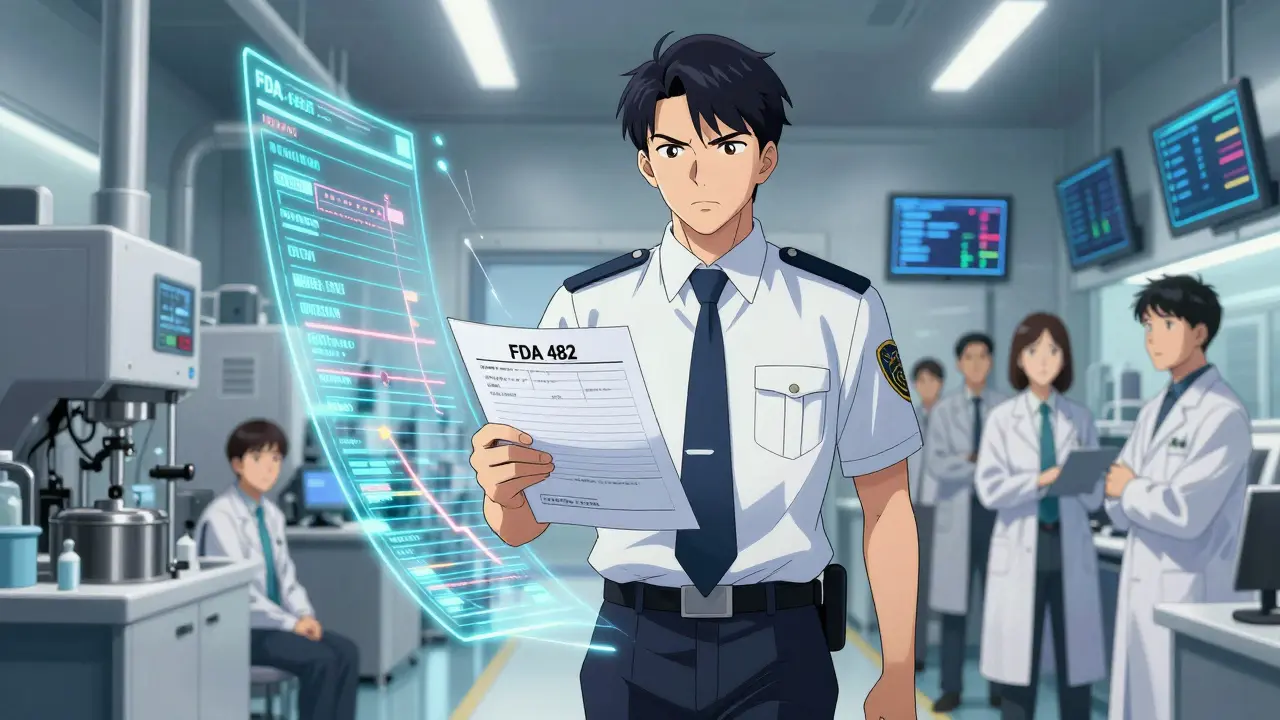
The U.S. Food and Drug Administration (FDA) doesn't just approve drugs and medical devices - it makes sure they're made right. Every year, inspectors walk into factories, labs, and warehouses across the globe to check if companies are following the rules. These aren't random visits. They're critical checks that keep millions of patients safe. If a pill, vaccine, or pacemaker is made in a facility that cuts corners, the consequences can be deadly. That’s why the FDA’s inspection system is one of the most rigorous in the world.
Why FDA Inspections Exist
The foundation was laid in 1938 with the Federal Food, Drug, and Cosmetic Act. Since then, laws like the 1962 Kefauver-Harris Amendments and the 2012 Food Safety Modernization Act have expanded the FDA’s power. Today, inspections are the agency’s main way to verify that manufacturers follow Current Good Manufacturing Practices (CGMP). These aren’t suggestions - they’re legal requirements. CGMP covers everything from how raw materials are stored to how workers are trained and how data is recorded.
The FDA inspects about 12,000 domestic and 1,000 foreign facilities each year. That’s a massive scope. But they don’t inspect every site equally. High-risk facilities - like those making life-saving drugs for cancer patients or implantable devices - get inspected every 6 to 12 months. Low-risk sites, such as those producing over-the-counter supplements, might not see an inspector for 3 to 5 years. This risk-based approach means the agency can focus where it matters most.
The Four Types of FDA Inspections
Not all inspections are the same. The FDA uses four distinct types, each with its own trigger and purpose:
- Pre-approval inspections happen before a new drug or device gets approved. The FDA needs to see that the manufacturing process is solid. If the facility isn’t ready, the product won’t move forward - no matter how promising the science.
- Routine surveillance inspections are the most common. These are scheduled checks to ensure ongoing compliance. The frequency depends entirely on risk level.
- Compliance follow-up inspections occur when a facility previously failed. The FDA returns to see if problems were fixed. Missing this step can lead to shutdowns or import bans.
- For-cause inspections are unplanned. They’re triggered by red flags - a spike in patient complaints, a whistleblower tip, or a sudden surge in product failures. These can happen with zero notice.
Pre-approval inspections are especially strict. Once the FDA determines a facility is ready for review, they must conduct the inspection within 30 days. Delays can hold up life-saving treatments.
What Happens During an Inspection
When an FDA inspector walks in, they don’t just ask questions. They bring official paperwork - FDA Form 482, the Notice of Inspection. This isn’t optional. It’s required by law. The inspector will be accompanied by a designated facility rep the entire time.
The inspection lasts anywhere from 3 to 10 days. It’s not a tour. It’s a deep dive. Inspectors will:
- Walk through the facility, checking cleanliness, equipment condition, and workflow
- Review documents - deviation logs, validation records, training files, batch records
- Interview staff, from lab technicians to quality managers
- Collect samples for lab testing
Data integrity is now the #1 concern. In 2023, 45% of all inspection observations were about electronic records - missing audit trails, unapproved system changes, or backdated entries. The FDA’s focus on 21 CFR Part 11 compliance means every digital system must be validated and secure.
At the end of the inspection, the team hands out FDA Form 483 - a list of objectionable conditions. This isn’t a final verdict. It’s a warning. Facilities have 15 working days to respond with a detailed corrective action plan. Ignore it, and the FDA may issue a warning letter, block imports, or shut down operations.
Why Most Facilities Fail
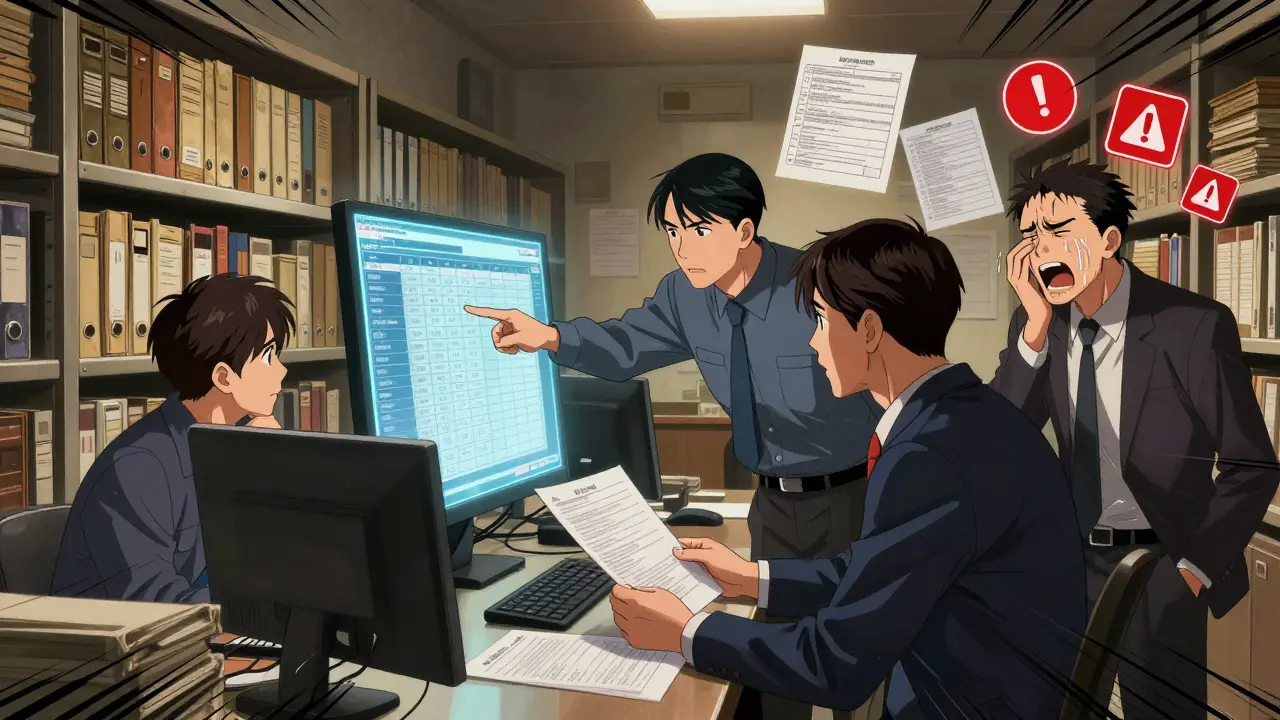
Industry data shows that 78% of inspection findings come from just four areas:
- Inadequate deviation investigations (32%) - Companies document problems but don’t dig deep enough to find the root cause. That’s like fixing a leaky faucet without turning off the water main.
- Incomplete training records (24%) - If staff can’t prove they were trained, the FDA assumes they weren’t. Simple as that.
- Insufficient validation documentation (15%) - Equipment, processes, and software must be proven to work consistently. No assumptions allowed.
- Poor change control records (7%) - Changing a machine setting or software update without documentation is a major red flag.
And here’s the kicker: 87% of Form 483 observations in 2023 were tied to records not being kept for the required 2 years after product discontinuation. If you stop making a product, you still have to keep its records. Many companies don’t realize this.
How to Prepare - Real Strategies That Work
Successful facilities don’t wait for the inspection notice. They build readiness into their culture. Here’s what works:
- Designate a single inspection coordinator - Facilities with one point of contact report 83% smoother inspections. No confusion. No mixed messages.
- Create a dedicated inspection support room - Equip it with printers, computers, phones, and a document management system. Facilities using this setup resolved document requests 40% faster.
- Run quarterly mock inspections - One company reduced observation rates by 63% just by simulating real inspections with their own staff. It’s like fire drills - you don’t wait for the building to burn down.
- Update facility diagrams within 7 days of any change - Inspectors compare floor plans to reality. Even a moved cabinet can raise suspicion.
- Train all staff annually - FDA guidance says 8 hours for frontline workers, 16 for leads. But only 63% of sites meet this. Don’t be in the 37% who fall short.
One common mistake? Staff giving inconsistent answers. If two people describe the same process differently, inspectors assume there’s no real control. Practice answers. Drill your team. Make sure everyone knows the same story.

The Future of Inspections
The FDA is changing how it inspects. In 2022, they piloted remote inspections - virtual tours and digital document reviews. By 2024, they were used on 147 facilities with 78% accuracy matching in-person visits. By 2026, remote tools will make up 35% of all inspections.
AI is coming too. The FDA plans to roll out AI-assisted document review systems by Q3 2025. These tools will scan thousands of pages for missing audit trails, duplicate entries, or unapproved changes - faster than any human.
Inspection frequency is shifting too. High-risk manufacturers - especially those serving older adults - will see inspections increase by 18% through 2026. Low-risk dietary supplement makers may see fewer visits as resources shift to where the risk is highest.
And the number of warning letters? They rose 7% in 2023. Medical device makers received 42% of them. Pharmaceuticals got 38%. That’s not random. It’s a signal: the FDA is watching closely.
What Happens If You Fail?
A Form 483 isn’t the end. But if you don’t respond properly, it becomes a warning letter. If you ignore that? The FDA can:
- Block imports of your products
- Issue a public notice of violations
- Seize inventory
- Shut down your facility
Companies that treat inspections as a compliance hurdle often get caught. Those that treat them as a chance to improve - they thrive.
How often does the FDA inspect manufacturing facilities?
The FDA inspects facilities based on risk. High-risk sites - like those making life-saving drugs or implantable devices - are inspected every 6 to 12 months. Medium-risk sites get checked every 2 to 3 years. Low-risk facilities, such as those producing over-the-counter supplements, may go 3 to 5 years between inspections. The agency uses a risk-based model with 12 specific factors to determine frequency.
What is FDA Form 483 and why does it matter?
FDA Form 483 is a list of objectionable conditions found during an inspection. It’s not a final violation, but it’s serious. Facilities must respond within 15 working days with a corrective action plan. Ignoring or poorly responding to a Form 483 often leads to a warning letter, import bans, or facility shutdowns. Over 1,800 warning letters were issued in 2023 following Form 483 findings.
What are the most common reasons for inspection failures?
The top four reasons are: inadequate deviation investigations (32%), incomplete training records (24%), insufficient validation documentation (15%), and poor change control records (7%). Data integrity issues - like missing audit trails or unapproved system changes - now account for 45% of all observations. Many failures stem from poor recordkeeping, not technical problems.
Can the FDA inspect without warning?
Yes. While routine inspections are usually scheduled with 5 business days’ notice, "for-cause" inspections can happen with zero warning. These are triggered by complaints, adverse events, whistleblower tips, or sudden spikes in product failures. Facilities should always be ready.
What records must be kept after a product is discontinued?
All manufacturing and quality records must be kept for at least 2 years after a product is discontinued. For certain products - like those used in clinical trials or with long-term safety concerns - records must be kept longer. In 2023, 87% of Form 483 observations were linked to missing or improperly retained records.
Are remote inspections real? Do they work?
Yes. The FDA piloted remote inspections in 2022-2023 with 147 facilities. They found that 78% of documentation review items were assessed just as effectively as in-person visits. By 2026, remote tools are expected to make up 35% of all inspections. However, physical inspections are still required for process validation, equipment checks, and facility walkthroughs.
Final Thought
FDA inspections aren’t about catching companies off guard. They’re about ensuring that every pill, device, and vaccine meets the highest standard - every single time. Companies that build inspection readiness into their daily operations don’t just survive inspections - they build trust. And trust is what keeps patients alive.






Posts Comments
Adam M March 15, 2026 AT 23:01
This is why so many generics are garbage. FDA inspections aren't optional - they're the only thing standing between you and a toxic pill. Skip the hype. Just read Form 483s. They tell the real story.
Serena Petrie March 17, 2026 AT 21:57
So basically they just wanna shut down small labs because they can't afford the paperwork. Classic.
Sally Lloyd March 17, 2026 AT 23:22
Let me guess... the FDA inspects the plants that make the vaccines... but never the ones that make the chemicals that go into the vaccines. Funny how that works. And the audits? Always done by contractors who used to work for the companies they're inspecting. Coincidence? I think not. 🤔
Elsa Rodriguez March 19, 2026 AT 17:41
I swear to god, if one more person says 'trust the FDA' I'm gonna scream. They missed the heparin crisis. They missed the tainted baby formula. They missed the contaminated insulin. And now they're patting themselves on the back for 'risk-based inspections'? BRO. That's just code for 'we're too broke to check everything'. I'm not a conspiracy theorist... I just read the damn reports. 😭
Aaron Leib March 21, 2026 AT 09:28
The key takeaway here isn't fear. It's preparedness. Companies that treat inspections like a surprise pop quiz fail. Those that build compliance into daily ops? They thrive. It's not about perfection. It's about consistency. And documentation. Always document.
Kathy Leslie March 21, 2026 AT 09:43
I work in a lab that makes OTC stuff. We get inspected every 4 years. Last time they found we had a loose screw on a scale. We fixed it. They left. No big deal. The system’s not perfect, but it’s not a witch hunt either. Chill.
mir yasir March 23, 2026 AT 02:31
The structural integrity of regulatory oversight in the United States is predicated upon a hierarchical framework of epistemic authority, wherein the FDA functions as a technocratic vanguard. One must acknowledge the profound ontological weight of CGMP compliance as a manifestation of epistemic vigilance in pharmaceutical praxis. The notion of 'risk-based inspection' is, in fact, a neoliberal reconfiguration of public health accountability.
Stephanie Paluch March 24, 2026 AT 00:00
I just read this whole thing and I’m so impressed 😍 The part about mock inspections? Genius. And the 2-year record rule? I had NO idea. I’m gonna share this with my team. We’ve been slacking on change control… thanks for the wake-up call 🙌
tynece roberts March 25, 2026 AT 11:55
so like... i work in a place that makes gummy vitamins and we got inspected last year and the inspector was like 'why is this shelf 2 inches to the left?' and i was like 'uh... because we moved it?' and he wrote it down. i mean. i get that records matter. but like. we're not making heart stents. why is this soooo intense? also i think they're just trying to make us hire more people to do paperwork. which is dumb. we're a 6 person shop. i can't even find my coffee mug some days.
Ali Hughey March 25, 2026 AT 12:56
THEY’RE LYING TO YOU. THE FDA DOESN’T INSPECT FOREIGN FACILITIES-THEY PAY THIRD-PARTY CONTRACTORS WHO ARE OWNED BY THE COMPANIES THEY’RE SUPPOSED TO BE INSPECTING!! AND THE FORM 483? THAT’S A LIE. THEY USE IT TO INTIMIDATE SMALL BUSINESSES WHILE BIG PHARMA GETS A PASS!! I’VE SEEN THE DOCUMENTS. THEY’RE ALL BACKDATED. THE AUDIT TRAILS? FAKED. THE AI SYSTEMS? THEY’RE DESIGNED TO HIDE THE TRUTH!! THEY’RE SCREWING US OVER-AND THEY’LL DO IT TO YOU NEXT!! DON’T TRUST THE SYSTEM!! THEY’RE WATCHING YOU RIGHT NOW!! 🔍🚨💣
Write a comment