Metformin Dosing Calculator
Calculate Your Safe Metformin Dose
Based on your kidney function (eGFR), we'll show you the appropriate metformin dosage range and monitoring schedule.
Enter your eGFR to see your recommended dose
Metformin is the most common starting drug for type 2 diabetes. It’s cheap, effective, and reduces heart disease risk. But many people stop taking it because they’re told their kidneys are "bad"-and they believe metformin is hurting them. That’s a myth. Metformin doesn’t damage kidneys. It just leaves your body through them. That’s why you need to watch your kidney function closely-and adjust your dose if needed.
Why Kidney Function Matters for Metformin
Metformin doesn’t get broken down by your liver. It doesn’t turn into anything else. It goes in, does its job lowering blood sugar, and then gets flushed out by your kidneys. If your kidneys aren’t working well, metformin builds up. Too much can lead to lactic acidosis-a rare but serious condition where your blood becomes too acidic.
But here’s the key: lactic acidosis from metformin is extremely rare. Studies show it happens in only 3.3 out of every 100,000 people taking it each year. Most cases happen when someone has another serious illness-like a heart attack, infection, or severe dehydration-not because of metformin alone.
That’s why guidelines changed in 2016. Before then, doctors would stop metformin if your creatinine was above 1.4 or 1.5. That meant lots of people with mild kidney issues lost a drug that protected their heart. Now, we use eGFR-estimated glomerular filtration rate-to measure kidney function more accurately. It’s not about creatinine levels anymore. It’s about how well your kidneys are filtering blood.
eGFR Ranges and Metformin Dosing
Your eGFR tells you how much blood your kidneys filter per minute. The numbers guide your dose:
- eGFR ≥60 mL/min/1.73 m²: You can take the full dose-up to 2,550 mg per day. Get your kidney function checked every 6 to 12 months.
- eGFR 45-59 mL/min/1.73 m²: Max dose is 2,000 mg per day. Check kidney function every 3 to 6 months.
- eGFR 30-44 mL/min/1.73 m²: Max dose is 1,000 mg per day. Check every 3 months. Don’t start metformin here if you’ve never taken it before-but if you’re already on it and stable, keep going.
- eGFR <30 mL/min/1.73 m²: Stop metformin. It’s not safe.
Some guidelines, like Canada’s RxFiles, are even more specific. They say: if you’re on dialysis, take 250 mg daily on peritoneal dialysis, or 500 mg after each hemodialysis session. These details matter because kidney function isn’t the same for everyone.
When to Hold Metformin
You don’t need to stop metformin forever just because your kidneys are a little slower. But there are times you should pause it temporarily:
- Before contrast dye tests (like CT scans with iodine). If your eGFR is under 60, hold metformin for 48 hours before and after the scan. Restart only after checking your kidney function again.
- If you’re sick. Severe infection, vomiting, diarrhea, or dehydration can cause sudden drops in kidney function. Stop metformin until you’re back to normal.
- If you’re on NSAIDs (like ibuprofen or naproxen). These can stress your kidneys, especially if your eGFR is between 30 and 59. Avoid them if possible.
Many patients don’t know this. They keep taking metformin before a CT scan and end up in the hospital. A simple hold-and-recheck saves lives.
Myths That Cost People Their Health
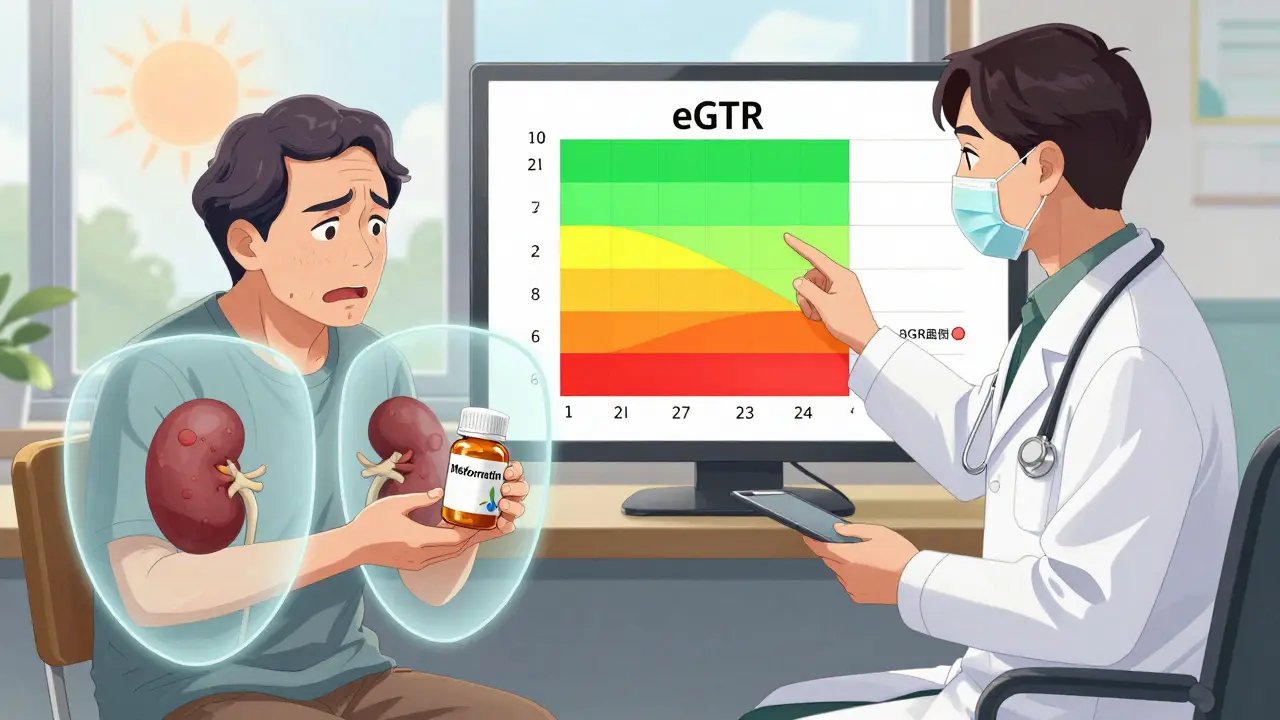
Doctors still tell patients: "Your kidneys are bad, so we’re stopping metformin." That’s outdated. A 2022 chart review at Cleveland Clinic found 22% of patients with eGFR above 30 were taken off metformin unnecessarily-just because someone misread their numbers.
One patient, an 82-year-old man with eGFR of 38, was taken off metformin. His HbA1c jumped from 6.8% to 8.9% in three months. He ended up in the ER with high blood sugar. He didn’t need to be off it. He just needed a lower dose and better monitoring.
Another myth: "Metformin causes kidney damage." It doesn’t. It’s not toxic to kidneys. It’s like a delivery truck that only uses one road. If the road gets clogged, the truck backs up. But the road itself isn’t broken.
Patients who understand this are more likely to stick with the drug. Cleveland Clinic found that when doctors told patients: "Metformin doesn’t harm your kidneys-it just needs monitoring because it leaves through them," adherence to check-ups went up by 35%.
What About Vitamin B12?
Long-term metformin use can lower vitamin B12 levels. About 7-10% of people on it for more than 4 years develop a deficiency. That can cause fatigue, numbness, or even nerve damage.
It’s not a reason to stop metformin. It’s a reason to check your B12 every 2-3 years, especially if you’re over 60, vegetarian, or taking acid-reducing meds like omeprazole. If your levels are low, a simple supplement fixes it.
Special Cases: Elderly, Dialysis, and Unstable Kidneys
Older adults often have lower muscle mass, which makes creatinine levels misleading. That’s why eGFR is better-but even eGFR can be off in very elderly people. Some doctors now use cystatin C, another marker that’s not affected by muscle mass. The 2024 ADA guidelines are expected to recommend it for patients over 70.
For people on dialysis, metformin is usually stopped. But recent studies show low doses (500 mg/day) may be safe in stable patients with eGFR between 15 and 30. This is still debated, but guidelines like Diabetes Canada allow it under close watch.
But if your kidney function is unstable-dropping fast because of heart failure, infection, or dehydration-don’t use metformin at all. Even if your eGFR is 40, if it dropped from 60 last month, hold the drug. The risk isn’t in the number. It’s in the trend.
Real-World Challenges
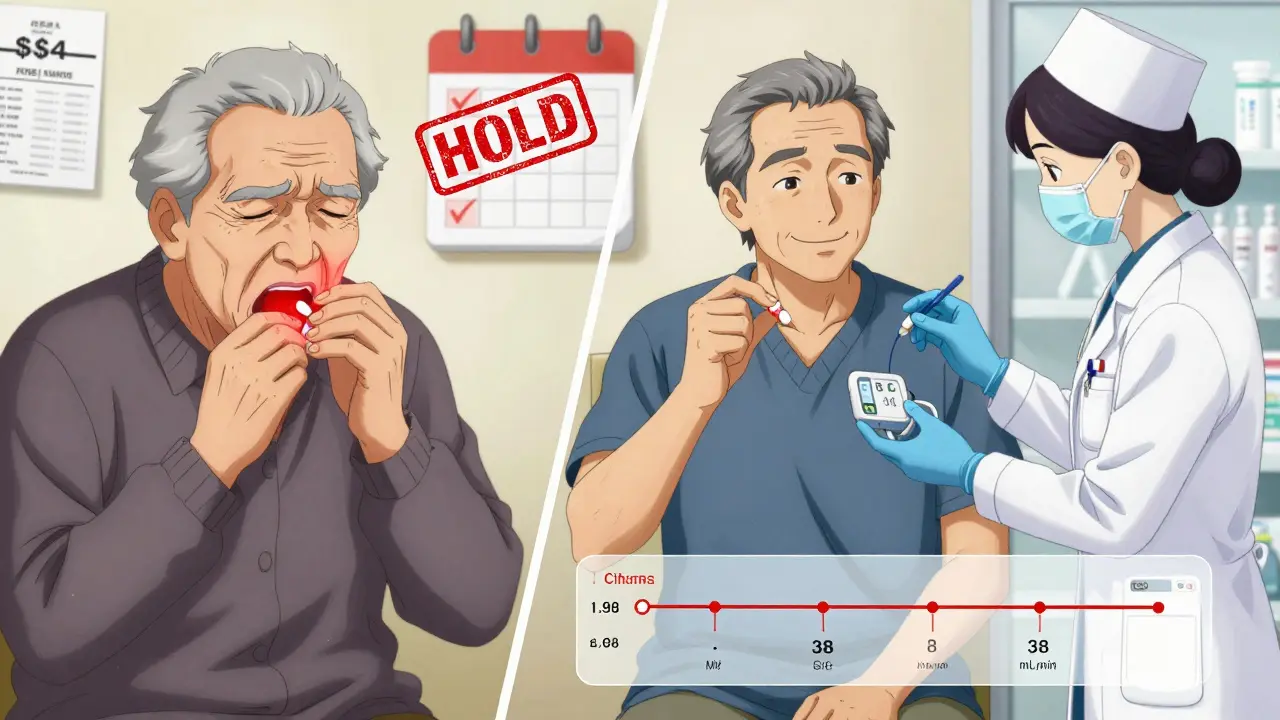
A 2021 survey of 347 family doctors found 68% were confused about what to do when eGFR was between 30 and 45. Over 40% stopped metformin even when patients were stable. That’s not just a guideline problem-it’s a communication problem.
Patients forget to get blood tests. Doctors get busy. Systems don’t remind them. A 2023 study in JAMA Internal Medicine found 41% of eligible patients with diabetes and kidney disease didn’t get their eGFR checked as often as they should.
One solution? Set up automatic alerts in your EHR. If your eGFR is below 60, flag it for a repeat test in 3 months. Or ask your pharmacist to call you when your next test is due.
Also, start low. Many people quit metformin because of stomach upset. Starting at 500 mg once a day and increasing by 500 mg every week cuts side effects in half. Cleveland Clinic reduced discontinuation from 28% to 9% just by slowing down the ramp-up.
What’s Next?
Research is ongoing. The MET-FORMIN-CKD trial is testing whether 500 mg/day is safe for people with eGFR 25-35. Results are expected in 2024. If it’s safe, we may expand use even further.
Meanwhile, metformin remains the most prescribed first-line diabetes drug in the U.S.-76% of new prescriptions in 2023 were for it. Why? It works. It’s cheap (as low as $4 a month). And it saves lives.
You don’t need perfect kidneys to take metformin. You just need to know your numbers, stick to your dose, and get checked regularly. That’s all.
Can metformin cause kidney damage?
No, metformin does not damage kidneys. It’s cleared by the kidneys, so if they’re not working well, the drug can build up. But metformin itself isn’t toxic to kidney tissue. The myth that it harms kidneys leads many patients to stop taking it unnecessarily, even when their eGFR is above 30.
What eGFR level is too low for metformin?
Metformin is contraindicated when eGFR falls below 30 mL/min/1.73 m². For eGFR between 30 and 44, the maximum dose is 1,000 mg per day. If you’ve never taken metformin before and your eGFR is in this range, doctors usually won’t start you on it-but if you’re already taking it and your kidney function is stable, you can continue with a lower dose.
Should I stop metformin before a CT scan with contrast?
Yes-if your eGFR is below 60. Hold metformin 48 hours before and after the scan. Restart only after your kidney function is checked again and confirmed stable. This prevents contrast-induced kidney injury from combining with metformin buildup.
How often should I get my kidney function checked on metformin?
If your eGFR is 60 or higher, check every 6-12 months. If it’s between 45 and 59, check every 3-6 months. If it’s between 30 and 44, check every 3 months. More frequent checks are needed if you’re ill, dehydrated, or taking kidney-stressing medications like NSAIDs.
Is metformin safe for elderly patients?
Yes, if kidney function is monitored. Older adults often have lower muscle mass, which can make creatinine-based estimates inaccurate. eGFR is better, but some doctors now use cystatin C for more precision. Start with a low dose (500 mg), increase slowly, and check kidney function and B12 levels regularly.
Can I take metformin if I’m on dialysis?
Generally, metformin is avoided in dialysis patients because kidney clearance is minimal. But some guidelines, like Canada’s, allow low doses (250 mg/day for peritoneal dialysis; 500 mg after each hemodialysis session) in stable patients with eGFR 15-30. This is still being studied, so follow your nephrologist’s advice.
Does metformin cause vitamin B12 deficiency?
Yes, long-term use (over 4 years) can lower B12 levels in 7-10% of users. Symptoms include fatigue, tingling, or memory issues. Get your B12 checked every 2-3 years, especially if you’re over 60 or take acid-reducing drugs. A simple supplement can fix this without stopping metformin.
What to Do Next
If you’re on metformin and have diabetes:
- Ask your doctor for your latest eGFR number-not just creatinine.
- Check if your dose matches your eGFR range.
- Set a calendar reminder for your next kidney test.
- Ask about B12 levels if you’ve been on metformin for more than 2 years.
- Don’t stop metformin just because your kidneys are slower-ask how to adjust safely.
Metformin isn’t going away. It’s still the best first choice for type 2 diabetes. But it only works if you take it right-and that means knowing your kidneys, not fearing them.






Posts Comments
Stephen Tulloch January 15, 2026 AT 16:19
Bro, metformin doesn't wreck kidneys 😤 it just uses them as a taxi stop. If your kidneys are sluggish, you don't toss the taxi-you just slow the pickup. 🚕💨 I've seen docs pull it for eGFR 48 like it's a death sentence. Lmao. Fix the dose, not the drug.
Melodie Lesesne January 17, 2026 AT 06:45
This is such a needed post! So many people panic when they hear 'kidney issues' and quit metformin without realizing how safe it is with proper monitoring. I had my grandma on it for years with eGFR 36-she stayed stable, her sugars were great, and she never had a single issue. Just check numbers and keep going! ❤️
Corey Sawchuk January 17, 2026 AT 17:20
I've been on metformin 1000mg for 5 years. eGFR 42. Docs used to scare me into quitting. Now I know better. Just check every 3 months. B12's low but I take a pill. Easy. No drama.
Joie Cregin January 19, 2026 AT 07:03
I used to think metformin was a kidney killer until my endo pulled out a chart like it was a superhero origin story. Turns out my kidneys were just doing their job-transporting, not destroying. Now I treat my eGFR like a dashboard light. Not a siren. 🛑➡️📈
Allen Davidson January 19, 2026 AT 21:15
This is exactly the kind of clarity we need. Too many patients get scared off by outdated info. I tell my patients: metformin is like a quiet neighbor who doesn't cause trouble-just needs you to keep the driveway clear. Check eGFR, adjust dose, keep living. Simple.
john Mccoskey January 21, 2026 AT 06:35
Let’s be brutally honest: the medical establishment still operates on bureaucratic inertia. The 2016 guidelines were a step forward, but the real problem isn’t the science-it’s the laziness of clinicians who still rely on creatinine like it’s 2003. And don’t get me started on the B12 oversight. We’re talking about a nutrient deficiency that causes irreversible neuropathy, yet 90% of PCPs don’t screen for it. This isn’t just negligence-it’s systemic malpractice disguised as protocol.
Ryan Hutchison January 22, 2026 AT 14:57
Canada's guidelines are way too soft. We're letting people on dialysis take metformin? That's a lawsuit waiting to happen. In the US, we know better. If your kidneys are failing, you don't get to keep your diabetes meds. Period. This isn't Europe-we don't gamble with patient safety.
Samyak Shertok January 23, 2026 AT 17:49
Oh so now kidneys are just 'delivery roads'? Next they'll say insulin is just a delivery truck for glucose. 😂 You know what's really dangerous? Blindly trusting a $4 pill because some guy wrote a blog with a traffic analogy. My uncle took metformin for 8 years, then had a stroke. Coincidence? Or did the 'safe' drug just quietly poison his nerves?
Rob Deneke January 24, 2026 AT 04:49
Start low go slow with metformin. Seriously. 500mg first week. Then 1000. Then 1500. Your gut will thank you. I used to vomit every time I took it. Now I take 2000mg like it's cereal. Just give it time.
evelyn wellding January 24, 2026 AT 18:03
Yessss this!! 💪 I was terrified to take metformin after my doc said my kidneys were 'failing'-turned out my eGFR was 52. I'm on 1500mg now and feel amazing. And yes I take my B12! 🌟 Don't let fear steal your health!
Chelsea Harton January 25, 2026 AT 08:35
B12 def is real but no one talks about it. I got numb fingers. Thought it was stress. Turned out my metformin was stealing my vitamins. Took a pill. Fixed. Dumb that docs don't warn you.
vivek kumar January 27, 2026 AT 05:55
The MET-FORMIN-CKD trial results will be pivotal. If 500mg is safe at eGFR 25–35, it redefines care for elderly CKD patients. But we must also address the cultural fear around kidney function. In India, many still believe metformin 'rots' kidneys. Education isn't optional-it's lifesaving.
Nick Cole January 28, 2026 AT 08:21
I had a patient who was taken off metformin because his creatinine was 1.6. His eGFR was 41. He ended up in the ER with HbA1c 10.2. We put him back on 1000mg. Two months later, he was at 6.9. He cried. Said he felt like a person again. This isn’t just about numbers. It’s about dignity.
Write a comment