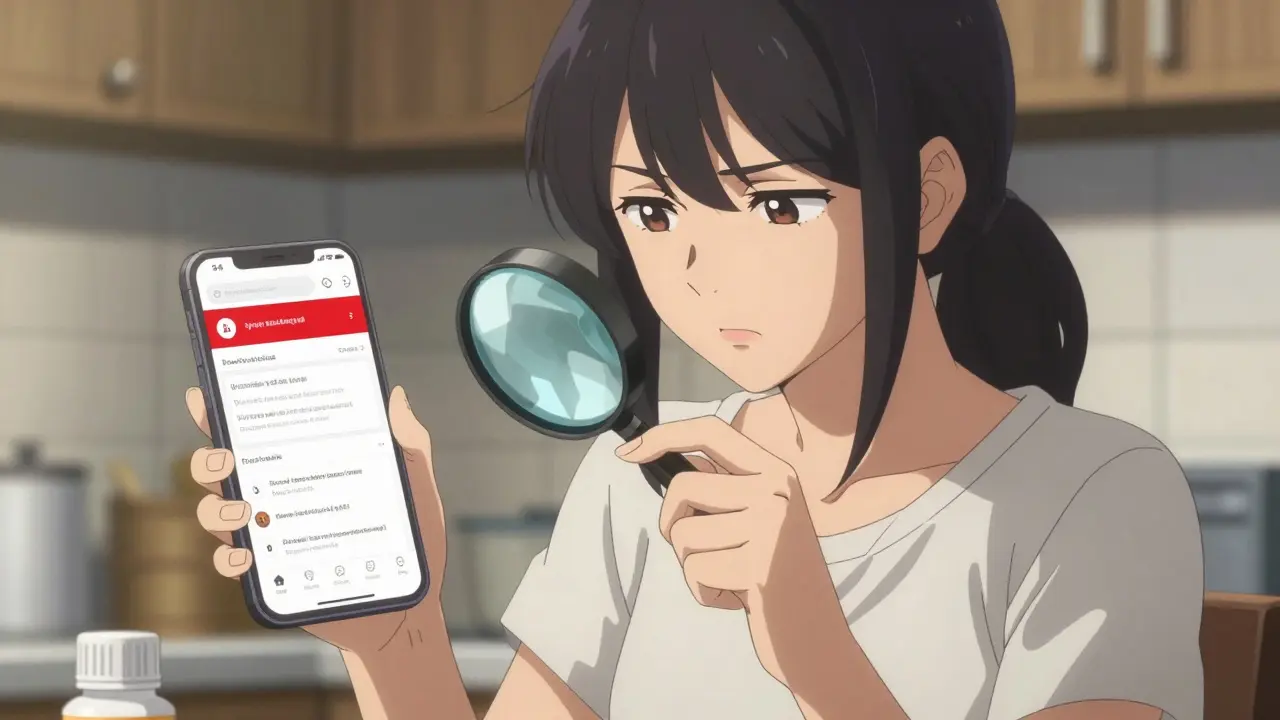
Every year, millions of people around the world take pills they think are real medicine-only to find out too late that they’re fake. These aren’t just poor-quality copies. They’re dangerous. Some contain no active ingredient at all. Others have the wrong dose, toxic chemicals, or even rat poison. And they’re getting harder to spot.
Why Your Eyes Are the Last Line of Defense
Technology has tried to fix this. Barcodes, serial numbers, blockchain trackers-you name it. But here’s the truth: no system is perfect. Even the best verification tools fail when medicines slip through illegal online sellers or get mixed into supply chains in countries with weak oversight. That’s where you come in.The World Health Organization says counterfeit medicines make up 10% to 30% of the market in low- and middle-income countries. In the U.S. and Europe, it’s under 1%. But that doesn’t mean you’re safe. Fake drugs are increasingly sold through social media, Instagram ads, and websites that look like real pharmacies. A 2023 FDA report found that 89% of counterfeit exposures came from online sources. And most people don’t even check if the site is legit.
Here’s the hard part: counterfeiters are getting smarter. Packaging now looks identical. Colors match. Spelling is correct. Even the seal looks sealed. But there are still clues-if you know what to look for.
How to Check Your Medicine Like a Pro
You don’t need a lab or a degree in pharmacology. Just five minutes and a sharp eye.- Look at the packaging. Is the box wrinkled? Are the fonts slightly off? Are the colors duller than usual? Even small differences-like a slightly thinner border or a misaligned logo-can mean it’s fake.
- Check the seal. Legitimate medicines have tamper-proof seals. If it’s loose, broken, or looks like it was resealed with glue, don’t take it.
- Compare it to your last bottle. Did the pills change color, shape, or size? Even if the label says it’s the same drug, a different appearance is a red flag. A Brazilian patient noticed her diabetes pills were lighter in color than before. She reported it. Turns out, the batch was fake.
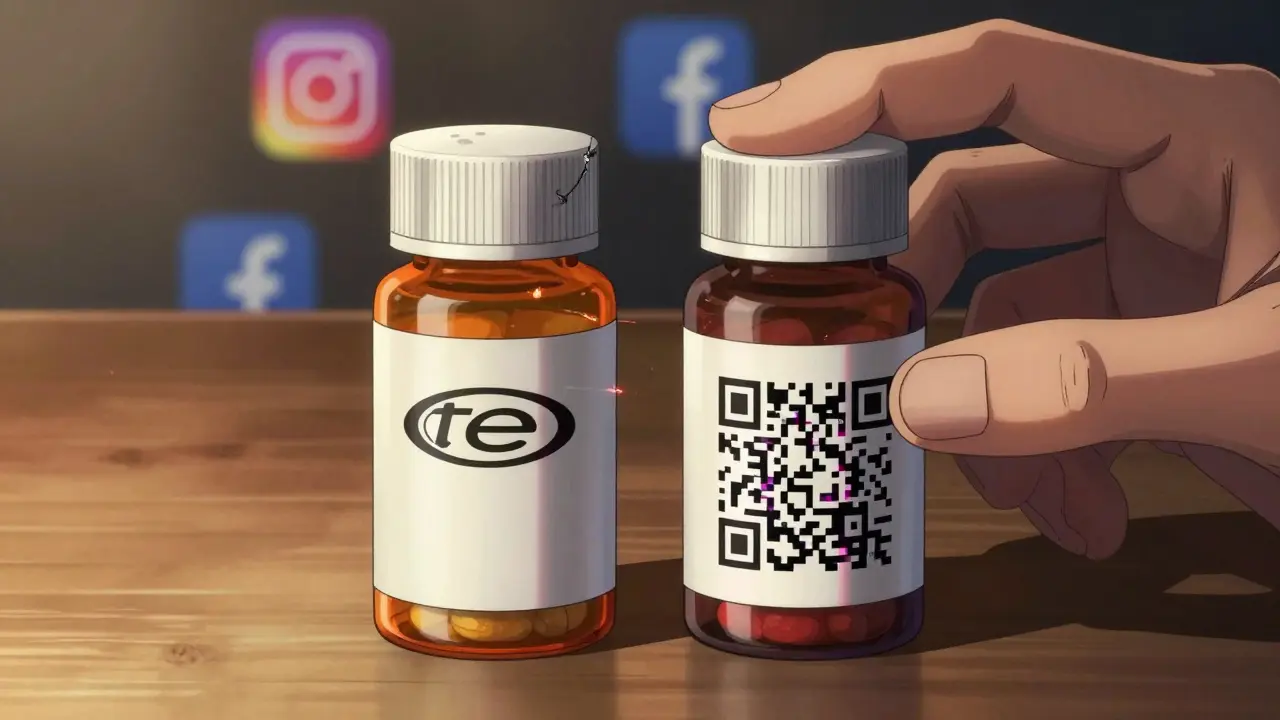
- Read the leaflet. If it’s missing, or if the language sounds weird-like broken English or odd phrasing-it’s likely fake. France and Brazil now use QR codes on packaging that link to official digital leaflets. Scan it. If it takes you to a random website, stop.
- Verify the source. Only buy from pharmacies you trust. In the U.S., look for the .pharmacy seal on websites. It’s verified by the National Association of Boards of Pharmacy. If it’s not there, walk away. In Europe, pharmacies are required to scan your prescription medicine’s unique code. Ask them to do it. If they refuse or don’t know how, that’s a warning sign.
According to a 2022 study in the Journal of Medical Toxicology, patients who followed these simple steps caught 70-80% of counterfeit medicines before taking them. That’s not luck. That’s vigilance.
Where Most People Get Tricked
The biggest danger isn’t street vendors or shady clinics anymore. It’s the internet.Think you’re saving money by buying insulin or heart pills from a website that offers them for half the price? You’re not. You’re risking your life. A 2023 survey by the National Association of Boards of Pharmacy found that 41% of Americans bought medicine online without checking if the site was verified. And 18% of those people later reported side effects-many linked to fake drugs.
Here’s what they miss:
- “Too good to be true” pricing. If a 30-day supply of Viagra costs $10, it’s fake. Period.
- Anonymous sellers. No physical address? No phone number? No license displayed? Run.
- Payment only via cryptocurrency or wire transfer. Legit pharmacies accept credit cards. They’re accountable.
- No prescription required. If you can buy a controlled drug without a prescription online, it’s illegal-and almost certainly fake.
Twitter’s #FakeMeds hashtag had over 12,000 complaints in 2023. Most came from people who bought from Instagram ads or Facebook groups. One woman in Ohio bought “generic” Xanax from a seller claiming to be in Canada. The pills were chalk and dye. She ended up in the ER with seizures.
What Works-And What Doesn’t
Some solutions sound impressive but fall short when real people try to use them.Serialization-unique codes on every pill pack-is mandatory in the EU and spreading worldwide. Sounds great, right? But here’s the catch: 70% of patients don’t know how to verify them. A Reddit thread in March 2024 showed only 28% of respondents checked tamper seals, and 63% couldn’t explain what a serial number even meant.
Apps like MedCheck (used by over 1.2 million people) help. So does the WHO’s free “Medicines Safety” app. But these tools only work if you know they exist-and if you use them every time.
And here’s the uncomfortable truth: patient vigilance isn’t fair. It’s easier if you’re educated, literate, and have access to reliable pharmacies. In rural parts of Africa or Southeast Asia, where counterfeit rates hit 30%, many people buy medicine because they have no other choice. They can’t afford to be picky. That’s not negligence-it’s desperation.
Experts like Dr. Paul Newton from Oxford argue that putting the burden on patients in these areas is unethical. It’s a sign that governments and corporations have failed to ensure safe access. And he’s right. But until that changes, your vigilance might be the only thing standing between you and harm.
What You Can Do Right Now
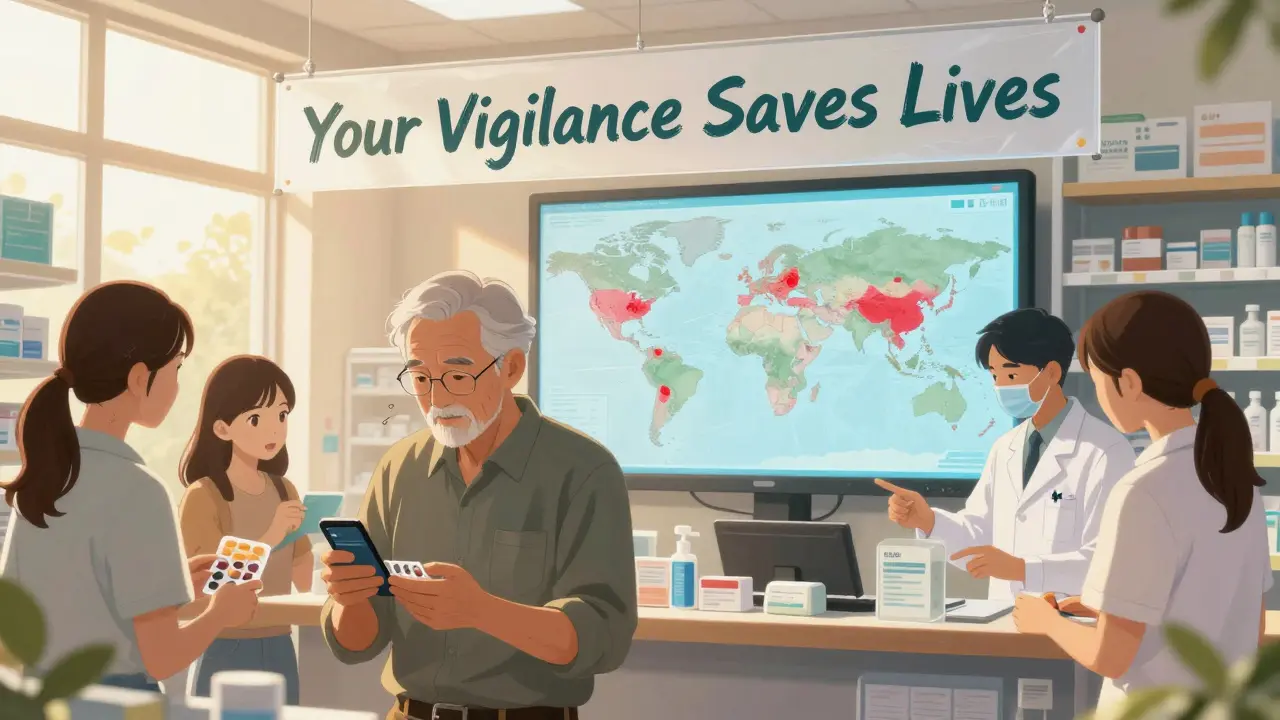
You don’t need to be a detective. Just be consistent.- Always buy from licensed pharmacies-physical or verified online. Use the NABP’s Buy-Safely tool to check websites.
- Keep your old medicine packaging. Compare new bottles to old ones. Look for changes.
- Scan QR codes on packaging. If the link looks suspicious, don’t proceed.
- Report anything odd. In the U.S., call the FDA at 1-888-INFO-FDA. In Europe, contact your national health authority. In Brazil, report to ANVISA. Pfizer reported that 14,000 consumer tips led to over 200 counterfeit busts in 2023.
- Talk to your pharmacist. Ask them to show you how to verify your medicine. Most are happy to help.
It’s not about paranoia. It’s about control. You’re the last person to touch that pill before it enters your body. No machine, no law, no regulation can replace that.
The Bigger Picture
Counterfeit drugs are a $200 billion problem. They’re fueled by greed, weak laws, and global supply chain gaps. But they only succeed when people don’t question what they’re given.Thailand cut counterfeit incidents by 37% between 2021 and 2023-not with new tech, but with community education. Pharmacists went door-to-door. Schools taught kids how to spot fake medicine. People started talking.
That’s the real power of patient vigilance. It’s not just about checking seals. It’s about changing culture. When enough people refuse to accept fake medicine, the market shrinks. When enough people report fakes, law enforcement can act.
You’re not just protecting yourself. You’re protecting your family, your neighbors, your community. One person asking a question can stop a whole shipment. One report can save hundreds of lives.
Next time you pick up a prescription-stop. Look. Ask. Report. That’s how real change starts.


Posts Comments
shubham rathee January 21, 2026 AT 10:03
Bro i just bought some metformin off a guy on instagram for 15 bucks and it looked legit asf
same box same color same everything
but i popped one and felt like i got hit by a bus
turned out it was just sugar and glitter
now i check every pill like its a bomb
Kevin Narvaes January 21, 2026 AT 21:18
so like... if the government cant protect us from poison pills then whats the point of even having a government
we're just animals now
survival of the fittest
and the fittest are the ones who know how to spot fake meds
or who have rich parents
and also why do they even make these things
who profits from this
the same people who sell us the truth
Dee Monroe January 22, 2026 AT 16:23
I remember when I was 19 and living in a dorm, I bought a bottle of ibuprofen from a sketchy online store because it was 70% off. I didn't check the seal, didn't scan anything, didn't compare it to my old bottle. I just took it because I had a headache and I was lazy. Two hours later I was vomiting and shaking, convinced I was having a stroke. Turns out it was talcum powder and a trace of lead. I spent three days in the ER. I never thought I'd be the kind of person who'd fall for something so obvious. But here's the thing-it's not about being smart or careful. It's about being lucky. And I got lucky. Now I always check. Always. Even if I'm in a rush. Even if it's my third time buying the same thing. Because the next time I might not be so lucky. And I don't want to be the reason someone else loses a parent, a sibling, a friend. This isn't just about pills. It's about how much we're willing to risk when we stop asking questions.
Alex Carletti Gouvea January 23, 2026 AT 18:56
Why are we letting foreign countries ruin our medicine supply
China and India are flooding the market with garbage
and we sit here checking seals like it's our job
the real solution is tariffs and bans
not some checklist for civilians
we need to stop being the world's pharmacy
Philip Williams January 24, 2026 AT 01:19
The data presented here is compelling, but I’d like to see the source material for the 70-80% detection rate. The Journal of Medical Toxicology study cited lacks a DOI or volume number, which makes verification difficult. Additionally, the FDA’s 89% figure for online counterfeit exposure is from a 2023 report, but the methodology behind that statistic-whether it includes self-reported cases or lab-confirmed counterfeits-isn’t clarified. Transparency in these numbers is essential. If patient vigilance is to be promoted as a public health strategy, we must ensure the foundational data is not only accurate but reproducible. Otherwise, we risk creating a false sense of security.
Ben McKibbin January 24, 2026 AT 05:41
Let’s be real-this isn’t about checking seals or scanning QR codes. It’s about reclaiming agency in a world that’s been designed to make us passive consumers. We’ve been trained to trust logos, to believe in brands, to assume that if it’s on the internet, it’s real. But the truth is, we’ve outsourced our responsibility to corporations, regulators, and algorithms. And now we’re paying the price-with our health, our peace of mind, our trust. The real revolution isn’t in the tech. It’s in the mindset. It’s in saying: ‘I’m not just a customer. I’m the last line of defense.’ That’s powerful. That’s radical. And that’s how change happens. Not through legislation alone, but through millions of people choosing to look closer, ask louder, and refuse to settle for anything less than safety. One pill. One question. One report at a time.
Melanie Pearson January 25, 2026 AT 08:51
It's deeply irresponsible to suggest that individuals in low-income countries should bear the burden of verifying pharmaceutical integrity. This is not a matter of vigilance-it is a systemic failure of global governance, corporate ethics, and international trade policy. The fact that we are asking mothers in rural Bangladesh to inspect pill packaging while pharmaceutical giants profit from unregulated supply chains is not just unethical-it is a moral abdication. The WHO's 10-30% statistic is not a call to action for patients; it is a indictment of the World Bank, the FDA, and multinational distributors who prioritize profit over human life. Until we hold these institutions accountable, patient 'vigilance' is a distraction-a performative gesture that absolves the guilty.
Jerry Rodrigues January 26, 2026 AT 23:09
Just checked my blood pressure pills today. Box looked fine. Seal was intact. But I remembered the last time I bought these, the font on the bottom was a tiny bit thinner. So I compared. Same difference. Called my pharmacist. Turned out it was a new batch. They confirmed it was legit. But I’m glad I checked. Just takes a minute.
Write a comment