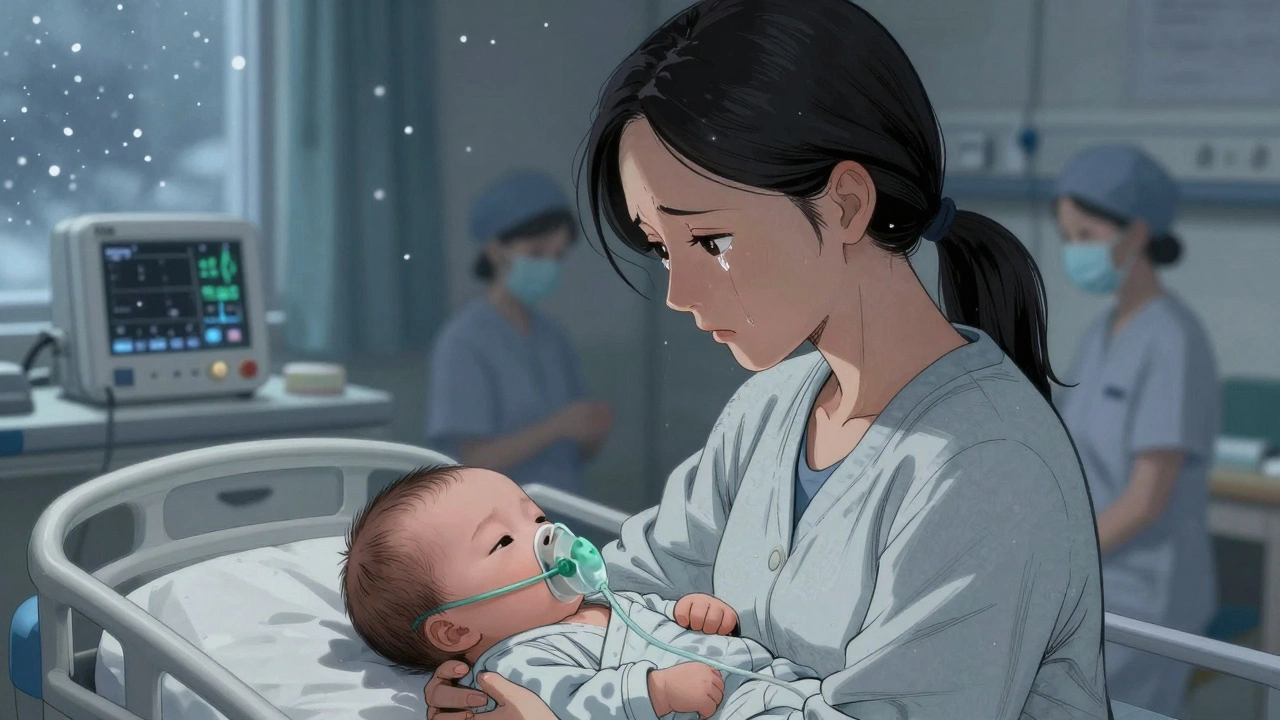
Every winter, something quiet and dangerous moves through homes, daycares, and nursing homes. It starts with a runny nose, a cough, maybe a fever. For most adults, it’s just a cold. But for infants and older adults, it can turn deadly. That something is RSV-Respiratory Syncytial Virus. It’s not new, but in 2025, we finally have real tools to fight it. If you’re caring for a baby under 1, a grandparent over 65, or someone with a weak heart or lungs, you need to know what RSV does, who it hits hardest, and how to stop it.
What RSV Really Does to the Body
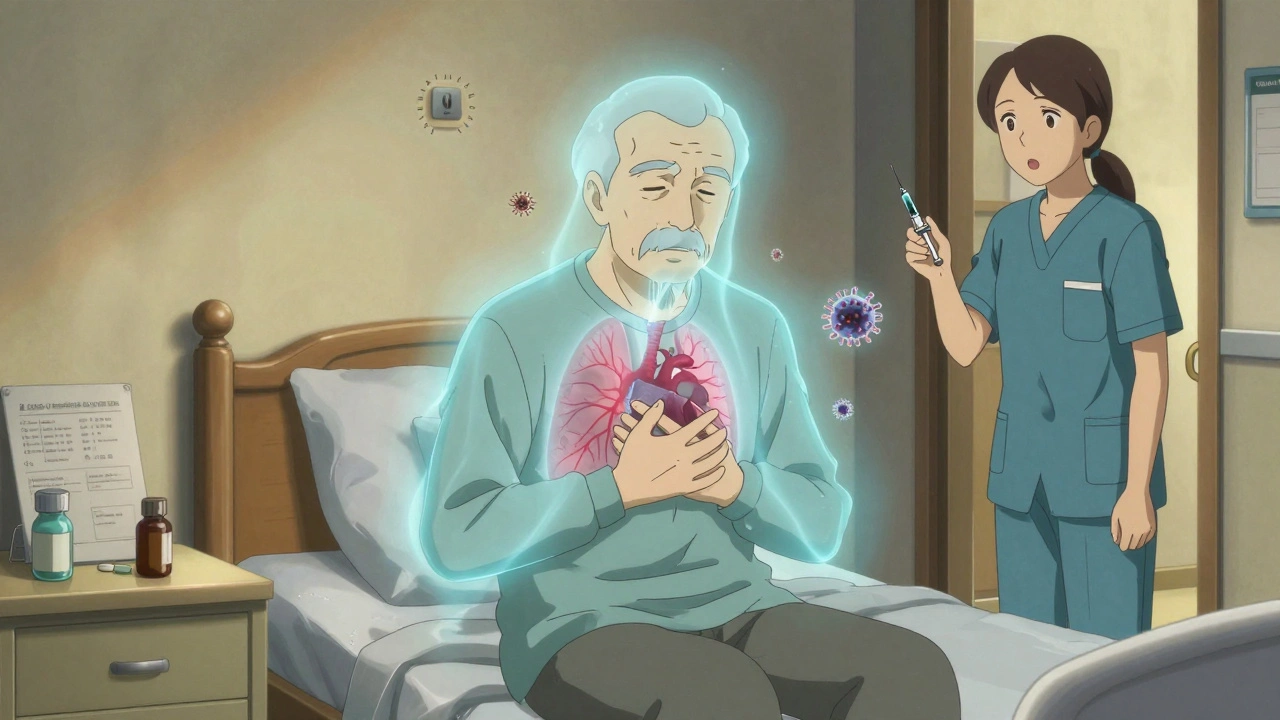
RSV doesn’t just give you a stuffy nose. It attacks the small airways in the lungs, especially in young children and older adults. In babies, it causes bronchiolitis-inflammation of the tiniest breathing tubes. In older people, it can trigger pneumonia or make heart failure worse. The virus spreads easily: through coughs, sneezes, or touching a doorknob that an infected person just touched. It can live on surfaces for nearly 10 hours.
Symptoms usually show up 4 to 7 days after exposure. First, it’s like a regular cold: runny nose (78% of cases), sore throat, fever. But in high-risk groups, it quickly turns serious. Rapid breathing, wheezing, chest retractions (when the skin pulls in around the ribs), and trouble feeding in babies are red flags. In older adults, confusion, dizziness, or sudden worsening of heart or lung conditions can mean RSV is taking over.
Why Infants Are Most at Risk
RSV is the #1 cause of hospitalization for babies under 1 year old. About 2 to 3% of all infants under 6 months end up in the hospital each year. That’s tens of thousands in the U.S. alone. Premature babies, especially those born before 29 weeks, are 3 to 5 times more likely to need intensive care. Babies with heart defects or chronic lung disease face even higher risks-up to 25 times more likely to get severely ill.
Why? Their airways are tiny. Even a little swelling blocks airflow. Their immune systems haven’t learned to fight this virus yet. And they can’t clear mucus the way older kids or adults can. A baby with RSV might breathe 60 times a minute-normal is 40. They’ll look tired, refuse to eat, and their lips or fingernails might turn blue. That’s not a cold. That’s an emergency.
And the damage doesn’t always end when they leave the hospital. Kids who had severe RSV before age 2 are over four times more likely to develop asthma by age 7. Their lungs never fully catch up. Studies show their lung function stays 8-12% lower than peers into their teens.
The Silent Threat to Older Adults
For years, RSV was seen as a “kids’ virus.” That changed in 2023. Now we know it kills 6,000 to 14,000 adults over 65 every year in the U.S.-more than the flu in some seasons. People with COPD are 4 times more likely to be hospitalized. Those with heart failure face nearly 3 times the risk.
Why are older adults so vulnerable? Their immune systems weaken with age. They don’t fight off the virus as well. And if they already have a weak heart or lungs, RSV pushes them past the edge. About 78% of hospitalized older adults with RSV see their existing condition get worse. One in three ends up in the ICU. And recovery? It’s not just about healing the lungs. Nearly half of those hospitalized develop new problems-like being unable to bathe or dress themselves. One in four needs to go to a rehab center after leaving the hospital.
And the risk keeps climbing with age. People over 75 stay in the hospital nearly 3 times longer than younger adults. Their death rate is almost double. RSV doesn’t just cause illness in older adults-it accelerates decline.
How RSV Spreads-And How to Stop It
RSV doesn’t need a pandemic to spread. It’s in every household, every daycare, every nursing home. One sick child can infect a whole family in days. The virus travels through droplets from coughs and sneezes (65% of cases), direct contact like kissing a sick child (25%), and surfaces (9.8 hours on stainless steel).
Simple steps cut transmission dramatically:
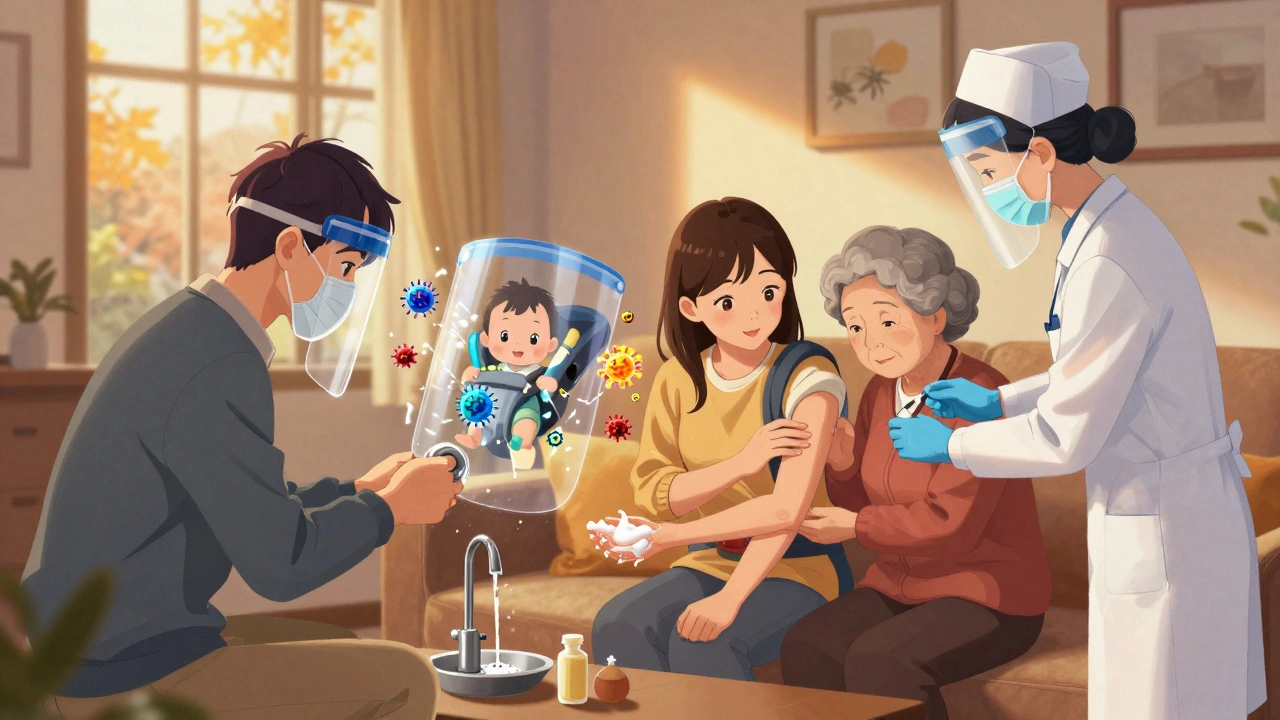
- Wash hands with soap for at least 20 seconds-before feeding a baby, after changing a diaper, before touching an older adult. This reduces spread by 35-50%.
- Avoid touching your face. Your eyes, nose, and mouth are the virus’s front door.
- Disinfect high-touch surfaces daily: doorknobs, light switches, toys, phones. EPA-approved cleaners kill RSV on contact and reduce surface spread by 85-95%.
- Keep sick people away from babies and older adults-even if they just have a sniffle.
- Wear a mask around high-risk people if you’re sick, even if it’s just a cold.
These aren’t just suggestions. They’re lifesavers.
The New Tools: Vaccines and Antibodies
2023 was the year everything changed. For the first time ever, we have real protection.
For babies: Nirsevimab (Beyfortus™) is a single shot given before or during RSV season. It’s not a vaccine-it’s a lab-made antibody that gives immediate, temporary protection. It cuts the risk of hospitalization by 75% for the first 5 months of life. The CDC now recommends it for all infants under 8 months entering their first RSV season. High-risk kids between 8 and 19 months get it too.
For older adults: Two vaccines are now approved: GSK’s Arexvy and Pfizer’s Abrysvo. Arexvy is 82.6% effective at preventing severe lower respiratory disease. Abrysvo is 66.7% effective. Both are given as one shot. The CDC says adults 60+ should talk to their doctor about getting vaccinated, especially if they have heart or lung disease, live in a nursing home, or have other health issues.
For pregnant people: Abrysvo is also approved to be given between 32 and 36 weeks of pregnancy. It passes protective antibodies to the baby before birth, offering up to 82% protection against severe RSV in the first 6 months of life.
These tools are powerful. But access isn’t equal. In the U.S., they’re available in clinics and pharmacies. In low-income countries, they’re almost impossible to get. The cost of one dose of Arexvy is $295. For a family in rural Kenya or Papua New Guinea, that’s months of income. That’s why 97% of RSV deaths in children happen outside wealthy nations.
What to Do Right Now
If you have a baby under 1 or an older adult in your care, here’s your action list:
- Check if your infant is eligible for nirsevimab. Ask your pediatrician-even if your baby was born healthy.
- Ask your doctor or pharmacist about RSV vaccines for adults 60+. Don’t wait for symptoms.
- Start washing hands like your life depends on it-because it does.
- Disinfect surfaces daily, especially in shared spaces.
- Know the warning signs: rapid breathing, flaring nostrils, chest pulling in, blue lips, refusal to eat, extreme lethargy. Call 999 or go to A&E immediately if you see these.
RSV isn’t going away. But it doesn’t have to be a death sentence anymore. We have the tools. We just need to use them.
Long-Term Effects You Can’t Ignore
RSV doesn’t just cause illness-it changes lives. Children who survived severe RSV as babies are more likely to have asthma, need inhalers, and miss school. Their lungs are permanently altered. In older adults, a single RSV hospitalization can trigger a downward spiral: loss of independence, need for home care, or even nursing home placement.
One study found that 42% of adults over 65 hospitalized with RSV couldn’t do basic tasks like bathing or dressing 30 days after discharge. That’s not recovery-that’s a new reality.
That’s why prevention isn’t just about avoiding a cold. It’s about protecting someone’s ability to live well.
What’s Next for RSV?
Research is moving fast. New antivirals like ALS-8176 are showing promise in early trials-reducing viral load by 97%. Maternal vaccination is already saving babies before they’re born. Global efforts are pushing to make vaccines and antibodies affordable in low-income countries. If we get this right, we could prevent half a million hospitalizations a year by 2030.
But progress means nothing without access. Until every baby, everywhere, can get protected-RSV will remain a silent killer.
Is RSV the same as the flu or COVID?
No. RSV is a different virus that mainly affects the lungs and airways. While flu and COVID can cause similar symptoms, RSV is the top cause of bronchiolitis in babies and causes more hospitalizations in infants under 1 than either flu or COVID. In older adults, RSV often worsens heart and lung conditions more than flu does.
Can adults get RSV more than once?
Yes. You can get RSV multiple times in your life. Immunity doesn’t last long. But later infections are usually milder-unless you’re over 65 or have a chronic illness. That’s why vaccines are so important for older adults, even if they’ve had RSV before.
Does hand sanitizer work against RSV?
Alcohol-based hand sanitizers with at least 60% alcohol can reduce RSV on hands, but they’re not as reliable as soap and water. RSV has a protective outer layer that soap breaks down better. For babies and older adults, always wash with soap and water when possible.
When is RSV season?
In the UK and other temperate regions, RSV season usually runs from late fall to early spring, peaking between December and January. It’s best to get protection-like the infant antibody shot or adult vaccine-before the season starts, ideally in September or October.
Can I give my baby over-the-counter cold medicine for RSV?
No. The FDA and American Academy of Pediatrics strongly warn against giving OTC cold or cough medicines to children under 4. They don’t help and can be dangerous. Instead, use a bulb syringe to clear nasal mucus, keep your baby hydrated, and use a cool-mist humidifier. If breathing is hard, seek medical help immediately.

Posts Comments
sandeep sanigarapu December 12, 2025 AT 20:33
RSV is not just a cold. It's a silent war on the smallest lungs and weakest hearts. I've seen grandparents lose independence after one hospital stay. Prevention isn't optional-it's survival. Wash hands. Disinfect. Vaccinate. Simple. Non-negotiable.
nikki yamashita December 14, 2025 AT 11:56
My niece got RSV at 3 months. We thought it was just a stuffy nose. Then she stopped eating. We rushed to the ER. They said if we’d waited another 6 hours… I’m getting Beyfortus for my next grandkid. No questions.
Laura Weemering December 15, 2025 AT 04:26
It’s ironic, isn’t it? We’ve engineered vaccines for every niche virus under the sun, yet we still treat RSV like a rite of passage… as if infant hospitalization were some kind of Darwinian filter. The real tragedy isn’t the virus-it’s our collective denial of systemic vulnerability. We weaponize individual responsibility while ignoring structural inequity in access. The 97% death disparity? That’s not biology. That’s capitalism with a stethoscope.
Reshma Sinha December 16, 2025 AT 06:32
As a nurse in Delhi, I’ve seen babies gasping for air in rooms with no oxygen. No Beyfortus. No vaccines. Just mothers holding their kids, whispering prayers. We need global equity-not just science. If a baby in Nairobi can’t get the same shot as one in Boston, then we haven’t won. We’ve just moved the battlefield.
Adam Everitt December 17, 2025 AT 06:34
hand sanitizrs dont work as well as soap… i mean, yeah, i guess… but like… do we really need to overthink this? just wash your hands. stop touching your face. keep sick people away. it’s not rocket science. i’m not saying it’s easy… just… do it.
wendy b December 17, 2025 AT 08:40
Let me be clear: if you're a parent and you haven't gotten your infant the monoclonal antibody, you're not just negligent-you're statistically endangering them. The data is irrefutable. 75% reduction in hospitalization. This isn't a debate. It's a public health imperative. If your pediatrician hasn't mentioned it, find another one.
Donna Anderson December 17, 2025 AT 20:42
my mom got the rsv shot last year. she’s 72, has COPD. she’s still out gardening. no hospital. no icu. no rehab. i’m getting mine next month. if you’re over 60 and you’re not thinking about this… you’re living in a dream.
Levi Cooper December 19, 2025 AT 13:42
Everyone’s talking about vaccines like they’re magic bullets. But let’s be real-how many people even know what RSV stands for? Half the country thinks it’s just a bad cold. We need mandatory education in schools, in clinics, in DMV waiting rooms. This isn’t just medical-it’s cultural. And we’re failing.
And don’t get me started on the cost. $295 for one shot? In a country where a single ER visit costs more than a month’s rent for some families? That’s not healthcare. That’s extortion dressed in white coats.
Meanwhile, in India, nurses reuse N95s because they can’t afford new ones. We’re saving babies in Ohio while kids in Bihar die from the same virus. That’s not science. That’s sin.
Rob Purvis December 21, 2025 AT 03:33
Just read the CDC guidelines again. Nirsevimab isn’t just for preemies. It’s for ALL infants under 8 months. If your kid was born at 38 weeks and you didn’t get it-why? Is it because you didn’t know? Then tell everyone. If you didn’t want to? Then you’re part of the problem. We have the tools. Stop pretending we don’t.
Write a comment