
Antidepressant Sexual Side Effects Comparison Tool
Current Antidepressant
Alternative Options
Comparison Results
Select both medications to see comparison results
Select your current and alternative medication to see evidence-based recommendations for managing sexual side effects.
It’s not rare to hear someone say, "I started feeling better, but then sex just... disappeared." For many people taking antidepressants, this isn’t a side effect they talked about with their doctor - it’s a silent struggle that affects relationships, self-esteem, and even their willingness to keep taking the medication. If you’re one of them, you’re not alone. About 35-70% of people on antidepressants experience some kind of sexual side effect. That’s more than one in three. And for some, it’s worse than the depression itself.
Why Do Antidepressants Affect Sex?
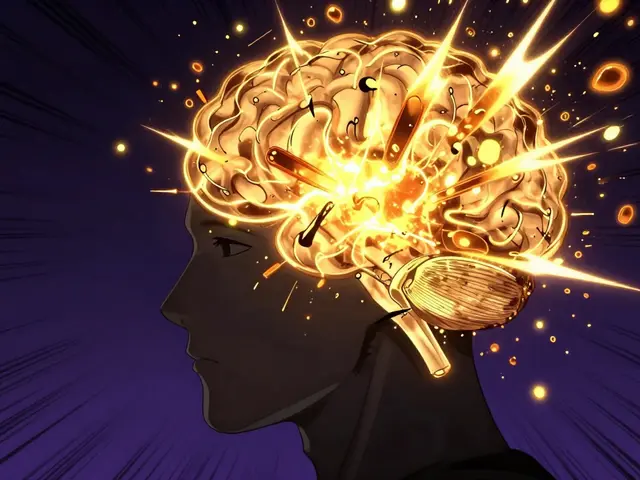
It sounds strange at first: a drug meant to lift your mood ends up putting a damper on your sex life. But here’s the simple version: antidepressants, especially SSRIs like sertraline (Zoloft) and fluoxetine (Prozac), work by boosting serotonin in your brain. That helps with sadness, anxiety, and low energy. But serotonin doesn’t just affect mood. It also shuts down the pathways that control arousal, desire, and orgasm. Think of it like turning down the volume on your body’s sexual signals. Dopamine and norepinephrine - the chemicals that actually make sex feel good - get blocked. So even if you want to have sex, your brain just doesn’t send the right messages.
This isn’t just about "not feeling like it." It’s physical. Men often report trouble getting or keeping an erection, delayed or absent ejaculation, or a complete loss of interest. Women commonly describe dryness, difficulty reaching orgasm, or just not caring about sex at all. Studies show 64% of men on SSRIs lose libido, and 61% of women report the same. For women, 49% can’t climax at all.
And here’s the twist: depression itself can cause low libido. About 35-50% of people with untreated depression already have sexual problems. So when you start an antidepressant, it’s hard to tell if the issue is the illness or the medicine. That’s why doctors need to ask - not assume.
Not All Antidepressants Are Equal
If you’re on an SSRI and having sexual side effects, your next question might be: "Can I just switch?" The answer is yes - but not to just any other drug. The risk varies widely across classes.
- Paroxetine (Paxil): Has the worst record. One in every 2-4 people switching to it will develop sexual dysfunction. It’s the most likely to cause delayed orgasm or complete loss of desire.
- Sertraline (Zoloft) and Citalopram (Celexa): Also high risk. Around 50-60% of users report issues.
- Fluoxetine (Prozac): Slightly better than the others, but still causes problems for many.
- Venlafaxine (Effexor XR): An SNRI, it’s almost as bad as SSRIs.
Now, the good news: some antidepressants barely touch your sex life.
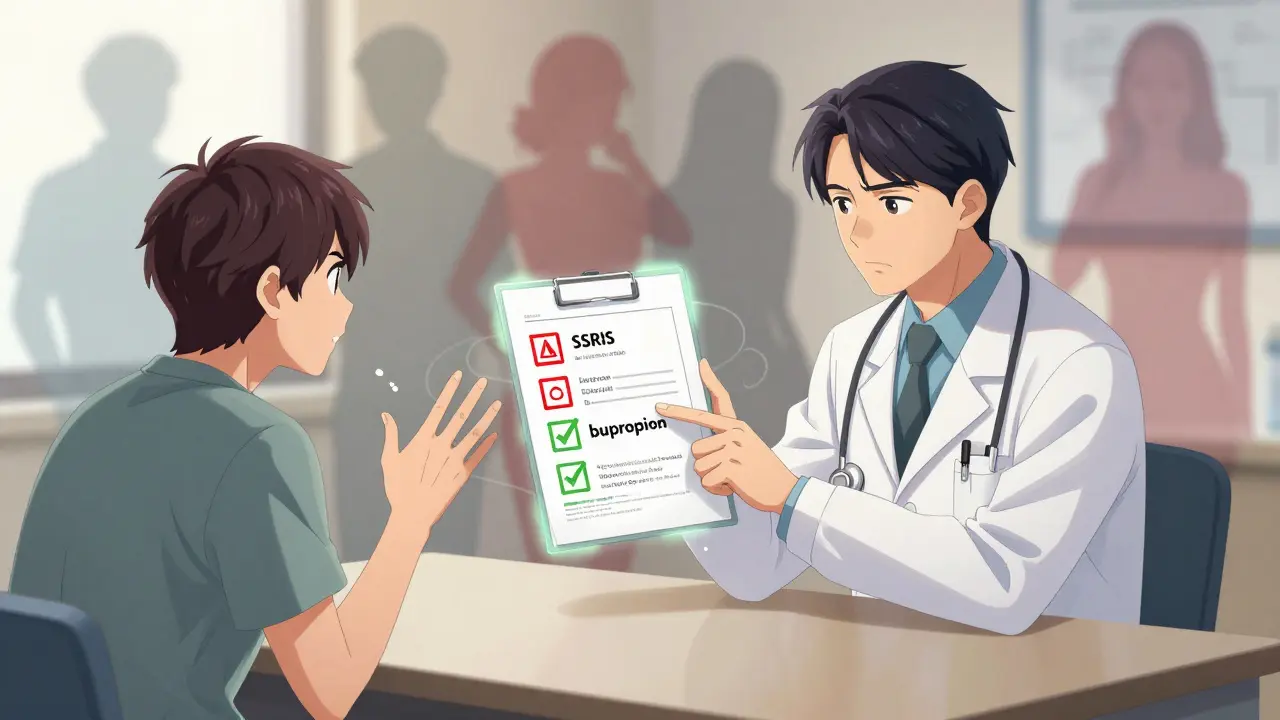
- Bupropion (Wellbutrin): This is the standout. Four separate studies show it causes far fewer sexual side effects than SSRIs. In one trial, 68% of people who switched from an SSRI to bupropion saw improvement. It doesn’t boost serotonin - it works on dopamine and norepinephrine, which actually help with desire and arousal. It’s also cheaper: generic bupropion XL costs about $15.72/month versus over $50 for brand-name Zoloft.
- Mirtazapine (Remeron): Used less often, but studies show low sexual side effect rates. It can make you sleepy, though.
- Agomelatine (Valdoxan): Approved in Europe, it’s a melatonin-based antidepressant with minimal sexual impact. Not available everywhere.
- Nefazodone (Serzone): Also low risk, but it’s rarely used now because of rare liver damage.
Switching isn’t always easy. You can’t just stop one and start another. Most require a 2-4 week taper to avoid withdrawal symptoms - especially with paroxetine, which leaves your system fast. Fluoxetine sticks around for days, so switching is smoother.
Solutions That Actually Work
There are three proven paths when sexual side effects hit: adjust the dose, switch meds, or add something.
1. Lower the Dose
Some people find that cutting their SSRI dose in half helps. About 20-30% see improvement. But there’s a catch: lowering the dose might make your depression come back. This only works if you’re already stable and your doctor agrees it’s safe.
2. Switch to a Lower-Risk Antidepressant
This is the most effective move for many. Switching from an SSRI to bupropion gives the best chance of recovery. A 2019 study in the Journal of Clinical Psychiatry found that 58% of women on SSRIs who added bupropion (150mg daily) saw better sexual function. That’s more than half. For men, switching to bupropion often restores libido and erectile function. It’s not magic - about 15-20% of people don’t respond to the new drug at all - but for many, it’s life-changing.
3. Add-On Treatments
Instead of switching, you can keep your current antidepressant and add something to fix the side effects.
- Sildenafil (Viagra): Works for men. In trials, 65-70% of men on SSRIs improved with sildenafil versus just 25% on placebo. It doesn’t fix desire, but it helps with performance.
- Cyproheptadine: An old antihistamine that blocks serotonin. A 2021 study showed 52% of women with SSRI-induced anorgasmia regained orgasm after taking 4mg nightly. It’s off-label but safe for most.
- Buspirone: Sometimes used off-label. Helps with arousal and desire, especially in women.
Don’t try random supplements. Things like ginseng or maca? No solid proof. Stick to what’s been tested.
What About Stopping the Medication?
You might think: "I’ll just quit." But that’s risky. Antidepressants aren’t like aspirin. Stopping suddenly can cause dizziness, nausea, brain zaps, and - worse - a return of depression. About 23% of people quit SSRIs within 90 days because of sexual side effects, often without telling their doctor. That’s dangerous.
There’s also a rare but real condition called Post-SSRI Sexual Dysfunction (PSSD). In about 0.5-1.2% of users, sexual problems last for months or even years after stopping. There are over 28 peer-reviewed case reports since 2010. It’s uncommon, but it’s real. That’s why you should never stop cold turkey.

What’s New on the Horizon?
Research is moving fast. The FDA approved esketamine (Spravato) in 2019 for treatment-resistant depression. In trials, only 3.2% of users reported sexual side effects - far lower than SSRIs. But it costs about $880 per dose and requires clinic monitoring. Not practical for everyone.
There’s also a new drug in Phase II trials called SEP-227162. Early results show it causes 87% fewer sexual side effects than sertraline. It’s not available yet, but it points to a future where mood and desire don’t have to be enemies.
European experts now recommend pharmacogenomic testing - checking your genes to see how you process certain drugs. For example, people who are "poor metabolizers" of CYP2D6 (about 7% of Europeans) get much higher levels of paroxetine in their blood. That means they’re far more likely to have side effects. Testing can help avoid the wrong drug entirely.
What Should You Do?
If you’re struggling with sexual side effects, here’s what to do:
- Don’t suffer in silence. Talk to your doctor. Use a simple scale like the AArizona Sexual Experience Scale (ASEX) to describe what’s happening.
- Ask: "Is this depression, or is it the medication?" Your doctor should check both.
- Request a switch to bupropion. It’s the most evidence-backed option.
- If switching isn’t an option, ask about adding sildenafil (for men) or cyproheptadine (for women).
- Never stop your medication without medical supervision.
Sexual side effects aren’t a sign of weakness. They’re a biological response to a powerful drug. And they’re treatable. The goal isn’t to give up on antidepressants - it’s to find the right one that helps your mind without hurting your body.
Do all antidepressants cause sexual side effects?
No. SSRIs and SNRIs like sertraline, paroxetine, and venlafaxine have the highest risk - affecting 35-80% of users. But bupropion (Wellbutrin), mirtazapine (Remeron), and agomelatine (Valdoxan) have much lower rates. In fact, bupropion causes fewer sexual side effects than placebo in some studies.
How long do sexual side effects last?
For most people, side effects appear within the first few weeks and don’t go away on their own. Only about 18% of users report improvement after six months. That’s why waiting it out rarely works. If it’s been over two months and you’re still having issues, it’s time to talk to your doctor about adjusting your treatment.
Can I take Viagra with my antidepressant?
Yes - for men. Sildenafil (Viagra) is safe to use with SSRIs and has been shown to improve erectile function in 65-70% of men on antidepressants. It doesn’t fix low desire, but it helps with performance. Always check with your doctor first, especially if you have heart problems or take nitrates.
Is bupropion as effective as SSRIs for depression?
Yes. Multiple studies show bupropion is just as effective as SSRIs for treating major depression. It’s also FDA-approved for seasonal depression and smoking cessation. The main trade-off is that it can cause insomnia or jitteriness in some people - but for many, the sexual benefits outweigh that.
What is PSSD, and should I be worried?
PSSD stands for Post-SSRI Sexual Dysfunction. It’s a rare condition where sexual problems - like low libido, numbness, or inability to orgasm - persist for months or years after stopping the medication. It affects 0.5-1.2% of users. While uncommon, it’s real and documented in peer-reviewed journals. That’s why it’s critical to taper off SSRIs slowly under medical supervision instead of quitting abruptly.



Posts Comments
lawanna major March 18, 2026 AT 03:21
I’ve been on sertraline for three years. The depression lifted, but my sex life? Gone. Not just ‘not in the mood’-more like my body forgot how to feel pleasure. I switched to bupropion last year. It wasn’t instant. Took six weeks. But now? I’m back. Not just physically, but emotionally. I didn’t realize how much of myself I’d lost until it came back. If you’re struggling, don’t assume it’s permanent. Talk to your doctor. There’s a path forward.
Ryan Voeltner March 18, 2026 AT 07:16
The biological mechanisms described here are accurate and well documented. Serotonin modulation does indeed suppress dopaminergic and noradrenergic pathways critical to sexual function. The data on bupropion’s comparative advantage is robust and supported by multiple randomized controlled trials. A systemic approach to pharmacotherapy is essential when balancing psychiatric and physiological outcomes.
Linda Olsson March 18, 2026 AT 21:56
They don’t want you to know this but the pharmaceutical industry pushed SSRIs hard because they’re profitable. Bupropion? Cheap. Generic. No patent. That’s why you don’t see ads for it. And don’t get me started on ‘PSSD’-they bury the studies. I know someone who’s been numb for seven years after quitting Lexapro. They told him it was ‘in his head.’ It wasn’t.
cara s March 19, 2026 AT 19:42
I read this whole thing. Twice. And honestly? I’m shocked no one’s talking about how this affects women differently. Like, yeah, men get Viagra. But women? We get told to ‘try harder’ or ‘relax.’ Cyproheptadine? I had to beg my doctor for it. He said ‘it’s off-label.’ I said ‘so is half of what you prescribe.’ I’m on 4mg nightly now. Took three months. But I finally had an orgasm. Not just ‘got there’-actually felt it. That’s not a win. That’s a rescue.
Amadi Kenneth March 21, 2026 AT 05:20
This is why Africa doesn't need Western medicine! You people take pills for everything. In Nigeria, we have herbs, prayer, and discipline. My cousin had depression-he stopped the pills, drank bitter leaf tea, and danced every morning. Now he’s married with three kids. Why complicate life? Your brain is weak because you eat processed food and watch too much Netflix.
Shameer Ahammad March 22, 2026 AT 09:25
This entire article is dangerously misleading. You are promoting the idea that one can simply switch antidepressants like swapping out socks. This is irresponsible. Depression is not a light switch. Medication adherence is critical. The notion that bupropion is a ‘better’ option ignores individual neurochemistry. You are encouraging self-diagnosis and self-medication. This is how people end up in crisis.
Alexander Pitt March 22, 2026 AT 23:12
The data on sildenafil for SSRI-induced erectile dysfunction is solid. Sixty-five to seventy percent improvement in controlled trials. But it’s only useful for performance-not desire. For low libido, buspirone or cyproheptadine are better options. And yes, tapering matters. Abrupt discontinuation of paroxetine can trigger withdrawal symptoms that mimic a relapse. Always consult a psychiatrist before making changes.
jared baker March 24, 2026 AT 02:07
I was on Zoloft for two years. No sex. No joy. Just numb. Switched to Wellbutrin. Same mood, but now I can feel my body again. It’s not perfect. I get jittery sometimes. But I’d rather be jittery and alive than calm and dead. Don’t let anyone tell you it’s all in your head. It’s chemistry. And chemistry can be fixed.
Gaurav Kumar March 24, 2026 AT 14:28
In India, we have Ayurveda, yoga, and spiritual discipline. Why are Westerners so dependent on chemicals? This article reads like an ad for Big Pharma. Bupropion? It’s just another pill. True healing comes from inner balance. I meditate for 90 minutes daily. My libido? Perfect. My depression? Gone. No pills needed. Why do you let corporations control your body?
Jeremy Van Veelen March 24, 2026 AT 15:21
I almost died because of this. Not from depression. From the silence. I told my doctor I couldn’t climax. He said, ‘It’s common. Try mindfulness.’ Mindfulness?! I couldn’t even feel my own skin. I cried for three hours in the parking lot after that appointment. Then I found a psychopharmacologist. She switched me to bupropion. Six weeks later, I had sex for the first time in 18 months. I didn’t just get my body back-I got my dignity. If you’re reading this and you’re suffering? You are not broken. You are just on the wrong drug.
Laura Gabel March 24, 2026 AT 19:56
I didn’t even finish reading. Too long. I just wanted to know if I can take Viagra with my antidepressant. Answer: yes? Cool. I’m out.
jerome Reverdy March 25, 2026 AT 13:04
The key insight here is that serotonin isn’t the enemy-it’s the wrong tool for the job. SSRIs are like using a sledgehammer to fix a wristwatch. Bupropion? It’s more like a scalpel. Dopamine and norepinephrine modulation bypasses the sexual suppression pathway entirely. That’s why it works. The real tragedy? Most clinicians still default to SSRIs because they’re easier to prescribe. We need better training. And more awareness.
Andrew Mamone March 27, 2026 AT 01:31
Bupropion changed my life 🌱 I went from zero libido to feeling human again. No magic. Just science. And yes, I still get anxious sometimes. But now I can hug my partner without feeling like a ghost. Thank you for writing this. Someone needed to say it.
MALYN RICABLANCA March 27, 2026 AT 09:06
I have PSSD. It’s been four years. I stopped Lexapro. I thought I’d be fine. Instead, my clitoris went numb. My orgasms? Gone. My desire? A memory. I’ve tried everything: acupuncture, testosterone creams, pelvic floor therapy, hypnosis, even a $2,000 ‘neuro-repair’ device from a guy on YouTube. Nothing. I’m 32. I’ve never had a real orgasm. And the medical community? They tell me I’m ‘overreacting.’ I’m not. I’m a ghost in my own body. And no one cares. This isn’t a side effect. It’s a crime.
gemeika hernandez March 28, 2026 AT 16:54
I switched to Wellbutrin and now I have sex all the time. Like, every day. My husband is confused. I’m confused. But I’m happy. No more crying in the shower. Just… feeling. Who knew a pill could fix that?
Write a comment