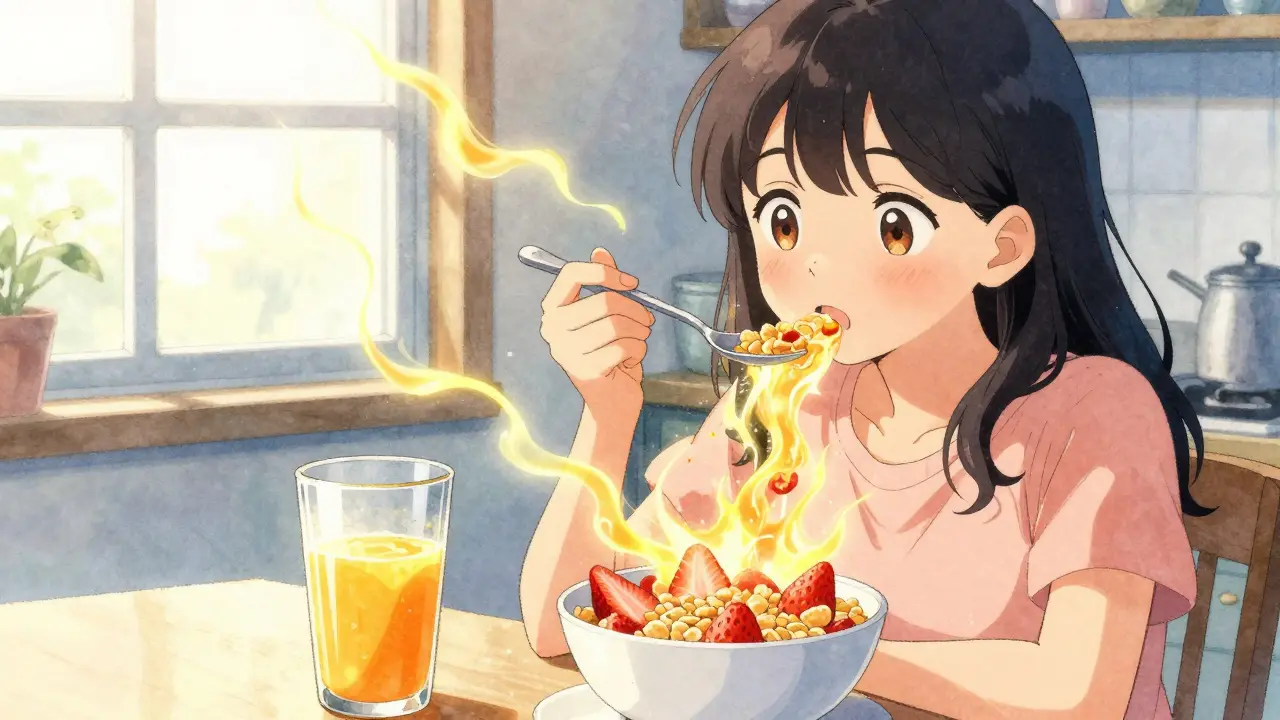
When you take an iron supplement or eat iron-rich foods like spinach, lentils, or fortified cereal, you might not be getting nearly as much iron as you think. The problem isn’t the dose-it’s what you’re eating or drinking with it. Vitamin C is the simplest, cheapest, and most effective way to fix that. But timing matters. So does what else you’re taking. Get it right, and your body absorbs up to twice as much iron. Get it wrong, and your supplement might as well be water.
Why Vitamin C Makes Iron Work
Your body can’t absorb iron the way it comes in food. Most plant-based iron (called non-heme iron) is in a form your gut can’t use. It’s stuck as Fe³⁺-ferric iron-which doesn’t dissolve well and just passes through. Vitamin C (ascorbic acid) changes that. It donates electrons, turning Fe³⁺ into Fe²⁺-ferrous iron-which your intestines can grab easily. This happens right in the upper part of your small intestine, near the duodenum, where a special enzyme called Dcytb uses vitamin C as a helper to make the switch. Studies from the 1980s first showed this, and modern research confirms it. A 2022 meta-analysis found vitamin C can boost non-heme iron absorption by 2 to 6 times. That’s not a small bump-it’s the difference between barely helping and actually fixing a deficiency. For example, eating spinach with no vitamin C gives you maybe 5% of its iron. Add 100mg of vitamin C (about half a glass of orange juice), and that jumps to 15-20%. That’s the same as eating three times as much spinach. This works best with plant foods. Meat, fish, and poultry already have heme iron, which your body absorbs easily without help. But if you’re vegetarian, vegan, or just trying to eat more plants, vitamin C is your best friend.How Much Vitamin C Do You Actually Need?
You don’t need a giant orange smoothie. The sweet spot is 100-200mg per meal. That’s:- One medium orange
- Half a cup of red bell pepper
- One cup of strawberries
- 6 ounces of orange juice
When Vitamin C Doesn’t Help (And When It Can Hurt)
Vitamin C won’t help if you have too much iron already. People with hemochromatosis-a genetic condition that causes iron overload-should avoid high-dose vitamin C with iron. It can make things worse. It also doesn’t work well if you have low stomach acid (achlorhydria) or an H. pylori infection. Those conditions mess with the gut environment vitamin C needs to do its job. And if you’re taking more than 65mg of iron in one dose, vitamin C’s effect starts to fade. That’s why many doctors recommend splitting iron doses-smaller amounts with vitamin C, taken twice a day, work better than one big pill. High doses of vitamin C (over 500mg) can cause stomach upset in 15-20% of people. Diarrhea, cramps, nausea. That’s why most experts stick to 100-200mg. You get the benefit without the side effects.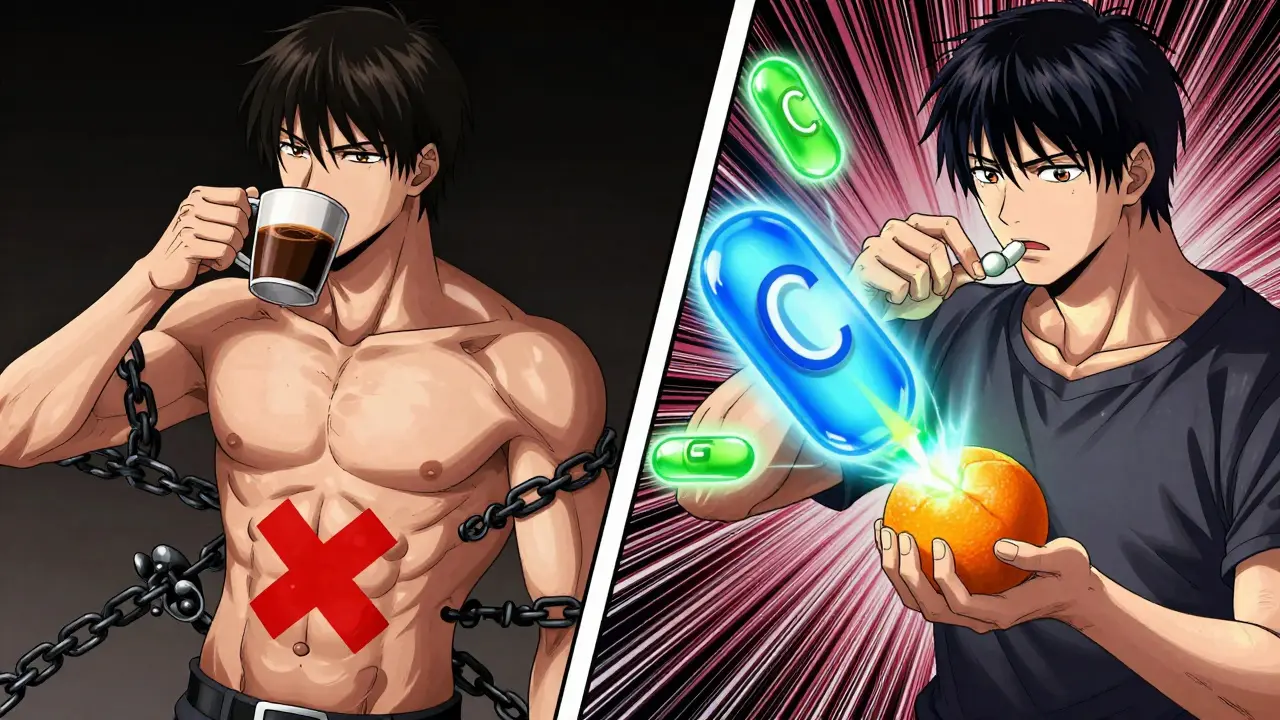
What to Avoid: Iron Killers
Vitamin C fights off other things that block iron. But if you’re not careful, those blockers win. Tea, coffee, and red wine are full of polyphenols. These bind to iron and stop it from being absorbed. One cup of tea can cut iron absorption by 60%. The same goes for calcium-rich foods like milk, cheese, and calcium supplements. Calcium competes with iron for the same transporters in your gut. Here’s the fix: wait two hours after drinking coffee or tea before eating iron-rich meals or taking supplements. Wait four hours after taking calcium supplements. Same with antacids-those containing aluminum or magnesium can reduce iron absorption by 70-80%. Don’t take them together. Even some medications interfere. Thyroid medicine like levothyroxine? Take it at least two hours before or after iron. Iron can block its absorption, making your thyroid treatment less effective.How to Actually Do This in Real Life
You don’t need to be a nutritionist. Just pair your iron with vitamin C at the same time.- Fortified cereal for breakfast? Add sliced strawberries or a glass of orange juice.
- Lentil soup for lunch? Squeeze lemon juice on top. Add tomato slices.
- Iron supplement at night? Take it with a small orange or a handful of kiwi.
- Spinach salad? Toss in red bell peppers, broccoli, or citrus dressing.
What’s New in 2026
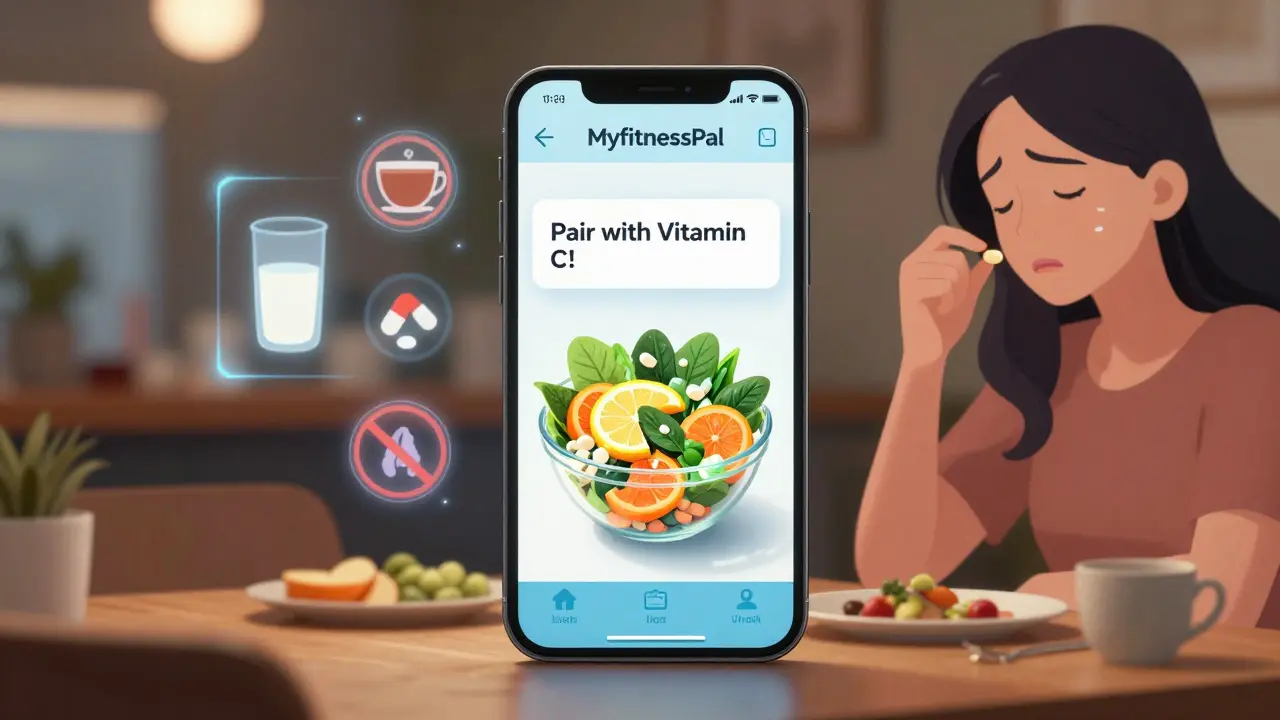
The science keeps evolving. In early 2024, the FDA updated its guidelines to require all non-heme iron supplements to carry a label saying: “Take with vitamin C-rich foods for better absorption.” That’s huge. It means the message is finally getting to the public. New research is looking at how your genes affect vitamin C’s effectiveness. Some people have variations in the DMT-1 transporter that make them less responsive. Future tests might tell you if you’re one of them. Meanwhile, companies are starting to make combination pills-iron and vitamin C in one tablet with timed release. Early trials show they keep both nutrients active in the gut longer, improving absorption even if you’re not perfect about timing. And apps are catching on. MyFitnessPal now alerts you if you log iron without vitamin C. The WHO is sending SMS reminders in 15 countries to help people in low-resource areas remember to pair their supplements.Bottom Line: Do This Every Day
If you’re taking iron for deficiency, or eating plant-based foods rich in iron:- Take 100-200mg of vitamin C with every iron-containing meal or supplement.
- Don’t take it with coffee, tea, calcium, or antacids. Wait two to four hours.
- Don’t take iron with thyroid medication-space them out.
- Use whole foods when possible: oranges, strawberries, bell peppers.
- If you get stomach upset, lower the iron dose and keep the vitamin C.
Can I take vitamin C and iron together in one pill?
Yes, and many supplements now do this. But check the label. Some combination pills use slow-release iron, which may not be as effective if your stomach acid is low. If you’re not sure, take them separately with food for the best results.
Does vitamin C help with heme iron from meat?
No. Heme iron from meat, fish, and poultry is already absorbed at 15-35% efficiency, and vitamin C doesn’t significantly boost it. But if you’re eating a mixed meal with both meat and plants, vitamin C still helps with the plant-based iron in the same meal.
Is it okay to take vitamin C with iron at night?
Yes. Timing isn’t about morning or night-it’s about consistency. Take your iron and vitamin C together, 30 minutes before or after a meal. Avoid taking them right before bed if they cause stomach upset, as lying down can worsen discomfort.
Why do some iron supplements not include vitamin C?
Many older or cheaper supplements were made before the science was widely known. Also, some manufacturers avoid it because vitamin C can make the pill less stable over time. But since 2022, the FDA has required labeling that recommends pairing with vitamin C-so most new products now include it or clearly state the need.
Can children and pregnant women take vitamin C with iron?
Yes. In fact, it’s strongly recommended. Pregnant women have higher iron needs, and vitamin C helps them absorb more from plant-based diets. The WHO and CDC both support this approach. For children, use age-appropriate doses-consult a pediatrician, but 50-100mg of vitamin C with meals is generally safe and effective.



Posts Comments
rasna saha January 27, 2026 AT 06:05
just started taking my iron with orange juice and i swear my energy’s up. no more 3pm crashes. also, i’m vegan so this was a game changer. no more feeling like a zombie.
Ashley Porter January 28, 2026 AT 19:47
the dcytb-mediated ferric-to-ferrous reduction is a beautiful example of redox biochemistry in vivo. the 2022 meta-analysis in the American Journal of Clinical Nutrition shows a clear dose-response curve with plateauing beyond 200mg ascorbate. most clinical guidelines still undersell this mechanism.
shivam utkresth January 30, 2026 AT 15:28
in india we’ve been doing this for generations-lentils with lemon juice, spinach with achaar. no fancy pills, just food wisdom. my grandma called it ‘taste + trick’. turns out she was a biochemist without a lab coat. also, tea after meals? yes. tea with meals? nope. that’s just bad karma for your hemoglobin.
Kipper Pickens January 30, 2026 AT 17:34
the FDA’s 2024 labeling update is a quiet revolution. non-heme iron supplements now have to scream ‘take with vit c’ on the bottle. finally. the industry dragged its feet for decades because profit margins on expensive chelated iron are way higher. this is public health winning over corporate inertia.
Aurelie L. January 31, 2026 AT 19:39
so basically if i drink coffee i’m just wasting money? wow. that’s it. i’m done.
Joanna Domżalska January 31, 2026 AT 21:57
you’re all being manipulated. vitamin c doesn’t boost absorption. it’s just a placebo for people who want to feel in control. your body knows what it’s doing. stop overcomplicating food.
Josh josh February 2, 2026 AT 02:32
yo i take iron with my morning smoothie and i dont even think about it anymore. orange banana spinach kale. boom. iron and vit c. no stress. also my poop is less scary now
bella nash February 2, 2026 AT 06:27
It is imperative to underscore the physiological imperative of ascorbic acid in facilitating the reduction of ferric iron to its ferrous state within the duodenal lumen. This biochemical transformation is non-negotiable for optimal enterocyte uptake. Failure to adhere to this protocol constitutes a significant deviation from established nutritional biochemistry.
Sally Dalton February 3, 2026 AT 06:59
OMG I JUST REALIZED I’VE BEEN TAKING MY IRON WITH TEA FOR A YEAR 😭😭😭 I’M SO SORRY MY BLOOD CELLS. i just switched to orange juice and now i feel like a new person. like, i actually want to get out of bed. thank you thank you thank you. also i cried reading this. not because i’m dramatic, but because i finally get it.
Betty Bomber February 3, 2026 AT 17:41
my mom takes iron and she swears by the lemon slice on her lentils. she’s 72 and still hikes. maybe it’s not just the iron. maybe it’s the lemon. or the love. or both.
Ashley Karanja February 3, 2026 AT 23:57
the fact that we’re still talking about this in 2026 is wild. we’ve got apps, FDA labels, timed-release pills, and WHO SMS reminders-and yet, 71% of people still don’t pair their iron with vitamin C. it’s not a knowledge gap. it’s a habit gap. we know what to do. we just don’t do it. and that’s not about science. that’s about psychology. we need behavioral nudges, not more infographics. i’m building a chrome extension that auto-suggests vitamin c pairings when you log meals. if you want to beta test, dm me. also, i love you all.
Karen Droege February 5, 2026 AT 06:25
listen. if you’re pregnant or helping someone who is-this isn’t optional. your baby needs iron. your body needs vitamin c. if you’re skipping it because ‘i forgot’ or ‘i don’t like orange juice’-then find another way. bell peppers. kiwi. broccoli. even a 100mg tablet. don’t let laziness steal oxygen from your child. i’ve seen too many women show up with Hb 8.5 and think it’s ‘normal’. it’s not. you’re not lazy. you’re just uninformed. now you’re not. go crush it.
Write a comment