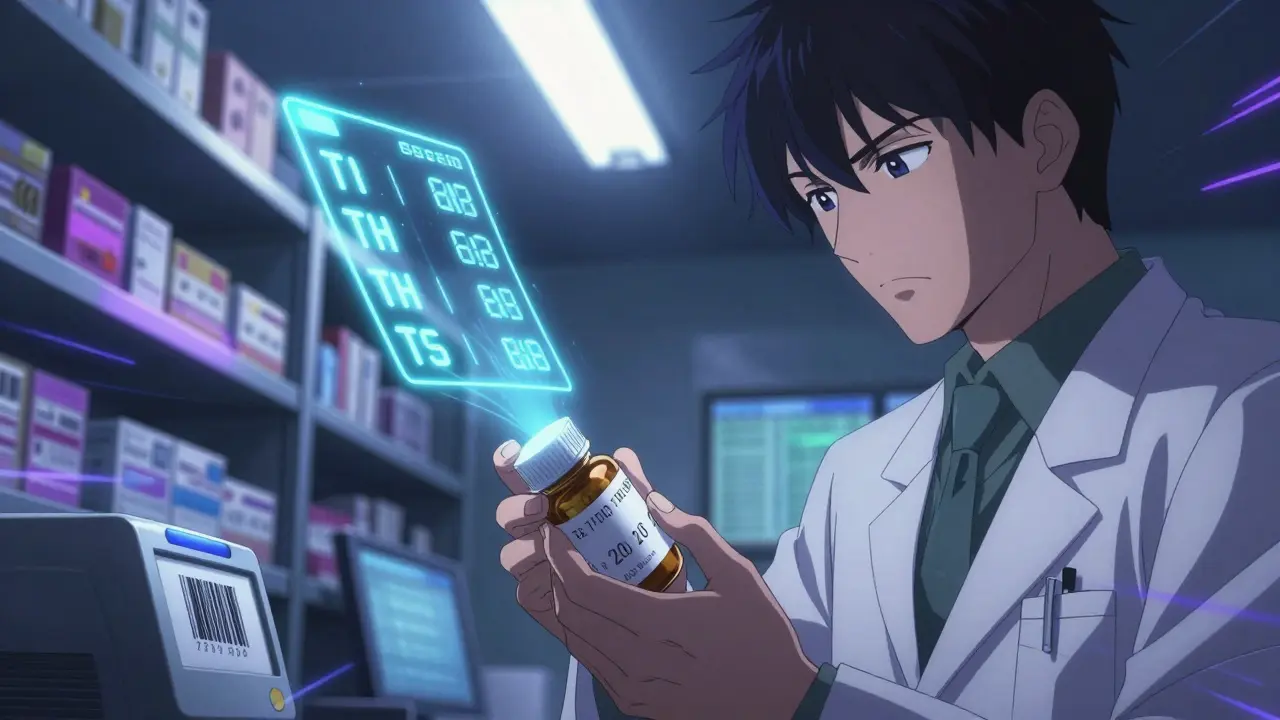
Every year, millions of prescription drugs move through a complex web of manufacturers, wholesalers, and pharmacies before reaching your medicine cabinet. But what if one of those pills wasn’t made in a licensed lab? What if it was mixed in a basement somewhere with the wrong chemicals-or worse, nothing at all? That’s not a movie plot. It’s a real risk. And since 2013, the U.S. government has been building a system to stop it: the DSCSA track-and-trace system.
What Exactly Is the DSCSA?
The Drug Supply Chain Security Act, or DSCSA, is a federal law designed to make sure every prescription drug sold in the U.S. can be traced from the factory to the pharmacy. It doesn’t just check where a drug came from-it verifies that it’s real. Each bottle, box, or vial gets a unique serial number, like a fingerprint. That number, along with the lot number, expiration date, and National Drug Code (NDC), is scanned and shared electronically every time the drug changes hands. Before DSCSA, tracking was a mess. Some states had their own rules. Others had none. A drug could move across state lines with no digital paper trail. Counterfeiters exploited that. Now, every trading partner-manufacturers, repackagers, distributors, and pharmacies-must use the same system. And by November 27, 2024, that system must be fully electronic and interoperable. No more paper logs. No more guesswork.How the System Works: The Three Ts
DSCSA doesn’t just slap a barcode on a pill bottle. It requires three key pieces of data to move with every shipment:- Transaction Information (TI): What the product is, its lot, expiration, and serial number.
- Transaction History (TH): A record of every previous owner, going back to the manufacturer.
- Transaction Statement (TS): A legal certification that the product was handled properly and isn’t counterfeit.
Why Serialization Matters
The magic of DSCSA is in the serial number. Each one is unique. No two packages have the same. That’s because the FDA requires GS1 standards: 20-character alphanumeric codes that can be read by machines and scanned by humans. A manufacturer doesn’t just print a number-they generate it through a secure system tied to their product database. This isn’t just about stopping fakes. It’s about speed. In 2021, a contaminated blood pressure medication was found in a single lot. Without DSCSA, the recall would’ve meant pulling every bottle of that drug nationwide-costing millions and leaving patients without treatment. With DSCSA, the FDA pinpointed the exact 37,000 bottles in the affected lot. The rest stayed on shelves. Patients kept taking their meds. That’s the power of traceability.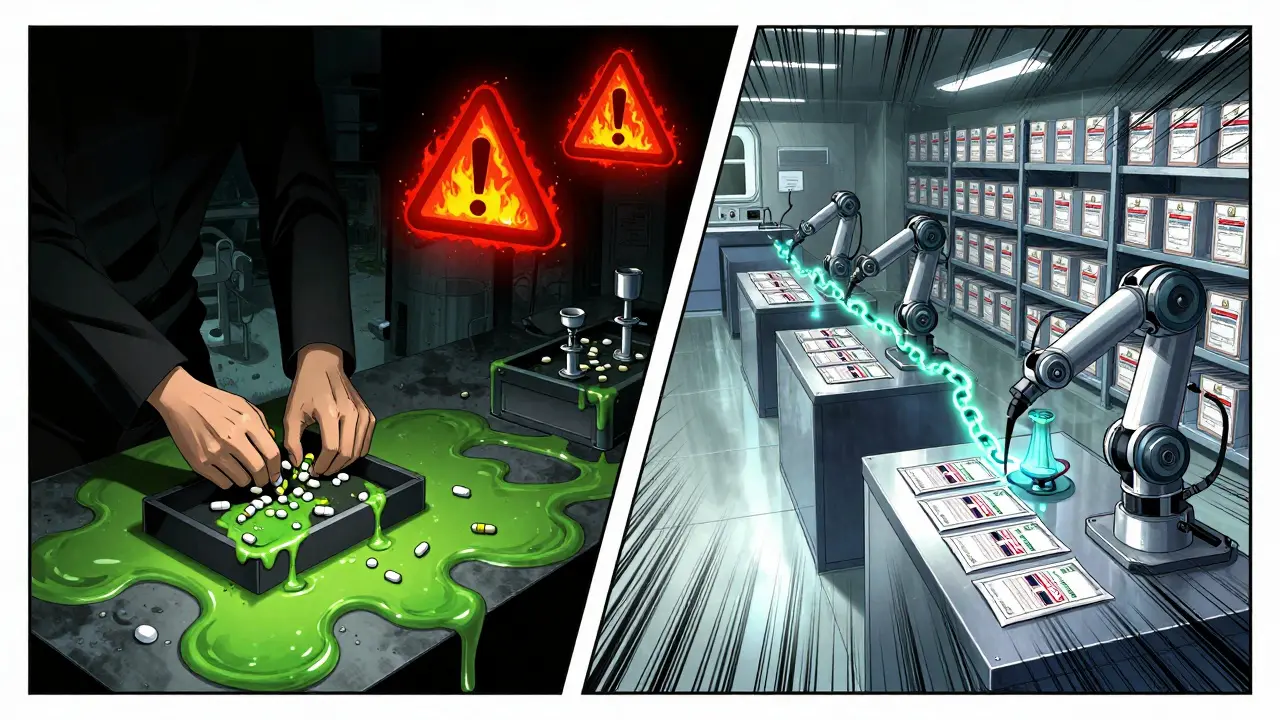
Who’s Complying-and Who’s Struggling
The big players got it done. Manufacturers? 98% compliant. Wholesale distributors? 95%. Chain pharmacies like CVS and Walgreens spent hundreds of millions upgrading their systems. Walgreens alone invested $120 million between 2021 and 2022. CVS cut suspect product investigations by 75% using automated verification. But small pharmacies? They’re still catching up. A 2023 survey by the National Community Pharmacists Association found 68% of independent pharmacies called DSCSA compliance their biggest tech challenge. The average cost? Around $185,000. That’s more than some clinics make in a year. Many still use old scanners that can’t read 2D barcodes. Their software doesn’t talk to distributors’ systems. Data mismatches cause delays-sometimes two or three days just to verify a shipment. Even worse, not everyone uses the same EPCIS standard for data exchange. One vendor’s system speaks a different language than another’s. That’s why McKesson, one of the biggest distributors, processes over 1.2 billion serialized transactions a year with 99.98% accuracy-and still sees glitches. It’s not that the system doesn’t work. It’s that it’s still being stitched together.What Happens When Something Goes Wrong
The FDA doesn’t just require tracking-they require action. If a pharmacy finds a suspicious product, they can’t just ignore it. They must:- Quarantine it immediately.
- Verify the serial number against the manufacturer’s database.
- Conduct forensic testing if needed.
- Report it to the FDA within 24 hours.
How DSCSA Compares to Europe’s System
The European Union has its own system: the Falsified Medicines Directive (FMD). It’s stricter. It requires anti-tampering seals on every package. It also uses a central repository where all serial numbers are stored and checked in real time. The U.S. chose a different path. No central database. No tamper-proof seals. Instead, DSCSA relies on interoperability between private systems. It’s less invasive, but it’s also more fragile. If two companies’ software can’t talk to each other, the chain breaks. That’s why the FDA gave everyone a full year after November 2023 to fix glitches before enforcing penalties. They know the system isn’t perfect yet.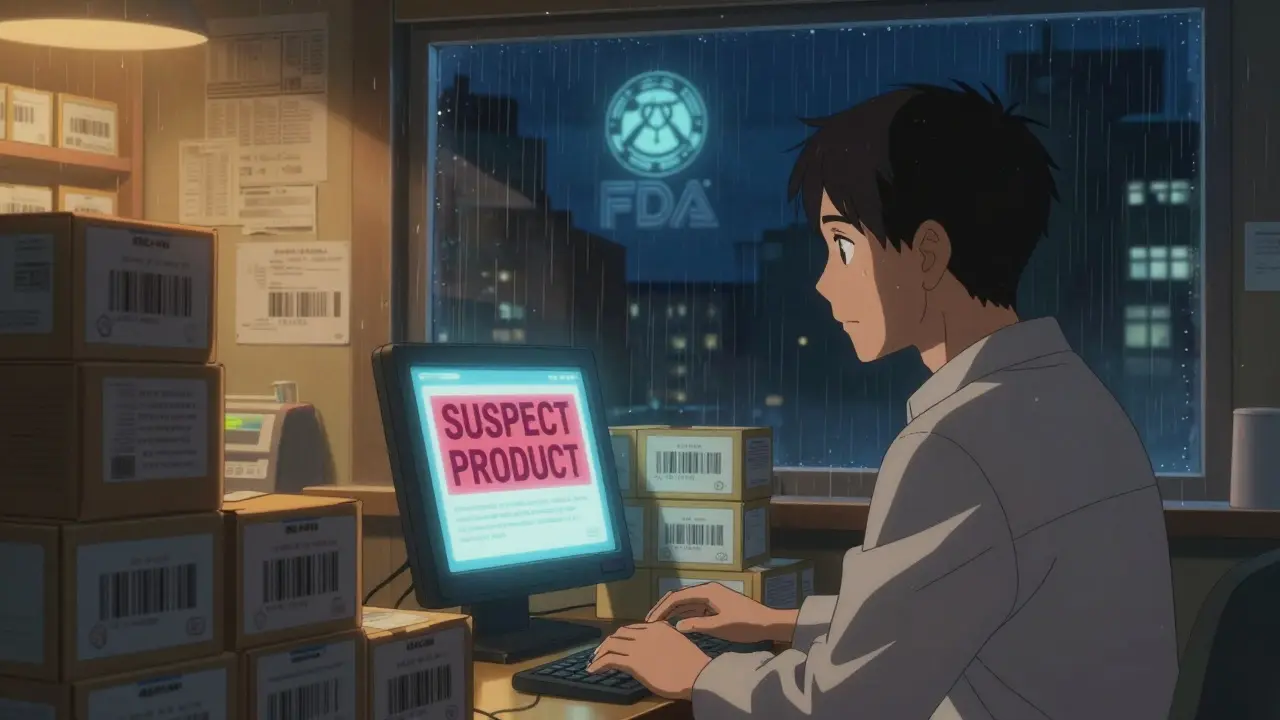
The Real Impact: Numbers That Matter
The numbers tell the story:- The U.S. pharmaceutical supply chain handles about 5 billion prescription transactions every year.
- The DSCSA-compliant software market is projected to hit $3.2 billion by 2025.
- Counterfeit drug incidents are expected to drop by 90% by 2027.
- Drug diversion (theft and illegal resale) is already down 40% since DSCSA began.
- Recalls are faster and cheaper-saving an estimated $2.3 billion annually by 2027.
What Comes Next?
The 2024 deadline is just the start. The FDA is already looking ahead. In March 2023, Commissioner Dr. Robert Califf said the agency is evaluating whether to extend DSCSA to high-risk over-the-counter drugs-like insulin pens or asthma inhalers. Those aren’t prescription-only, but they’re just as dangerous if fake. There’s also talk about expanding the system to biologics, vaccines, and even medical devices. The infrastructure is there. The technology is proven. Now it’s about scaling.What You Can Do
As a patient, you don’t need to scan barcodes or check serial numbers. But you can stay alert:- Check your pills. If the packaging looks off-wrong font, misspelled name, missing seal-don’t take them.
- Buy from licensed pharmacies. If a website sells pills without a prescription, it’s not legal.
- Report suspicious products. Talk to your pharmacist. They’re trained to spot fakes.
What does DSCSA stand for?
DSCSA stands for the Drug Supply Chain Security Act. It’s a U.S. federal law passed in 2013 to build an electronic, interoperable system for tracking prescription drugs from manufacturer to pharmacy, with the goal of preventing counterfeit, stolen, or harmful drugs from reaching patients.
When did DSCSA become fully effective?
Full implementation of the DSCSA’s electronic track-and-trace requirements became mandatory on November 27, 2024. This is when all trading partners-manufacturers, distributors, and pharmacies-must exchange serialized, electronic transaction data for every prescription drug package.
How does DSCSA stop counterfeit drugs?
Each drug package gets a unique serial number, lot number, expiration date, and NDC code. When a pharmacy receives a shipment, its system verifies that the serial number matches the manufacturer’s database and that the transaction history is complete and legitimate. If anything doesn’t match, the product is flagged as suspect and quarantined before it can be sold.
Are all pharmacies required to comply with DSCSA?
Yes. All dispensers, including retail pharmacies, hospitals, and clinics, must comply. However, adoption has been uneven. While 91% of chain pharmacies are compliant, only about 72% of independent pharmacies have fully implemented the required systems as of mid-2023.
What happens if a pharmacy receives a suspect product?
The pharmacy must immediately quarantine the product, verify its authenticity by checking the serial number with the manufacturer, conduct forensic testing if needed, and report it to the FDA within 24 hours. Failure to do so can result in regulatory action, including fines or loss of operating license.
Is DSCSA the same as the EU’s FMD?
No. The EU’s Falsified Medicines Directive (FMD) requires anti-tampering seals and a central repository where all serial numbers are stored and verified in real time. DSCSA doesn’t use a central database. Instead, it relies on direct electronic data exchange between trading partners using standardized formats like EPCIS.
Will DSCSA apply to over-the-counter drugs in the future?
The FDA is evaluating whether to extend DSCSA requirements to certain high-risk over-the-counter drugs, such as insulin pens, epinephrine auto-injectors, and other products with a history of counterfeiting or diversion. No official decision has been made yet, but expansion is likely.



Posts Comments
Jason Xin January 30, 2026 AT 12:45
Honestly, I didn’t realize how much tech was behind my prescription bottle until I read this. My local pharmacy had a glitch last month where my meds got stuck for two days because the system couldn’t verify the serial number. Turned out it was just a misaligned barcode - no fake drugs, just bad scanning. Still, it made me appreciate how fragile this whole system is.
Big pharma’s got it dialed in, but the little guys? They’re drowning in paperwork and outdated scanners. $185K to upgrade? That’s a house payment for some of these places.
Yanaton Whittaker January 31, 2026 AT 19:03
USA STILL THE BEST. No other country has the guts to let private companies handle this without a creepy central database. EU’s got their little fingerprint scanner on every pill? Pathetic. We don’t need government tracking - we need innovation. And guess what? We’re delivering it. 99.98% accuracy? That’s American engineering right there. 🇺🇸💪
Kathleen Riley February 1, 2026 AT 09:50
It is, indeed, a most remarkable confluence of regulatory foresight and logistical engineering that the Drug Supply Chain Security Act has precipitated. One cannot help but marvel at the ontological shift from analog record-keeping to a digital ecosystem of serialized transactional integrity.
Yet, one must also interrogate the epistemological implications: if traceability is predicated upon proprietary interoperability, is not the very notion of public safety outsourced to corporate infrastructures whose incentives may not align with patient welfare? The absence of a central repository is not merely a technical choice - it is a philosophical one.
Beth Cooper February 1, 2026 AT 20:45
Wait… so you’re telling me the government is forcing pharmacies to scan barcodes… but they’re NOT putting microchips in our pills? 😏
Classic. They say they’re stopping fakes, but I bet this is just the first step. Next thing you know, they’ll be using the serial numbers to track who’s taking what, when, and how often. And don’t even get me started on how the FDA ‘verified’ that 90% drop in counterfeits - probably just reclassified a bunch of expired meds as ‘suspect’ and called it a win.
Also, why does Walgreens spend $120M and CVS cut investigations by 75%? Sounds like they’re hiding something. Maybe they’re the ones selling the fakes and now they just got better at covering it up. 🤔
Donna Fleetwood February 2, 2026 AT 07:12
This is actually kind of amazing if you think about it. We’re talking about a system that can save lives just by making sure a pill’s barcode matches what it’s supposed to be. It’s not flashy, it’s not sexy - but it’s the quiet hero of public health.
To all the small pharmacies struggling with the cost - you’re not alone. I know a few owners who’ve been grinding through this, and they’re heroes. Let’s not forget: this isn’t about big tech or big pharma - it’s about Grandma getting her blood pressure med without fear. We can fix the glitches. We just need to keep showing up.
Also, if you’re a pharmacist reading this - thank you. Seriously. You’re doing the work no one sees.
Melissa Cogswell February 3, 2026 AT 13:23
One thing the article doesn’t mention: the burden of data validation falls disproportionately on pharmacists. The system flags mismatches constantly - sometimes due to typos in NDCs or expired API keys in distributor systems. Most of these are false positives, but the pharmacist still has to stop everything, call the distributor, wait for a response, and then manually re-enter data if the system doesn’t auto-resolve.
It’s not just about the cost of software. It’s about the time. A single verification can take 20 minutes. Multiply that by 50 packages a day. That’s a full workday lost to compliance, not patient care.
Bobbi Van Riet February 4, 2026 AT 09:33
So I was reading this and it got me thinking - what if the real problem isn’t counterfeit drugs, but how much we’ve outsourced trust? We used to rely on our local pharmacist knowing our meds, knowing our history, knowing if something looked weird. Now we’ve got machines scanning barcodes and algorithms comparing serial numbers, and we’re supposed to feel safe because a computer says so.
Don’t get me wrong - I’m glad we’re catching fakes. But I also miss the days when your pharmacist would say, ‘Hey, this bottle feels off. Let me call the rep.’ Now we’re so dependent on tech that when the system glitches, we panic. And the people who fix it? They’re not in the news. They’re in IT departments at regional distributors, working late because someone’s insulin shipment got stuck in a data loop.
Maybe the real win isn’t the 99.98% accuracy - it’s that we didn’t give up on this when it got messy.
Blair Kelly February 6, 2026 AT 02:15
Let’s be crystal clear: the DSCSA is not a triumph - it’s a patchwork of corporate compromises dressed up as public safety. The FDA gave a full year to fix ‘glitches’? That’s not leniency - that’s admission of systemic failure. The system’s built on EPCIS, which is a glorified XML schema with zero enforcement mechanisms. And yet, we’re told to believe in ‘interoperability’ as if it’s a religion.
Meanwhile, the EU’s FMD has real tamper-evident seals and a centralized, auditable database. The U.S. version is a Rube Goldberg machine held together by duct tape and goodwill. And don’t even get me started on how ‘independent pharmacies’ are being left behind - not because they’re incompetent, but because the system was designed by and for megacorporations. This isn’t innovation. It’s exclusion disguised as progress. And if you think the 90% drop in counterfeits is real, you haven’t looked at the audit logs.
Write a comment