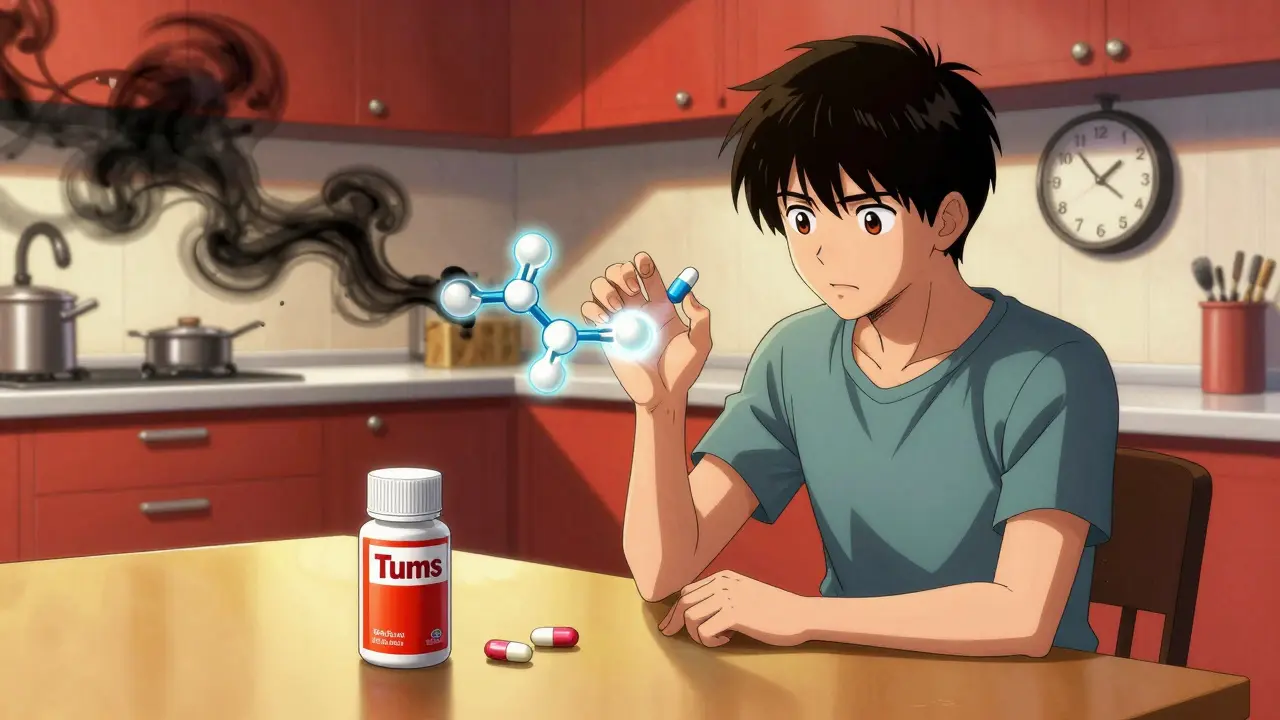
It’s not uncommon to take an antacid for heartburn while also on antibiotics for an infection. But if you’re taking them at the same time, you might be making your antibiotic less effective - and that’s not just a small risk. It could mean your infection doesn’t clear up, and you end up right back where you started. This isn’t a myth or a guess. It’s a well-documented, clinically proven interaction that affects millions of people every year.
Why Antacids and Antibiotics Don’t Mix
Antacids work by neutralizing stomach acid. They contain minerals like aluminum, magnesium, or calcium. These same minerals are what cause trouble with certain antibiotics. When they meet in your gut, they bind to the antibiotic molecules, forming a kind of chemical cage that your body can’t absorb. This is called chelation. The result? The antibiotic passes right through you without ever reaching your bloodstream.
It’s not just chelation, though. Antacids also raise the pH of your stomach. Some antibiotics need a certain level of acid to dissolve properly. If your stomach is too neutral, those drugs can’t break down. That means even if they aren’t chemically bound, they still don’t get absorbed.
Studies show this isn’t theoretical. In one analysis of 15,000 patients, those who took ciprofloxacin with an antacid had a 22% higher chance of treatment failure for urinary tract infections. That’s not a minor drop - that’s enough to send someone back to the doctor, maybe even to the hospital.
Which Antibiotics Are Most at Risk?
Not all antibiotics are affected the same way. Some are hit hard. Others barely notice. Here’s the breakdown:
- Fluoroquinolones - ciprofloxacin, levofloxacin, moxifloxacin. These are the worst offenders. When taken with antacids, absorption can drop by up to 90%. That’s not a typo. A single Tums right after your pill could make the drug useless.
- Tetracyclines - doxycycline, tetracycline. These are also heavily affected. Studies show 30-70% less absorption when taken with antacids. Doxycycline, often used for acne or Lyme disease, can fail completely if dosed with an antacid.
- Macrolides - azithromycin, clarithromycin. These have some interaction, but it’s mild. Still, guidelines recommend separating them by at least two hours.
- Beta-lactams - amoxicillin, cephalexin. These are the exceptions. They’re not strongly affected. You might lose 15-20% absorption, but in most healthy people, that doesn’t lead to treatment failure.
- Metronidazole - no interaction. If you’re on this for a bacterial infection or parasite, you don’t need to worry about antacids.
It’s easy to assume all antibiotics are the same. They’re not. If you’re on ciprofloxacin or doxycycline, timing matters. If you’re on amoxicillin, you have more flexibility - but it’s still better to separate them.
How Far Apart Should You Take Them?
There’s no one-size-fits-all answer. But here’s what the experts agree on:
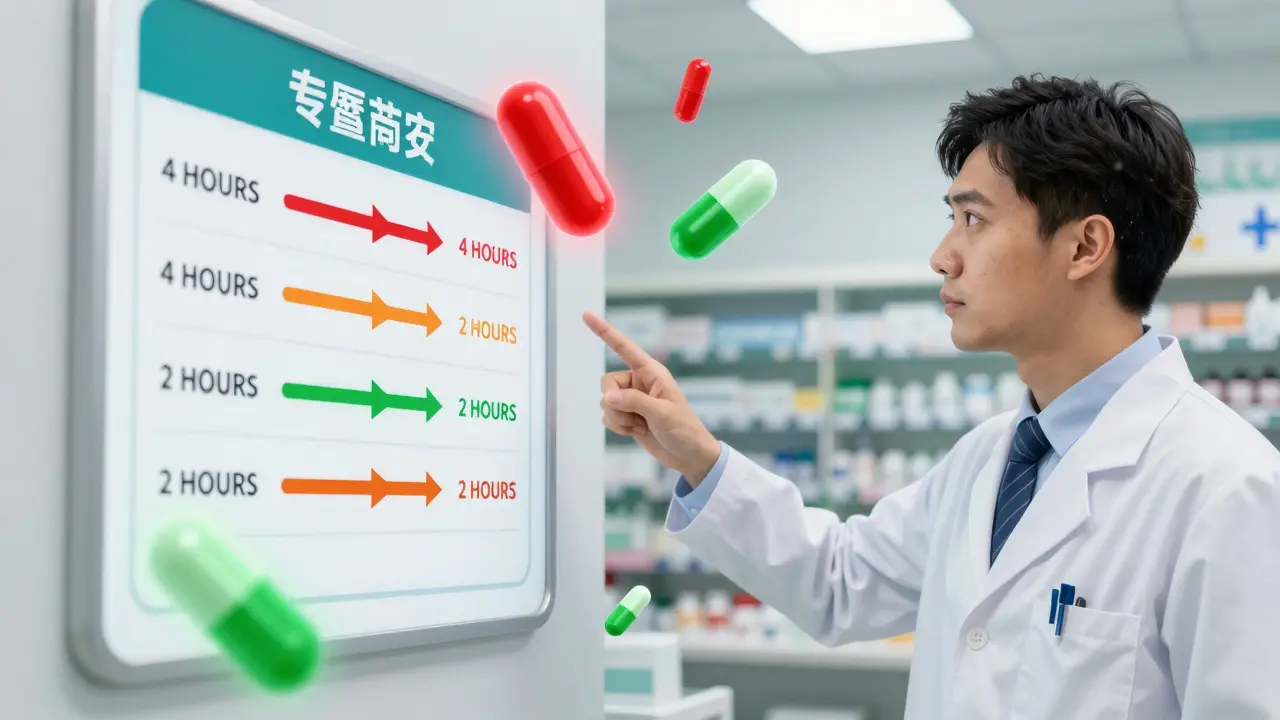
- Fluoroquinolones - Take them at least 4 hours before or 2 hours after an antacid. The NHS and FDA both say 4 hours before is safest.
- Tetracyclines - Take them 2 to 3 hours before or after antacids. Doxycycline is especially sensitive to calcium.
- Macrolides - 2 hours separation is enough.
- Beta-lactams - 1 hour is usually fine. If you’re unsure, aim for 2.
Why the difference? It depends on the mineral in the antacid. Calcium-based antacids (like Tums) bind more tightly and last longer in the gut than magnesium-based ones. So if you’re taking calcium antacids, you need more time.
What About Over-the-Counter Antacids?
People often think, “It’s just Tums - it’s not a real drug.” But Tums contains calcium carbonate. Mylanta has aluminum and magnesium. Rolaids? Calcium carbonate again. These aren’t harmless snacks. They’re potent chemical agents that interact with prescription drugs.
Even “natural” remedies like calcium supplements or magnesium pills can cause the same issue. If you’re taking a daily calcium pill for bone health and also on doxycycline for acne, you’re at risk. That’s why pharmacists now flag these combinations in real time.
According to a 2023 survey, 92% of electronic health records automatically warn doctors and pharmacists when these two are prescribed together. That’s how serious this is.
What Should You Do Instead?
If you need acid relief while on antibiotics, here’s what works:
- Switch to H2 blockers - famotidine (Pepcid) or ranitidine (though ranitidine is mostly off the market). These reduce acid without the minerals that bind antibiotics.
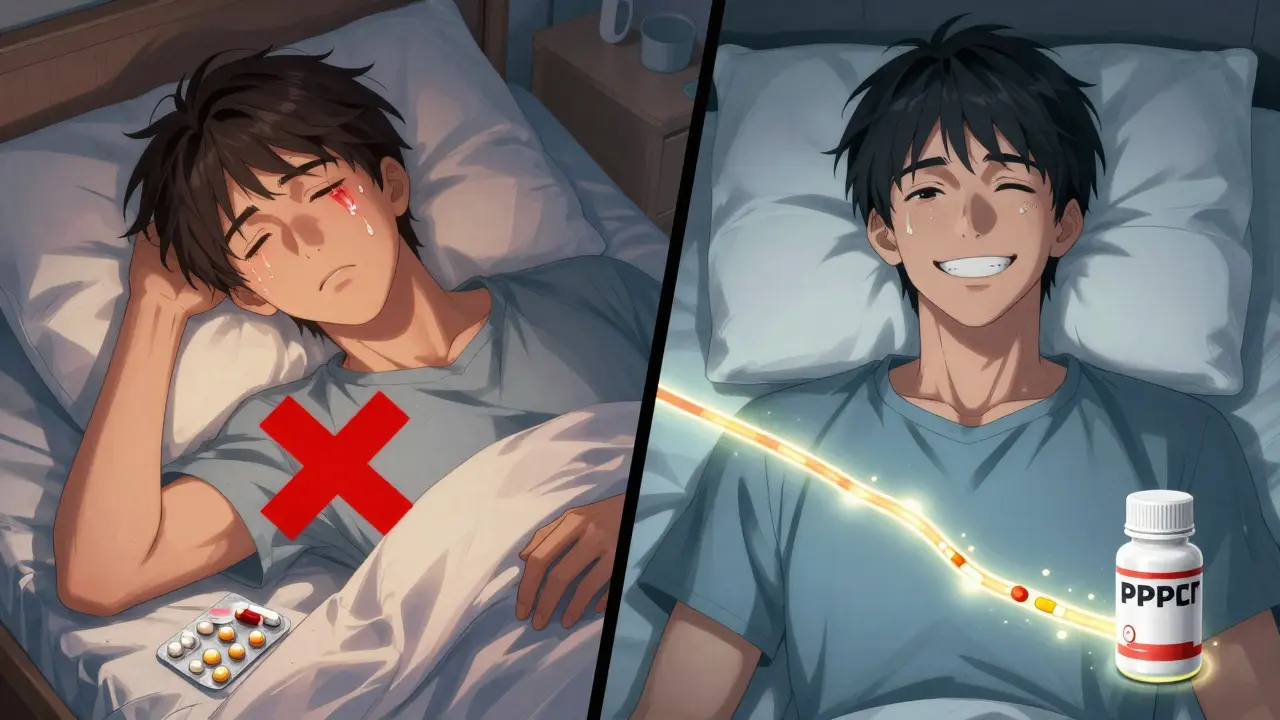
- Use proton pump inhibitors (PPIs) - omeprazole, pantoprazole. These are even better. They don’t contain calcium, aluminum, or magnesium. They work differently and don’t interfere with antibiotic absorption.
- Time your doses - If you must use antacids, take them at least 4 hours after your antibiotic, or 2 hours before. Set phone alarms. Write it down. Don’t rely on memory.
A 2023 study found that switching from antacids to PPIs reduced antibiotic treatment failure from 27% to just 9% in patients who needed both. That’s a 67% drop in failures - just by changing one thing.
Real Stories: What Happens When Timing Is Ignored
On Reddit, a patient wrote: “I took ciprofloxacin for a UTI with my Tums. Two days later, I was back in the ER. My pharmacist said I’d basically flushed the antibiotic out.”
Another user on Amazon Pharmacy shared: “My doxycycline wasn’t working. My acne didn’t improve. Then my pharmacist said, ‘Are you taking your antacid with it?’ I was. I started taking the antibiotic 2 hours before breakfast. In three weeks, my skin cleared up.”
These aren’t rare. A database of 1,247 patient reviews found that 68% of people who initially thought their antibiotic failed later succeeded after fixing the timing.
Doctors on Sermo report that nearly 18% of antibiotic treatment failures they see in primary care are due to patients taking antacids at the wrong time. That’s almost one in five cases that could have been avoided.
Tools That Help
Remembering to wait 4 hours between pills is hard. Especially if you’re on antibiotics twice a day, have a stomach condition, and are juggling other meds.
Apps like MyMedSchedule have built-in alerts for this exact interaction. They’ll remind you: “Wait 4 hours after your ciprofloxacin before taking Tums.” More than 1.2 million people use it. It’s not fancy - but it works.
Visual aids help too. A Mayo Clinic study found that giving patients a simple chart showing “safe windows” for dosing reduced timing errors by 37%. Sometimes, seeing it drawn out makes all the difference.
What’s Changing in 2026?
There’s good news. In 2023, the FDA approved a new version of ciprofloxacin called Cipro XR-24. It’s designed to be absorbed even when antacids are present. In trials, it only lost 8% absorption - compared to 90% for the old version.
Also, new guidelines now differentiate between types of antacids. Calcium-based ones need 4 hours. Magnesium-based ones? 2 hours is often enough.
And research is moving toward personalized timing. A 2023 study found that people with faster gastric emptying can take antibiotics closer to antacids than those with slower digestion. That’s the future - not just generic advice, but advice tuned to your body.
The Bottom Line
If you’re on antibiotics and need antacids, don’t guess. Don’t assume it’s fine. Check the label. Ask your pharmacist. Look up your specific antibiotic.
For fluoroquinolones and tetracyclines: Separate by at least 2 to 4 hours. Always.
For amoxicillin or metronidazole: Less critical, but still better to separate.
And if you’re stuck, switch to a PPI like omeprazole. It’s safer, just as effective for heartburn, and doesn’t mess with your antibiotics.
This isn’t about being perfect. It’s about avoiding preventable failure. One simple change - timing - can mean the difference between getting better and needing another round of treatment. And that’s worth remembering.






Posts Comments
Amina Aminkhuslen March 7, 2026 AT 01:20
So let me get this straight - you’re telling me my daily Tums habit is basically sabotaging my antibiotics like a drunken sidekick in a bad action movie? 🤦♀️ I’ve been popping those like candy since I was 16. My stomach’s been a temple of calm since then. Now you want me to wait 4 hours? I work a 9-to-5, I eat lunch at 1, and I take my meds at 8. That’s not a schedule - that’s a hostage negotiation. I’m switching to PPIs. No more Tums. No more drama. Just silent, chemical peace.
amber carrillo March 7, 2026 AT 16:42
This is one of those posts that makes you pause and think about how much we take for granted. Thank you for laying it out so clearly. I’ve seen friends struggle with recurrent infections and never connected it to something as simple as timing. Knowledge is power - and this is powerfully simple.
Tim Hnatko March 7, 2026 AT 22:45
I’m a pharmacy tech and I’ve seen this exact scenario play out way too often. Patient comes in with a new script for doxycycline, says they’re on calcium supplements for bone health - no idea there’s a conflict. We flag it, they’re confused. ‘But I’ve been doing this for years.’ I get it. We’re taught to take meds with food. We’re not taught that food can be a chemical bomb. I wish more people knew this. Maybe we need a sticker on every antacid bottle. Just one. ‘WARNING: May render antibiotics useless.’
Aaron Pace March 8, 2026 AT 17:53
Bro 😭 I took cipro with Tums last week for my UTI. Now I’m back on antibiotics AGAIN. My pharmacist literally facepalmed. I thought Tums was like… a snack? 🤡 I’m using MyMedSchedule now. It’s got a little bell icon. I named it ‘Antibiotic Guardian’. It’s my new bestie. 🫶
Vikas Verma March 9, 2026 AT 11:23
From a clinical pharmacokinetics standpoint, the chelation mechanism is well-characterized, particularly with divalent and trivalent cations. The bioavailability reduction in fluoroquinolones is not merely statistical - it is pharmacologically deterministic. The gastric pH elevation further compounds the dissolution deficit for acid-labile compounds. Therefore, the temporal separation protocol is not anecdotal - it is a direct consequence of physicochemical principles governing drug absorption. This is foundational knowledge in therapeutic drug monitoring. Ignoring it is not negligence - it is a systemic failure in patient education infrastructure.
Sean Callahan March 10, 2026 AT 20:17
i just took my amoxi and then a tums like 10 min later and now im like wait did i just ruin my whole treatment?? omg i think i need to go to the er or something idk im panicking now i just wanted to stop my heartburn and now im like maybe i have to start over and its so frustrating i hate this so much
Ferdinand Aton March 11, 2026 AT 18:58
Okay but have you considered that maybe your body just… doesn’t need antibiotics? Like, maybe you’re overprescribed? I’ve been on zero antibiotics for 7 years and I’ve never been sick. Maybe the real issue is that we’re too quick to reach for pills instead of letting our immune systems do their job. Just saying.
Susan Purney Mark March 12, 2026 AT 07:59
Thank you for this. I’ve been on doxycycline for acne and had a flare-up of heartburn - I was terrified I’d have to stop the treatment. I switched to omeprazole last week. My skin cleared up, my stomach stopped burning, and I didn’t have to stress about timing. I wish my doctor had told me this instead of just saying ‘take it with food.’ A simple chart or handout would’ve saved me weeks of confusion. Please, healthcare providers - give us visuals. We’re not pharmacists. We’re just trying not to feel sick.
Write a comment