
Medical Alert Bracelet Priority Calculator
Your Medical Profile
Max 50 charactersPriority Recommendations
Space Used: 0/50 characters
Remaining: 50
QR Code Recommendation: Your profile requires more space than traditional bracelets allow. Consider a QR code bracelet for full medical records.
Imagine you collapse in public. You can’t speak. Your phone is in your bag. No one knows you’re on warfarin, allergic to penicillin, or diabetic. In those first critical minutes, your life depends on what’s around your wrist.
Medical alert bracelets aren’t fashion accessories. They’re lifesaving tools-especially when it comes to drug safety. Every year, nearly 1 in 3 emergency room errors involve medications. That’s not a small risk. It’s a preventable one. And for people taking high-risk drugs or dealing with severe allergies, a simple engraved bracelet can mean the difference between life and death.
Why Medical Alert Bracelets Exist
The first medical ID bracelet was created in 1956 by the MedicAlert Foundation. Back then, it was a simple metal tag with an engraving and a phone number to call for medical records. Today, it’s evolved into something far more powerful. First responders are trained to look at wrists and necks within seconds of arriving at an emergency. That’s not a suggestion-it’s protocol. The American College of Emergency Physicians says so. And it’s not just in the U.S. Hospitals and paramedics around the world recognize these symbols.
Why? Because when someone is unconscious, confused, or in shock, they can’t tell you what medications they’re on. They can’t say, "I’m on blood thinners," or "Don’t give me morphine-I’m allergic." But their bracelet can.
What Information Saves Lives
Not all information on a bracelet matters equally. Emergency teams prioritize what they see. According to ACEP guidelines, the most critical details are:
- Drug allergies-especially penicillin, latex, NSAIDs, and sedatives. Penicillin allergies alone affect 10% of Americans. A single wrong dose can trigger anaphylaxis.
- Current medications that change emergency treatment-blood thinners like warfarin, rivaroxaban, or apixaban. These drugs can cause uncontrolled bleeding during trauma. If paramedics don’t know you’re on them, they might give you clotting agents that could kill you.
- Chronic conditions requiring specific protocols-Type 1 vs. Type 2 diabetes, insulin dependence, epilepsy, or heart failure. Giving glucose to someone with Type 1 diabetes who’s in ketoacidosis? That’s dangerous. Giving insulin to someone who’s hypoglycemic? That’s fatal.
Traditional bracelets only have space for 3 to 5 key items. That’s why you need to choose wisely. "On blood thinners" isn’t enough. Which one? Warfarin? Eliquis? The name matters. A 2023 study found that 12% of users had incomplete info because of space limits-and that led to extra tests, delays, and sometimes dangerous guesswork.
QR Code Bracelets: The Upgrade That Actually Works
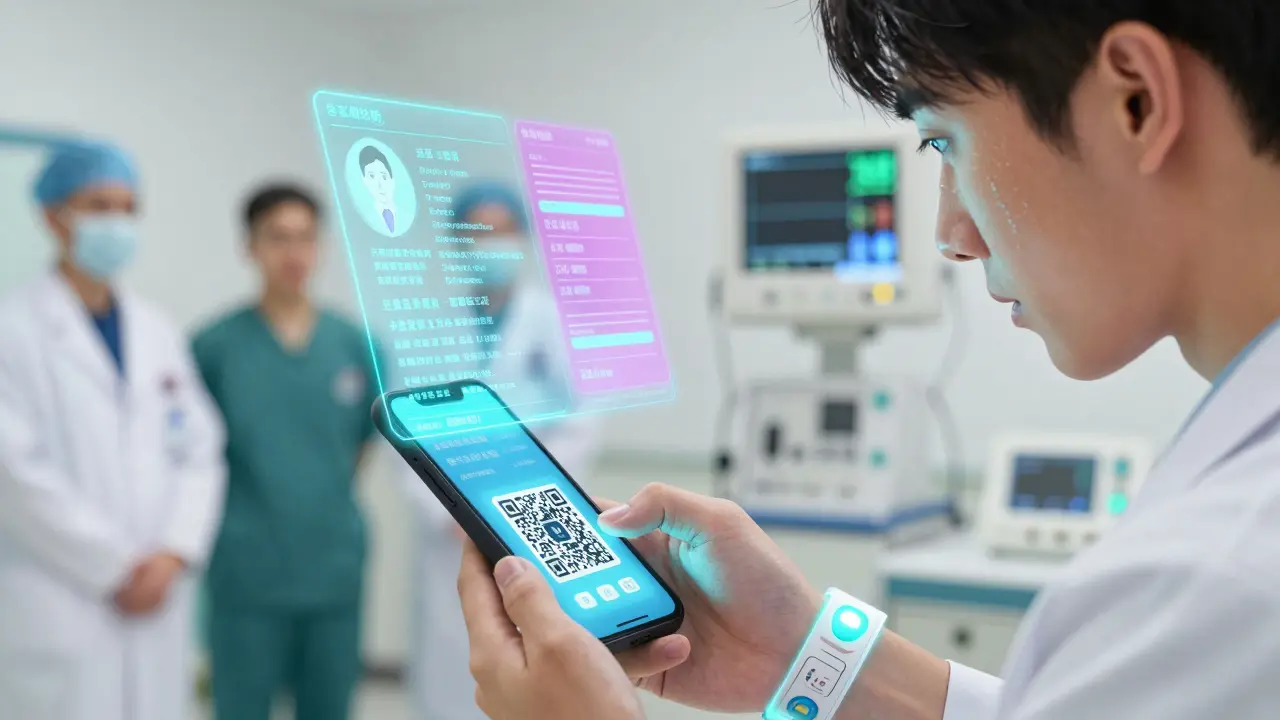
Enter QR code bracelets. These aren’t gimmicks. They’re digital lifelines. Scanned with a smartphone, they link to a full, up-to-date medical profile: all your medications, dosages, allergies, doctors’ contacts, and even your pharmacy’s info. MedicAlert’s SmartProfile system, launched in early 2024, even syncs with pharmacy databases. If your doctor changes your prescription, the bracelet updates automatically.
That solves the biggest flaw in traditional IDs: outdated info. The American Pharmacists Association says 35% of users never update their bracelets after a medication change. That’s like having a map to a house that’s been torn down. QR code systems reduce that risk dramatically. And they’re not expensive-starting at $69.99 with a $59.99 annual fee to keep your profile active.
Real Stories, Real Results
On Reddit, a user named AllergicAmy posted about being rushed to the ER for appendicitis. The nurse had already reached for penicillin. Then they saw her bracelet: "ANAPHYLACTIC TO PENICILLIN." They stopped. She lived. That story isn’t rare.
Trustpilot reviews for MedicAlert show 4.7 out of 5 stars from over 1,200 users. Sixty-three percent say they bought it for drug safety. One man with atrial fibrillation and a blood thinner told them his bracelet stopped an ER doctor from giving him a clot-busting drug that would’ve caused a brain bleed. Another woman with a severe latex allergy had surgery postponed because her bracelet alerted the OR team before they opened the sterile pack.
But it’s not perfect. Some users report that their bracelets didn’t have enough space. One wrote: "It just said ‘ON BLOOD THINNERS.’ They still had to run tests to figure out which one. I lost 45 minutes.” That’s why choosing the right info matters more than ever.
Who Needs One Most?
You don’t have to be elderly or frail to need one. If you take any of these, you’re at higher risk:
- Warfarin, apixaban, rivaroxaban, or other anticoagulants (41% of users have one)
- Insulin or other diabetes medications (28% of users have one)
- Any drug with a black box warning or known dangerous interactions
- Severe allergies to penicillin, NSAIDs, or anesthetics (33% of users have one)
- Multiple prescriptions (five or more)
- Conditions like epilepsy, heart failure, or kidney disease that affect drug metabolism
It’s not about age. It’s about risk. And if you’re on even one high-risk drug, you’re part of a group that’s statistically more likely to face a medication error in an emergency.
What to Put on Your Bracelet
Here’s the exact order experts recommend:
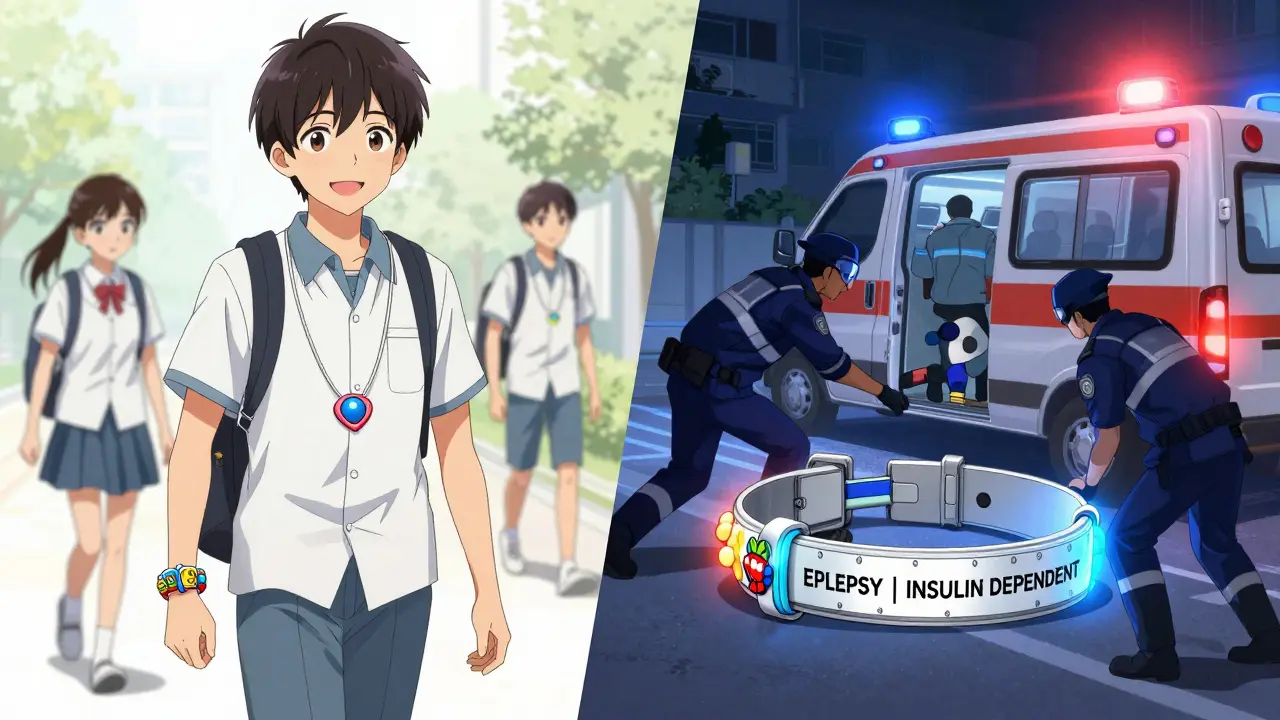
- Drug allergies-be specific: "ALLERGIC TO PENICILLIN" not just "ALLERGIES"
- Life-altering medications-"ON WARFARIN," "INSULIN DEPENDENT," "ON APIXABAN 5MG"
- Chronic conditions-"TYPE 1 DIABETES," "EPILEPSY," "HEART FAILURE"
- Emergency contacts-if space allows, add a phone number or "CALL [NAME]"
Don’t waste space on "DIABETIC" if you’re on insulin. Say "INSULIN DEPENDENT." Don’t write "ALLERGIC TO DRUGS." Name the drug. Precision saves time. Time saves lives.
Cost, Support, and Keeping It Updated
Basic metal bracelets start at $49.99. QR code versions start at $69.99, with annual fees around $60 to maintain the digital profile. Some systems, like Medical Guardian’s 2025 model, bundle the bracelet with a personal alarm that calls for help automatically. That costs $29.95/month-but if you live alone or have a high-risk condition, it’s worth it.
Customer service matters. MedicAlert scored 4.3/5 in a 2024 J.D. Power study. Smaller brands? Around 3.1/5. If you’re paying for this, you want help when you need it.
Updating your info? Set a calendar reminder every time your meds change. Or use a QR system that auto-syncs with your pharmacy. If your doctor prescribes a new drug, update your bracelet within 48 hours. Don’t wait. Outdated info is worse than no info.
The Bigger Picture
The global medical ID market hit $287 million in 2023-and it’s growing fast. Hospitals are required by law to check for medical IDs during emergencies. The 2022 CARES Act made it standard procedure. Epic and Cerner, the two biggest hospital EHR systems, are now building direct links to medical ID profiles. Soon, your bracelet won’t just tell the ER what you take-it’ll pull your full record from your doctor’s system.
That’s the future. But right now, the most important thing is this: if you take drugs that could harm you if given incorrectly, wear a bracelet. Don’t wait for an emergency to realize you didn’t prepare.
It’s not about being cautious. It’s about being smart. And in medicine, being smart when you can’t speak is the only way to survive.
Do medical alert bracelets really work in emergencies?
Yes. First responders are trained to look for them. In 89% of cases where a bracelet is present, medical teams use the information correctly. Studies show they reduce medication errors by up to 28% in unconscious patients. Real cases confirm this-people have been saved from allergic reactions, wrong drugs, and dangerous interactions because their bracelet was there.
Can I just write my info on a piece of paper instead?
No. Paper doesn’t survive water, sweat, or trauma. Paramedics won’t search your pockets. They check wrists and necks. A bracelet is visible, durable, and standardized. It’s designed to be found in seconds. A note in your wallet? It’s too late by then.
What if I have too many medications to fit on a bracelet?
Prioritize. Use the top three: allergies, life-saving meds, and chronic conditions. For everything else, use a QR code bracelet. It links to a full digital profile with all your drugs, dosages, and interactions. You can update it anytime, and first responders can scan it with a phone.
Are QR code bracelets safe and private?
Yes. Reputable providers use encrypted links and require a PIN or password to access full details. Only emergency personnel scan the code-they don’t get your entire medical history unless you’ve given permission. Your data stays under your control. You can delete or update it anytime.
Do I need to wear it every day?
Yes. 73% of emergencies happen when people are away from home-shopping, traveling, walking the dog. If you only wear it at night or when you’re home, you’re not protected. Make it part of your routine, like brushing your teeth. It’s not optional if you’re on high-risk meds.
Can kids or teens wear medical alert bracelets?
Absolutely. Children with severe allergies, epilepsy, or insulin-dependent diabetes need them just as much as adults. Many brands offer kid-friendly designs-colors, characters, even superhero themes. The goal is to make it something they’ll want to wear, not hide.




Posts Comments
Cam Jane January 6, 2026 AT 12:15
I got my QR bracelet last year after my dad had a bad reaction in the ER because they didn’t know he was on rivaroxaban. Took them 47 minutes to figure it out. He’s fine now, but I’ll never forget the panic on the nurse’s face when she realized they almost gave him a clot-buster. I wear it every day-even to bed. It’s not just a bracelet, it’s a silent bodyguard. If you’re on blood thinners, insulin, or have a serious allergy? Just get one. No excuses. Your future self will thank you.
Dana Termini January 8, 2026 AT 11:06
I’ve been wearing a traditional metal bracelet for 12 years. I have Type 1 diabetes and a penicillin allergy. It’s simple: INSULIN DEPENDENT. ALLERGIC TO PENICILLIN. No QR code, no app, no subscription. I update it every time my meds change. I don’t trust cloud-based systems. If the power goes out, or the server crashes, I still have my info. Sometimes the old way is the safest way.
Amy Le January 8, 2026 AT 11:54
Let’s be real-this whole thing is a corporate cash grab. 🤑 MedicAlert makes $60 a year off people who are scared of hospitals. Meanwhile, the real problem? ER staff don’t even check for these things consistently. I’ve seen it. They glance at your wrist, shrug, and go straight to the chart. And guess what? The chart is often wrong too. QR codes? Cool tech, but if the system doesn’t integrate with hospital EHRs, it’s just a fancy keychain. Stop selling fear. Fix the system.
Stuart Shield January 10, 2026 AT 06:48
I work in a rural ER in Wales, and I’ve seen this play out a hundred times. A guy collapses-no ID, no phone, no one to call. We start IV fluids, then his wrist catches my eye: "ON WARFARIN." We stop. We call the pharmacy. We save him. That bracelet? It’s not plastic or metal. It’s trust. It’s a promise between strangers. I’ve cried after shifts because of moments like that. Don’t underestimate the power of a tiny engraved tag. It’s not just medical info-it’s humanity in a crisis.
Lily Lilyy January 11, 2026 AT 00:42
My 14-year-old daughter has epilepsy and a severe nut allergy. She wears a pink bracelet with a butterfly and her info engraved. She says it makes her feel brave. I used to worry she’d be teased. Instead, kids at school ask her about it. Now they all know what to do if someone collapses. We’ve turned a medical tool into a classroom lesson on empathy. It’s not just about safety-it’s about teaching compassion. Everyone should wear one if they need it. No shame. Only strength.
Brian Anaz January 12, 2026 AT 07:35
QR codes? In America? You’re kidding me. We got the best tech in the world and you’re still paying $60 a year to keep your medical info online? Meanwhile, China and Germany have national digital health IDs. We’re still stuck with wristbands that need a phone to read? Pathetic. Get a metal one. Write it in permanent marker if you have to. Stop trusting Silicon Valley to save your life.
Kiran Plaha January 13, 2026 AT 10:21
My uncle had a stroke and they gave him aspirin. He was on Eliquis. They didn’t know. He didn’t have a bracelet. He’s fine now, but he can’t walk right anymore. I bought one for my mom last week. She’s 78, on three meds, and hates wearing things. But I told her: "If you ever need help, and you can’t talk, this tiny thing might be the only voice you have." She put it on. I cried. Sometimes the simplest things are the most powerful.
Matt Beck January 14, 2026 AT 21:39
Okay, but… what if someone scans your QR code and it’s not an emergency? 😳 Like… what if a nosy neighbor or a hacker finds your bracelet and just… scans it? 🤔 I mean, what’s stopping them? Your data’s on a server somewhere, right? And what if the link breaks? Or the battery dies? Or the company goes bankrupt? 🤯 I’m not saying don’t get one-I’m saying don’t be naive. Tech is great until it’s not. And then? You’re just holding a fancy paperweight.
Molly McLane January 15, 2026 AT 13:39
My sister is a paramedic in Chicago. She told me last week that 8 out of 10 unconscious patients they bring in have no ID. Eight. Out. Of. Ten. And the ones who do? Half the time, the info is wrong. Outdated meds. Misspelled allergies. "Allergic to penicillin" written as "Allergic to penicilin." They waste minutes trying to figure it out. A QR bracelet doesn’t fix everything-but it fixes the biggest problem: silence. If you can’t speak, your bracelet should be able to. That’s not magic. That’s basic dignity.
Beth Templeton January 15, 2026 AT 17:30
Wear a bracelet. Done. Next.
Tiffany Adjei - Opong January 17, 2026 AT 00:26
Wait, so you’re telling me I need to spend $70 and $60/year just so ER staff don’t screw up? That’s not safety-that’s capitalism exploiting fear. My friend got her bracelet because her doctor said "it’s a good idea." No data. No study. Just marketing. Meanwhile, hospitals still don’t train staff to check for them properly. So why am I paying? Why am I supposed to feel guilty if I don’t? I’ll take my chances. And if I die? At least I didn’t fund a subscription service.
Write a comment