Imagine taking a medication that has saved your life for years. The doctor prescribes the same name, but the pharmacy hands you a different pill. It looks slightly different. It costs eighty-five percent less. But when you take it, something feels off. Your symptoms return. Or worse, you develop new side effects like nausea or skin rashes. This is not a conspiracy theory. It is a documented reality for thousands of patients dealing with generic drug combinations medications containing two or more active pharmaceutical ingredients marketed as lower-cost alternatives to brand-name products.
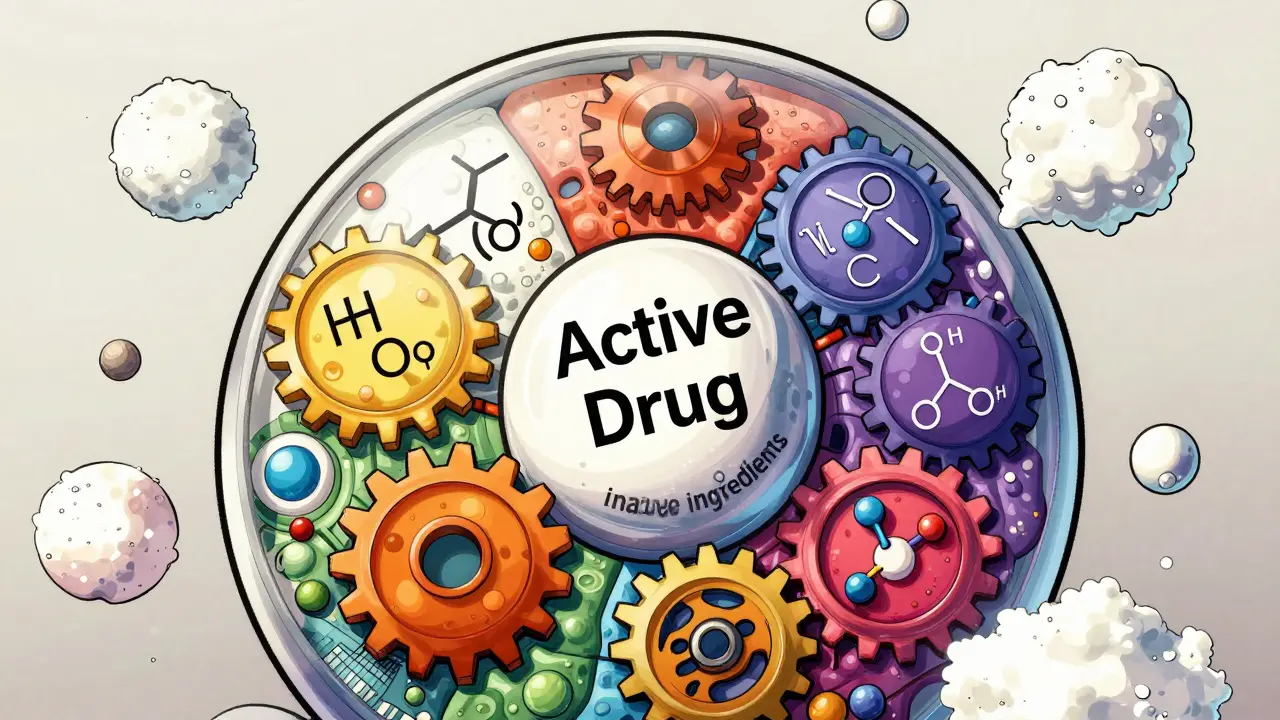
The core issue isn't usually the medicine itself. It is what surrounds the medicine. While the active ingredients must be identical, the inactive components-the fillers, binders, and dyes-can vary wildly between brands and generics. For most people, this doesn't matter. But for a specific group of vulnerable patients, these subtle chemical shifts can disrupt their health in significant ways.
Why Generic Combinations Are Different From Single Drugs
To understand the risk, we first need to look at how regulations work. Under the Hatch-Waxman Act 1984 US legislation allowing generic manufacturers to demonstrate bioequivalence without repeating costly clinical trials, passed in 1984, the U.S. Food and Drug Administration (FDA) allows companies to skip full clinical trials if they prove their product is "bioequivalent" to the brand name. Bioequivalence means the drug enters the bloodstream at a similar rate and extent.
However, combination drugs add a layer of complexity. A single-drug generic only needs to match one active ingredient. A combination generic, like a blood pressure med mixing two agents, must ensure both ingredients release correctly together. The FDA requires dissolution testing showing an 80-125% similarity in drug release profiles. Yet, this standard often fails to capture how different inactive ingredients affect extended-release mechanisms.
| Feature | Brand Name Product | Generic Combination |
|---|---|---|
| Active Ingredients | Identical quantity and quality | Must be identical |
| Inactive Ingredients | Proprietary formulation | Can vary significantly (fillers, binders) |
| Development Cost | Average $2.6 billion | Approx. $2 million per product |
| Testing Focus | d>Clinical efficacy and safetyBioequivalence (AUC and Cmax) |
This cost difference is huge. Brand developers spend billions on trials. Generic makers spend millions on bioequivalence studies. That savings gets passed to you, which is why about 90% of prescriptions in the United States are now filled with generics. But that economic benefit comes with a trade-off: variability in non-active components.
The Hidden Role of Inactive Ingredients
We tend to think of pills as just the drug. But a tablet is mostly filler. According to a 2017 study in the Journal of the American Pharmacists Association, nearly half (47%) of generic combination drugs examined had different inactive ingredient profiles compared to their brand counterparts.
Common variations include:
- Magnesium stearate: Found in 38% of differing cases, used as a lubricant during manufacturing.
- Lactose: Present in 29% of cases, a common binder that can trigger issues for those with sensitivities.
- Microcrystalline cellulose: Used in 22% of cases to give the pill structure.
For a healthy person, magnesium stearate does nothing. But for someone with a sensitive gut, or a rare allergy, it can cause inflammation or digestive distress. These ingredients don't just sit there; they influence how fast the drug dissolves. In extended-release formulations, the inactive matrix controls the speed of delivery. Change the matrix, and you change the timing of the dose hitting your system.
Who Is Most At Risk? Narrow Therapeutic Index Drugs
Not all medications carry the same risk. The biggest concern lies with Narrow Therapeutic Index (NTI) drugs medications where small changes in blood concentration can lead to treatment failure or toxicity. These are drugs where the difference between a helpful dose and a harmful one is tiny. The FDA lists 14 distinct NTI products, including warfarin (blood thinner), levothyroxine (thyroid hormone), and certain anti-seizure medications.
Consider thyroid medication. A 2020 study in JAMA Internal Medicine looked at nearly 90,000 Medicare patients who switched from brand to generic levothyroxine. They found that 12.3% experienced changes in their thyroid-stimulating hormone (TSH) levels severe enough to require a dosage adjustment. Compare that to the control group, where only 8.7% needed changes. That might sound small, but for a patient whose metabolism is already fragile, that fluctuation can mean fatigue, weight gain, or heart palpitations.
Combination drugs amplify this risk because interactions between multiple active ingredients make the absorption process more complex. If one ingredient absorbs slightly slower due to a different binder, it might alter how the second ingredient works.
Real-World Impact: What Patients Are Reporting
Data from clinical trials is clean. Real life is messy. Patient reports tell a starkly different story than the "98.5% success rate" cited by some industry groups. On the platform PatientsLikeMe, an analysis of over 12,000 posts between 2020 and 2023 showed that 23.7% of users reported adverse effects after switching to generic combinations.
The complaints weren't random. They clustered around specific categories:
- Psychiatric medications: 31.2% complaint rate. Mood stabilizers are highly sensitive to absorption rates.
- Endocrine therapies: 28.6% complaint rate. Hormone balance requires precise dosing.
- Gastrointestinal issues: The most common physical symptom, reported by 41% of pharmacists receiving complaints.
Dr. Aaron Kesselheim from Harvard Medical School noted before the Senate HELP Committee in 2023 that while FDA standards are scientifically sound for most drugs, we lack sufficient post-marketing surveillance to catch rare but serious events linked to formulation differences. He specifically highlighted combination products as a blind spot.
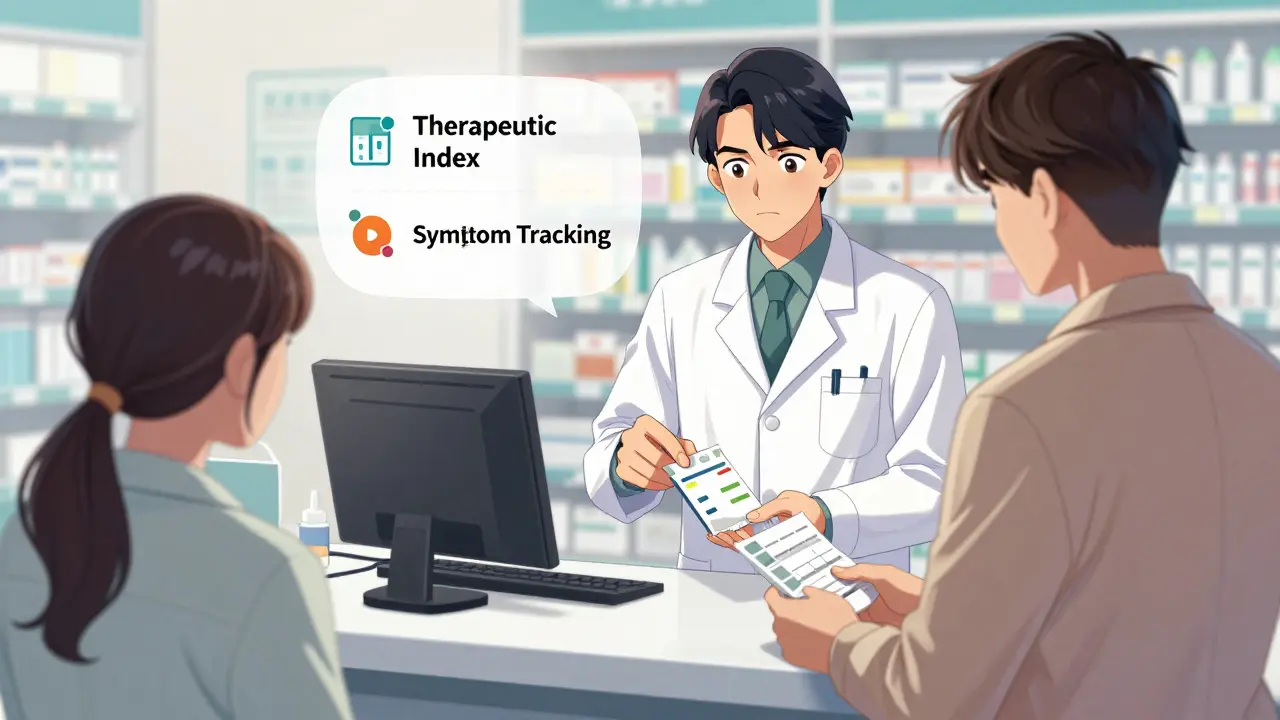
How to Protect Yourself During Substitution
You cannot always stop a pharmacy from substituting a generic. State laws often mandate it unless the doctor explicitly forbids it. However, you can manage the risk. The USP Chapter <1099> guidelines for minimizing medication errors recommending a five-point assessment before substituting combination generics outlines a smart approach for pharmacists and patients alike.
- Check the Therapeutic Index: Is your drug an NTI drug? If yes, ask your pharmacist to stick to one manufacturer.
- Review Your History: Have you had reactions to fillers like lactose or dyes? Tell your provider.
- Monitor Disease Stability: Do not switch generics right after a major health change, surgery, or dose adjustment. Wait until your condition is stable.
- Track Symptoms: Keep a simple log for two weeks after any switch. Note energy levels, digestion, and mood.
- Ask About Authorized Generics: These are made by the brand company but sold at a generic price. They have identical formulations. They cost 15-20% more than standard generics but eliminate the variable entirely.
If you notice a problem, do not just suffer through it. Contact your prescriber. In many states, doctors can write "Dispense As Written" on the prescription to prevent automatic substitution. For high-risk patients, this extra step is worth the potential insurance hassle.
The Future of Generic Regulation
The industry is waking up to these issues. The FDA's 2023 report noted a 27% increase in complex generic applications requiring specialized review. New guidelines introduced in 2022 demand stricter dissolution testing for 28 high-risk drug combinations.
Additionally, the Generic Pharmaceutical Alliance committed to disclosing all inactive ingredients in standardized labeling by 2025. This transparency will help patients with allergies make better choices. Until then, awareness is your best tool. Know your meds, know your body, and never hesitate to question a change that makes you feel worse.
Are generic combination drugs safe for everyone?
For the majority of patients, yes. Studies show that about 98.5% of substitutions proceed without issue. However, patients taking narrow therapeutic index drugs, those with known allergies to fillers like lactose, or individuals with sensitive gastrointestinal systems may experience adverse effects due to differences in inactive ingredients.
What is the difference between a generic and an authorized generic?
An authorized generic is produced by the original brand-name manufacturer but sold under a generic label at a lower price. Unlike standard generics, authorized generics use the exact same formulation, including inactive ingredients, as the brand-name product. They typically cost 15-20% more than standard generics but offer identical performance.
Can I refuse a generic substitution at the pharmacy?
Yes, but it depends on your insurance and state laws. You can ask your doctor to write "Dispense As Written" or "Brand Medically Necessary" on the prescription. However, your insurance plan may charge higher copays for brand-name drugs, so check your coverage first.
Why do inactive ingredients matter if they aren't the drug?
Inactive ingredients like binders and fillers control how quickly the drug dissolves and releases into your body. In extended-release medications, these components are critical for maintaining steady drug levels. Changes in these ingredients can alter absorption rates, potentially leading to reduced efficacy or increased side effects.
Which medications are considered Narrow Therapeutic Index (NTI)?
NTI drugs include warfarin (blood thinner), levothyroxine (thyroid hormone), phenytoin (seizure prevention), and lithium (mood stabilization). For these drugs, even small variations in blood concentration can cause serious health issues, making consistent formulation crucial.