
Imagine spending a decade and billions of dollars developing a miracle drug, only to watch your profits vanish overnight the second your patent expires. That's the "patent cliff" pharmaceutical companies face. But there is a clever, often overlooked way these companies fight back: they launch their own generic version of their own drug. It sounds like a contradiction-a brand-name company competing against itself-but in the industry, this is a calculated move called an authorized generic strategy.
| Feature | Authorized Generic | Traditional Generic |
|---|---|---|
| Manufacturer | The original brand company | A different competing company |
| Formula | Identical to brand name | Bioequivalent (similar) |
| FDA Path | Existing brand approval | ANDA (Abbreviated New Drug Application) |
| Market Entry | Immediate (no exclusivity wait) | May face 180-day delay |
What exactly is an authorized generic?
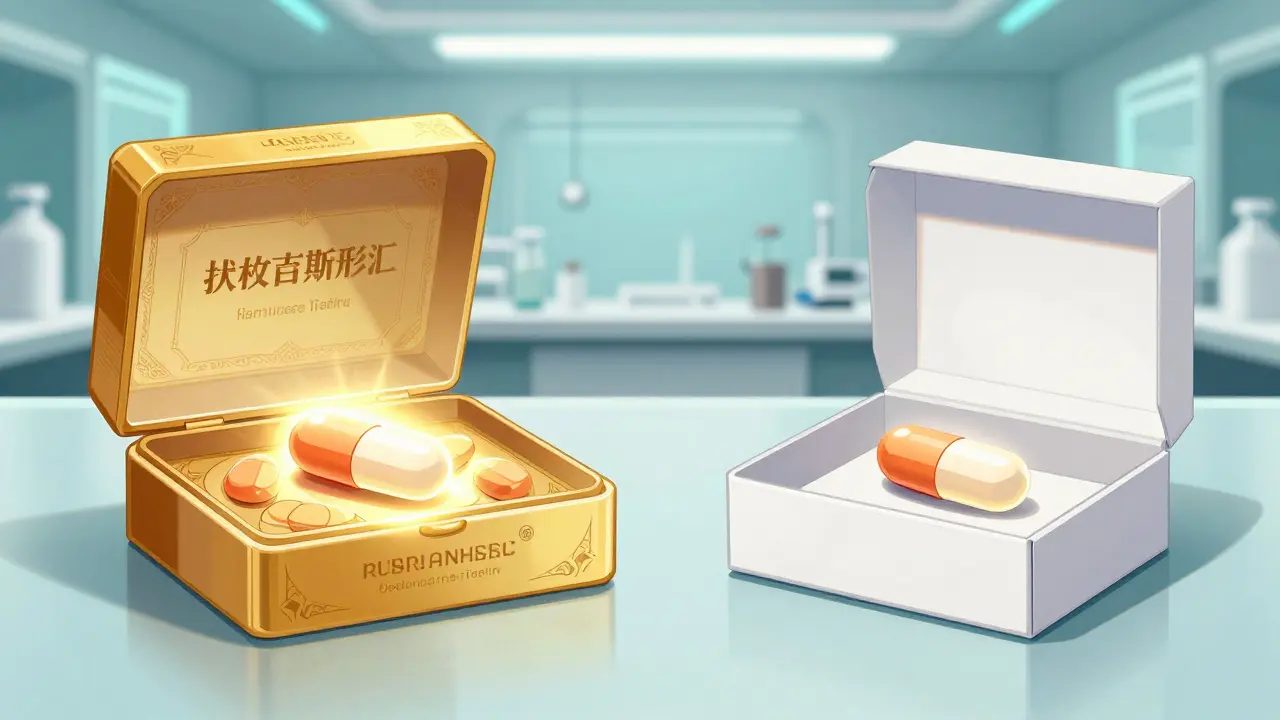
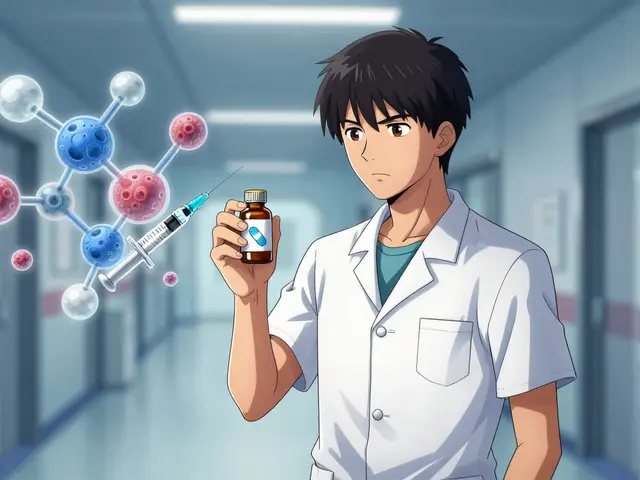
An Authorized Generic is a medical product that is identical to the brand-name drug in almost every way-size, shape, color, and ingredients-but is sold without the brand name. While it looks and acts exactly like the original, the packaging and label are different to follow trademark laws. Think of it as the same product, just in a plain white box.
This isn't just a random business choice; it's a legal loophole created by the Hatch-Waxman Act, a 1984 law that balances the need for new drug innovation with the need for affordable medicine. By using this act, brand manufacturers can step into the generic market the moment their patent expires, rather than waiting for a competitor to do it first.
The strategy: Why compete with yourself?
Why would a company like Pfizer or Eli Lilly want to sell a cheaper version of their own product? It's all about money and market share. When a patent ends, prices for a drug can crash by 80% to 85% in a single year because of sudden competition. If a brand company does nothing, they lose that entire chunk of the market to other generic firms.
By launching an authorized generic, the brand company can:
- Capture the "budget" crowd: They keep patients who would have switched to a cheaper generic anyway.
- Squeeze competitors: If the brand company already has a generic on the shelf, other generic companies have a harder time gaining a foothold.
- Tiered Pricing: They often price the authorized generic slightly lower than the brand version, but slightly higher than the "bottom-shelf" generics. This keeps their total revenue higher.
A classic example happened in 1997 with AstraZeneca. When the patent for Prilosec expired, they launched their own generic version through a subsidiary. Within six months, they grabbed about 30% of the total market for that drug, effectively stealing customers back from the competition.
How the production process actually works
For a traditional generic company, making a copy is a mountain of paperwork and testing. They have to file an ANDA (Abbreviated New Drug Application) and prove to the FDA that their version works exactly like the original. This process can take an average of 17 months.
Brand manufacturers have a massive shortcut. Since they already own the original formula, they don't need to repeat clinical trials. They use the same factories and the same Good Manufacturing Practice (GMP) standards. The only real "production" change is the packaging and the labels. Because of this, the transition can happen in as little as 6 to 9 months.
One of the biggest advantages is the 180-day exclusivity rule. Normally, the first generic company to successfully challenge a patent gets six months of being the only generic on the market. Authorized generics bypass this. The brand company can launch their generic on the very same day the patent expires, meaning they don't have to wait for anyone.
The impact on your wallet and health
Does this actually help the patient? The answer depends on who you ask. If you're a patient, you might find authorized generics appealing because you know it's the exact same pill you've been taking for years. A survey by the Kaiser Family Foundation found that 71% of patients prefer authorized generics for this reason of familiarity.
However, economists and doctors aren't always convinced. Dr. Aaron Kesselheim from Harvard Medical School has pointed out that when a brand company launches an authorized generic, prices don't drop as much as they should. In some markets, prices only fell by 32% when an authorized generic was present, compared to a 68% drop when only independent generics were competing.
In short: you get the peace of mind that the drug is identical, but you might pay a few more dollars than you would if the market were truly open to all competitors.
The legal battle and the future
This strategy isn't without drama. The Federal Trade Commission (FTC) has stepped in several times, arguing that this is an antitrust issue. They believe some companies use authorized generics to block other competitors from entering the market, which keeps prices artificially high. For instance, a case involving Actavis and the drug Namenda ended in a $448 million settlement.
Looking ahead, this trend is moving into the world of "biologics"-complex drugs made from living cells. These are much harder to copy than simple pills. We are now seeing the rise of authorized biosimilars. Amgen, for example, launched an authorized version of its own drug Enbrel in 2023. Because biologics are so complex, the brand company's ability to produce its own generic version is even more powerful than it was with traditional pills.
Is an authorized generic the same as a regular generic?
Yes, in terms of the drug itself. An authorized generic is actually the exact same formulation and is made in the same factory as the brand-name drug. A traditional generic is a copy made by a different company that is "bioequivalent," meaning it works the same way, but the inactive ingredients might differ slightly.
Why doesn't the brand company just lower the price of the original drug?
If they lower the price of the brand-name drug, they lose a huge amount of profit from insurance companies and hospitals that are willing to pay a premium for the "brand." By creating a separate generic version, they can keep the high price for some customers while offering a cheaper option to others.
How can I tell if my medicine is an authorized generic?
It's surprisingly hard. They don't usually say "Authorized Generic" on the box. The best way is to check the manufacturer listed on the packaging. If it's the same company that makes the brand-name version but the box is generic, it's likely an authorized generic.
Do authorized generics require new FDA approval?
No. Because the drug is identical to the one already approved, the manufacturer can leverage their existing data. They don't have to redo the expensive and time-consuming clinical trials that traditional generic companies must go through.
Do these drugs cost more than traditional generics?
Usually, yes. Brand companies often price their authorized generics slightly above the cheapest traditional generics to maximize their revenue while still appearing competitive.



Posts Comments
Trey Kauffman April 11, 2026 AT 00:47
Oh brilliant, so we're just pretending it's a free market while the same corporate overlords play both sides of the fence to keep the prices high. Truly a peak example of capitalist efficiency where the only thing being cured is the company's quarterly revenue deficit.
Will Gray April 13, 2026 AT 00:23
This is exactly how they keep us under their thumb. They manipulate the FDA and the Hatch-Waxman Act to ensure that no real competition ever survives. It's a coordinated effort by globalist entities to control the supply of life-saving medicine. Wake up and realize that these "authorized generics" are just a psychological trick to make us think we're getting a deal while they maintain an iron grip on the American pharmaceutical infrastructure. We need to bring everything back in-house and stop letting these shadow corporations dictate who lives and dies through patent loopholes and shell companies.
Doug DeMarco April 14, 2026 AT 16:02
Actually a pretty cool way to look at it! It's kind of like how some brands make a "lite" version of their product to keep people from switching to the budget brand at the grocery store 🛒 Always good to know how the sausage is made so we can make better choices for our health! 😊
Kelly DeVries April 14, 2026 AT 17:11
the sheer audacity of these companies lol like imagine being that greedy and it actually working... just absolutely wild how they play us all for fools and we just pay it anyway
Chad Miller April 16, 2026 AT 14:23
totaly unethical tbh. brand companies just loot poor peple and the govt doesnt do nuthin about it. just pathetic
Rakesh Tiwari April 18, 2026 AT 08:29
Wow, what a shocker that a billion-dollar company wants to make more money. I am absolutely stunned by this revelation. Truly, the pinnacle of corporate altruism to offer us a generic that's still slightly more expensive than a real generic. Pure genius.
Emily Wheeler April 19, 2026 AT 02:51
It is quite a fascinating dichotomy when you consider that the pursuit of profit and the pursuit of public health are often at odds, and while I can see how a company wants to protect its investment after spending billions on research, there is a deeper philosophical question about whether life-saving medicine should even be subject to the laws of market competition in the first place, because at the end of the day we are talking about human lives and not just consumer goods, and perhaps if we shifted our perspective toward a more collaborative model of pharmaceutical development where the goal was accessibility rather than market share, we could find a way to reward innovation without creating these artificial barriers that keep prices higher than they need to be for the average person just trying to survive a chronic illness.
kalpana Nepal April 19, 2026 AT 13:32
Money is a fake god. This is why we need strong nations that control their own medicine. India makes best generics because we care for people not just money. These Western laws are just games for rich people to get richer while poor people suffer.
Julie Bella April 20, 2026 AT 01:45
Omg this is literally a crime!! 😱 How can they just do this and not go to jail?? Its so wrong to play with peopl's health just to keep their stock prices high!! someone needs to report this to the higher ups right now!! 😡
danny Gaming April 20, 2026 AT 10:17
ridiculous system man. they just manipulate the labels and call it a day. its basically a scam to keep the US market locked down so no one else can even try to compete. just a big joke lol
emmanuel okafor April 20, 2026 AT 17:34
life is about balance. they want profit but people want health. maybe if we talk more we find a middle way where everyone is happy
Robin Walton April 21, 2026 AT 04:50
It's really stressful for patients to navigate all this. Just knowing that the price might be higher just because of a branding trick is frustrating, but I get why some people feel safer with the brand name.
Lynn Bowen April 22, 2026 AT 09:06
Interesting insight into the business side of healthcare. It shows how complex the transition from patent to generic really is.
Write a comment