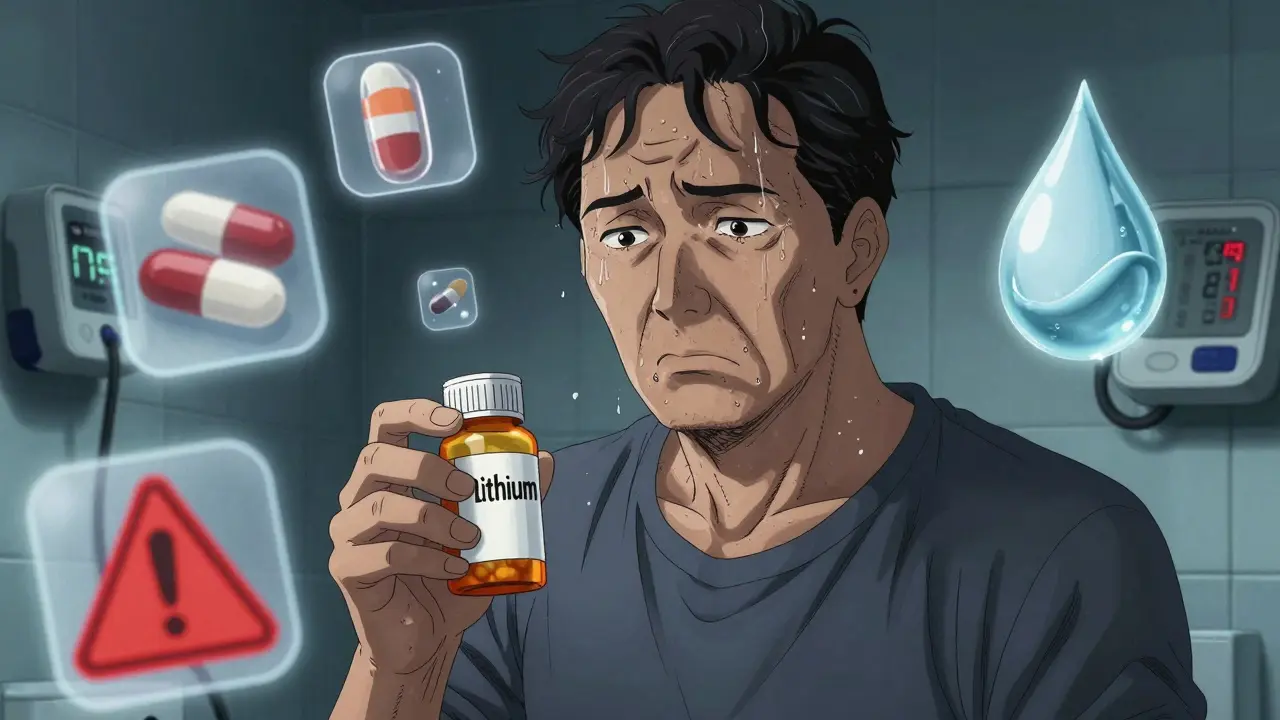
Lithium is one of the oldest and most effective mood stabilizers for bipolar disorder. But it’s also one of the most dangerous if not managed carefully. Even small changes in your body - like taking a common painkiller, starting a water pill, or getting dehydrated - can push lithium levels into toxic territory. And the consequences aren’t just uncomfortable. They can be life-threatening.
Why Lithium Is So Sensitive
Lithium doesn’t break down in your body. About 95% of it leaves through your kidneys, unchanged. That means anything that affects kidney function or fluid balance can cause lithium to build up. The safe range is tiny: 0.6 to 1.2 mmol/L. Go just a little above that, and you risk toxicity. Go much higher, and you could end up in the hospital - or worse.Older adults, people with kidney problems, or those with heart failure are at higher risk. But even healthy people aren’t safe if they mix lithium with certain drugs or skip fluids. The problem isn’t always the drug itself. It’s how that drug changes your body’s ability to flush lithium out.
NSAIDs: The Silent Lithium Booster
Non-steroidal anti-inflammatory drugs - like ibuprofen, naproxen, and diclofenac - are everywhere. People take them for headaches, arthritis, or muscle pain. But if you’re on lithium, these can be dangerous.NSAIDs block enzymes that help your kidneys produce prostaglandins. These prostaglandins normally keep blood flow to the kidneys steady. When they’re blocked, your kidneys filter less blood. Lithium gets reabsorbed instead of flushed out. Levels can rise 25% to 60% within days.
Not all NSAIDs are equal. Indomethacin causes the biggest spike - up to 60%. Ibuprofen bumps levels by 25-40%. Celecoxib is milder, around 15-30%. But even a small rise can matter when your margin for safety is so thin.
One fatal case in New Zealand involved a 72-year-old woman on lithium and an ACE inhibitor. She started taking an NSAID for joint pain. Her lithium levels weren’t checked regularly. Within weeks, she developed severe toxicity and died. Her story isn’t rare. It’s a warning.
Diuretics: Water Pills That Trap Lithium
Diuretics help reduce swelling and lower blood pressure by making you pee more. But they also change how your kidneys handle lithium.Thiazide diuretics - like hydrochlorothiazide - are the worst offenders. They cause lithium levels to jump 25-50% within 7 to 10 days. That’s because they make your kidneys reabsorb more sodium, and lithium rides along. It’s like a hitchhiker you didn’t invite.
Loop diuretics like furosemide are less risky, but still dangerous. They can raise lithium levels by 10-25%. Potassium-sparing diuretics like spironolactone? The data is mixed. Some studies show little effect. Others show spikes. Better to avoid them unless closely monitored.
There’s one twist: not all diuretics raise lithium. Osmotic diuretics like mannitol and carbonic anhydrase inhibitors like acetazolamide actually lower lithium levels by 15-30%. But that’s not a green light. Suddenly dropping lithium levels can trigger a relapse of bipolar symptoms. It’s a different kind of risk.
And don’t forget herbal diuretics. Products marketed as “natural weight-loss teas” often contain ingredients like dandelion or parsley. They’re not regulated. They can cause dehydration - and spike lithium levels just like prescription diuretics.
Dehydration: The Hidden Trigger
You don’t need a drug to raise lithium levels. Just lose a little water.Lithium floats in your blood. If there’s less blood - because you’re sweating, vomiting, or just not drinking enough - the concentration goes up. Losing just 2-3% of your body weight in fluid can push lithium levels up by 15-25%.
That’s why travel, illness, and heat are red flags. Flying long-haul? The dry cabin air and limited fluids can dehydrate you. Getting the flu? Diarrhea and fever drain your fluids. Spending a day in the sun without water? Same risk.
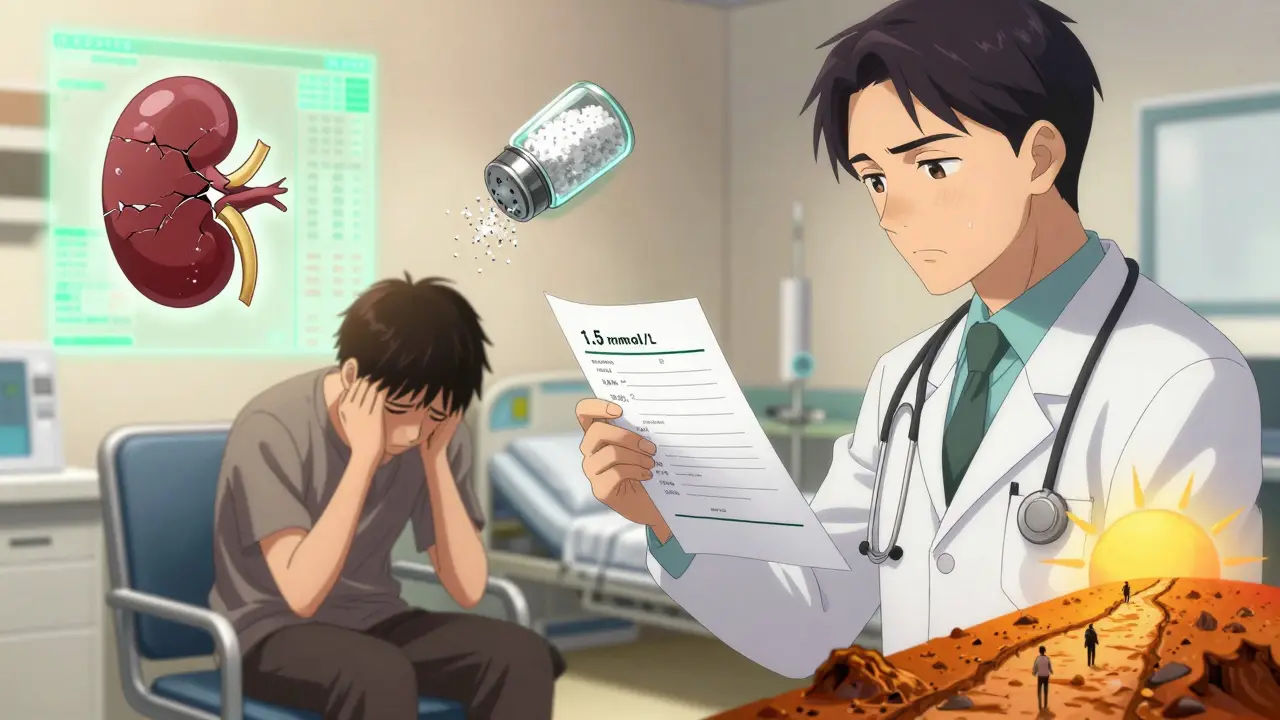
Even something as simple as skipping your usual glass of water after a workout can matter. One patient in Bristol reported feeling dizzy and nauseous after a weekend hike. She hadn’t changed her lithium dose. But she hadn’t drunk enough. Her lithium level jumped from 0.8 to 1.5 mmol/L. She needed emergency treatment.
Salt Intake: The Overlooked Factor
Your sodium intake directly affects lithium levels. Low salt? Lithium builds up. High salt? Lithium flushes out.Changing your salt intake by just 20-30 mmol per day - about a teaspoon of table salt - can shift lithium levels by 10-20%. That’s enough to push someone from safe to toxic.
Many people try to eat less salt for heart health. But if you’re on lithium, sudden salt reduction is risky. On the flip side, bingeing on salty snacks or processed foods can drop your lithium levels too low, triggering mood swings or relapse.
The key? Consistency. Don’t go on a low-salt diet without talking to your doctor. Don’t suddenly start eating fast food every day. Keep your salt intake steady. And if you do change it - get your lithium level checked within a week.
What to Do If You Need These Medications
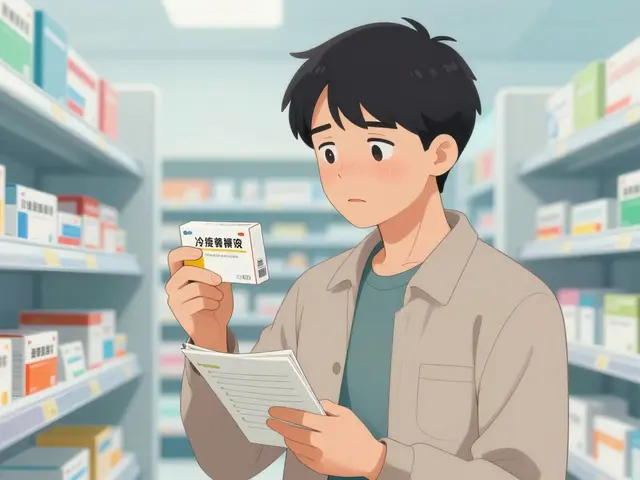
Sometimes, you can’t avoid NSAIDs or diuretics. Maybe you have arthritis. Maybe you have high blood pressure. The goal isn’t to panic - it’s to manage the risk.- Use the lowest dose of NSAID for the shortest time possible. Avoid daily use unless absolutely necessary.
- Ask your doctor if there’s a safer alternative. Acetaminophen (paracetamol) doesn’t interact with lithium and is often a better choice for pain.
- If you must take a thiazide diuretic, your lithium dose may need to be lowered by 25-50% upfront.
- Check lithium levels within 5-7 days after starting any new drug. Then again at 2 weeks, and monthly for the first 3 months.
- Never stop lithium on your own. Even if you feel fine, stopping suddenly can cause rebound mania or depression.
Recognizing Toxicity Early
Lithium toxicity doesn’t always come with a siren. Early signs are easy to miss:- Diarrhea (68% of early cases)
- Lightheadedness or dizziness (52%)
- Drowsiness or confusion (47%)
- Tremors in your hands
- Nausea or vomiting
As it gets worse, you might see blurred vision, ringing in your ears, or muscle weakness. Severe cases can lead to seizures, kidney damage, or coma.
If you feel any of these - especially after starting a new medication or getting sick - get your lithium level checked today. Don’t wait. Don’t assume it’s just a virus. It could be lithium poisoning.
Monitoring Is Non-Negotiable
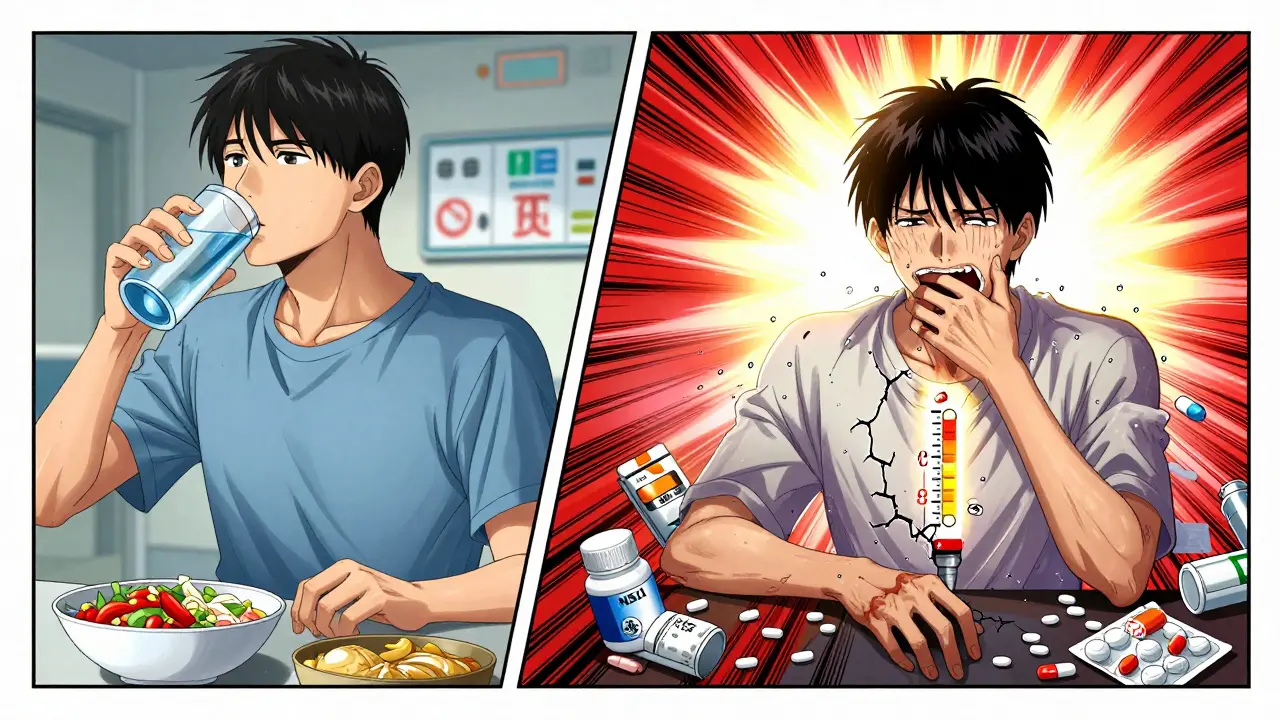
Regular blood tests aren’t optional. They’re your safety net. Guidelines say:- Check lithium levels before starting any new drug.
- Check again 5-7 days after starting an NSAID or diuretic.
- Check again at 2 weeks and monthly for the first 3 months.
- Check anytime you get sick, travel, or change your diet.
Many patients don’t get tested often enough. One study found that over 40% of lithium toxicity cases happened because levels weren’t monitored after a drug change. Electronic alerts in medical systems help - but they’re not foolproof. You have to be your own advocate.
What to Ask Your Doctor
If you’re on lithium, here are five questions to ask at every appointment:- Is this new medication safe with lithium?
- Should I get my lithium level checked after I start this?
- Am I drinking enough fluids every day?
- Is my salt intake consistent?
- What symptoms should I watch for - and when should I call you?
Don’t assume your doctor knows every interaction. Many aren’t aware of how sensitive lithium is. Bring this information with you. It could save your life.
Final Thought: It’s Not About Avoiding Everything - It’s About Managing Risk
You don’t have to live in fear. But you do have to be smart. Lithium works. It saves lives. But it’s like driving a sports car: powerful, but unforgiving if you ignore the rules.Stay hydrated. Keep your salt steady. Avoid NSAIDs unless you have to. Check your levels. Speak up. These aren’t just tips. They’re your shield.
Can I take ibuprofen if I’m on lithium?
It’s not recommended. Ibuprofen can raise lithium levels by 25-40%, increasing the risk of toxicity. If you need pain relief, ask your doctor about acetaminophen (paracetamol), which doesn’t interact with lithium. If you must take ibuprofen, use the lowest dose for the shortest time and get your lithium level checked within 5-7 days.
How long does it take for NSAIDs to affect lithium levels?
Lithium levels can start rising within 24-48 hours after taking an NSAID, but the biggest spike usually happens between 5 and 10 days. That’s why checking your lithium level at 1 week is critical - even if you feel fine.
Can dehydration alone cause lithium toxicity?
Yes. Even mild dehydration - like losing 2-3% of your body weight from sweating, illness, or not drinking enough - can raise lithium levels by 15-25%. This is especially dangerous in hot weather, during travel, or when you have vomiting or diarrhea. Always drink water regularly, even if you’re not thirsty.
Are herbal diuretics safe with lithium?
No. Herbal diuretics - like dandelion, parsley, or green tea extracts - aren’t regulated and can cause dehydration or interfere with kidney function. This can spike lithium levels just like prescription diuretics. Avoid all weight-loss teas or supplements labeled as "natural diuretics" if you’re on lithium.
What should I do if I start feeling dizzy or nauseous on lithium?
Stop taking any new medications, drink water, and contact your doctor immediately. These could be early signs of lithium toxicity. Don’t wait for symptoms to get worse. A simple blood test can confirm if your lithium level is too high - and prevent serious harm.




Posts Comments
Erwin Asilom December 25, 2025 AT 12:42
Lithium’s narrow therapeutic window is one of those things that gets glossed over in primary care. I’ve seen patients on it for years, then start taking ibuprofen for a bad back and end up in the ER with tremors and confusion. The scary part? They didn’t even realize it was the NSAID. No one told them. This post nails the urgency. Always check levels after any new med-no exceptions.
And yes, dehydration is a silent killer here. I tell my patients: if you’re sweating, sick, or flying, drink water like it’s your job. Not because you’re thirsty-because your kidneys need the volume to flush lithium out.
Consistency is everything. Salt intake, fluid intake, meds-all steady. Small shifts, big consequences.
sakshi nagpal December 26, 2025 AT 00:29
This is an exceptionally well-researched and clinically vital summary. As a healthcare professional from India, I’ve witnessed multiple cases where lithium toxicity was misdiagnosed as gastroenteritis or viral encephalopathy due to lack of awareness. The inclusion of regional factors-like unregulated herbal diuretics in over-the-counter weight-loss products-is particularly crucial in low-resource settings.
It is imperative that primary care providers, pharmacists, and even community health workers receive structured training on lithium pharmacokinetics. Patient education must be standardized, not left to chance. Thank you for this clear, actionable guide.
roger dalomba December 27, 2025 AT 03:02
Wow. A whole essay on why you can’t take Advil. Next up: ‘How to Not Die from Breathing Too Hard While on Lithium.’
Look, I get it-it’s dangerous. But this reads like a pharmaceutical pamphlet written by someone who’s never met a human who doesn’t have a PhD in nephrology. Can we just… stop pretending every patient is a walking lab report?
Also, ‘don’t drink herbal tea’? Cool. I’ll just stop existing.
Sophia Daniels December 28, 2025 AT 06:10
OMG I CAN’T BELIEVE PEOPLE STILL DON’T KNOW THIS. 🤯
Like, I had a cousin on lithium who took ibuprofen for her period and ended up in the hospital screaming about ‘the walls talking.’ She thought it was ‘spiritual awakening.’ NO. IT WAS TOXICITY. 😭
And don’t even get me started on those ‘detox teas’-they’re basically lithium bombs with a cute panda logo. I told my sister to throw hers out. She said ‘it’s natural’-BRO. NATURAL DOESN’T MEAN SAFE. 🚫🍵
Also, if you’re not checking your levels every time you sneeze, you’re playing Russian roulette with your brain. Stop. Just stop.
Peter sullen December 28, 2025 AT 20:23
It is of paramount importance to underscore the pharmacodynamic interplay between lithium and renal sodium handling mechanisms, particularly in the context of thiazide diuretic administration, which induces a state of volume contraction and subsequent proximal tubular sodium (and lithium) reabsorption, thereby precipitating a clinically significant elevation in serum lithium concentrations.
Moreover, the non-selective cyclooxygenase (COX-1/COX-2) inhibition induced by NSAIDs reduces renal prostaglandin synthesis, diminishing renal perfusion and glomerular filtration rate, which further exacerbates lithium retention.
Consequently, it is imperative that clinicians implement a structured pharmacovigilance protocol, including baseline and serial serum lithium monitoring (at 5–7 days, 14 days, and monthly for the first 90 days post-intervention), in conjunction with patient education regarding hydration status, dietary sodium consistency, and avoidance of OTC agents with nephrotoxic potential.
Failure to adhere to these evidence-based parameters constitutes a significant breach in therapeutic stewardship.
Steven Destiny December 29, 2025 AT 04:54
You people are still debating this? This isn’t a suggestion-it’s a life-or-death protocol. If you’re on lithium and you’re taking anything that isn’t approved by your psychiatrist, you’re not just being careless-you’re being reckless.
I’ve lost friends to this. Not because they were dumb, but because no one told them. So now I scream it from the rooftops: NO NSAIDS. NO DIURETICS. NO ‘NATURAL TEAS.’ DRINK WATER. CHECK YOUR LEVELS. ASK QUESTIONS.
If your doctor doesn’t know this, find a new one. Your brain isn’t a lab experiment. It’s your only one.
Rajni Jain December 29, 2025 AT 13:10
i just wanna say thank you for writing this. i’ve been on lithium for 8 years and honestly, no one ever explained it like this. i thought drinking less water was ‘being healthy’ lol. now i drink like a camel and i keep salt shakers everywhere. my therapist even joked i’m a salt addict now 😅
also-i threw out my dandelion tea. no regrets. you’re right, it’s not worth it.
if you’re on lithium and you’re reading this? you’re not alone. we got this.
Natasha Sandra December 31, 2025 AT 12:26
YES YES YES 💯
I told my sister last week: ‘If you take ibuprofen while on lithium, you’re basically putting a match to your brain.’ 🔥
And those herbal teas? 🤦♀️ I saw a TikTok of someone drinking ‘lithium detox tea’-I almost called 911. People don’t realize this isn’t a ‘natural cleanse’-it’s a chemical trap.
Hydrate. Check levels. Don’t be a hero. Your brain is worth more than your ‘wellness routine.’ 💙
Sumler Luu January 1, 2026 AT 19:22
Thank you for this. I’m a nurse and I’ve seen too many cases where lithium toxicity was missed because the patient didn’t connect their symptoms to their meds. I’ve started handing out a one-page handout to every lithium patient-hydration, NSAIDs, salt, signs of toxicity. Simple. Clear.
One patient told me, ‘I thought the dizziness was just from stress.’ I said, ‘It’s not stress. It’s your lithium trying to kill you.’ She cried. Then she got tested. Her level was 1.8.
We don’t need more info. We need more action. This post helps.
Write a comment