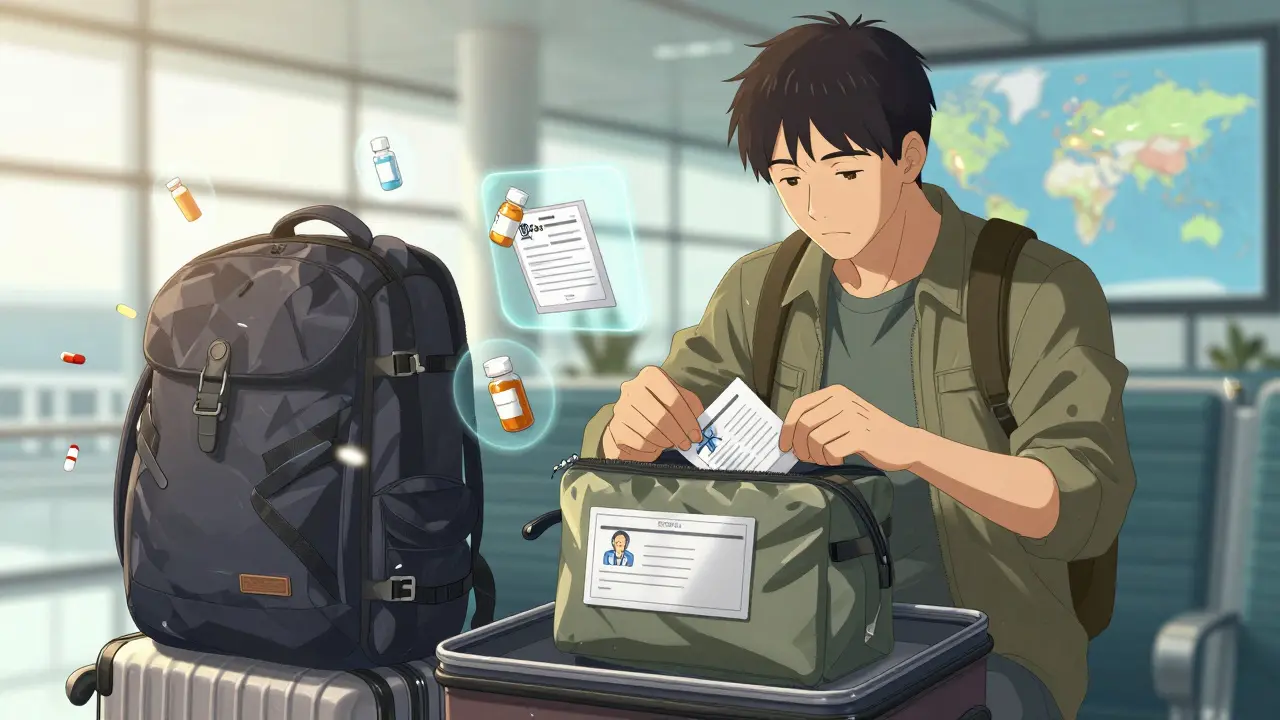
Running out of medication while you’re halfway across the world isn’t just inconvenient-it can be dangerous. Whether you’re on a three-month backpacking trip through Southeast Asia or a six-week business tour across Europe, missing a single dose of your blood pressure pill, thyroid med, or insulin can send your health into a tailspin. The good news? With the right plan, you can avoid this entirely. Most people don’t realize how much control they actually have over their meds while traveling-until they’re stuck in a foreign pharmacy with no prescription and no backup.
Start Planning 30 Days Before You Leave
The biggest mistake travelers make? Waiting until the last week to think about meds. You need time. Time to talk to your doctor. Time to coordinate with your pharmacy. Time to deal with insurance red tape. Start 30 days out. That’s not optional-it’s the standard recommendation from the CDC and major pharmacy chains like CVS and Walgreens. Call your pharmacy and ask for a vacation override. That’s the term insurers use when they let you get an early refill because you’re traveling. Most major U.S. insurers-including UnitedHealthcare, Aetna, and Blue Cross Blue Shield-allow this. But policies vary. UnitedHealthcare typically lets you refill 7 days early. Blue Cross Blue Shield of Michigan allows up to 14. Ask for the exact rules for your plan. Don’t assume. Don’t guess. Write it down.Get a 90-Day Supply If You Can
If your doctor approves, ask for a 90-day supply instead of 30. It’s not always possible-especially with controlled substances-but for most chronic conditions like diabetes, hypertension, or asthma, it’s a game-changer. A 2021 Kaiser Permanente study of 45,000 travelers showed that switching to 90-day supplies cut refill requests by 67%. Fewer refills mean fewer chances for something to go wrong. Pharmacies are required to honor this if your insurance allows it. Most do. And if your doctor says no? Ask why. Sometimes it’s just habit. Sometimes it’s outdated policy. Push back. Bring up the CDC’s travel guidelines. Say you’re planning an extended trip. You’d be surprised how often they’ll say yes.Know the Rules for Controlled Substances
If you’re on opioids, benzodiazepines, stimulants, or other Schedule II-IV drugs, things get complicated. Forty-eight U.S. states enforce a “28-day rule”: you can’t refill a 30-day prescription until 28 days have passed. That means if your trip lasts longer than 28 days, you need to plan ahead. You can’t just walk into a pharmacy abroad and get a refill. You can’t even get one in the U.S. without your doctor’s explicit approval. Here’s what works: Get a 90-day supply before you leave. Get a signed letter from your doctor on letterhead explaining your diagnosis, dosage, and why you need the medication. Some countries, like Japan and Thailand, require this even for non-controlled meds. For controlled substances, it’s non-negotiable. Also, carry your original prescription bottle with the pharmacy label. It’s your proof of legitimacy.Double Your Meds-And Separate Them
Dr. Jennifer Schaefer from the American Pharmacists Association says this plainly: “Take your medication in two separate containers that you keep in two separate places.” That’s not just good advice-it’s survival protocol. Put half your meds in your carry-on. Put the other half in your checked luggage. Why? Because if your bag gets lost, you still have meds. If you’re stopped at security, you can declare your liquids without panic. TSA allows medically necessary liquids over 3.4 ounces if you tell them at the checkpoint. Ninety-eight percent of U.S. airports follow this rule. But don’t assume every international airport does. Know the rules of your destination. Don’t put all your pills in one pill organizer. Use two different ones. Or better yet, keep some in original bottles. Original bottles have the pharmacy name, your name, and the prescription number. That’s your golden ticket if you need to explain your meds to a foreign pharmacist or customs officer.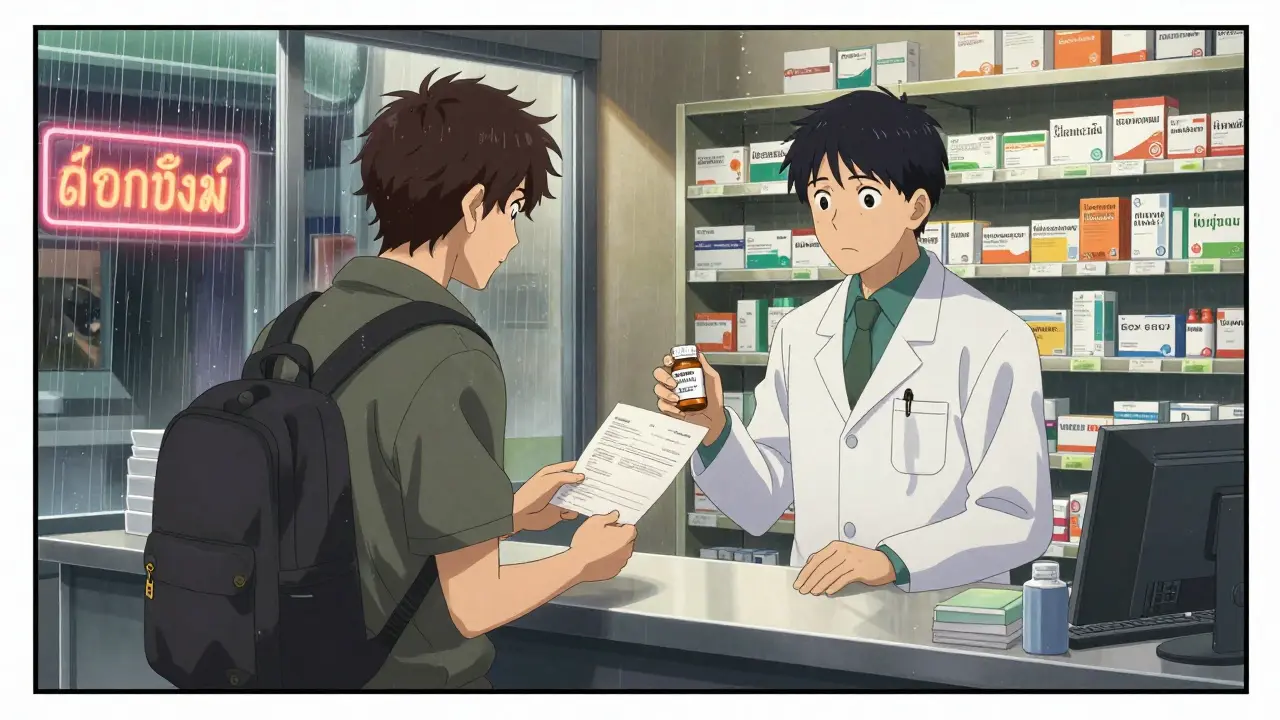
International Travel? Check Embassy Rules First
This is where most travelers get caught off guard. Just because your meds are legal in the U.S. doesn’t mean they’re legal in Thailand, Dubai, or Germany. Seventy-eight countries require written documentation to bring prescription meds. Sixty-three have strict quantity limits. For example: Thailand caps opioid prescriptions at 30 days, even if your doctor wrote 90. The UAE bans even common antidepressants like fluoxetine without special permits. Go to the embassy website of every country you’ll visit-including layovers. Look for “medication import guidelines.” Download and print them. If you can’t find it, email the embassy. Ask: “What documentation is required for [medication name] to enter your country?” Bring:- Original prescription bottles with labels
- Doctor’s letter on letterhead (signed and dated)
- Notarized copy of your prescription
- Copy of your insurance card
Time Zones and Scheduling: Don’t Guess
Skipping a dose because you’re confused about time zones is a common mistake. If you take your pill at 8 a.m. Eastern Time, don’t suddenly switch to 8 a.m. local time when you land in Tokyo. Your body’s rhythm is still on home time. The American Academy of Sleep Medicine recommends sticking to your home schedule for the first 24 to 48 hours after arrival. Then, gradually shift to local time. Use your phone’s medication reminder app. Set it to your home time zone. Or use a second device. Write down your schedule on paper. Don’t rely on memory. Even a 3-hour shift can throw off meds like insulin or seizure drugs. When in doubt, take it at your home time. Better safe than sorry.What If You Lose Your Meds?
You’re not alone. The 2023 GoodRx Survey found that 41% of travelers forgot or lost their meds. Here’s what to do: Domestically: Walk into any CVS, Walgreens, or Rite Aid. Show your original bottle or prescription. Ask for a 3-day emergency refill. Ninety-four percent of national chains will give you one. Some even let you use their MinuteClinic for a one-time renewal-up to two times a year. CVS says 79% of users who used this service called it “lifesaving.” Internationally: If you’re abroad and out of meds, your first call should be to your country’s embassy. They often have lists of local pharmacies that work with expats. If you have travel insurance, call their 24/7 helpline. Many now offer telehealth prescriptions. Teladoc handled over 1.2 million emergency refills in 2022. You can get a new prescription emailed to a local pharmacy in many countries. If all else fails, try a hospital emergency room. Bring your doctor’s letter and original bottle. Many ERs can provide a short-term supply while you figure out the next step.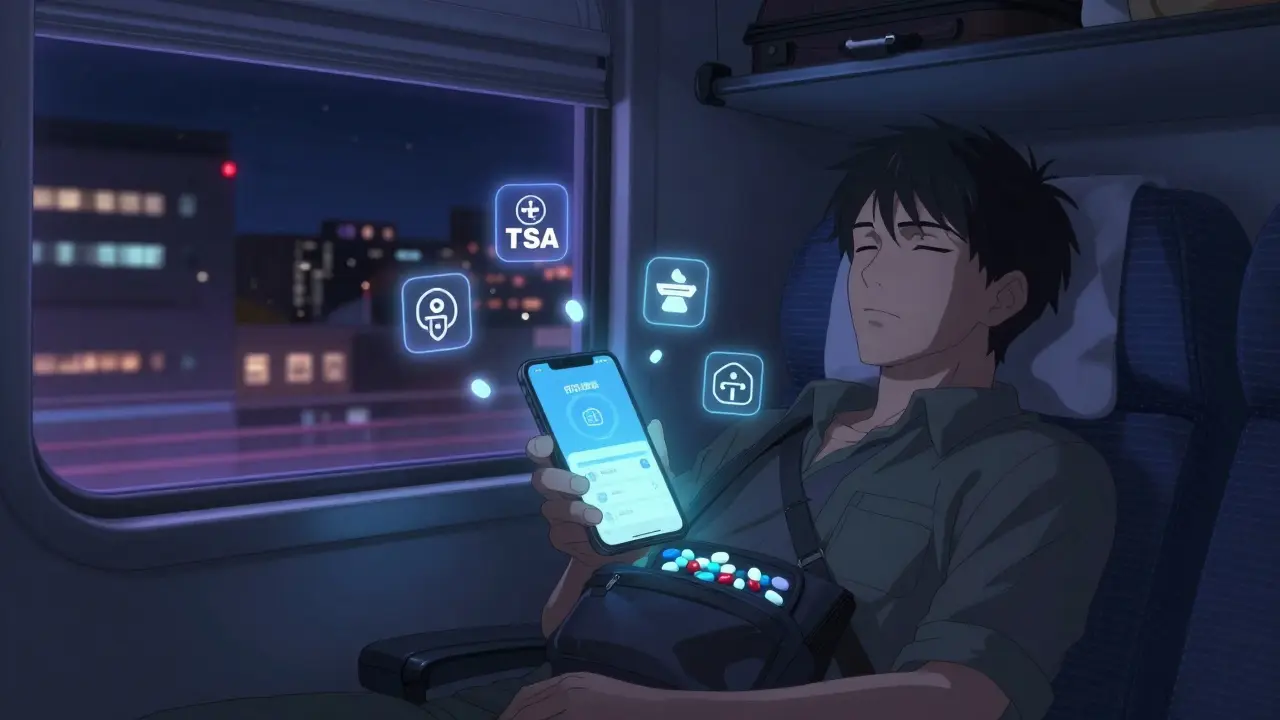
Keep Digital Copies-And Know Your Insurance
Take a photo of every prescription bottle. Save the doctor’s letter as a PDF. Email it to yourself and a trusted family member. Save your insurance card and policy number in your phone. Most insurers now have apps where you can access digital prescriptions. UnitedHealthcare rolled out digital verification in November 2023. CVS Health’s app lets you request refills while traveling. Also, know your plan’s out-of-network rules. If you need to refill at a pharmacy outside your network, will your insurance cover it? Some plans only cover in-network pharmacies abroad. Others reimburse you after the fact. Call your insurer before you leave. Ask: “If I refill my prescription overseas, what documentation do I need to get reimbursed?”Why This Matters More Than You Think
Medication non-adherence during travel causes 23% of travel-related hospitalizations, according to a 2021 study in the Journal of Travel Medicine tracking over 15,000 travelers. That’s not a small number. That’s one in four. And 78% of those emergencies could’ve been prevented with simple planning, according to Express Scripts. This isn’t about being overly cautious. It’s about being prepared. You plan your flights, your hotels, your itinerary. Why wouldn’t you plan your meds? Your health doesn’t take a vacation. Neither should your treatment.Final Checklist
Before you leave:- Call your pharmacy 30 days out. Request vacation override.
- Ask for a 90-day supply if possible.
- Get doctor’s letter and notarized prescription copy.
- Check embassy websites for medication rules in every country.
- Split meds: half in carry-on, half in checked bag.
- Take photos of all prescriptions and save digital copies.
- Set phone reminders to home time zone.
- Save your insurer’s international helpline number.
- Download your pharmacy’s app (CVS, Walgreens, etc.).
Can I get a refill on my prescription while traveling abroad?
It depends on the country and your medication. In some places like Canada or the UK, you can refill a U.S. prescription with a doctor’s note. In others, like Japan or Thailand, you need a special permit or can only get a 30-day supply-even if your prescription is for 90 days. Controlled substances are especially restricted. Always check the embassy website of your destination before you go.
What if I lose my medication while traveling?
If you’re in the U.S., walk into any CVS, Walgreens, or Rite Aid with your original bottle and ask for a 3-day emergency refill-they’re legally allowed to give it. If you’re abroad, contact your country’s embassy. They often have lists of pharmacies that help travelers. You can also use telehealth services like Teladoc to get a new prescription sent to a local pharmacy. Always carry a doctor’s letter and digital copies of your prescriptions.
Can I bring liquid medications on a plane?
Yes. TSA allows medically necessary liquids over 3.4 ounces if you declare them at security. This includes insulin, liquid antibiotics, and other prescriptions. You don’t need to put them in a quart-sized bag, but you must tell the officer. Bring your prescription label or doctor’s note to avoid delays. This rule applies at all major U.S. airports and many international ones.
Should I adjust my medication schedule for time zones?
Don’t change your schedule right away. The American Academy of Sleep Medicine recommends sticking to your home time zone for the first 24-48 hours after arrival. Then, slowly shift to local time. This is especially important for insulin, seizure meds, and blood pressure drugs. A 3-hour shift can affect how your body responds. Use your phone to set reminders based on your home time.
Do I need a doctor’s letter to travel with meds?
For most medications, yes-especially if you’re traveling internationally. A signed letter on your doctor’s letterhead, stating your name, diagnosis, medication name, dosage, and reason for use, is required in 78 countries. For controlled substances, it’s mandatory. Always carry the original prescription bottle too. It’s your best proof that the meds are yours.
Can I get a vacation override for controlled substances?
It’s harder, but sometimes possible. Most U.S. insurers allow vacation overrides for non-controlled meds. For controlled substances, federal and state rules limit refills. You can’t get a 90-day supply easily. Your best bet is to get the maximum allowed before you leave-usually a 30-day supply-and carry a doctor’s letter explaining your need. Some states allow 28-day refills with a 2-day gap, so timing matters. Always check your state’s pharmacy board rules.
What if my insurance denies my vacation override request?
Call your insurer’s customer service and ask to speak to a supervisor. Explain you’re traveling for an extended period and need a refill to avoid health risks. Mention the 2021 Traveler’s Access to Medication Act, which requires insurers to provide overrides upon 72-hour notice. If they still refuse, ask for a written denial and file a formal appeal. You can also contact your doctor to request a new prescription with a different start date that aligns with your travel dates.





Posts Comments
Aysha Siera January 18, 2026 AT 19:27
They don't want you to know this but the FDA and WHO are secretly working with Big Pharma to limit your meds abroad so you'll have to pay more for local prescriptions. I've seen the leaked memos. Your insulin? They're tagging it with microchips to track your travel. Don't be fooled by the 'doctor's letter' nonsense. That's just the cover.
Stacey Marsengill January 19, 2026 AT 17:31
Wow. Just... wow. I’ve been on 17 international trips in the last 3 years with my anxiety meds and this is the first time someone actually got it right. I used to panic every time I landed. Now I print the embassy guidelines, split my pills like a paranoid ninja, and carry the doctor’s letter folded in my passport like a sacred text. You just saved me 3 years of sleepless nights. Thank you.
rachel bellet January 20, 2026 AT 17:19
Let’s be clear: the CDC’s ‘vacation override’ policy is a regulatory loophole exploited by non-compliant patients. Insurance companies are not obligated to honor it under ERISA guidelines. The 90-day supply request constitutes a potential violation of the Controlled Substances Act if the prescriber doesn’t document medical necessity with ICD-10 codes. This article is dangerously misleading. You’re not ‘prepared’-you’re gaming the system.
Pat Dean January 20, 2026 AT 21:34
So now we’re encouraging Americans to bring their prescription drugs into other countries like we’re some kind of pharmaceutical superpower? What’s next? Exporting our opioid crisis to Thailand? This isn’t ‘preparedness’-it’s cultural imperialism wrapped in a pill organizer. If you can’t handle a 30-day supply, maybe you shouldn’t be traveling.
Jay Clarke January 21, 2026 AT 17:34
I used to think this was just about meds… until I lost my insulin in Lisbon. Turns out, the real lesson isn’t in the pharmacy-it’s in the soul. You think you’re in control because you’ve got your bottles and your letters and your apps? Nah. You’re just delaying the moment you realize you’re not in charge of anything-not your body, not your schedule, not even your damn time zone. That’s the real travel medicine.
Selina Warren January 23, 2026 AT 06:26
STOP WAITING FOR PERMISSION. Your health isn’t a bureaucratic form. If your doctor says no to a 90-day supply, go to another doctor. If your insurance says no, call them until they cry. If the embassy website is useless, email them daily until they reply. You want to live? You don’t get to be passive. You show up. You fight. You bring two pill organizers. You take your meds at 8 a.m. even if it’s midnight in Bangkok. This isn’t advice-it’s a revolution. And you’re either on the front lines or you’re the casualty.
Robert Davis January 24, 2026 AT 06:45
Interesting. I read this whole thing and still have no idea what to do if I’m in rural Nepal and my blood pressure pills run out. The article gives you a checklist, but no real-world contingency. I’ve been there. The pharmacy had one bottle of generic lisinopril from 2018. No labels. No expiration date. Just a guy in a hat and a scale. You think your ‘doctor’s letter’ means anything there? It doesn’t. You’re just holding paper while your BP spikes.
Eric Gebeke January 24, 2026 AT 14:42
They say ‘double your meds’ like it’s magic. But have you ever tried carrying 90 days of pills through airport security? TSA doesn’t care about your ‘medical necessity.’ They care about the shape of the bottle. I once had a cop confiscate my Xanax because the label was ‘too faded.’ They didn’t even check the prescription. You think you’re prepared? You’re just a walking liability with a pill organizer.
Joni O January 25, 2026 AT 22:56
i just wanted to say thank you for this. i'm a type 1 diabetic and i've been traveling solo for 2 years now. i do the split meds thing, i take pics of my bottles, i set my phone to home time... but honestly? the hardest part is not feeling guilty for needing so much stuff. this post made me feel less alone. you're right-we don't get to take vacations from our bodies. i'm printing this out and taping it to my suitcase. you're a lifesaver. ❤️
Ryan Otto January 27, 2026 AT 06:18
While the logistical framework presented is superficially coherent, it exhibits a profound epistemological deficit in its reliance on Western medical hegemony. The assumption that U.S. pharmaceutical protocols are universally applicable constitutes a neo-colonial imposition upon sovereign healthcare systems. Furthermore, the normalization of ‘vacation overrides’ undermines the integrity of pharmacovigilance frameworks in jurisdictions with strict narcotics control. One must question the ethical implications of exporting pharmaceutical dependency under the guise of ‘preparedness.’
Max Sinclair January 27, 2026 AT 11:04
This is honestly one of the most thoughtful, practical guides I’ve ever read on travel and meds. I’ve been traveling for 15 years with a chronic condition and I wish I’d had this 10 years ago. I especially appreciate the reminder about time zones-so many people don’t realize how much that affects insulin and seizure meds. I’ve added the embassy checklist to my travel folder. Thanks for taking the time to write this. You made someone’s next trip a lot safer.
Write a comment