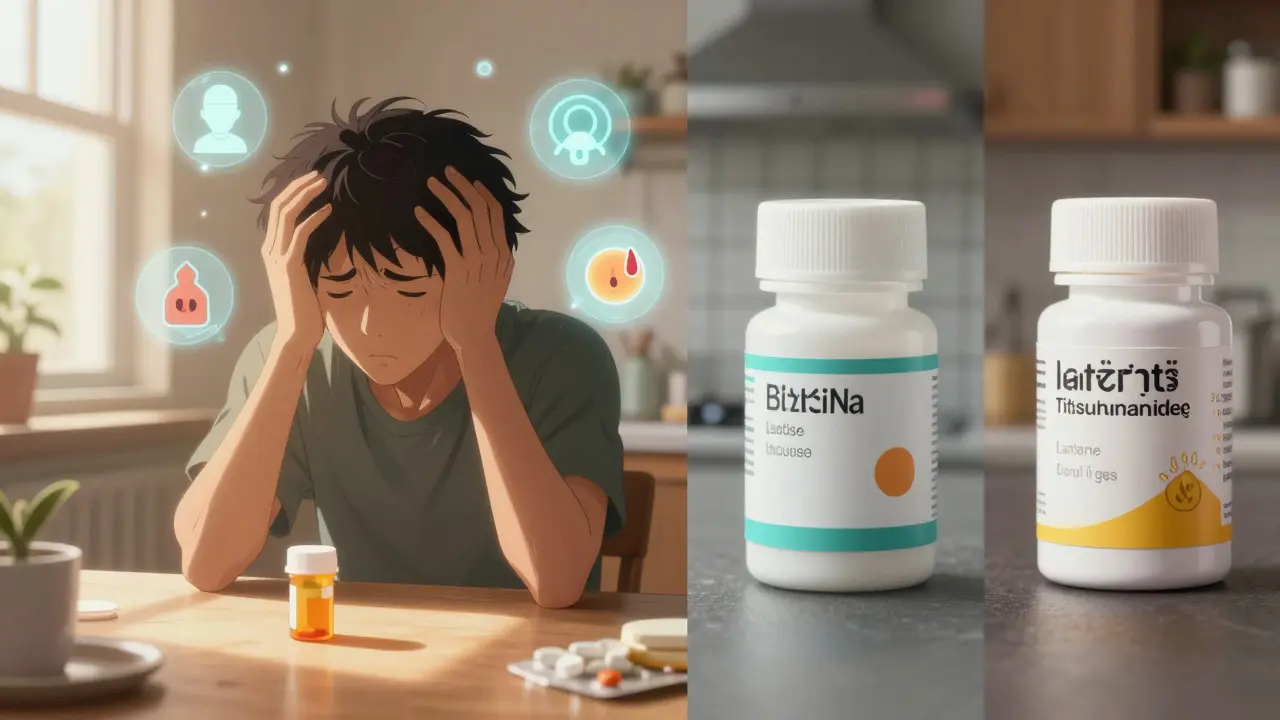
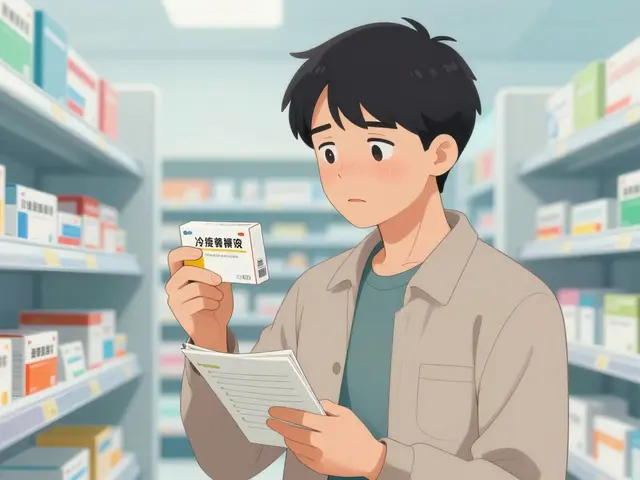
Switching from a brand-name drug to a generic version is supposed to be seamless. The FDA says they’re the same - same active ingredient, same dose, same effect. But for some people, it’s not. Headaches. Dizziness. Nausea. A sudden spike in blood pressure. These aren’t random. They might be your body reacting to something new in the pill - a different filler, dye, or coating you’ve never taken before. And if you’re feeling off after the switch, you’re not alone. About 1 in 50 people report changes after switching to generics, even though most have no issues at all.
Why Side Effects Happen After a Generic Switch
Generic drugs must meet strict FDA standards to prove they work the same way as the brand. They need to deliver the same amount of active ingredient into your bloodstream within a narrow range - 80% to 125% of the brand’s levels. That’s called bioequivalence. But here’s the thing: that rule doesn’t cover the inactive ingredients. Things like lactose, cornstarch, titanium dioxide, or coloring agents. These don’t treat your condition, but they can still affect your body. If you’re sensitive to gluten, for example, and the generic uses a different binder that contains wheat starch, you might get stomach pain. If you’ve never had a reaction to the brand but now feel jittery after switching to a generic version of metoprolol, it could be a dye or preservative. It’s not the drug failing. It’s your body reacting to something else in the pill. And then there’s perception. Studies show people who believe generics are inferior are more likely to notice and report side effects - even when there’s no real difference in how the drug works. One 2018 study found patients reported more side effects with traditional generics than with authorized generics (made by the same company as the brand). That doesn’t mean the generic is worse. It means your brain can influence how you feel.When to Report Side Effects
Not every weird feeling means you need to report it. But if you notice something new, unusual, or worse after switching, pay attention. The FDA wants to hear about two kinds of reactions:- Serious side effects: These are life-threatening, cause hospitalization, lead to permanent damage, or result in birth defects. Examples: chest pain, seizures, severe rash, sudden confusion, or extreme fatigue.
- Unexpected side effects: Even if it’s not life-threatening, if it’s not listed on the medication’s label, report it. That’s how new safety issues get found.
What Information You Need to Report
To make your report useful, you need to give the FDA enough detail. A complete report has four things:- Your identity - Name, age, gender. You can report anonymously, but providing contact info helps them follow up if needed.
- The drug - Name of the generic you switched to, including the manufacturer. Check your prescription bottle. The manufacturer’s name and NDC number are printed on it.
- The side effect - Exactly what happened, when it started, how bad it was, and how long it lasted.
- Your history - What brand name you were on before, when you switched, and whether you had the same side effects on the brand.
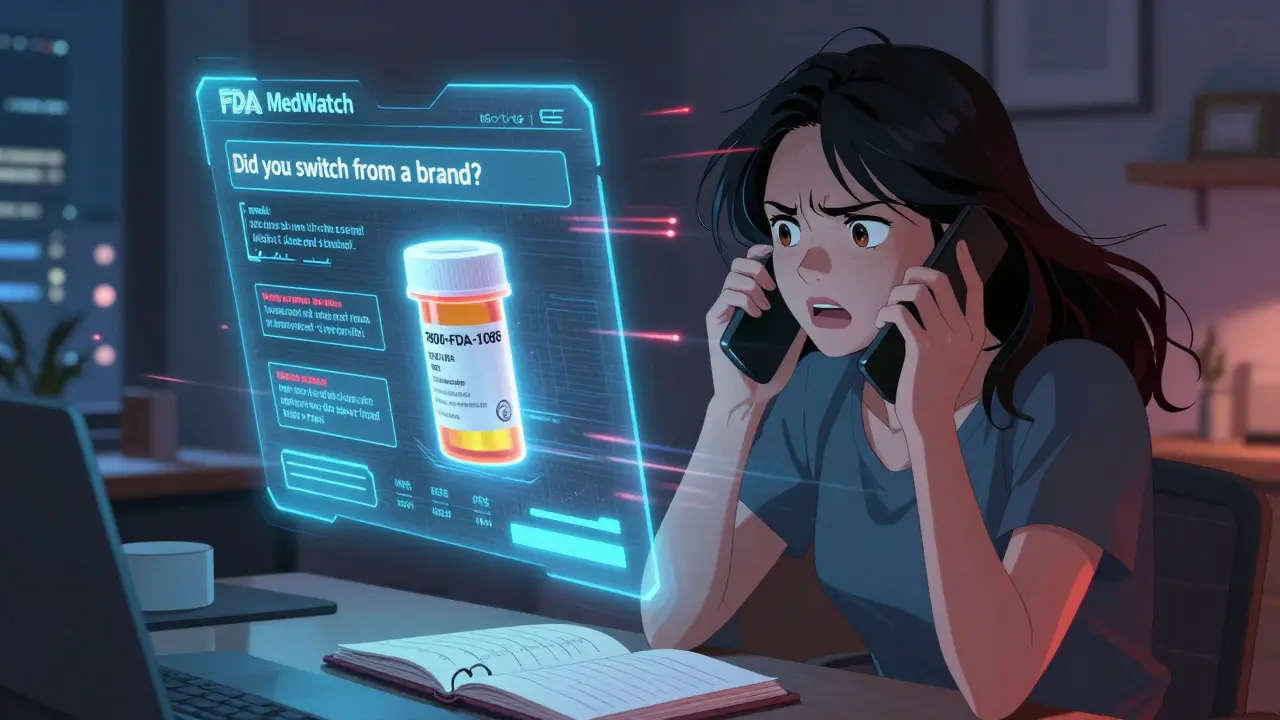
How to Report - Three Simple Ways
You don’t need a doctor to report. But it helps. Here’s how to do it:1. Online - Fastest and Easiest
Go to www.accessdata.fda.gov/scripts/medwatch. Fill out the MedWatch form. It’s been redesigned since 2022 - it’s now 35% faster to complete. You can upload photos of your prescription bottle. The system even prompts you to answer key questions about whether you switched from a brand.2. By Phone - For Urgent Cases
Call 1-800-FDA-1088. This is the main line for all adverse event reports. If you’re having a medical emergency - like trouble breathing or chest pain - call 911 first. Then call this number afterward to report. For urgent non-emergency cases (like a sudden rash or severe dizziness), you can also call 1-866-300-4374.3. By Paper Form - If You Prefer
Ask your doctor or pharmacist for Form FDA 3500B. You can also download it from the FDA website. Fill it out and mail it to:MedWatch
Food and Drug Administration
5600 Fishers Lane
Rockville, MD 20857
What Happens After You Report
Your report goes into the FDA’s Adverse Event Reporting System (FAERS), which collects about 2 million reports every year. About 20% come from patients like you. The rest come from doctors and drugmakers. The FDA doesn’t respond to every report individually. But they look for patterns. If 10 people report the same side effect after switching to the same generic made by Company X, they investigate. If enough reports point to a problem, they might update the label, issue a warning, or even pull the product. Drugmakers are required to investigate every report they get - and send serious ones to the FDA within 15 days. So when you report, you’re not just helping yourself. You’re helping everyone who takes that drug next.
Why Most People Don’t Report - And Why You Should
A 2022 survey found only 12% of people who had side effects after switching to a generic ever reported them. Why? Most didn’t know how. Others thought it was “too complicated.” Some blamed themselves - “Maybe I’m just sensitive.” Or they assumed their doctor already reported it. Here’s the truth: doctors and pharmacists don’t always report. They’re busy. They might not even know the reporting system exists. In one Reddit thread, a patient said their doctor submitted the report for them - but only because they asked. Most patients never ask. If you don’t report, the FDA never sees the problem. That means the same bad batch, the same problematic filler, keeps getting made. Someone else will get sick. And next time, it might be worse.What to Do While You Wait
Reporting is important. But so is your health right now. If you’re having side effects:- Don’t stop your medication cold - especially for blood pressure, thyroid, or seizure meds. That can be dangerous.
- Call your doctor. Ask: “Could this be from the generic switch?”
- Ask if you can go back to the brand, or try a different generic manufacturer.
- Keep a symptom journal. Write down what you took, when, and how you felt. Bring it to your next appointment.
The Bigger Picture
Generic drugs save the U.S. healthcare system over $300 billion a year. They’re safe, effective, and necessary. But safety isn’t just about active ingredients. It’s about real people - with real bodies - reacting to real changes. The FDA knows this. That’s why they’re working on new tools to spot generic switch issues faster. By 2025, they plan to add a checkbox to reporting forms: “Did you switch from a brand-name drug?” That small change could help them see patterns we’ve missed for years. Until then, your voice matters. If you felt different after a switch - even if you’re not sure why - report it. You’re not complaining. You’re helping fix a system that’s meant to protect you.



Posts Comments
Henriette Barrows December 30, 2025 AT 11:42
I switched to a generic levothyroxine last year and started feeling like a zombie by 3 PM. No energy, brain fog, cold all the time. I thought I was just getting older. Turned out the generic had a different filler-turned out I’m sensitive to lactose. Once I switched back to the brand, I was human again. Took me six months to figure it out because no one believes you until you have lab results.
Alex Ronald January 1, 2026 AT 09:58
For anyone dealing with this, check the NDC code on your bottle. Different manufacturers use different inactive ingredients. Some generics are made by the same company as the brand-those are called authorized generics. They’re usually way less problematic. Ask your pharmacist for the NDC and look it up on drugs.com. It’s not hard.
Teresa Rodriguez leon January 1, 2026 AT 12:50
I’ve been on the same generic for five years and never had an issue. People are too quick to blame the pill. It’s probably stress or diet. Stop looking for problems where there aren’t any.
Aliza Efraimov January 2, 2026 AT 08:53
Y’ALL. I switched generics for my blood pressure med and woke up with a headache so bad I cried. Then my hands started shaking. I thought I was having a stroke. Called my doc at 7 AM. They said ‘it’s probably the filler’ and switched me back. I didn’t report it because I thought it was just me. But now I’m going to. Because what if the next person doesn’t have a doctor who listens? You’re not crazy. Your body isn’t broken. The pill changed. Report it. Please.
Nisha Marwaha January 3, 2026 AT 15:35
From a pharmacovigilance standpoint, the bioequivalence window of 80–125% AUC and Cmax is statistically robust for population-level efficacy, but inter-individual variability in pharmacokinetics-particularly with narrow therapeutic index agents-is often underappreciated in post-marketing surveillance. The excipient heterogeneity across manufacturers introduces a confounding variable that is not captured in RCTs. Patient-reported outcomes are critical for signal detection in real-world settings.
Amy Cannon January 4, 2026 AT 16:40
So like, I switched to this generic thing and felt kinda weird, right? Like, my head was all fuzzy and I kept forgetting where I put my keys. I thought maybe I was just tired from work. But then I read this whole thing and was like… ohhh. Maybe it’s the dye? I mean, I don’t even know what’s in these pills. I just swallow them. But now I’m gonna check the bottle. And maybe call my doc. And I’m gonna report it. Because like… what if? And also, I miss my old pills. They didn’t make me feel like a robot.
Himanshu Singh January 5, 2026 AT 17:10
Good post! I had same issue with generic metoprolol. Got dizzy and heart raced. Switched back to brand-fixed. But I didn’t know how to report. Now I did it online. Took 10 min. FDA site is easy. You should too. Help others.
Jasmine Yule January 6, 2026 AT 09:34
My mom had a seizure after switching generics. She’s 72. Had been on the same brand for 12 years. The new one had a different coating. She didn’t even know it was a different pill. The pharmacist didn’t tell her. Now she’s on the brand again, insurance fights us every month. I’m reporting this. Not just for her. For every elderly person who gets handed a new pill and thinks ‘oh, it’s just the same.’ It’s not.
Jim Rice January 7, 2026 AT 19:35
Lmao. People are losing their minds over filler ingredients. The FDA approves these. If you’re sensitive to cornstarch, go live in a cave. You’re not special. Your body isn’t ‘reacting.’ You’re just anxious. Stop blaming the system. Take the pill. Stop complaining.
Manan Pandya January 8, 2026 AT 04:41
Excellent breakdown. One thing to add: authorized generics (same manufacturer as brand) are often the sweet spot-same formulation, lower cost. Many patients don’t know they exist. Ask your pharmacy if they can source it. Also, if you’re on warfarin, monitor INR closely after any switch. Even small changes can be dangerous. Document everything. Your life depends on it.
David Chase January 9, 2026 AT 15:26
AMERICA IS BEING POISONED BY CHEAP DRUGS!!! 🇺🇸💀 The FDA is a corrupt puppet of Big Pharma and Chinese manufacturers! They don’t care if your kidneys fail! I found out my generic metformin had lead in it! I SAW THE LABEL! I REPORTED IT AND THEY IGNORED ME!! I’M NOT THE ONLY ONE!! 🔥🚨 #GenericScam #FDAIsCorrupt #SaveOurLives
Emma Duquemin January 10, 2026 AT 04:33
Okay. I need to say this. I switched generics for my seizure med. One day I was fine. The next? I had a full-on tonic-clonic seizure in my kitchen. My kid called 911. Turns out the new generic had a different binder-changed my absorption rate by 18%. I didn’t know. My neurologist didn’t know. The pharmacist didn’t know. We were all just trusting the system. I reported it. They’re now investigating that batch. I’m alive because I spoke up. Don’t be quiet. Your voice? It’s the only thing standing between you and disaster.
Kevin Lopez January 12, 2026 AT 03:42
Not a side effect. Non-compliance. You didn’t take it right. Or you’re hypochondriac. Generic bioequivalence is proven. Stop wasting FDA’s time.
Write a comment