
When a pregnant person is using opioids-whether prescribed for pain or as part of an opioid use disorder-the stakes aren’t just personal. They’re medical, emotional, and deeply tied to the health of a growing baby. The idea of stopping opioids cold turkey during pregnancy might seem like the safest choice, but the reality is far more complex. Stopping abruptly can trigger serious complications: preterm labor, fetal distress, even miscarriage. The better path? Medication-assisted treatment (MAT), which stabilizes the mother and gives the baby the best chance at a healthy start.
Why Stopping Opioids Isn’t the Answer
Many assume that if opioids are harmful, then quitting them entirely during pregnancy is the solution. But research shows that medically supervised withdrawal doesn’t work well in this context. Between 30% and 40% of people who try to stop opioids during pregnancy relapse within weeks. And when that happens, the risks spike. Preterm labor becomes 25-30% more likely. Fetal distress rises. The chance of losing the pregnancy increases too. The American College of Obstetricians and Gynecologists (ACOG), the CDC, and addiction specialists all agree: staying on a stable, controlled medication is safer than quitting. It’s not about replacing one drug with another-it’s about preventing the physical chaos of withdrawal, which affects both mother and baby.What Is Medication-Assisted Treatment (MAT)?
MAT uses FDA-approved medications to help manage opioid use disorder during pregnancy. The two main options are methadone and buprenorphine. Both work by binding to the same brain receptors as opioids, but without causing the highs or crashes. This keeps cravings and withdrawal symptoms under control. Methadone is taken daily in a clinic setting. Doses usually start at 10-20 mg and are slowly increased to 60-120 mg daily, depending on the individual’s needs. Buprenorphine, often sold under the brand name Suboxone, is taken as a dissolving tablet under the tongue. It usually starts at 2-4 mg and can be increased to 8-24 mg daily. Both are safe during pregnancy and have been studied extensively. A key benefit? MAT reduces relapse by 60-70% compared to trying to quit without medication. Babies born to people on MAT tend to weigh more-on average 200-300 grams heavier-and are born later, often 1-2 weeks closer to full term. Their heads are also larger, which is a sign of better brain development.Neonatal Abstinence Syndrome (NAS) - What It Is and What It Isn’t
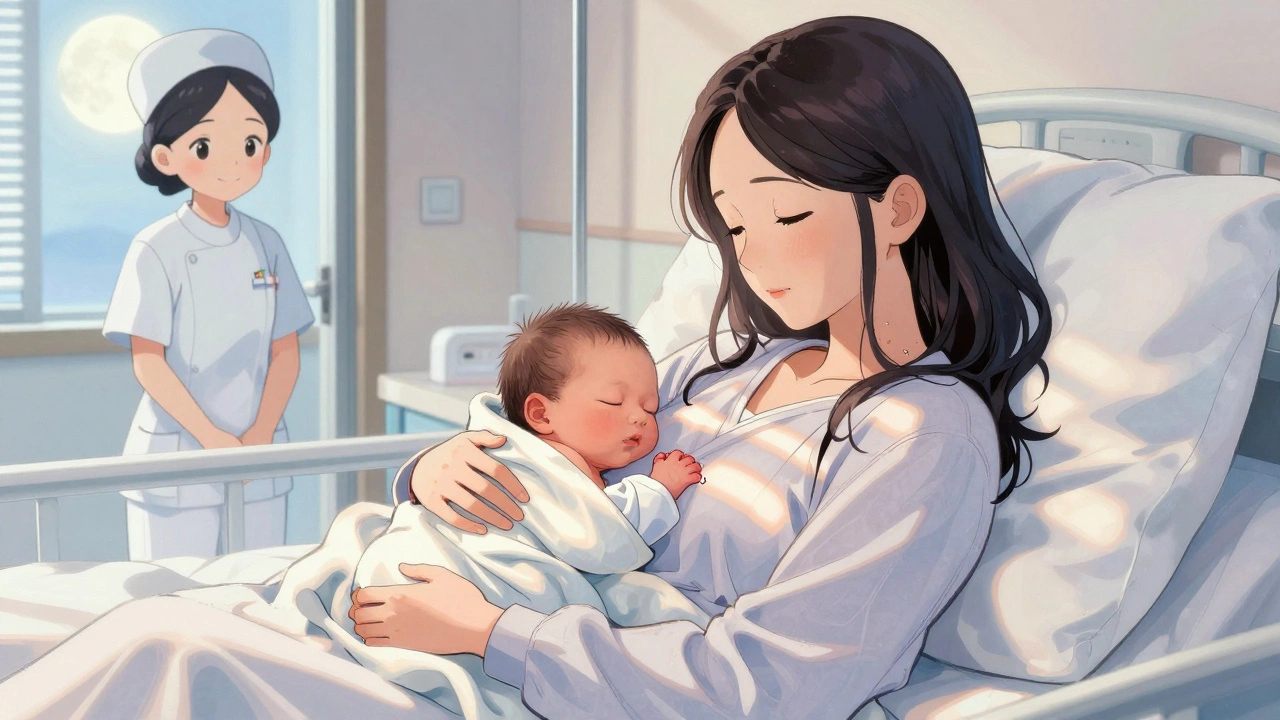
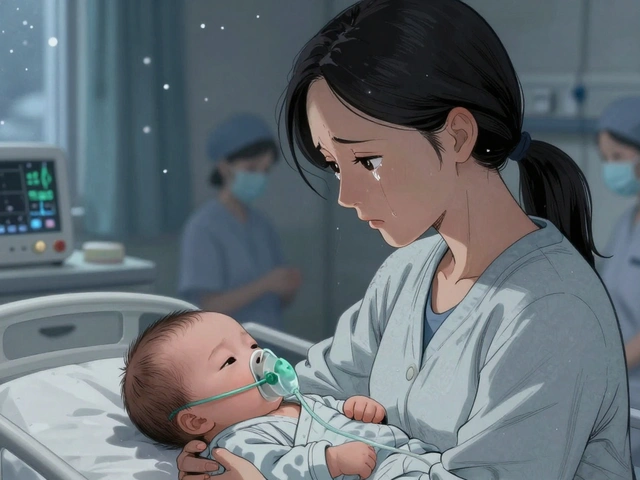
If you’ve heard of NAS-now often called Neonatal Opioid Withdrawal Syndrome (NOWS)-you might think it’s a sign that treatment failed. It’s not. It’s a normal, expected, and treatable response to the baby being born into a world without the opioids they were exposed to in the womb. Between 50% and 80% of babies exposed to opioids in utero will show signs of withdrawal. Symptoms usually appear 48-72 hours after birth. They can include:- High-pitched crying
- Tremors or jitteriness
- Feeding problems-difficulty sucking or swallowing
- Fast breathing (over 60 breaths per minute)
- Temperature changes (above 37.2°C)
- Loose stools (more than 3 per hour)
Comparing Methadone, Buprenorphine, and Naltrexone
Not all MAT options are the same. Here’s how they stack up:| Treatment | Maternal Retention at 6 Months | Infant NAS Incidence | Typical Hospital Stay for Baby | Breastfeeding Success |
|---|---|---|---|---|
| Methadone | 70-80% | 70-80% | 17.6 days | 60-70% |
| Buprenorphine | 60-70% | 50-70% | 12.3 days | 70-80% |
| Naltrexone | Not widely used in pregnancy | 0% (in studied cohort) | 4.8 days | 83% |
Naltrexone is different. It doesn’t activate opioid receptors-it blocks them. This means it’s not used to treat active opioid dependence. It’s only safe if the person has been opioid-free for at least 7-10 days. In one 2022 study, babies exposed to naltrexone showed zero signs of withdrawal. Their mothers had shorter hospital stays and higher breastfeeding rates. But here’s the catch: many of these mothers didn’t get prenatal care until 28 weeks, while those on buprenorphine started at 19 weeks. That delay raises red flags. Naltrexone isn’t a first-line treatment for pregnant women with active opioid use disorder.
Methadone keeps more mothers in treatment long-term, but it tends to cause more severe withdrawal in babies. Buprenorphine often leads to shorter hospital stays and slightly better breastfeeding outcomes. The choice isn’t about which is “better”-it’s about what fits the person’s life, access to care, and medical history.
How Babies Are Monitored After Birth
Every hospital should have a plan to watch for withdrawal symptoms. The CDC recommends monitoring for at least 72 hours after birth. In the first 24 hours, checks happen every 3-4 hours. After that, every 4-6 hours. The traditional tool for this is the Finnegan scale, which scores symptoms like crying, sleep, and muscle tone. But many hospitals are switching to the Eat, Sleep, Console model. It asks three simple questions:- Can the baby eat well?
- Can the baby sleep for at least an hour at a time?
- Can the baby be comforted without medication?
What About Breastfeeding?
Breastfeeding is not only safe for most babies exposed to opioids in utero-it’s encouraged. The small amount of medication that passes into breast milk is usually not enough to cause harm. In fact, breastfeeding can reduce the severity of withdrawal symptoms. Mothers on methadone or buprenorphine can breastfeed. Those on naltrexone, if they’ve been cleared for it, have even higher success rates. The key is avoiding additional substances-alcohol, cigarettes, or recreational drugs-which can make breastfeeding unsafe.
The Real Barriers: Access, Stigma, and Mental Health
Even with all the science on our side, many pregnant people still face huge obstacles. Only 45% of U.S. hospitals have standardized protocols for treating opioid use disorder in pregnancy. In rural areas, that number drops to 28%. Many don’t have on-site MAT services. Others don’t know how to refer patients. Stigma is just as powerful. One mother on a recovery forum wrote: “The nurse rolled her eyes when I asked about buprenorphine. Like I was asking for a drug, not care.” That kind of attitude pushes people away from help. And mental health? It’s often ignored. Over 30% of pregnant women in substance use treatment screen positive for moderate to severe depression. Nearly 42% report postpartum depression. Treatment must include therapy, support groups, and trauma-informed care-not just pills.New Developments and What’s Coming
In 2023, the FDA approved Brixadi, a long-acting buprenorphine injection given once a week or once a month. Early trials show 89% of pregnant women stayed in treatment for 24 weeks, compared to 76% with daily pills. That’s a big win for people who struggle with daily routines or clinic visits. The American Academy of Pediatrics now says: try non-drug care for at least two hours before reaching for medication. That means more cuddling, more skin-to-skin time, more quiet. It’s simple, but powerful. The NIH’s HEALing Communities Study is testing full-team care-adding housing support, transportation help, mental health counseling-to see if it reduces NAS severity. Early results show a 22% drop in symptoms when all these pieces come together.What You Need to Know
If you’re pregnant and using opioids, you’re not alone. And you’re not failing. The goal isn’t perfection-it’s safety. MAT saves lives. It gives you stability. It gives your baby a better start. Start treatment as early as possible. Ideally, by 8-12 weeks. Talk to your OB-GYN or midwife. Ask for a referral to an addiction specialist. Don’t wait until you’re in crisis. You don’t have to choose between being a good mom and being healthy. With the right care, you can be both.Can I take opioids during pregnancy if they’re prescribed by my doctor?
Prescribed opioids for pain during pregnancy carry risks, especially if used long-term. If you’re on opioids for chronic pain, talk to your doctor about alternatives like physical therapy or non-opioid medications. If you’re dependent, switching to methadone or buprenorphine under medical supervision is safer than continuing regular opioid use. Never stop abruptly.
Is NAS the same as addiction in newborns?
No. NAS (Neonatal Abstinence Syndrome) is a temporary withdrawal condition, not addiction. Babies aren’t addicted-they’re physically dependent because their bodies adapted to opioids in the womb. Once the drugs leave their system, the symptoms fade with time and care. Most babies recover fully without long-term effects.
Can I breastfeed if I’m on methadone or buprenorphine?
Yes. Both methadone and buprenorphine are considered safe for breastfeeding. The amount that passes into breast milk is very low and unlikely to harm the baby. Breastfeeding can even help reduce withdrawal symptoms. Avoid alcohol, smoking, or recreational drugs while breastfeeding, as those pose real risks.
What if I can’t find a doctor who offers MAT in my area?
Call your state’s health department or the SAMHSA helpline (1-800-662-HELP). Many states have telehealth programs that connect pregnant people with addiction specialists remotely. Some hospitals offer mobile clinics or partnerships with nearby treatment centers. You deserve care-keep asking until you find it.
Will my baby be taken away if I’m on MAT?
No. Being on methadone or buprenorphine is not grounds for child removal. Child protective services are supposed to support families in recovery, not punish them. If you’re engaged in treatment, attending appointments, and following your care plan, you’re doing everything right. Legal intervention only happens if there’s neglect, abuse, or ongoing substance use outside of medical supervision.






Posts Comments
Chelsea Moore December 2, 2025 AT 08:19
I can't believe people still think this is acceptable. You're literally poisoning your baby with drugs! Who lets this happen? I had a friend who went through this and her kid had to stay in the NICU for months. It's not 'treatment'-it's enabling. And now we're telling women it's okay? No. No. No.
John Morrow December 3, 2025 AT 11:19
The data presented here is statistically significant but methodologically flawed in its operationalization of maternal retention as a proxy for treatment efficacy. The assumption that prolonged pharmacological exposure equates to improved neonatal outcomes ignores confounding variables such as socioeconomic status, prenatal care access, and polypharmacy. The Finnegan scale, while historically dominant, has been shown to have inter-rater reliability coefficients below 0.6 in multiple meta-analyses. The Eat, Sleep, Console model, while intuitively appealing, lacks longitudinal validation and may inadvertently normalize under-treatment of NAS symptoms. Furthermore, the omission of pharmacokinetic data regarding placental transfer ratios of buprenorphine versus methadone renders comparative conclusions premature.
Kristen Yates December 4, 2025 AT 18:55
I work in a rural clinic. We don't have MAT. We don't have specialists. We don't even have a pediatrician who understands this. The moms come in scared, ashamed, and alone. We do what we can. Sometimes it's just holding their hand and saying, 'You're not alone.' That's the real treatment.
Saurabh Tiwari December 6, 2025 AT 10:47
this is so real 🙏 i live in india and we have zero support for this. no one talks about it. women just suffer in silence. if you're lucky, you get a doctor who doesn't judge. that's the win. no one talks about mental health here. no one. just pills or nothing.
Michael Campbell December 7, 2025 AT 22:11
Government wants you addicted so you stay dependent. They profit from the system. MAT is just a slow poison with a badge. Wake up.
Victoria Graci December 8, 2025 AT 19:52
There’s something quietly beautiful about the idea that healing doesn’t always mean eradication. Sometimes it’s just… holding space. For the body that’s been through war, for the mind that’s been told it’s broken, for the baby who just needs to be held a little longer. The fact that we’ve built a system where a newborn’s trembling hands are met with swaddling instead of sedation-that’s not medicine. That’s grace.
Saravanan Sathyanandha December 10, 2025 AT 16:59
In India, we do not have the infrastructure for MAT, yet many women continue their pregnancies with minimal support. The cultural silence around addiction is profound. But I have seen mothers in rural Bihar, with no access to buprenorphine, breastfeed their infants while using prescribed opioids under the supervision of a local midwife. Their resilience is not a statistic. It is a testament to love that defies systems.
alaa ismail December 11, 2025 AT 15:30
i just want to say thank you for writing this. my sister is on buprenorphine and she's been sober for 2 years. she's a great mom. people don't get it. it's not about being clean, it's about being alive.
ruiqing Jane December 11, 2025 AT 21:15
Every single one of these points is evidence-based, compassionate, and necessary. The stigma is not just ignorance-it is systemic violence. We must demand that every hospital, every OB-GYN, every nurse, and every social worker be trained in trauma-informed, nonjudgmental care. There is no excuse for neglect.
Fern Marder December 12, 2025 AT 09:46
MAT is the only reason my daughter is alive today. 🤍 I was on methadone. I cried every day for 6 months. But I showed up. I fed her. I held her. And now she’s 4 and running around like a tornado. I didn’t ‘fix’ myself-I got the help I needed. And that’s not weakness. That’s courage.
Allan maniero December 12, 2025 AT 18:02
I’ve spent the last decade working in neonatal units across three continents. The most consistent predictor of positive outcomes isn’t the medication-it’s the presence of a consistent, non-judgmental caregiver. Whether it’s a mother on buprenorphine in Vermont or a grandmother in rural Kenya holding her grandchild through withdrawal, the human connection is the real therapy. The pills just help her stay present enough to offer it.
Anthony Breakspear December 12, 2025 AT 21:28
Look, I used to think this was just another liberal policy. Then my cousin had her baby. She was on buprenorphine. The hospital didn’t treat her like a criminal. They gave her a quiet room, let her hold her baby 24/7, and didn’t slap a label on her. That baby? He’s thriving. She’s in college now. You can’t tell me this isn’t working. Stop acting like compassion is a flaw.
Zoe Bray December 14, 2025 AT 19:31
The implementation of Medication-Assisted Treatment (MAT) during gestation represents a paradigmatic shift in perinatal addiction management, predicated upon the biopsychosocial model of care. The comparative efficacy of buprenorphine over methadone, as evidenced by reduced neonatal length of stay and enhanced breastfeeding adherence, aligns with current clinical guidelines promulgated by the American College of Obstetricians and Gynecologists. However, the persistent heterogeneity in care delivery infrastructure remains a critical barrier to equitable access.
Girish Padia December 16, 2025 AT 18:28
people are so quick to say 'it's safe' but what about the long term? what about the kids when they're 10 and have anxiety? nobody talks about that. you're just trading one problem for another.
Chris Wallace December 18, 2025 AT 15:56
I was on methadone during both my pregnancies. My kids are 12 and 15 now. One’s a straight-A student. The other plays soccer for his high school. We never talked about it until last year, when my daughter asked me why I was in the clinic every morning. I told her the truth. She hugged me and said, 'Mom, you didn’t give up. That’s the bravest thing I’ve ever heard.'
Write a comment