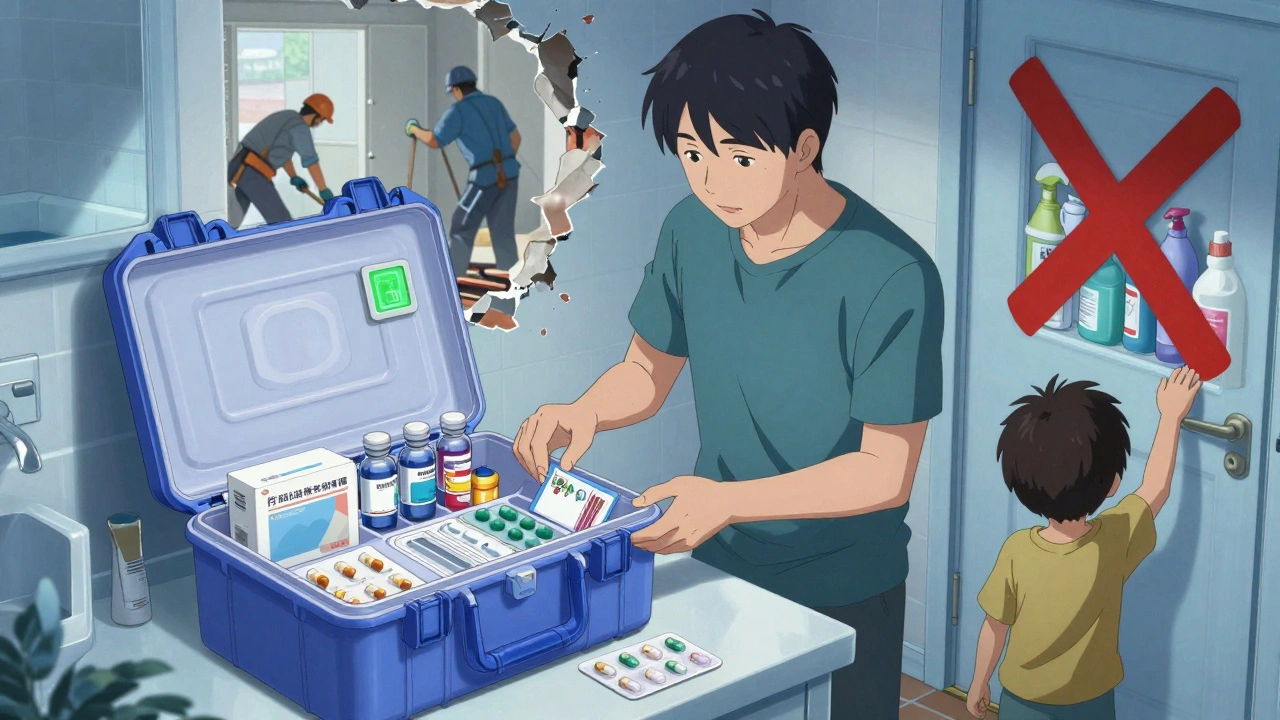
When you’re tearing down walls or packing up boxes for a move, your meds shouldn’t be an afterthought. A bottle of painkillers left on a dusty shelf, insulin sitting in a hot car, or opioids tucked in a half-packed suitcase-these aren’t just careless mistakes. They’re risks. Accidental poisonings, lost prescriptions, and ruined medication happen more often than you think during home changes. And no, your bathroom cabinet or kitchen counter isn’t safe anymore-not when the renovation crew is running through the house or the movers are tossing boxes into a truck.
Why Medications Are Vulnerable During Moves and Renovations
Most people don’t think about meds until they’re packing their socks and coffee mugs. But medications aren’t like books or dishes. They’re sensitive. Heat, humidity, and sunlight can destroy them. A bottle of amoxicillin left on a sunny windowsill might lose half its strength in a week. Insulin? It can go bad if it freezes or overheats-and you won’t be able to tell by looking at it. Then there’s access. Kids, pets, even guests can find meds when they’re not locked away. The EPA says 55% of Americans take prescription meds regularly. That means in nearly every home, there’s something that could be deadly if a child gets into it. During renovations, you’re moving things around. Drawers are open. Cabinets are empty. Temporary storage spots? They’re rarely secure.Where to Store Medications During Renovations
If you’re remodeling one room, don’t just shove your meds into another room’s drawer and call it done. You need a dedicated spot that meets three rules: cool, dry, and locked. Start by picking a room that’s not being touched. A bedroom, a home office, even a basement (if it’s not damp) works. Avoid the kitchen if you’re doing countertop work. Avoid the bathroom-steam from showers ruins pills and patches. Even if the bathroom is untouched, humidity from other parts of the house can still creep in. Find a high cabinet or drawer that can be locked. A locked file cabinet, a small safe, or even a locked toolbox will do. Don’t use a plastic bin on the floor. Kids climb. Pets jump. And if you’re using a closet, make sure it’s not near a heater or air vent. Temperature swings are silent killers for meds. Keep everything in its original bottles. No dumping pills into random containers. The label has your name, dosage, and expiration date. If a pill gets mixed up, you won’t know what you’re taking. That’s how accidental overdoses happen.How to Pack Medications for a Move
Packing meds for a move isn’t like packing clothes. You can’t just toss them in a box and hope for the best. First, sort your meds. Make a list: what you take daily, what’s for emergencies, what’s expired. Toss anything outdated. Don’t move expired meds-they’re useless and dangerous. Next, pack them in a small, labeled container. Use a hard-sided plastic box with a tight lid. Don’t use cardboard-it crushes, and it absorbs moisture. Put the box in your car, not the moving truck. If you’re flying, carry it in your personal bag. Never let a moving company handle your meds. They don’t care if your insulin gets warm. For refrigerated meds like insulin, GLP-1 agonists, or certain antibiotics, you need a cooler. Use a small insulated bag with ice packs. But here’s the catch: don’t let the meds freeze. Put ice packs on the sides, not directly touching the vials. Some people use temperature-monitoring stickers-you can buy them online for under £10. They change color if the med got too hot or cold.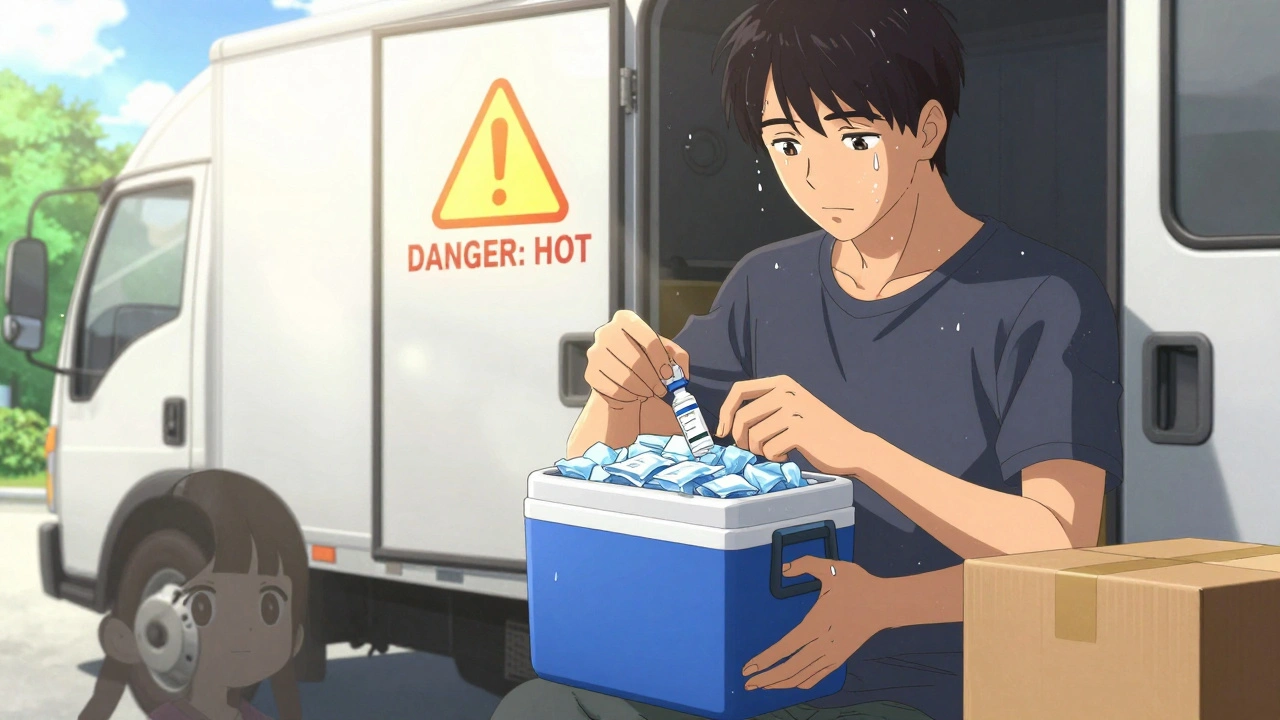
What to Do With Unused or Expired Medications
Before you move, clean out your medicine cabinet. Get rid of anything you haven’t used in six months. But don’t just toss it in the trash or flush it down the toilet. The safest way? Use a drug take-back program. In the UK, most pharmacies offer this. Just drop off your old pills at your local chemist. They’ll dispose of them safely. If you can’t find one, the government’s NHS website lists drop-off locations by postcode. If no take-back is available, mix the pills with something unappetizing-used coffee grounds, cat litter, dirt. Put them in a sealed plastic bag. Then throw them in the trash. This stops kids or animals from digging them out. Never crush pills unless the label says it’s okay. Some meds-like fentanyl patches or strong opioids-should be flushed. Why? Because even one pill can kill a child. The FDA and NHS say flushing these is the only safe option when take-back isn’t possible. Check the label or ask your pharmacist.Special Cases: Controlled Substances and High-Risk Meds
If you take opioids, benzodiazepines, or stimulants like Adderall, you’re dealing with controlled substances. These are high-risk. Theft is real. People break into homes looking for painkillers. During renovations, your home is exposed. During moves, your meds are in transit. For these, lock them in a small safe with a combination or key. Don’t rely on a drawer. Keep them with you at all times during the move. If you’re flying, declare them to security. Carry a copy of your prescription. If you’re unsure whether your med is high-risk, ask your pharmacist. They’ll tell you. And if you’re moving to a new area, call your new GP ahead of time. Some controlled meds require special paperwork when transferring prescriptions.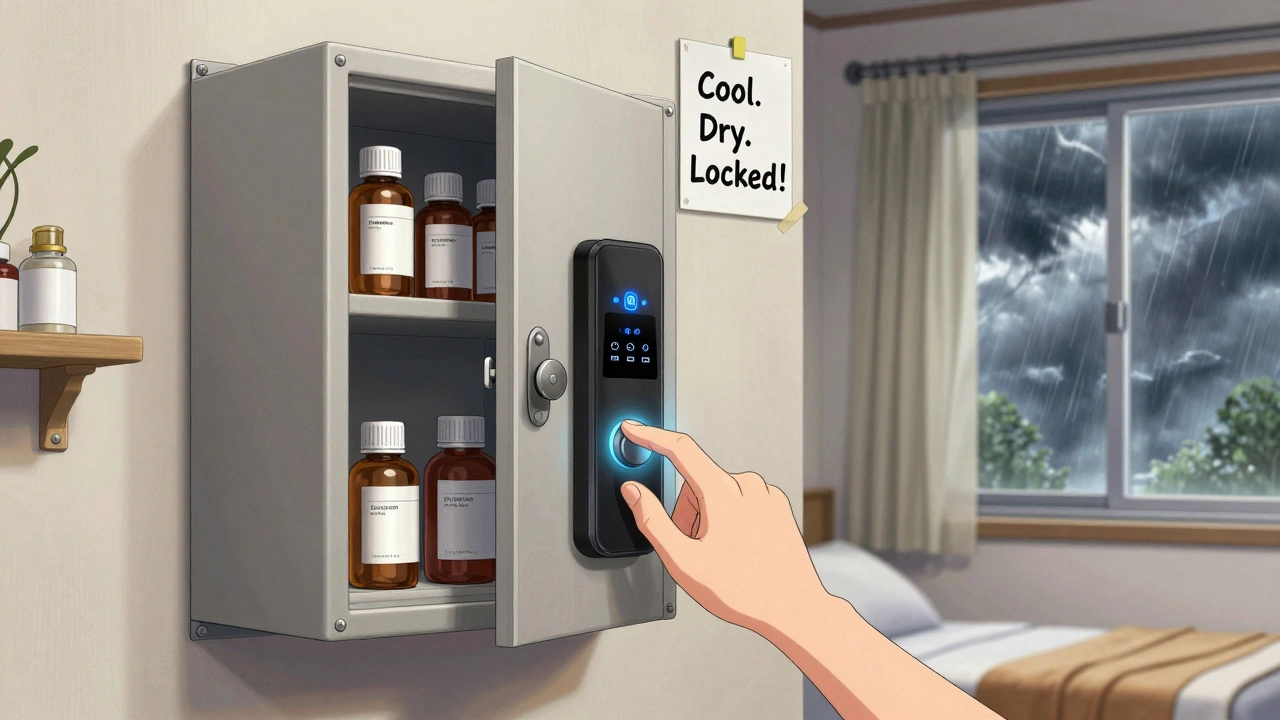
What Not to Do
Don’t leave meds in the car during a move. Even on a mild day, a car can hit 90°F in the sun. That’s enough to ruin most pills. Don’t store them near cleaning supplies. Mixing meds with bleach or ammonia? That’s a chemical hazard. Don’t wait until the last minute. Start sorting your meds at least two weeks before the move or renovation starts. You’ll thank yourself when you’re not rushing to find your blood pressure pills in a pile of boxes. Don’t assume your new home’s cabinet is safe. Even if it looks locked, test it. Kids are clever. Make sure it’s truly secure before you unpack.What to Do After the Move or Renovation
Once you’re settled, don’t just dump your meds back into the old cabinet. Reassess. Find a new secure spot. High. Locked. Cool. Dry. Away from the sink. Away from the window. Put a lock on the cabinet if it doesn’t have one. Consider a small medicine safe-it costs less than £30 and can be bolted to the wall. Update your list. Did any meds get damaged? Did you lose a bottle? Call your pharmacy. They can replace it. Check expiration dates again. Moving can take weeks. Some meds might have sat in a hot garage or attic. If you’re unsure, throw it out. Better safe than sorry.Final Reminder: This Isn’t Just About Safety-It’s About Responsibility
Medications aren’t just stuff. They’re lifelines. For someone with diabetes, a spoiled insulin pen could mean a hospital visit. For someone with epilepsy, a missed dose could trigger a seizure. For a child, a single pill could be fatal. When you’re renovating or moving, you’re already juggling a lot. But your meds? They don’t get a day off. Treat them like your phone or your wallet-something you protect, not something you forget. Take five minutes before you pack. Lock them up. Label them. Keep them cool. Dispose of the rest. It’s not complicated. But it’s necessary.Can I store my medications in the bathroom during a renovation?
No. Bathrooms are too humid. Steam from showers and baths breaks down pills and patches, making them less effective or even unsafe. Even if the bathroom isn’t being renovated, moisture from other parts of the house can still affect your meds. Always choose a cool, dry location like a locked bedroom cabinet or home office drawer.
What if I need to transport insulin during a move?
Insulin must stay between 36°F and 46°F (2°C-8°C). Use a small insulated cooler with ice packs, but never let the vials freeze. Place ice packs on the sides of the cooler, not directly touching the insulin. For long trips, consider a temperature-monitoring sticker that changes color if the meds got too hot or cold. Never put insulin in the moving truck or a car trunk.
Should I flush my old pills down the toilet?
Only if they’re on the FDA’s flush list-like fentanyl patches, oxycodone, or certain painkillers. These are dangerous even in small amounts. For most other meds, mix them with coffee grounds or cat litter, seal them in a plastic bag, and throw them in the trash. The safest option? Use a pharmacy take-back program. Most UK chemists offer free disposal.
Can I pack my medications in a moving box?
Never. Moving trucks can sit in the sun for hours, reaching temperatures over 120°F. That will ruin most medications. Always carry your meds with you in your personal vehicle or carry-on bag. Use a hard plastic container, not cardboard, and keep them in a cool spot-like under your seat, not in the trunk.
How do I know if my medication has gone bad?
Sometimes you can tell-pills might crumble, change color, or smell strange. Liquids might cloud or separate. But many meds look fine even after being ruined by heat or moisture. If you’re unsure, don’t take it. Call your pharmacist. When in doubt, throw it out. It’s cheaper than a trip to A&E.
Is it okay to store meds in a locked gun safe?
Yes, if it’s cool and dry. A locked gun safe, fireproof box, or even a locked toolbox works fine as long as it’s not in a hot garage or damp basement. The goal is to keep meds out of reach and away from extreme temperatures. Just make sure you can access them quickly if you need them.
What should I do if I lose a prescription during a move?
Call your pharmacy right away. Most can reissue a prescription if you’ve been taking it regularly. For controlled substances, you may need to contact your GP. Keep a list of all your meds and dosages-this makes it easier to replace them quickly. Always keep a backup list in your phone or wallet.
Can I use a regular lockbox from the hardware store?
Yes. You don’t need a fancy medicine safe. A simple, sturdy lockbox with a key or combination will work. Look for one that’s small enough to fit on a shelf but strong enough to resist being pried open. Make sure it’s stored in a cool, dry place-not near a radiator or window.




Posts Comments
Mindy Bilotta December 3, 2025 AT 09:20
Just moved last month and I forgot about my meds until my kid grabbed a bottle of ibuprofen from a box. Scared the hell out of me. Locked everything in a small safe in the bedroom before the movers came. Best decision ever. Seriously, people, just do it.
Michael Bene December 5, 2025 AT 08:18
Oh wow, another one of those ‘your meds are sacred’ articles. Let me guess-you also think your cat’s litterbox should be climate-controlled? Look, if your insulin is getting ruined by a 90-degree car, you’ve got bigger problems than storage. Most people aren’t pharmacists. Stop acting like everyone’s one bad move away from a meth lab.
Brian Perry December 6, 2025 AT 02:30
MY BEST FRIEND’S DAD DIED BECAUSE HIS BLOOD PRESSURE MEDS GOT HOT IN A MOVING TRUCK. I’M NOT KIDDING. I SAW THE CORONER’S REPORT. THIS ISN’T A ‘TIP’-IT’S A LIFESAVING RULE. WHY DO PEOPLE TREAT MEDS LIKE THEY’RE JUST STUFF?!
Justin Hampton December 7, 2025 AT 01:49
So you’re telling me I can’t store my Adderall in the glovebox because it might get warm? But I’ve done it for 8 years. No issues. The real danger is overregulation and fearmongering. If you’re that paranoid, maybe you shouldn’t be taking controlled substances at all.
Palanivelu Sivanathan December 8, 2025 AT 13:55
Medications… they are not just pills… they are echoes of our vulnerabilities, stored in plastic bottles like prayers in a temple… the heat of the sun, the dampness of the bathroom… these are not mere environmental factors… they are metaphors for how society treats the fragile… the silent suffering… the forgotten capsules…
But also… please lock them. I mean… yeah. Lock them. I agree. Just… also, think about the existential weight of your ibuprofen.
Joanne Rencher December 8, 2025 AT 21:56
Flush fentanyl? Yeah right. And I’m supposed to believe you’re not just trying to get rid of your stash? You people act like you’re doing God’s work, but half of you are hoarding opioids like they’re gold bars. Disgusting.
Erik van Hees December 10, 2025 AT 08:03
Good post, but you missed one thing: if you’re flying, TSA lets you carry meds in your carry-on without declaring them unless they’re controlled substances. And even then, just have the prescription label. I’ve flown with insulin, Xanax, and metformin-no problems. Don’t overcomplicate it.
Cristy Magdalena December 11, 2025 AT 01:52
I’m so tired of people treating this like it’s just a checklist. My mom had to go to the ER last year because her thyroid med got ruined in a storage unit. She didn’t know until she was shaking and dizzy. It’s not about being ‘careful’-it’s about being human. And if you’re not thinking about this, you’re not thinking about the people who rely on these pills to live.
Adrianna Alfano December 11, 2025 AT 21:18
OMG YES. I just moved and I didn’t realize my diabetes test strips were in a box that sat in the garage for 3 days. They were all warped and useless. I cried. I didn’t even know they were sensitive to heat. I’m so glad I found this. I’m buying a lockbox today. Thank you for saying this. 💕
Casey Lyn Keller December 12, 2025 AT 23:24
They say ‘don’t leave meds in the car’ but what if you live in a city and have no garage? What if your apartment has no lockable cabinets? This advice assumes privilege. Not everyone has a bedroom safe or a basement. This is tone-deaf.
Jessica Ainscough December 14, 2025 AT 20:56
Just wanted to say this was super helpful. I’m helping my aunt move next week and she’s on 12 different meds. I’m going to make a little checklist based on this. Small things matter. Thanks for writing it.
May . December 15, 2025 AT 01:07
Just lock them. Don’t overthink it.
Sara Larson December 16, 2025 AT 03:19
YESSSSS I did this last month and it saved me! Got a $25 lockbox from Target, labeled everything with sticky notes, kept insulin in a cooler with ice packs in the car. My anxiety went down 90%. You’re not being dramatic-you’re being smart. 💪🩺
Josh Bilskemper December 17, 2025 AT 16:09
Most of this is common sense. If you need a blog post to tell you not to store pills next to bleach, you shouldn’t be managing your own medication. Also, why are you moving if you’re this fragile?
Storz Vonderheide December 18, 2025 AT 22:45
This is exactly the kind of practical, compassionate advice we need more of. I’m from a rural area where take-back programs are hard to find. I’ve started handing out little printed guides to neighbors who are older or on multiple meds. This isn’t just about safety-it’s about community. Thank you for writing this.
Write a comment