
Why Hyperpigmentation Hits Harder in Darker Skin
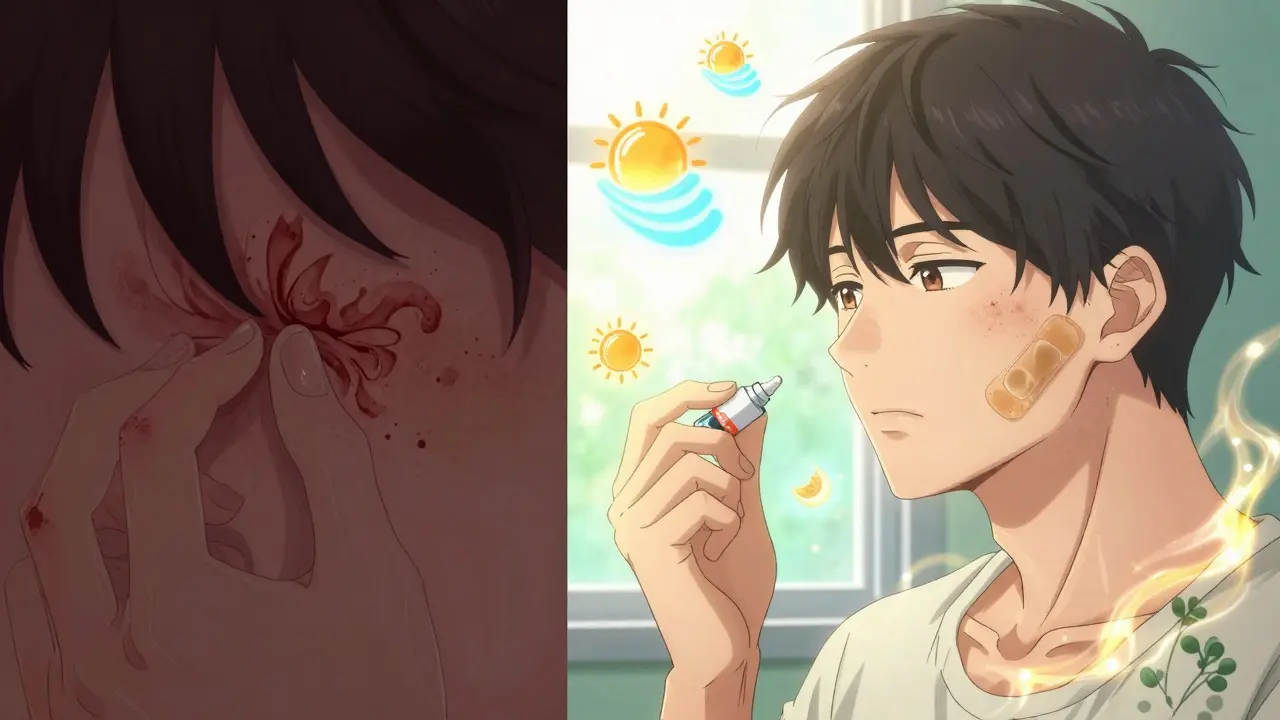
When you have darker skin, a pimple doesn’t just fade away. It leaves behind a dark spot that can stick around for months-or even years. This isn’t just a cosmetic issue. For many people with skin of color, these patches of discoloration become a source of stress, self-consciousness, and even social withdrawal. The reason? Higher melanin levels. Melanin protects your skin from UV damage, but when your skin is irritated-by acne, a cut, a scratch, or even a harsh scrub-it overproduces pigment. That’s post-inflammatory hyperpigmentation, or PIH. It’s not an infection. It’s not an allergy. It’s your skin’s overreaction to trauma.
Unlike lighter skin tones where redness fades quickly, darker skin turns brown or gray. These spots don’t go away on their own. Sun exposure makes them worse. Even indoor lighting, especially from screens, can darken them over time. A 2023 report from the American Society for Dermatologic Surgery found that up to 65% of people with darker skin experience PIH after minor skin injuries. And melasma? That’s the hormonal version-dark, patchy discoloration on the cheeks, forehead, or upper lip. It’s more common in women, especially during pregnancy or while taking birth control pills.
What Causes Hyperpigmentation in Skin of Color?
It’s not just one thing. It’s a mix of biology and lifestyle. First, inflammation. Acne is the biggest trigger. Even mild breakouts can leave behind dark marks. Eczema, psoriasis, and even allergic reactions to hair dyes or cosmetics can do the same. Second, sun exposure. UV rays activate melanocytes, the pigment cells. In darker skin, those cells are already more active, so even a little sun can trigger darkening. Third, hormones. Melasma isn’t just about being pregnant-it’s about estrogen and progesterone levels. That’s why it often shows up after starting birth control or during menopause.
And here’s something most people don’t realize: blue light from phones and computers can also worsen hyperpigmentation. That’s why tinted sunscreens with iron oxides are now recommended. They block not just UVA and UVB rays, but also the blue light that contributes to pigment darkening. Regular sunscreens? They help-but they’re not enough on their own.
Why Standard Treatments Often Fail
Many treatments designed for lighter skin tones can backfire in darker skin. Hydroquinone, once the gold standard, is effective-but it can cause irritation, and long-term use risks ochronosis, a condition where the skin turns blue-black. Chemical peels? Too strong, and they can cause more pigmentation. Laser treatments? If not done by someone experienced with skin of color, they can burn or lighten the skin unevenly.
What works better? Gentler, targeted options. Azelaic acid, vitamin C, kojic acid, and tretinoin are all proven to reduce pigment without triggering inflammation. A 2022 study in the Journal of Clinical and Aesthetic Dermatology found that 5% cysteamine cream reduced melasma by nearly 50% in 12 weeks-with no side effects. Tranexamic acid, originally used for heavy periods, is now being applied topically to block pigment production at the source. These newer treatments are safer, more predictable, and better suited for sensitive, pigmented skin.
The Non-Negotiable: Daily Sun Protection
No treatment will work if you’re not wearing sunscreen every single day. Not just on sunny days. Not just when you’re at the beach. Every day. Rain or shine. Indoors or out. UV rays penetrate clouds. Blue light comes through windows. And if you’re not protecting your skin, you’re undoing months of progress.
Use a broad-spectrum sunscreen with SPF 30 or higher. Look for iron oxides in the ingredient list-they block blue light. Tinted formulas blend better with deeper skin tones and give a natural finish. Reapply every two hours if you’re outside. Wear wide-brimmed hats, long sleeves, and UV-blocking sunglasses. Avoid being outside between 10 a.m. and 4 p.m. when the sun is strongest. This isn’t optional. It’s the foundation of every successful treatment plan.

Keloids: When Scars Grow Beyond the Wound
While hyperpigmentation leaves flat patches, keloids are different. They’re raised, thick, rubbery scars that grow beyond the original injury. Think of a piercing, a cut, or even an acne bump that turns into a hard, itchy lump that keeps expanding. Keloids are far more common in people with skin of color-up to 15 times more likely than in lighter skin tones. They’re not dangerous, but they can be painful, restrict movement, and cause serious emotional distress.
Unlike normal scars, keloids don’t stop growing when the wound heals. They’re driven by overactive fibroblasts-cells that make collagen. Genetics play a big role. If your parent or sibling has keloids, you’re more likely to develop them. They’re most common on the chest, shoulders, earlobes, and jawline. Even minor trauma like acne or chickenpox can trigger them.
Treating Keloids: It’s Not Just About Creams
Topical creams alone won’t shrink keloids. You need a layered approach. First-line treatment? Silicone gel sheets or pressure earrings (for ear keloids). These work by flattening the scar and reducing collagen overproduction. Steroid injections directly into the keloid are next. They reduce inflammation and soften the tissue. Multiple sessions are needed, but results are often visible within weeks.
Laser therapy, especially pulsed dye lasers, can reduce redness and flatten keloids. Cryotherapy (freezing) is another option, but it carries a higher risk of pigment loss in darker skin. Surgery? Only if combined with radiation or steroid injections afterward-otherwise, the keloid often comes back bigger than before. The key is early intervention. The sooner you treat a rising scar, the better the outcome.
Putting It All Together: A Realistic Plan
Here’s what a successful treatment plan looks like for someone with skin of color dealing with both hyperpigmentation and keloids:
- Identify triggers: Are you breaking out? Are you using harsh scrubs? Are you skipping sunscreen? Are you getting piercings or tattoos?
- Stop the damage: Switch to gentle, non-comedogenic skincare. Avoid picking at acne. Use a soft washcloth, not a scrub.
- Protect daily: Apply tinted sunscreen with iron oxides every morning. Reapply if outside.
- Treat pigment: Use a combination of vitamin C in the morning and tretinoin or azelaic acid at night. Add tranexamic acid or cysteamine if needed.
- Manage scars: For early keloids, start silicone sheets or pressure therapy. See a dermatologist for steroid injections if it’s growing.
- Be patient: Pigment fades over 3-6 months. Keloids take 6-12 months to flatten. Consistency beats intensity.
When to See a Dermatologist
You don’t need to wait until it’s unbearable. If you’ve had dark spots for more than three months, if a scar is growing beyond the original wound, or if your current routine isn’t helping, it’s time to see a specialist. Not every dermatologist understands skin of color. Look for one who specializes in pigmentation disorders or has experience treating diverse skin tones. Ask if they’ve treated patients with PIH or keloids before. Don’t settle for a one-size-fits-all approach.
What Not to Do
- Don’t use lemon juice, baking soda, or raw honey as home remedies-they can burn or irritate your skin.
- Don’t skip sunscreen because it’s cloudy or you’re indoors.
- Don’t pick at acne or scabs.
- Don’t get laser treatments from someone who doesn’t have experience with darker skin.
- Don’t assume hyperpigmentation will fade on its own.
Final Thoughts
Hyperpigmentation and keloids aren’t just skin-deep. They affect confidence, relationships, and daily life. But they’re not untreatable. With the right knowledge, the right products, and the right care, you can see real improvement. It takes time. It takes consistency. And it takes finding a dermatologist who gets it. You’re not alone. Millions of people with skin of color are managing this every day. And with the right plan, you can too.
Can hyperpigmentation go away on its own?
Sometimes, but rarely. Mild post-inflammatory hyperpigmentation may fade in 3-6 months if the trigger is removed and sun protection is strict. But most cases, especially melasma or deep PIH, require active treatment. Without sunscreen and targeted ingredients, the dark spots often get darker or last for years.
Is hydroquinone safe for dark skin?
It can be, but only under medical supervision. Hydroquinone works well for fading pigment, but long-term use (over 6 months) can cause ochronosis-a rare but serious condition where skin turns blue-gray. Many dermatologists now prefer alternatives like azelaic acid, tranexamic acid, or cysteamine cream, which are just as effective with fewer risks.
Why do keloids keep coming back after surgery?
Keloids form because the body overproduces collagen after injury. Cutting them out creates a new wound, which triggers the same overreaction. That’s why surgery alone fails. To prevent recurrence, surgery must be combined with other treatments like steroid injections, pressure therapy, or radiation immediately after removal. Never remove a keloid without a plan to prevent regrowth.
Can blue light from screens cause dark spots?
Yes. Studies show that high-energy visible (HEV) blue light from phones, laptops, and LED lights can stimulate melanin production in darker skin. Regular sunscreens don’t block this. That’s why tinted sunscreens with iron oxides are now recommended-they shield against both UV and blue light, helping prevent pigment darkening even indoors.
Are keloids hereditary?
Yes. If one or both of your parents have keloids, your risk increases significantly. Genetics play a major role in how your skin heals. People of African, Asian, and Hispanic descent are more prone, but it’s not about race-it’s about inherited healing patterns. If you know you’re at risk, avoid piercings, tattoos, and unnecessary skin trauma.
What’s the fastest way to fade dark spots?
There’s no magic fix, but the fastest results come from combining three things: daily sunscreen with iron oxides, prescription-strength tretinoin at night, and a brightening agent like vitamin C or tranexamic acid in the morning. Add chemical peels or laser treatments only under expert care. Results usually appear in 8-12 weeks with consistent use.






Posts Comments
RAJAT KD January 8, 2026 AT 19:14
Stop wasting time with fancy creams. Just wear sunscreen. That's it. No magic potions needed.
Aron Veldhuizen January 10, 2026 AT 03:27
Let me play devil’s advocate: if melanin is so protective, why are we treating it like a defect? This entire field is built on a colonial framework that pathologizes natural biology. You’re not broken-you’re just misunderstood. The real issue isn’t pigment, it’s the industry that profits from making you feel like it is.
And don’t get me started on ‘blue light’ fearmongering. You think your phone is worse than the sun? That’s like blaming a candle for a forest fire. The science is thin, the marketing is loud, and the price tag on iron oxide sunscreens? Absurd. We’ve turned skincare into a religion, and the priests sell $80 lotions with a side of guilt.
Micheal Murdoch January 10, 2026 AT 07:12
I’ve been dealing with PIH since my teens, and honestly, this post nails it. I used to think it was just ‘bad skin’-turns out, it’s biology + environment + bad advice.
What changed everything for me? Tretinoin 0.025% every other night, vitamin C in the morning, and a tinted SPF 50 with iron oxide. No more picking. No more ‘just wait it out.’ I’m 34 now, and after 15 years of frustration, my skin finally looks even. Not perfect-but better than I ever thought possible.
And yes, blue light? Real. I work 10 hours a day in front of screens. My cheeks got darker even in winter. Once I switched to the tinted sunscreen, the progress actually stuck. No hype. Just science.
Also-please, for the love of all things holy, stop using lemon juice. I did it once. My skin burned for a week. I cried. I regretted it. Don’t be me.
tali murah January 12, 2026 AT 03:04
How is it possible that in 2024, people still need a 2,000-word essay to understand that sunscreen is non-negotiable? This isn’t dermatology-it’s basic hygiene. And yet, here we are, treating pigment like some mystical curse instead of the simple biological response it is.
And don’t even get me started on the ‘natural remedies’ crowd. Baking soda? Honey? You wouldn’t scrub your car with sandpaper, so why scrub your face with kitchen cabinets? This isn’t a TikTok trend. This is your epidermis.
Also, ‘keloids are hereditary’-yes, but so is the tendency to ignore medical advice until it’s too late. I’ve seen three patients this month with keloids the size of golf balls because they waited for ‘it to go away.’ It won’t. It grows. Like a weed. And now you need lasers, steroids, and trauma. All because you were too lazy to wear a hat.
Jenci Spradlin January 12, 2026 AT 09:30
Y’all are overcomplicating this. I got PIH bad after a bad breakout. Tried everything. Then I just started using CeraVe PM + SPF 30 every damn day. No fancy acids. No prescriptions. Just consistency. Three months later? Faded. Not gone, but way better.
Also, blue light? Nah. I think that’s just a marketing trick to sell more sunscreen. I’ve been on my phone 12 hours a day since 2015 and my skin’s fine. Maybe it’s the stress, not the screen.
But sunscreen? Yeah. That’s real. Don’t skip it. Even indoors. I know, I know-it’s annoying. But so is looking like you have a shadow under your eyes for two years.
Gregory Clayton January 13, 2026 AT 12:16
Who the hell wrote this? Some dermatologist who’s never touched a Black person’s skin? I’ve been in the game since 2008. I’ve seen 1000+ cases. And let me tell you-none of this ‘tranexamic acid’ or ‘cysteamine’ nonsense works unless you’re already rich.
Real talk? The only thing that works is avoiding trauma. Don’t get piercings. Don’t pop pimples. Don’t wear tight headwraps that rub your neck. And if you’re a woman? Stop taking birth control if your skin’s acting up. That’s not ‘hormonal,’ that’s your body screaming for help.
And yeah, sunscreen? Obviously. But don’t act like it’s some breakthrough. We’ve known this since the 90s. The problem isn’t the science-it’s the people who won’t listen.
Catherine Scutt January 15, 2026 AT 08:22
I used to think keloids were just ‘bad scars’ until I saw my cousin’s chest after a simple ear piercing. It looked like a tumor. And now, after years of steroid shots, she’s finally getting somewhere.
But the thing no one talks about? The shame. You don’t want to wear tank tops. You avoid swimming. You wear long sleeves in July. It’s not about looks-it’s about feeling like your body betrayed you.
So if you’re reading this and you’re struggling? You’re not alone. And you don’t have to fix it all at once. Just start with one thing. Sunscreen. One day. Just one.
And if you’re a doctor? Stop acting like you know better. Listen. Really listen. We’ve been screaming for decades.
Ashley Kronenwetter January 16, 2026 AT 20:47
While the article presents clinically accurate information, it is essential to acknowledge the sociocultural dimensions of skin pigmentation discourse. The framing of hyperpigmentation as a ‘problem’ to be ‘managed’ implicitly reinforces aesthetic norms rooted in Eurocentric beauty standards. A more equitable approach would center patient autonomy and cultural context, rather than prescribing universal protocols that may not align with lived experience.
Furthermore, the emphasis on pharmaceutical interventions risks pathologizing natural biological variation. The recommendation of ‘tinted sunscreens’-while practical-also commodifies identity under the guise of dermatological necessity. Ethical dermatology must evolve beyond product-centric models toward holistic, culturally competent care.
Jeffrey Hu January 18, 2026 AT 18:27
Everyone’s missing the point. You’re all talking about sunscreen and creams, but nobody’s talking about the microbiome.
Recent studies show that dysbiosis in the skin microbiome-especially from over-cleansing and harsh actives-triggers more inflammation, which then drives PIH. That’s why tretinoin works for some and burns others. It’s not the ingredient, it’s the baseline health of your skin barrier.
And for keloids? Fibroblasts don’t go rogue because of genetics alone. Chronic low-grade inflammation from diet, stress, or even gut health plays a role. You want to treat keloids? Fix your gut first. Probiotics. Reduce sugar. Sleep. None of that’s in this article.
Also, blue light? Maybe. But the real culprit is LED lighting in offices. Fluorescent bulbs emit more HEV than phones. And nobody’s talking about that. Just saying.
Matthew Maxwell January 20, 2026 AT 01:57
Let’s be clear: this entire post is a corporate marketing brochure disguised as medical advice. Hydroquinone is banned in the EU for good reason. Azelaic acid? Expensive. Tranexamic acid? Off-label. And don’t even mention the $120 tinted sunscreens-most of them are just pigmented moisturizers with a premium label.
The real solution? Stop treating skin of color as a niche market. Dermatology has spent decades ignoring these populations, and now they’re cashing in with ‘specialized’ products that should’ve been standard 30 years ago.
Also, if you’re telling someone to avoid piercings and tattoos because of keloid risk, you’re not helping-you’re policing autonomy. People have the right to modify their bodies. The responsibility lies with the medical community to provide safe options, not to scare people into conformity.
And yes, I’ve seen patients who spent $5,000 on ‘miracle’ serums while ignoring basic sun protection. This isn’t science. It’s capitalism.
Write a comment