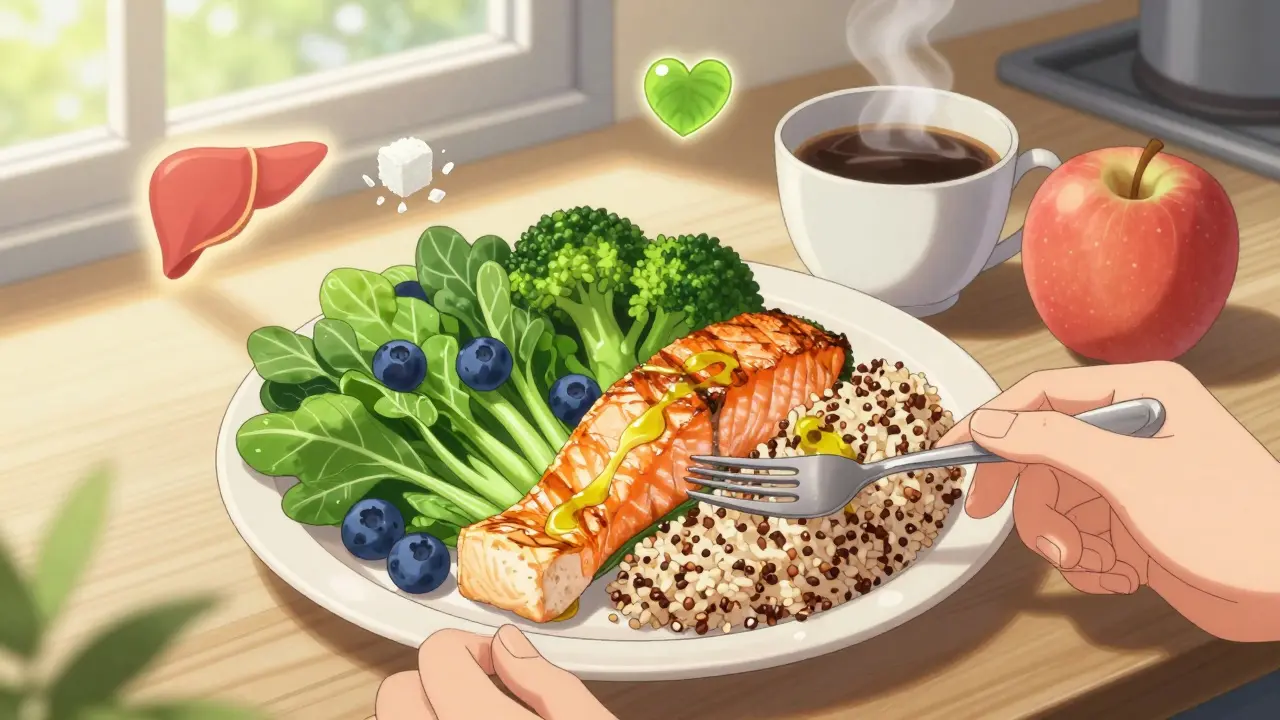
When your liver is struggling, food isn’t just fuel-it’s medicine. If you’ve been told you have fatty liver disease, elevated liver enzymes, or early-stage cirrhosis, the right diet can do more than slow things down. It can reverse damage. And you don’t need expensive supplements or extreme restrictions. What works isn’t a fad. It’s science-backed, real, and doable. The Mediterranean diet isn’t just trendy-it’s the most proven way to heal your liver without drugs.
What a Liver-Healthy Diet Actually Looks Like
There’s no such thing as a ‘liver detox’ juice cleanse. That’s marketing, not medicine. The American Association for the Study of Liver Diseases (AASLD) says it clearly: no single food cures liver disease. But a pattern of eating does. And that pattern is built on whole foods, not labels.
Think of your plate this way: half filled with vegetables and fruits-especially leafy greens, broccoli, blueberries, and apples. One-quarter should be lean protein like chicken, fish, beans, or tofu. The last quarter? Whole grains like oats, brown rice, or quinoa. That’s not a suggestion. It’s the Harvard Healthy Eating Plate, updated in 2024 and backed by over 20 clinical studies.
Here’s what you cut out:
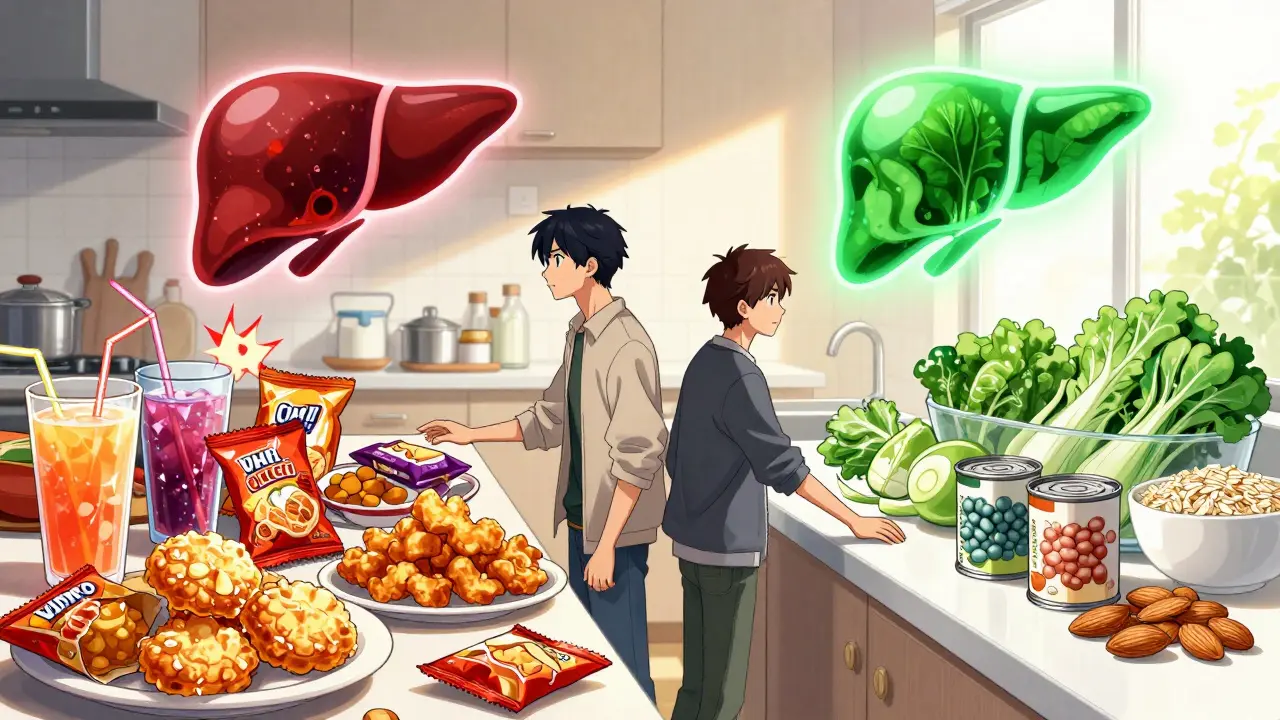
- Sugary drinks (soda, sweet tea, energy drinks)-one 12oz can adds 150-200 empty calories and floods your liver with fructose
- Trans fats (found in fried foods, packaged snacks, margarine)-they trigger inflammation and raise bad cholesterol
- Processed carbs (white bread, pastries, instant noodles)-they spike blood sugar and turn into liver fat fast
- Sodium over 2,000mg/day-too much salt worsens fluid buildup in advanced liver disease
Why the Mediterranean Diet Works-And What the Science Says
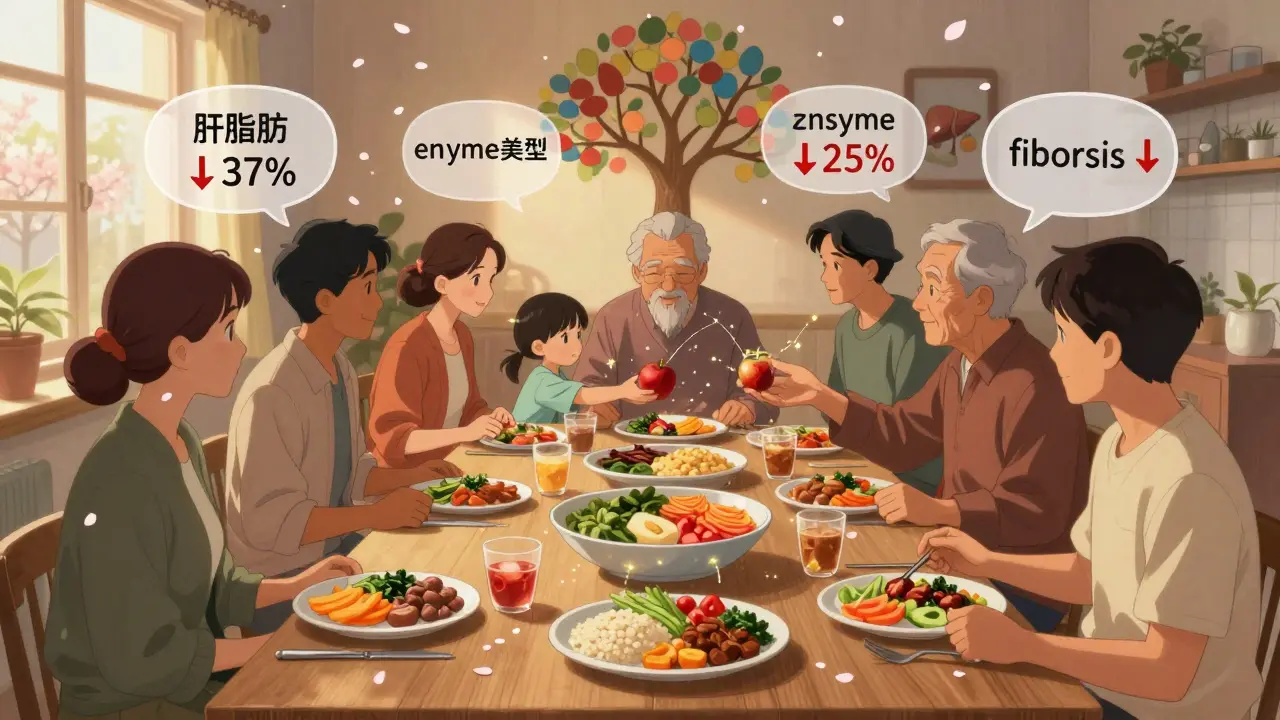
The Mediterranean diet isn’t about olives and pasta. It’s about fat quality, fiber, and balance. A 2013 study in Hepatology showed people with fatty liver who followed this diet for a year cut liver fat by 37%. Another 2022 review in the Journal of Hepatology confirmed that without losing weight, people saw liver enzyme levels drop by 20-30% in just six months.
Here’s how it works:
- Monounsaturated fats (olive oil, avocados, nuts) make up 40% of daily calories. They reduce VLDL, the fat-carrying particles that pile up in your liver.
- Fiber (from vegetables, legumes, whole grains) slows sugar absorption and feeds good gut bacteria that calm liver inflammation.
- Omega-3s (from salmon, sardines, walnuts) cut liver fat by 15-20% in 12 weeks, according to a 2021 trial in Clinical Gastroenterology and Hepatology.
- Anthocyanins (in blueberries, blackberries, red cabbage) lower liver inflammation by 25%-that’s not a guess. It’s from a 2020 study at Westmead Hospital.
Compare that to low-fat diets. They often replace fat with sugar-and make liver fat worse. Ketogenic diets? They help some, but studies show they’re 18% less effective at reducing fibrosis than the Mediterranean approach. The data is clear: balance beats extremes.
What to Eat Daily-Real Food, Not Rules
You don’t need to count calories. You need to build habits. Here’s a simple daily template:
- Breakfast: Oatmeal with walnuts, chia seeds, and blueberries. Black coffee or green tea.
- Lunch: Large salad with spinach, tomatoes, chickpeas, grilled chicken, and 2 tbsp olive oil + lemon dressing.
- Dinner: Baked salmon, roasted Brussels sprouts, and ½ cup quinoa.
- Snacks: Apple with almond butter, a handful of raw almonds, or carrot sticks.
Portion matters. A 2023 study from the Mayo Clinic found 63% of people overestimate protein servings. One portion = the size of a deck of cards. That’s about 3 ounces. More than that? It strains your liver.
And don’t skip breakfast. Skipping meals causes your liver to release stored glucose, worsening insulin resistance. Eat regularly. Even if it’s small.
What You Should Avoid-Even If It’s ‘Healthy’
Some foods trick you. They sound good but hurt your liver:
- Fruit juice: Even 100% pure juice spikes blood sugar faster than soda. Eat whole fruit instead.
- Dried fruit: Raisins, dates, and apricots are concentrated sugar bombs. A small handful has 20g of sugar.
- ‘Low-fat’ packaged foods: They’re often loaded with sugar and additives. Check the label-added sugar should be under 5g per serving.
- Alcohol: No amount is safe if you have liver disease. Even one drink a day can accelerate scarring.
- Artificial sweeteners: Studies link them to gut changes that worsen fatty liver. Stick to water, tea, or coffee.
And read labels. Hidden sugars hide under names like ‘high-fructose corn syrup,’ ‘cane juice,’ ‘maltodextrin.’ If you see three or more sugar ingredients, put it back.
Real People, Real Results
John, 58, from Ohio, had stage 2 liver fibrosis. His FibroScan score was 12.5 kPa (a sign of moderate scarring). His ALT (liver enzyme) was 112-more than double normal. He started the Mediterranean diet, walked 30 minutes daily, and cut out soda. Nine months later? FibroScan dropped to 6.2 kPa. ALT fell to 45. He didn’t lose 50 pounds. He just changed what he ate.
On Reddit’s r/FattyLiver, 68% of 1,247 users said their energy improved within three months. But 42% said processed food was too expensive. That’s real. The USDA says eating this way costs about $1.50 more per meal. But there’s a workaround: frozen vegetables, canned beans, eggs, and bulk oats cost less than pre-packaged meals. Batch cook on Sundays. Use lemon juice instead of salt. These small swaps add up.
Special Cases: What If You Have Advanced Liver Disease?
If you’re in late-stage cirrhosis, protein needs change. Too little protein leads to muscle loss, which makes survival harder. The European Association for the Study of the Liver says: don’t restrict protein unless you have hepatic encephalopathy. If you do, work with a dietitian. Otherwise, aim for 15-20% of calories from lean protein-fish, eggs, legumes, tofu.
And sodium? If you have swelling or fluid in your belly, limit salt to under 2,000mg. That means no canned soups, deli meats, or soy sauce. Use herbs, garlic, vinegar, or lemon instead.
How to Stick With It-When Life Gets Busy
Most people quit because it feels hard. But it doesn’t have to be.
- Start with one meal a day. Make lunch Mediterranean. Keep dinner simple.
- Use frozen veggies. They’re just as nutritious, cheaper, and last longer.
- Buy in bulk. Oats, lentils, brown rice, nuts-these are cheap and last months.
- Plan ahead. Sundays are for prepping: chop veggies, boil eggs, portion nuts.
- Don’t go cold turkey. If cutting all sugar gives you migraines (as one patient reported), ease in. Start with 15g of natural sugar from berries daily.
VA Health System’s 12-week telehealth program had an 87% satisfaction rate. Free. No cost. Just call. The Liver Foundation’s helpline handled over 12,000 calls last year-mostly from people asking, ‘How do I cook this?’
The Future Is Personalized
Researchers are now testing if your gut bacteria can predict how you’ll respond to certain foods. Mayo Clinic launched a $2.1 million study in January 2024 to find out. Soon, your liver diet might be tailored to your microbiome. But for now? The basics still work.
The World Gastroenterology Organisation says diet is the most scalable, cost-effective tool we have against fatty liver disease-which affects 1.8 billion people worldwide. You’re not alone. And you don’t need a miracle. You need consistency.
Can I still eat fruit if I have fatty liver?
Yes-but not as juice. Whole fruits are fine. Aim for 2 servings per day: one apple, one banana, or a cup of berries. Avoid dried fruit and fruit smoothies. The fiber in whole fruit slows sugar absorption, which protects your liver. Juicing removes fiber and concentrates sugar, making it as bad as soda.
Is olive oil really that good for the liver?
Yes. Olive oil is rich in monounsaturated fats and antioxidants. A 2014 trial showed replacing other oils with 2-3 tablespoons of extra virgin olive oil daily reduced liver fat by 20% in six months. It also lowers inflammation and improves insulin sensitivity. Choose cold-pressed, unfiltered varieties for the most benefit.
Do I need to lose weight to improve my liver?
Weight loss helps-but it’s not required. A 2022 study found people who switched to a Mediterranean diet saw liver enzyme levels drop by 25% even without losing a single pound. The key is cutting sugar, eating more fiber, and choosing healthy fats. That alone can reduce liver fat by 25-40% in six to twelve months.
Can I drink coffee with fatty liver?
Yes-black coffee is one of the best things you can drink. Multiple studies show drinking 2-3 cups of black coffee daily lowers liver enzyme levels, reduces fibrosis, and may even lower liver cancer risk. Skip cream, sugar, and flavored syrups. Just plain coffee.
What if I can’t afford fresh produce?
Frozen vegetables and canned beans (rinsed) are just as nutritious-and cheaper. Oats, eggs, peanut butter, and lentils are budget-friendly and liver-friendly. A 2023 Harvard study showed community cooking programs reduced Mediterranean diet costs by 35% by using bulk ingredients and seasonal swaps. You don’t need organic or exotic foods. Just real, unprocessed ones.




Posts Comments
Kathy Leslie March 13, 2026 AT 11:13
I started this diet last month and my energy is way better. No more afternoon crashes. Just whole foods, no magic pills.
Also, frozen broccoli is my new best friend.
Serena Petrie March 14, 2026 AT 22:03
Sounds nice. I'll stick to pizza.
Aaron Leib March 14, 2026 AT 23:31
The science here is solid. No need to overcomplicate it. Cut sugar, eat veggies, use olive oil. That’s it.
Consistency beats perfection every time.
Amisha Patel March 15, 2026 AT 13:20
In India, we have dal, spinach, and brown rice already. Just skip the fried snacks and sugary chai.
Simple. Real. Works.
Buddy Nataatmadja March 15, 2026 AT 23:11
As someone from Indonesia, we eat a lot of fish, coconut, and greens. This isn’t foreign. It’s just how we’ve always eaten before the fast food came in.
Maybe the West just forgot.
mir yasir March 17, 2026 AT 08:32
While the Mediterranean diet has empirical support, one must consider the confounding variables in the cited studies. The 2022 Journal of Hepatology review did not adequately control for physical activity levels, thereby overstating dietary causality.
Furthermore, the claim that 'no amount of alcohol is safe' lacks nuance in the context of genetic polymorphisms in alcohol metabolism.
Dylan Patrick March 17, 2026 AT 21:09
I was skeptical until my ALT dropped from 120 to 58 in 5 months. No weight loss. Just swapped soda for water and added veggies.
My liver is thanking me. And so is my wallet.
Stephanie Paluch March 19, 2026 AT 06:30
OMG YES to the coffee!! ☕️ I drink 3 cups a day and my doc was shocked at how good my numbers are. Also, frozen berries are a game changer 🫐
Don’t overthink it. Just eat real food. 🙌
Elsa Rodriguez March 20, 2026 AT 15:25
I tried this for two weeks. Felt like I was eating cardboard.
Then I had one slice of pizza and cried. Like, full-on ugly cry.
Is this what my liver wants? Or is it just punishing me for being human?
Write a comment