Palliative Care Medication Trade-off Calculator
Choose a Symptom to Explore
Management Options
Medications and their effectiveness versus side effect profile
Important Note: This tool provides general guidance based on current medical knowledge. Always consult your healthcare team for personalized treatment decisions.
When someone is living with a serious illness, the goal shifts from curing to comfort. That’s the heart of palliative and hospice care. It’s not about giving up. It’s about making sure every day feels as good as it can - even when time is short. But here’s the real challenge: the medicines that ease pain, breathlessness, or nausea often bring their own problems. Too much sedation. Dry mouth. Confusion. Constipation that won’t quit. Balancing relief with side effects isn’t just a medical decision - it’s a deeply personal one.
What’s the Difference Between Palliative and Hospice Care?
Palliative care is for anyone with a serious illness - whether they’re still fighting cancer, living with heart failure, or managing advanced dementia. It can start at diagnosis and run alongside treatments like chemotherapy or surgery. The goal? Reduce suffering. Improve quality of life. Help patients and families make sense of tough choices.
Hospice care is a kind of palliative care - but with a specific focus. It’s for people with a life expectancy of six months or less who have decided to stop curative treatment. It’s not about giving up hope. It’s about shifting hope from cure to comfort. Hospice teams - nurses, social workers, chaplains - come to you. Home, nursing home, or hospice facility. They manage symptoms, support families, and help people die with dignity, not in a hospital bed surrounded by machines.
Both use the same tools: pain meds, anti-nausea drugs, oxygen, counseling. But hospice is the final chapter. Palliative care is the steady hand that walks with you through the whole journey.
How Do Doctors Decide What Medication to Use?
There’s no one-size-fits-all. A 72-year-old with lung cancer and severe pain needs a different approach than a 65-year-old with kidney failure and constant nausea. Doctors don’t just guess. They use clear, evidence-backed protocols.
For pain, opioids like morphine or oxycodone are first-line. But dosing isn’t fixed. It’s adjusted daily. A patient might start with 5 mg every 4 hours - then need 10 mg after a few days. Why? Because pain changes. So does the body’s ability to process drugs. Kidney or liver trouble? Dose must drop. That’s why 87% of palliative specialists say general practitioners often miss this.
For breathlessness, opioids work - even if the patient doesn’t have pain. The American Academy of Family Physicians gives this a “B” level evidence rating: meaning it’s well-supported. But oxygen alone? Often doesn’t help. And giving too much oxygen to someone with COPD can make things worse.
For nausea, it’s not just one drug. It could be ondansetron, metoclopramide, or even dexamethasone - a steroid. Each has different side effects. Steroids might help with swelling in the gut, but they can cause insomnia or mood swings.
For anxiety or agitation, lorazepam (a benzodiazepine) is common. But if a patient is confused or delirious, antipsychotics like haloperidol might be used. The catch? These can cause stiff muscles, dizziness, or even heart rhythm changes. That’s why EKGs are checked - and why they’re stopped once the patient is calm.
What Are the Most Common Side Effects - and How Are They Managed?
Side effects aren’t accidents. They’re predictable. And they’re manageable - if you know what to look for.
- Constipation - Almost everyone on opioids gets this. It’s not normal. It’s not something you just live with. Laxatives are started right away - not when it’s bad. Senna, bisacodyl, or even enemas are routine. Some patients need daily stool softeners.
- Sedation - Drowsiness is common at first. But if a patient is sleeping through meals, missing family visits, or can’t speak, the dose is too high. Doctors look for why - is it the opioid? The anxiety med? A combo? They reduce one, not all.
- Delirium - Sudden confusion, hallucinations, agitation. It’s not dementia. It’s a medical emergency. Doctors use tools like CAM-ICU to check every 12 hours. They look for causes: infection, dehydration, drug buildup. Haloperidol helps - but only if it’s not overused.
- Dry mouth - Simple, but awful. Sips of water, ice chips, lip balm. Oral swabs. Sometimes saliva substitutes. No one talks about this - but it ruins comfort fast.
- Loss of appetite - Not always a problem. Forcing food can cause choking or vomiting. Small, favorite meals. Nutritional supplements if needed. But the goal isn’t weight gain - it’s comfort.
One key rule: Don’t stack drugs. Giving three anti-nausea meds at once? That’s a recipe for confusion or falls. One at a time. Watch. Adjust.
Why Do Families Often Resist Medication?
It’s heartbreaking to see. A daughter says, “I don’t want him to be sleepy.” A son says, “If he’s on pain meds, he’s giving up.”
These fears come from myths. “Morphine kills.” “If he’s sedated, he’s not aware.” “Pain means he’s suffering.”
The truth? Pain is suffering. And uncontrolled pain can make someone unable to speak, hold a hand, or say goodbye. Sedation from medication isn’t unconsciousness - it’s peace. A patient on the right dose can still smile, recognize loved ones, whisper “I love you.”
Doctors and nurses spend time explaining this. Not with charts. With stories. “Your dad was in so much pain yesterday, he couldn’t sleep. Today, he slept for an hour - and woke up asking for your voice. That’s not losing him. That’s giving him back a moment.”
The NCHPC guidelines say families have the right to have their loved one die free of pain - with dignity. That’s not just a phrase. It’s the foundation.
How Do You Know If the Care Is Working?
It’s not about how long someone lives. It’s about how they live in that time.
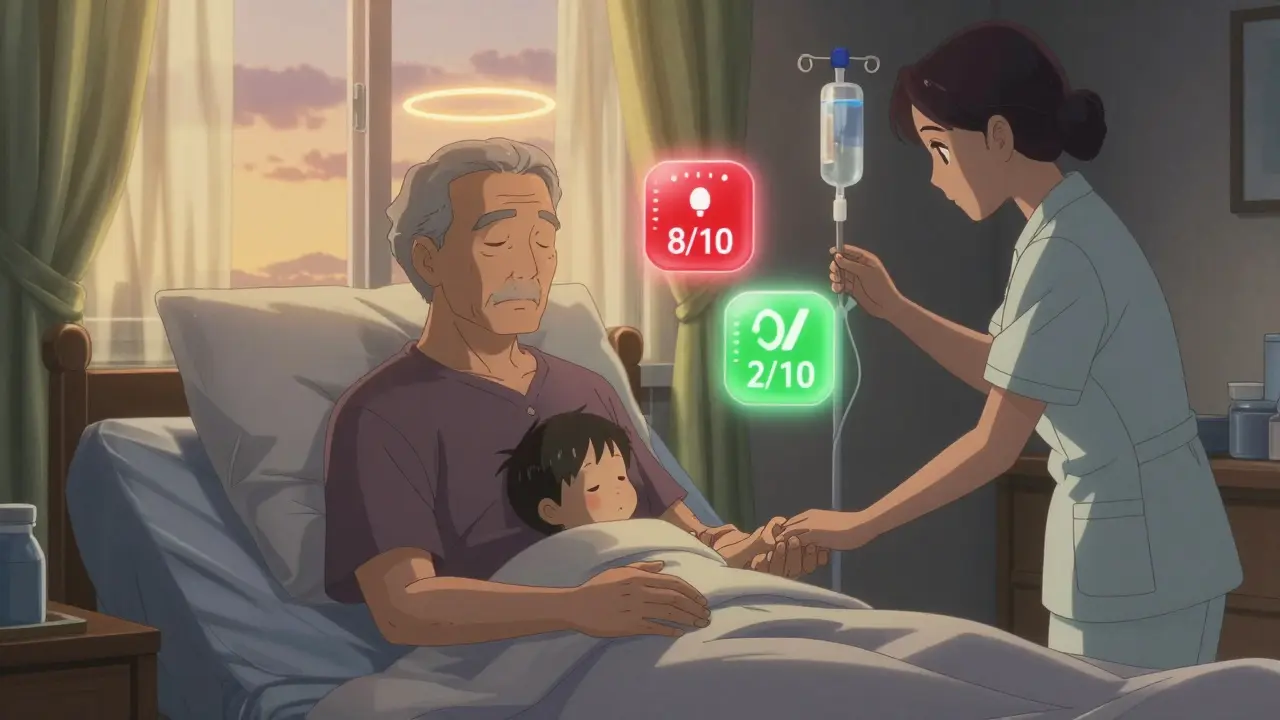
Good palliative care tracks symptoms daily. Pain on a scale of 0 to 10. Breathlessness. Nausea. Anxiety. Sleep. Mood. A patient who goes from 8/10 pain to 2/10? That’s success. A patient who can sit up, eat a spoonful of ice cream, or hold their grandchild’s hand? That’s success.
Tools like the NHS’s body diagram help patients point to where it hurts. A 31% improvement in communication? That’s huge. It means fewer mistakes. Fewer missed symptoms.
One nursing home in the UK saw a 37% jump in staff confidence after using a simple palliative care checklist. Fewer panic calls. More calm moments.
But there’s a dark side: documentation. Nurses say 68% don’t have time to fill out all the forms. That’s a problem. If you don’t write it down, you can’t adjust it. And if you don’t adjust it, side effects win.
What’s Changing in Palliative Care Right Now?
The field is evolving - fast.
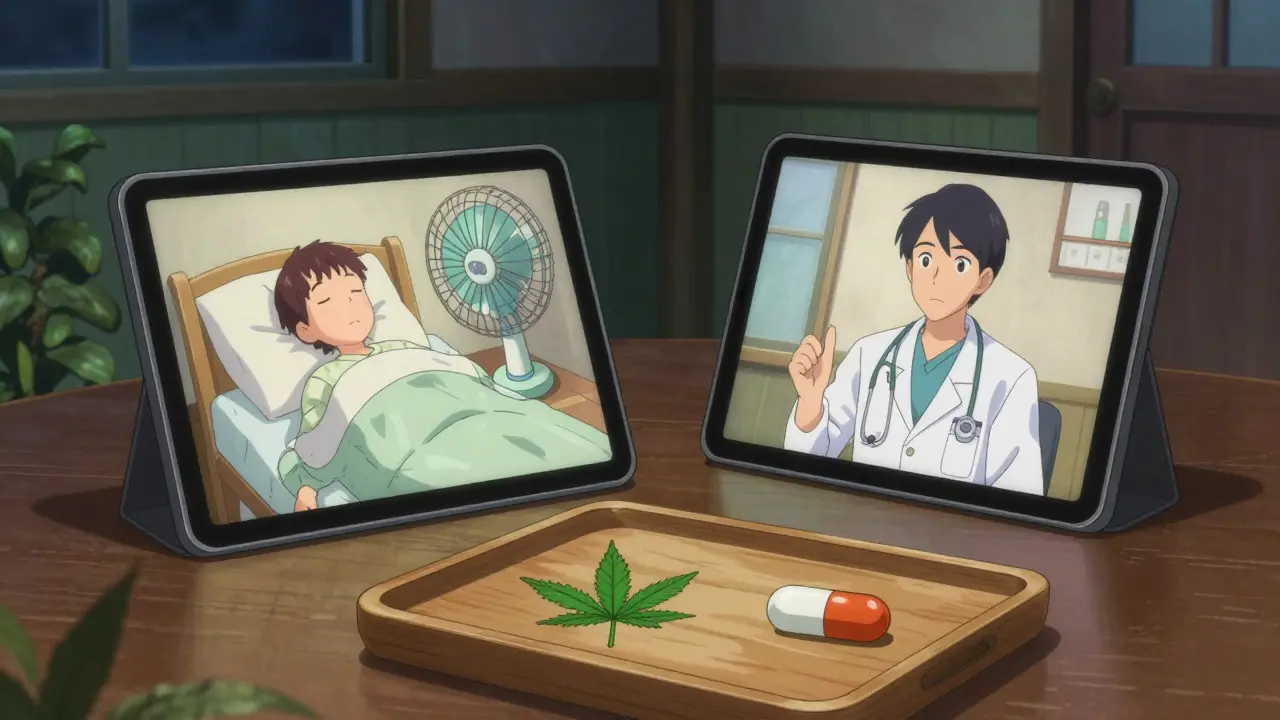
Tele-palliative care is growing. In rural areas, 55% of counties have no specialist. Now, video calls let patients in remote towns get expert advice. By 2027, that could reach 40% of rural patients.
New tools are being tested. Apps that let patients report pain with one tap. Sensors that track breathing patterns. AI that flags when a patient’s symptoms are worsening before the family even notices.
And then there’s cannabis. Fraser Health added guidelines in 2023. In one study, 37% of patients needed less opioid pain meds when using cannabinoids. But 29% got dizzy. It’s not magic. It’s another tool - with risks.
The big shift? From “just treat the pain” to “treat the whole person.” That means spiritual care. Social support. Family counseling. Addressing guilt, regret, fear. Dr. Harvey Chochinov’s work shows that when people feel heard - their physical pain often drops.
And the workforce? Still short. Only 7,000 certified palliative doctors in the U.S. for 22,000 needed. That’s why every nurse, every GP, every family member needs to understand the basics.
What Should You Do If You’re Facing This?
If you or someone you love is dealing with a serious illness:
- Ask for palliative care early - even if you’re still getting treatment.
- Keep a symptom diary: pain level, sleep, appetite, mood. Bring it to appointments.
- Don’t be afraid to say, “I don’t want him to be drowsy all day.” Or “Can we try less medication?”
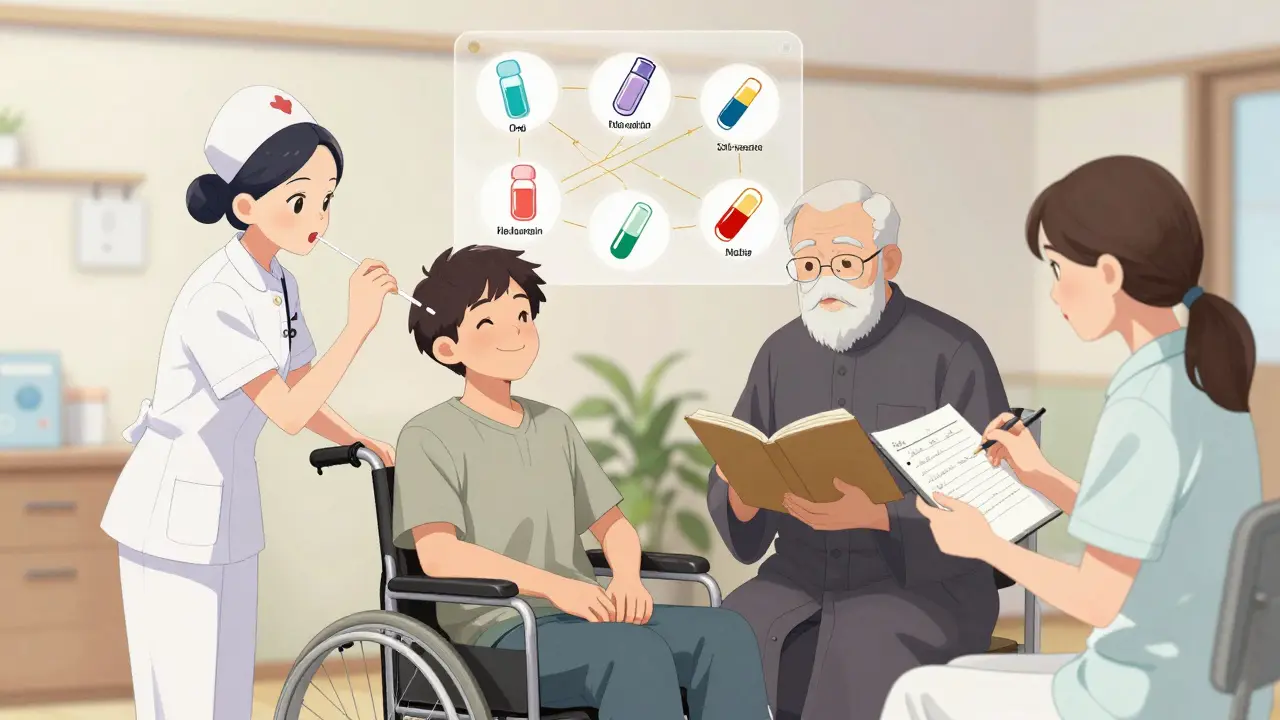
- Ask who’s on the team. Is there a social worker? A chaplain? A pharmacist who knows about drug interactions?
- Know that comfort isn’t weakness. It’s the most powerful thing you can give.
There’s no perfect answer. But there’s a better way - one that puts peace before prolonging, and dignity before drugs.
Is hospice care only for cancer patients?
No. Hospice care is for anyone with a life-limiting illness who has chosen comfort over cure. That includes heart failure, lung disease, kidney failure, advanced dementia, ALS, and other serious conditions. The six-month prognosis rule applies to all of them. Cancer is just the most common reason people think of hospice - but it’s far from the only one.
Can you leave hospice care if you change your mind?
Yes. Hospice is not a one-way door. If a patient’s condition improves - or if they decide to try another treatment - they can leave hospice at any time. They can re-enroll later if needed. Many patients do. It’s not a surrender. It’s a choice - and choices can change.
Do opioids shorten life?
No. When used properly, opioids don’t speed up death. In fact, uncontrolled pain can stress the body and make illness worse. Studies show that patients with well-managed pain live longer and have better quality of life. The fear that morphine “kills” comes from misunderstanding. Dosing is carefully adjusted - never rushed. The goal is comfort, not sedation.
What if my loved one refuses to take medication?
Respect their choice. Forcing medication can cause more distress than the symptom itself. Instead, ask why. Is it fear? Side effects? A belief that suffering is noble? Work with the palliative team to find alternatives - patches, suppositories, non-drug options like massage, music, or cooling fans. Sometimes, just being present is the most powerful medicine.
Are there non-drug ways to manage symptoms?
Yes - and they’re often overlooked. For breathlessness: a fan on the face, sitting upright, open windows. For pain: heat, cold packs, gentle touch, music. For anxiety: familiar voices, photos, holding hands. For nausea: ginger tea, peppermint oil, quiet rooms. These don’t replace meds - but they reduce the need for them. And that means fewer side effects.





Posts Comments
MANI V February 8, 2026 AT 03:33
Let me tell you something-people don’t need hospice care, they need to fight harder. My uncle had lung cancer and he refused to give up. He kept chemo, kept going, kept living. And now? He’s alive at 82. You don’t medicate someone into oblivion-you help them push through. This whole ‘comfort over cure’ thing is just surrender dressed up as compassion. Weakness masquerading as wisdom.
Susan Kwan February 9, 2026 AT 12:17
Oh honey, I’m so glad you mentioned the dry mouth thing. Because no one ever talks about how awful it is to have cotton in your throat while your daughter reads you poetry. I watched my mom go through this. The nurses gave her ice chips and lip balm. That’s it. No fancy meds. Just presence. And honestly? That’s what mattered more than the morphine.
Random Guy February 10, 2026 AT 02:48
so like… i just watched my grandpa on hospice and he was basically a zombie for 3 days. like, he’d blink once every 20 minutes. i asked the nurse if the meds were too much and she said ‘he’s peaceful.’ peace? bro he looked like a mannequin at a funeral home. why not just let him be alert and in pain? at least he’d know we were there.
Tasha Lake February 11, 2026 AT 03:41
From a clinical standpoint, the opioid titration protocols referenced here are aligned with ASCO and NCCN guidelines-particularly the use of equianalgesic dosing and renal/hepatic adjustment. But what’s under-discussed is the pharmacokinetic variability in elderly patients with polypharmacy. For example, a patient on concurrent CYP3A4 inhibitors (like ketoconazole or clarithromycin) can experience 300% increased opioid exposure. That’s why bedside pharmacists are critical. We need more integration-not just ‘more nurses.’
Andy Cortez February 12, 2026 AT 10:10
you know what’s funny? people act like opioids are some kind of magic death potion. like, if you give someone morphine, they just… vanish? nope. they just stop screaming. i had a cousin on hospice who could finally hold my hand again after 2 weeks of constant moaning. that’s not dying. that’s living. and if you’re too scared to let someone be comfortable… maybe you’re the one who needs the sedative.
Jacob den Hollander February 12, 2026 AT 18:21
Thank you for writing this. I’m a chaplain in a rural hospice, and I’ve seen families break down because they think pain meds mean giving up. But when we sit with them and say, ‘Your mom smiled for the first time in three days after we adjusted her dose’-they get it. It’s not about death. It’s about connection. And sometimes, the quietest moments are the most sacred. We don’t need more drugs. We need more time. More listening. More holding hands. That’s the real medicine.
Andrew Jackson February 14, 2026 AT 04:42
It is a profound moral failing of modern American medicine to equate comfort with dignity. The Founding Fathers did not envision a society where citizens are chemically subdued to avoid discomfort. True dignity lies in endurance. In resilience. In the unyielding will to confront suffering with courage-not with pharmaceutical sedation. This article is a symptom of a culture that has lost its spine.
PAUL MCQUEEN February 14, 2026 AT 07:49
87% of GPs miss the dosing adjustments? Really? That’s your big stat? I’ve been in this field 15 years. Most palliative docs are just glorified pain managers with fancy titles. The real issue? No one teaches families how to talk about death. They just hand out opioids and call it a day. Lazy.
Tricia O'Sullivan February 15, 2026 AT 11:44
Thank you for the clarity. In Ireland, we’ve had palliative care integrated into primary care since 2015. It’s not about the drugs-it’s about the system. A GP who knows the patient’s history, the family dynamics, the unspoken fears-that’s what changes outcomes. Not the morphine. Not the checklist. The relationship.
Brandon Osborne February 17, 2026 AT 04:56
LET ME TELL YOU ABOUT MY MOM. SHE WAS ON THREE ANTI-NAUSEA DRUGS AT ONCE. THREE. AND THEY GAVE HER A STEROID FOR SWELLING. SHE WAS SCREAMING AT THE WALLS. SHE THOUGHT THE DOG WAS TALKING. I HAD TO HOLD HER HAND FOR THREE HOURS UNTIL THE HALOPERIDOL KICKED IN. AND THEN SHE SMILED. AND SAID ‘I LOVE YOU.’ AND I THOUGHT-THIS IS WHAT THEY MEAN BY COMFORT. BUT NO ONE TOLD ME IT WOULD BE LIKE THIS. NO ONE.
Lyle Whyatt February 18, 2026 AT 13:42
I’ve been a hospice volunteer for 12 years. Let me tell you-non-drug interventions are the unsung heroes. One man with COPD? Couldn’t breathe. We opened the window, turned on a fan, played his favorite jazz playlist-Frank Sinatra-and he slept for six hours straight. No oxygen, no meds. Just air, music, and silence. Another woman? Had dry mouth so bad she couldn’t swallow. We used chilled mint-infused swabs. She cried. Said it was the first time in weeks she felt clean. These aren’t gimmicks. They’re grace. And they cost nothing.
Frank Baumann February 19, 2026 AT 18:07
They say ‘comfort over cure’ like it’s some noble truth. But what about the people who want to live? What about the ones who say ‘I’m not ready’? We’re pushing people into hospice too fast. Too easy. Too convenient. Insurance wants them out of hospitals. Families want the guilt gone. Doctors want to stop fighting. But what about the patient? The one who’s still fighting? They get lost in the paperwork. And then they die alone because no one had the guts to say: ‘Let’s try one more thing.’
Chelsea Deflyss February 20, 2026 AT 00:24
why do u always say ‘dignity’ like its a magic word? my grandma was on hospice and she kept trying to get up to clean the kitchen. she was confused. she thought it was 1987. they gave her antipsychotics and she stopped talking. i miss the woman who yelled at the tv. not the quiet ghost they turned her into.
Write a comment