
Drug Allergy Assessment Tool
Assess Your Eligibility for Drug Desensitization
This tool helps determine if drug desensitization might be appropriate for your allergy situation based on the information in the article. Remember, this is not a medical diagnosis. Always consult with a specialist.
Imagine being told you can’t take a life-saving antibiotic because you had a rash ten years ago. Or that your only effective chemotherapy drug is off-limits due to a single bad reaction. For thousands of people, this isn’t hypothetical-it’s reality. But there’s a way out: drug desensitization. It’s not a cure. It’s not a workaround. It’s a carefully controlled medical process that lets your body temporarily tolerate a drug you’re allergic to. And when done right, it works more than 95% of the time.
What Exactly Is Drug Desensitization?
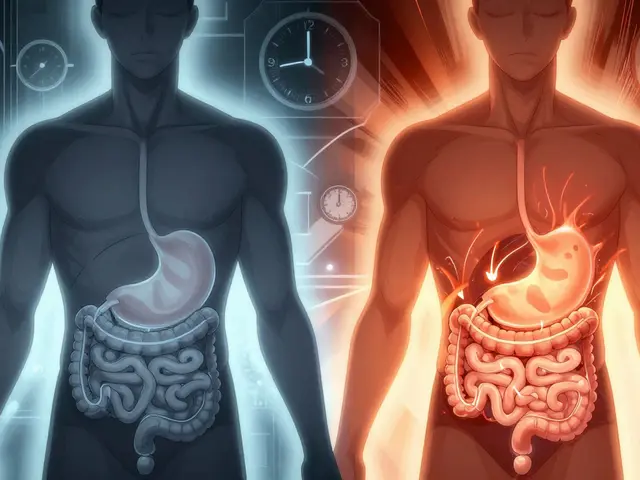
Drug desensitization isn’t about changing your immune system forever. It’s about tricking it-temporarily-into not reacting. The goal? Let you get the medicine you need, even if your body says no. This technique was first developed in the 1960s at the National Institutes of Health and later refined by Dr. Mariana Castells at Brigham and Women’s Hospital. Today, it’s used when there’s no alternative. When skipping the drug means risking death, serious infection, or cancer progression.The science is simple: give tiny, increasing doses of the drug over hours. Start with a dose so small-like one ten-thousandth of the full amount-that your immune system barely notices. Then, every 15 to 30 minutes, increase the dose. Slowly. Carefully. Under constant watch. By the end of the process, you’ve received the full therapeutic dose. And your body, for now, doesn’t react.
This only works for certain types of reactions. If you broke out in hives, felt dizzy, or had trouble breathing within minutes of taking a drug, desensitization is likely your best option. These are IgE-mediated reactions-the kind that show up fast. But if you got a blistering skin rash weeks later, like Stevens-Johnson syndrome? Desensitization won’t help. It’s too dangerous.
When Do Doctors Recommend It?
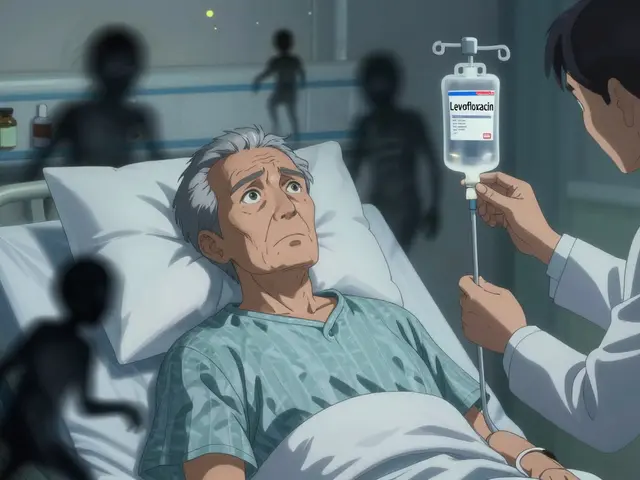
Doctors don’t turn to desensitization lightly. It’s not for every allergy. It’s for when the drug is essential-and nothing else works.Take antibiotics. Penicillin is one of the most common drugs people say they’re allergic to. But studies show up to 90% of those people aren’t truly allergic anymore-either the reaction was misdiagnosed, or their immune system outgrew it. Still, if you’re one of the 10% who really react, and you have a serious infection like osteomyelitis or endocarditis, penicillin is often the most effective treatment. Substitutes? They’re weaker. They cause more side effects. They might not even work. Desensitization lets you take the best drug, safely.
In cancer care, it’s even more critical. Drugs like paclitaxel (Taxol) and carboplatin are backbone treatments for breast, ovarian, and lung cancers. But up to 20% of patients develop reactions to them. Premedication with antihistamines and steroids helps some-but fails in 10% of cases. Desensitization? Success rate: 98%. A 2022 study at Brigham and Women’s Hospital followed 42 patients needing penicillin after a prior reaction. Every single one completed their full course. No deaths. No anaphylaxis. Just mild flushing or itching in a few.
Monoclonal antibodies-used in autoimmune diseases and cancer-are another big use case. Drugs like rituximab or trastuzumab can trigger severe reactions. Desensitization allows patients to keep getting them without switching to less effective alternatives.
The bottom line: if your life depends on the drug, and there’s no good substitute, desensitization is the path forward.
Rapid vs. Slow Desensitization: What’s the Difference?
Not all desensitization is the same. There are two main types, chosen based on how your body reacted.Rapid Drug Desensitization (RDD) is for immediate reactions-hives, swelling, low blood pressure, trouble breathing. It’s done in a hospital, usually intravenously. The standard protocol? Twelve steps. Start at 1/10,000th of the full dose. Double the amount every 15 minutes. By the end of 4 to 6 hours, you’ve reached the full therapeutic dose. This is the go-to for antibiotics, chemotherapy, and monoclonal antibodies. Success rate? 95-100% when done properly.
Slow Drug Desensitization (SDD) is for delayed reactions. Think rashes, fever, or organ inflammation that shows up days after taking the drug. These are T-cell mediated, not IgE-driven. There’s no standard protocol. Doses might be given every few hours, or even daily. Oral aspirin desensitization for asthma patients? That can take two to three days. Each step is smaller. The intervals are longer. The goal is the same: teach the body not to react. But it’s slower, more unpredictable, and less studied. Success rates? Around 60-75%, depending on the drug and reaction type.
Route matters too. IV is most common for antibiotics and chemo-70% of cases. Oral is used for aspirin, NSAIDs, and some antibiotics. Each route has its own timing rules. IV doses can be given every 20 minutes. Oral? At least an hour apart. For aspirin, sometimes you wait 24 hours between doses.
What Happens During the Procedure?
Desensitization isn’t something you do at home. Not even close. It requires a full medical team.You’ll be in a hospital or specialized allergy clinic. Monitors track your blood pressure, heart rate, oxygen levels, and breathing. Nurses check in after every dose. An allergist or immunologist is there the whole time-ready to stop the process or treat a reaction immediately.
Before you start, they’ll review your history. What happened? When? How bad? Did you need epinephrine? They’ll rule out other causes-like infection or drug interactions. Then they’ll pick the right protocol. Not all drugs have the same guidelines. Taxol? One set of steps. Penicillin? Another. Carboplatin? Different again.
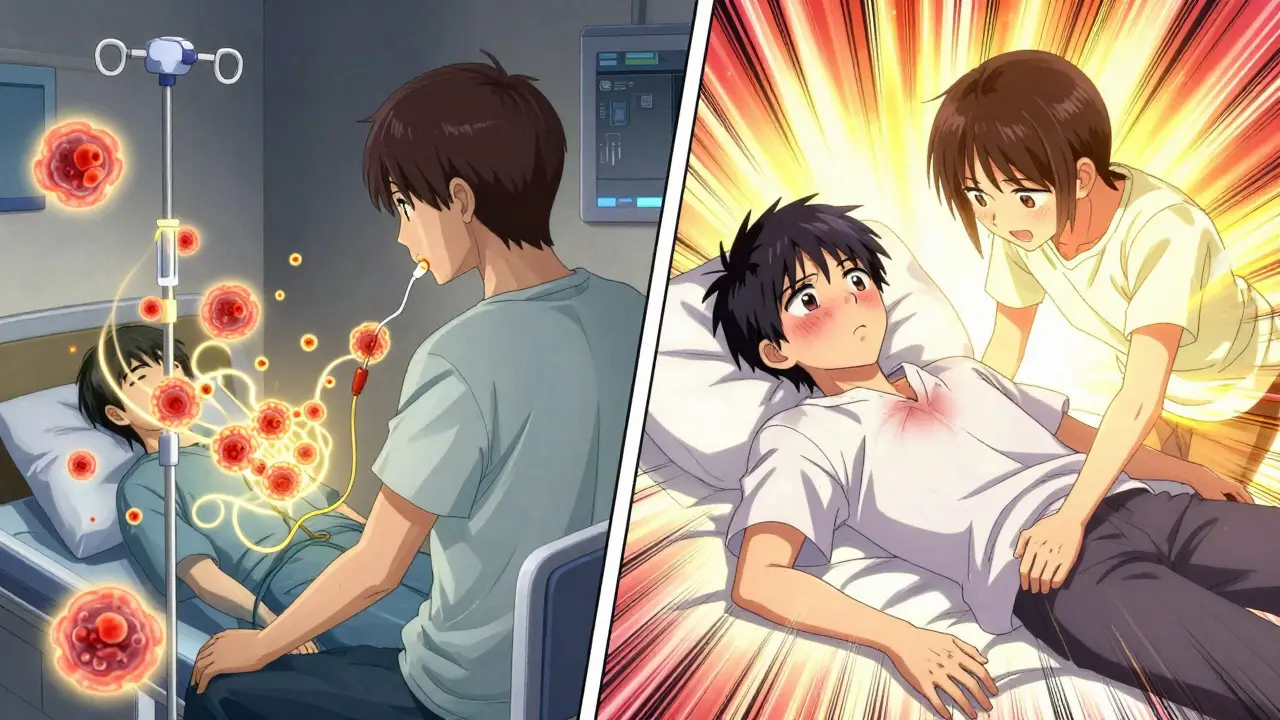
The actual process is tense. You’re awake. You feel the drip. You might feel warm, itchy, or a little lightheaded. That’s normal. The team watches for signs of escalation. If you develop wheezing or a drop in blood pressure, they pause. They give you antihistamines or steroids. They might slow down the dose increase. Or stop entirely.
After you reach the full dose, you’re usually monitored for another hour. Then you can go home-if it was an outpatient procedure. But here’s the catch: the tolerance doesn’t last. If you stop taking the drug for more than 48 hours, you’ll need to go through the whole process again. Every time.
Why Not Just Use Another Drug?
It sounds easier. Avoid the problem. Take something else.But here’s the reality: alternatives often don’t work as well.
For penicillin allergies, switching to a cephalosporin sounds fine. But cross-reactivity? It’s real. Up to 20% of people allergic to penicillin react to certain cephalosporins too. That’s not a safe swap. Vancomycin? It’s harsher on the kidneys. It takes longer. It’s less effective for some infections.
In oncology, the choices are even narrower. If you react to carboplatin, your next option might be cisplatin-which causes worse nausea, nerve damage, and kidney problems. Or you skip chemotherapy entirely. That’s not a trade-off most patients are willing to make.
Premedication-giving antihistamines and steroids before the drug-is sometimes used. But it’s not reliable. In one study, 4 out of 40 cancer patients still had severe reactions despite premedication. Desensitization cut that risk to less than 2%.
Desensitization isn’t about convenience. It’s about access. It’s about giving people the best possible treatment-even if their body once said no.
Who Shouldn’t Try It?
Desensitization is powerful-but not for everyone.It’s absolutely contraindicated in patients who’ve had severe delayed reactions like Stevens-Johnson syndrome or toxic epidermal necrolysis. These are life-threatening skin conditions. Trying to desensitize someone who’s had them is like lighting a match near gasoline. The American Academy of Allergy, Asthma & Immunology (AAAAI) gives a strong recommendation against it in these cases.
It’s also risky if you have unstable asthma, heart disease, or are on beta-blockers. These conditions make it harder to treat a reaction if one happens.
And it’s not something you can do in a regular doctor’s office. You need an allergist with specific training, a team ready for anaphylaxis, and the right equipment. Community hospitals often lack this. A 2021 survey found that 12% of adverse events happened because non-specialists tried it without proper support. Complication rates tripled.
Even with experts, it’s not foolproof. About 30-40% of slow desensitization attempts fail. That’s why careful patient selection is critical.
What Are the Risks?
Yes, it’s safe-when done right. But “safe” doesn’t mean “risk-free.”Severe reactions during desensitization happen in less than 2% of cases. Most are mild: itching, flushing, nausea. A few patients get low blood pressure or wheezing. But because the team is watching closely, they catch it early. Epinephrine is right there. Oxygen is ready. IV fluids are on standby.
The bigger risk? Doing it wrong. Improper dosing. Skipping steps. Not monitoring. Using a generic protocol when a drug-specific one is needed. A 2020 study found that 8% of errors came from incorrect drug dilution. Another 15% were due to picking the wrong patient.
That’s why standardized kits and checklists are now standard in top centers. Electronic checklists reduce selection errors by 60%. Simulation training boosts protocol adherence from 78% to 96%.
And then there’s the cost. Each procedure takes 4.2 nursing hours and 1.8 physician hours. Insurance only covers about 60% of the cost. Many small hospitals can’t afford it.

What Do Patients Say?
The feedback from patients who’ve gone through it? Overwhelmingly positive.In one study, 92% of cancer patients called desensitization “life-saving.” One Reddit user, u/PenicillinWarrior, wrote: “After 20 years of being labeled allergic, the 4-hour protocol let me finally take the best antibiotic for my osteomyelitis.”
Another, u/ChemoSurvivor, shared: “My hospital didn’t have the proper dilution kits-took 3 attempts before they got it right.” That’s the downside. If the team isn’t experienced, it’s messy. Stressful. Time-consuming.
Patients report anxiety before the procedure. Sixty-three percent said they were nervous. The process takes 4.7 hours on average for IV antibiotics. You’re stuck in a chair. Monitored constantly. It’s not relaxing.
But afterward? Relief. Gratitude. Freedom. They can finish their treatment. They can get better. They can live.
The Future of Desensitization
This isn’t a dead-end technique. It’s evolving fast.In 2023, the AAAAI released standardized national protocols-finally unifying 12 conflicting guidelines. That’s a big step toward consistency.
Researchers are now testing biomarkers to predict who will respond. A 2023 Lancet study showed basophil activation tests can predict success with 89% accuracy. That means we might soon know-before starting-if desensitization will work for you.
Home-based desensitization? Phase 2 trials show 92% success for stable patients. Imagine doing it in your living room, under remote supervision. It’s not mainstream yet, but it’s coming.
And in five years? Dr. Castells predicts we’ll use genetic and immunologic profiling to choose the right protocol for each person. Personalized desensitization. Tailored to your immune system.
The market is growing, too. Valued at $1.2 billion in 2022, it’s expected to grow nearly 13% a year through 2030. More cancer drugs. More resistant infections. More need.
Desensitization isn’t magic. It’s medicine at its most precise: calculated, monitored, and life-saving.
Final Thoughts
If you’ve been told you’re allergic to a drug that could save your life, don’t accept “no” as the final answer. Ask for a referral to an allergist or immunologist. Ask if desensitization is an option. It’s not for every allergy. But for the right person, at the right time, it’s the only path forward.It’s not easy. It’s not quick. But it’s effective. And in medicine, that’s what matters most.



Posts Comments
Michael Dillon December 26, 2025 AT 07:04
I've seen this done twice in my family. One worked, one didn't. The hospital didn't have the right protocol for the second one. They just winged it. That's the problem with this whole thing-it's not standardized everywhere. And when it fails, people die.
Gary Hartung December 27, 2025 AT 18:42
Ah, yes. The modern medical establishment's answer to biological unpredictability: brute-force tolerance via incremental poisoning. A triumph of engineering over physiology. How... elegant. The irony, of course, is that we're now treating immune systems as if they're faulty software that can be patched with a firmware update.
Ben Harris December 27, 2025 AT 21:44
I had this done for Taxol after my first reaction turned into a full-blown panic attack and my nurse had to hold me down. The worst part wasn't the itching or the flushing. It was the silence. Everyone in the room just stared at the IV drip like it was a ticking bomb. And when I got to the full dose? No one clapped. No one said congratulations. Just a nurse handing me a water bottle and a look like I'd just survived a war zone
Jason Jasper December 28, 2025 AT 11:28
I'm an immunologist and I've overseen over 50 desensitizations. The key isn't just the protocol-it's the patient's mental state. If they're terrified, their cortisol spikes and the reaction risk goes up. We now do pre-procedure breathing exercises. Small change. Huge difference.
Linda B. December 29, 2025 AT 16:54
This is all part of the pharmaceutical industry's grand plan. They know people will panic if they can't get the branded drug. So they push desensitization to keep you dependent. They don't want you to find alternatives. They want you hooked. And they charge $12,000 a session to do it. Coincidence? I think not.
Mussin Machhour December 31, 2025 AT 01:19
If you're reading this and you're scared about this procedure-don't be. I did it for carboplatin. It felt weird, yeah. But I got to keep living. My kids are still growing up. That’s worth a few hours in a hospital chair. You got this.
Christopher King January 1, 2026 AT 20:26
We are playing god with biology. We are not healing. We are overriding nature with a stopwatch and a syringe. The immune system is not a glitch. It is a warning. And we are silencing it with chemicals. What happens when we silence every warning? When the next time it screams, no one listens anymore?
Bailey Adkison January 3, 2026 AT 00:13
The article says desensitization works 95% of the time. That’s misleading. It works 95% of the time in controlled hospital settings with expert teams. In community clinics? More like 60%. And that’s if they even use the right protocol. Stop overselling it. The data is there. Read the studies.
Oluwatosin Ayodele January 3, 2026 AT 06:58
In Nigeria, we don’t have this luxury. We have one hospital in Lagos that even knows what desensitization is. The rest? They give you an alternative or tell you to go home. I lost my sister because they couldn’t do this for her penicillin allergy. This isn’t medicine. It’s a privilege.
Lindsay Hensel January 4, 2026 AT 20:38
Desensitization is not a cure. It is a bridge. A fragile, monitored, deeply human bridge between death and survival. And it is, in every sense, a miracle of precision.
Carlos Narvaez January 5, 2026 AT 22:44
The fact that this isn't standard in every ER is criminal. We treat anaphylaxis like an emergency. But we don't prevent it? That's like having fire extinguishers but refusing to install smoke detectors.
Harbans Singh January 7, 2026 AT 18:32
I'm from India and we don't have access to this. But I've seen people die because they couldn't get the right chemo. I wish someone would make this affordable and teach it to more doctors. Not everyone needs to be in Boston to live.
Justin James January 9, 2026 AT 06:05
You know what they don't tell you? That after you finish desensitization, they never tell you what happens if you get sick again in six months. Do you have to go through it again? What if you're pregnant? What if you're in a car accident and they need to give you morphine? Is your immune system now permanently confused? Or are you just one bad reaction away from being labeled allergic again? And who's keeping the records? The hospital? The insurance company? The FDA? Nobody. That's the real horror story.
Write a comment