
If you wake up every morning with a stuffy nose, itchy eyes, or that constant post-nasal drip - even when it’s not allergy season - you’re not imagining it. The culprit might be hiding right under your sheets. Dust mites are tiny, invisible bugs that live in your mattress, pillows, and blankets, feeding on the skin flakes you shed every night. They don’t bite. They don’t crawl on you. But their waste? That’s what triggers sneezing, wheezing, and worse for millions of people. And the worst part? Most of what you’ve been told about getting rid of them is wrong.
Why Dust Mites Are Worse Than You Think
Dust mites aren’t dirt. They’re living creatures - specifically, two types: Dermatophagoides farinae and a species of dust mite commonly found in household dust, especially in bedding and upholstered furniture and Dermatophagoides pteronyssinus and a species of dust mite that thrives in warm, humid environments and is a major trigger for allergic reactions. Each one lives for about 2-3 months, and during that time, a single female can lay up to 100 eggs. A typical mattress can hold anywhere from 100,000 to 10 million of them. Their poop? It’s the real problem. One gram of dust can contain up to 2,000 mites and 2 million fecal particles. That’s the allergen that sets off your immune system like a fire alarm.And here’s the kicker: you spend 6 to 8 hours a night right in the middle of it. Your pillow is basically a mite buffet. The warmth and moisture from your body make your bed the perfect breeding ground. The American College of Allergy, Asthma, and Immunology says dust mites are the number one year-round indoor allergen. That’s why symptoms don’t just show up in spring - they’re there every day.
The Only Three Things That Actually Work
Forget the sprays, the ultraviolet wands, the expensive air purifiers that claim to “kill mites.” The science is clear: only three methods have proven, measurable results. Everything else is noise.- Wash bedding weekly at 130°F (54.4°C) - Cold water does nothing. Lukewarm water? Only gets rid of about 75% of allergens. But at exactly 130°F, you kill 100% of the mites and denature their allergens. This isn’t optional. If you’re not washing your sheets, pillowcases, and blankets at this temperature every week, you’re wasting your time. Use a full load - no more than half the machine’s capacity - and make sure the detergent is enough (30-40ml per load). Don’t skip the dryer. Even if you wash in hot water, drying on high heat for 15 minutes ensures any surviving mites are gone.
- Keep humidity below 50% - ideally 45% or lower - This is the most powerful tool you have. Dust mites can’t survive without moisture. They absorb water from the air. When humidity drops below 55%, they start to die off. Below 50%, their population crashes. Below 45%, you’ll see a 90% reduction in just two weeks. That’s not a guess. That’s from the Journal of Allergy and Clinical Immunology and a peer-reviewed medical journal that publishes research on allergic diseases and clinical immunology. You need a digital hygrometer - not the cheap one that came with your thermostat - placed right at bed level. If your home’s humidity creeps above 50% during winter or after a rainy day, you need a dehumidifier. A good one costs $150-$250, but it’s the single best investment you’ll make for allergy relief.
- Use certified mattress and pillow encasements - These aren’t regular zippered covers. They need to be made of fabric with pores smaller than 10 micrometers - small enough to block mites and their waste. Look for products certified by the Asthma and Allergy Foundation of America and a nonprofit organization that provides education and advocacy for people with asthma and allergies or tested to withstand 10,000 abrasion cycles. Cheaper ones tear after a few months and become useless. You’re paying for durability. These covers should go on your mattress, box spring, and pillows. Don’t forget the duvet. If you use a comforter, get one with a removable, washable cover.
Combine all three, and you can reduce allergen levels by 80-90%. That’s the difference between waking up miserable and sleeping through the night.
What Doesn’t Work (And Why You’re Wasting Money)
There’s a whole industry built on selling you quick fixes. Let’s clear the air.- HEPA vacuums alone? Not enough. Yes, they capture allergens better than regular vacuums. But they don’t kill mites. If you vacuum once a week but keep your humidity at 60%, the mites come back in days. HEPA vacuuming gets you maybe 60-70% reduction - good, but not enough. Use it as a supplement, not your main weapon.
- Chemical sprays (like tannic acid)? Moderately helpful, but temporary. These can break down allergens on surfaces, but they don’t touch mites living deep in your mattress. Plus, they wear off in weeks. And if you’re spraying your pillow, you’re breathing in chemicals. Not worth the risk.
- Freezing stuffed animals or pillows? It works - if you freeze them for 24 hours. But most people don’t have the space or time to do this weekly. It’s a band-aid for occasional items, not a long-term solution.
- Carpet removal? Huge win - if you can do it. Carpets trap mites like a sponge. Removing them and replacing with hardwood, tile, or vinyl can reduce allergens by 90%. But if you’re renting or can’t afford it, focus on the three core methods above. You’ll still see big results.
- Essential oils, salt lamps, air purifiers? Zero evidence. They might smell nice, but they won’t touch dust mites.
Here’s what most people get wrong: they try one thing - maybe a new vacuum or a spray - and when it doesn’t fix everything, they give up. That’s why 41% of users think washing bedding every two weeks is enough. It’s not. You need all three: hot wash, low humidity, and encasements. Together, they work. Alone, they don’t.
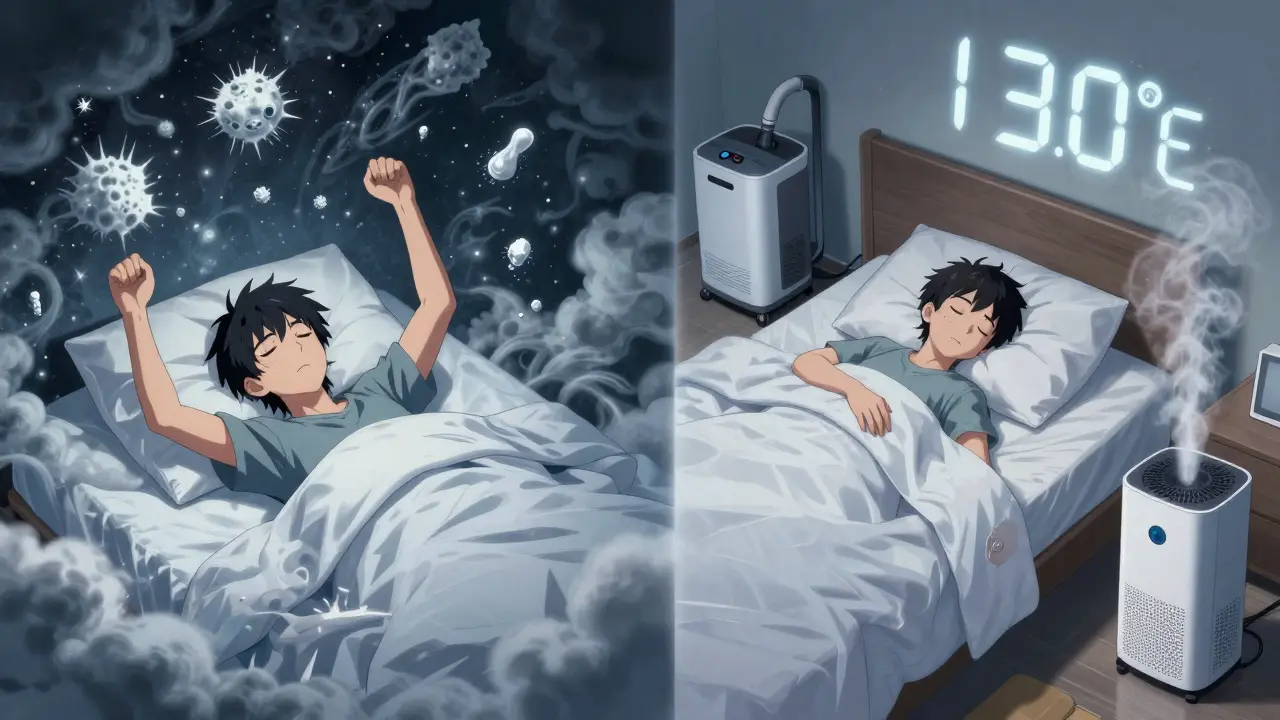
Your Weekly Routine (Simple, No Guesswork)
You don’t need to spend hours. Just stick to this 90-minute weekly plan:- Monday morning: Wash all bedding - sheets, pillowcases, duvet covers - at 130°F. Dry on high heat for at least 15 minutes.
- Monday afternoon: Vacuum your mattress with a HEPA vacuum. Go slowly - one foot per second. Pay attention to seams and edges where mites hide. Also vacuum your upholstered furniture and curtains.
- Monday evening: Check your hygrometer. If humidity is above 50%, turn on your dehumidifier. Let it run overnight. Keep it set to 45%.
- Wednesday: Damp-mop hard floors. Dust with a microfiber cloth - dry dusting just kicks allergens back into the air.
- Every day: Keep your bedroom temperature between 68-72°F. Don’t let it get too warm. Heat + moisture = mite paradise.
That’s it. No magic. No expensive gadgets. Just consistency.
Cost Breakdown - What You Really Need to Spend
You don’t need to break the bank. Here’s what you actually need to buy:- Two mattress encasements: $120-$180 (look for certified, 10-micron pore size)
- Two pillow encasements: $40-$60
- Digital hygrometer: $25 (get one that reads ±2% RH)
- Dehumidifier (for bedroom): $150-$250 (30-pint capacity or higher)
- HEPA vacuum: $180-$300 (if you don’t have one already)
Total: $500-$600. That’s a one-time cost. Compare that to years of antihistamines, doctor visits, and sleepless nights. Most people who stick with this see major improvement in 2-4 weeks. The biggest complaint? The upfront cost. But users on Reddit and Asthma UK forums say the same thing: “Worth every penny.”

What If You Can’t Control Humidity?
If you live in a humid climate or rent a place with poor ventilation, humidity control gets harder. But it’s still possible.- Use a dehumidifier even if it’s not in your bedroom - place it in the hallway or living room. Mites spread from room to room.
- Open windows only when outdoor humidity is lower than indoors. In the UK, that’s usually in winter. Avoid opening windows on damp, foggy days.
- Run your bathroom fan for 30 minutes after every shower. Moisture doesn’t vanish - it lingers.
- Consider a smart thermostat with humidity control. Some can link to your HVAC system to automatically reduce moisture.
- If your home has a concrete floor or basement, moisture can rise. Use a vapor barrier under rugs or consider professional damp-proofing if you’re a homeowner.
63% of people in a Mayo Clinic survey needed help from an HVAC pro to get humidity under control. Don’t be afraid to call one. It’s not a luxury - it’s part of your allergy treatment plan.
Long-Term Outlook
Climate change is making this worse. Warmer, wetter winters mean dust mites are spreading into areas where they used to die off. The Lancet Planetary Health and a peer-reviewed scientific journal focused on planetary health and environmental impacts on human health predicts a 20% increase in dust mite populations in temperate regions by 2040. That means more people will suffer. But the good news? The tools we have now are better than ever. The science is solid. The methods are proven. You don’t need to wait for a miracle cure. You just need to do the basics - correctly and consistently.Can I just wash my bedding in cold water if I use a dehumidifier?
No. Cold water doesn’t kill dust mites or remove their allergens effectively. Even with low humidity, allergens from dead mites remain in your bedding and can still trigger reactions. You need hot water (130°F) to denature the proteins that cause allergies. A dehumidifier helps prevent new mites, but doesn’t clean what’s already there.
Do dust mite covers work on memory foam mattresses?
Yes, as long as they’re properly fitted and have a pore size under 10 micrometers. Memory foam mattresses trap heat and moisture, making them even more attractive to mites. A certified encasement is even more important here. Make sure the cover is breathable and doesn’t trap heat - look for ones with moisture-wicking fabric.
How often should I replace my mattress encasements?
High-quality encasements made of durable, certified fabric can last 5-7 years if washed properly. Cheaper ones may tear or lose effectiveness after 6-12 months. Check for micro-tears, especially around zippers. If you can see light through the fabric, it’s no longer blocking mites.
Is it true that dust mites can live in my clothes?
They can, but not for long. Dust mites need consistent warmth and moisture - like what you provide in your bed. Clothes you wear daily are usually too dry and too cold. But if you leave dirty laundry piled up in a damp closet, mites can settle there. Wash clothes regularly, especially if they’ve been sitting for days. Don’t store damp towels or gym clothes in closed bags.
Can pets bring in dust mites?
Pets don’t carry dust mites on their fur. Mites live in fabric, not on animals. But pets do shed skin flakes - which is what mites eat. If your pet sleeps on your bed, they’re adding more food for the mites. Wash pet bedding weekly in hot water, and keep pets off the bed if you’re sensitive.
Next Steps
Start today. Buy a $25 hygrometer. Check your bedroom right now. If it’s above 50%, turn on your dehumidifier or open a window if it’s dry outside. This week, wash your bedding in hot water - even if you think it’s clean. Buy one mattress cover if you can’t afford all of them yet. Don’t wait for perfect conditions. Dust mite control isn’t about being perfect - it’s about being consistent. The science is clear. The methods work. You just have to do them.






Posts Comments
Melissa Taylor December 16, 2025 AT 20:09
Just started using the encasements and dehumidifier last week. My morning congestion is already cut in half. I didn’t believe it would work this fast, but the science checks out. No more reaching for antihistamines before coffee.
Worth every penny.
John Brown December 17, 2025 AT 10:43
Man, I wish I’d read this two years ago. I spent over $800 on air purifiers and ‘mite-killing’ sprays. None of it did squat. Turned on the dehumidifier, washed everything hot, slapped on the covers - now I sleep like a baby. Why do we always overcomplicate stuff?
Thanks for the clarity.
Michelle M December 17, 2025 AT 10:43
It’s funny how something so simple - temperature, humidity, consistency - becomes revolutionary when you stop chasing quick fixes. We’ve been sold this myth that health solutions need to be high-tech, expensive, or magical. But the truth? It’s just biology. Mites need moisture. You deny them that, and they vanish. No magic, no marketing. Just physics and laundry.
It’s a quiet kind of power, really. You don’t need to fight the allergens. You just need to make the environment unwelcoming. That’s what this is. A habitat redesign.
And yet, most people won’t do it. Too much effort. Too boring. But those who do? They get their lives back. Not because they took a pill. Because they changed their room.
Nupur Vimal December 18, 2025 AT 01:08
So you say wash at 130f but my washing machine dont go that high so what do i do
also why do you think i have to spend 600 on covers when i can just use bleach and call it a day
my mom used bleach for everything and she never had allergies so maybe you are overthinking this
also why are you so obsessed with humidity like its some new age cult
just air out your bed in the sun like normal people do
Jake Sinatra December 18, 2025 AT 15:18
Thank you for presenting evidence-based, actionable advice without hyperbole. The emphasis on peer-reviewed sources and measurable outcomes is refreshing in an age of wellness misinformation.
The cost breakdown is particularly valuable - it reframes the expenditure as preventative healthcare rather than consumerism. This is exactly the kind of public health guidance that should be disseminated by medical institutions.
I will be sharing this with my patients suffering from perennial allergic rhinitis.
Raj Kumar December 19, 2025 AT 04:26
Bro this is lit. I live in hyderabad and humidity is always above 70%. I got a 30 pint dehumidifier and put it in the hallway. My wife thought i was crazy but now she says she can breathe at night. We also got the encasements from amazon, the ones with the aaafa seal. They last 2 years already. No more sneezing when we roll over.
Also forgot to say - washing sheets every monday is now a ritual. Like church but with more detergent.
Christina Bischof December 19, 2025 AT 18:28
Changed my bedding routine last month. Didn’t expect much. Now I wake up without that foggy head. Weird how such a small change made such a big difference. Still don’t get why people buy those expensive vacuums though.
Just wash hot. Keep it dry. Done.
Jocelyn Lachapelle December 19, 2025 AT 23:14
I used to think dust mites were just a myth people made up to sell mattress covers. Then I got my hygrometer - 68% in my bedroom. I cried. Not from sadness. From shock. I had no idea.
Got the covers, turned on the dehumidifier, washed everything at 130. Two weeks later, I slept through the night for the first time in five years.
It’s not glamorous. But it works.
John Samuel December 21, 2025 AT 16:15
Behold: the triumph of empirical science over the charlatanry of the wellness-industrial complex. The author has delivered a masterclass in evidence-based allergen mitigation - a beacon of rationality in an age of pseudoscientific noise. The meticulous calibration of temperature, humidity, and physical barriers represents not merely hygiene, but a philosophical commitment to biological precision.
One might argue that such rigor is antithetical to the modern ethos of convenience - yet, what is convenience without restorative sleep? The cost of these interventions pales against the cumulative burden of chronic inflammation, sleep deprivation, and pharmaceutical dependency.
This is not a blog post. It is a medical manifesto.
Lisa Davies December 23, 2025 AT 04:33
OMG I just did this and my allergies are GONE. I thought I had to live with this forever. I bought one mattress cover first - just one - and it already helped. Now I’m saving up for the rest. You’re not broken. Your room is just toxic. Fix the room. Fix your life. 💪❤️
Cassie Henriques December 24, 2025 AT 18:24
Interesting that the study cited in JACI mentions that allergen reduction plateaus after 4 weeks - but the author implies continuous efficacy. Also, the 10-micron pore threshold is based on mite body size, but fecal pellets are 10–40 microns - so technically, even 10-micron fabric shouldn’t fully block them. The denaturation via heat is what matters more. Still - the protocol works. Just saying the mechanism isn’t as simple as advertised.
RONALD Randolph December 26, 2025 AT 08:12
Oh great. Another ‘scientist’ telling Americans how to live. We’ve got 300 million people sneezing and you want us to buy $600 worth of ‘certified’ plastic bags? Meanwhile, real countries like Russia and Canada have had zero dust mite problems for decades - because they have WINTERS. You people live in climate-controlled greenhouses and then blame the mites. Fix your homes. Stop buying junk. And for God’s sake - stop paying for ‘AAFA-certified’ nonsense. It’s a marketing scam.
Benjamin Glover December 27, 2025 AT 17:38
How quaint. The American obsession with quantifying everything. In the UK, we just open a window, air the bed, and get on with life. This level of micro-management is not health - it’s anxiety dressed as science.
Mike Nordby December 29, 2025 AT 08:58
While the methodology is sound, the assumption that all users have access to a dehumidifier or can afford $600 in upfront costs is problematic. For low-income households, the recommendation is not merely impractical - it is inequitable. A public health intervention should account for socioeconomic barriers. Perhaps community programs or subsidies for certified encasements would be a more just approach.
Sai Nguyen December 29, 2025 AT 18:29
So you’re telling me that in India, where people live in 90% humidity and sleep on the floor with cotton sheets, nobody has allergies? No. We have allergies. But we don’t waste money on plastic covers. We just use neem leaves under the pillow. Traditional knowledge > American capitalism. Your ‘science’ is just a way to sell stuff.
Write a comment