
When you start a new medication, it’s normal to wonder: Is this feeling because of the drug? Maybe it’s dizziness after taking blood pressure pills, a rash after antibiotics, or nausea from chemo. These symptoms could be harmless side effects-or they could be signs of something serious. The problem? Most people forget exactly when symptoms started, how bad they were, or what else they took that day. That’s where a symptom diary makes all the difference.
Why a Symptom Diary Matters
A symptom diary isn’t just a notebook. It’s a tool that helps you and your doctor connect the dots between what you’re taking and what your body is doing. Without it, symptoms get lumped together. Dizziness? Could be low blood sugar, stress, or the new antidepressant. A diary cuts through the guesswork. The FDA and NIH both say: if you suspect a drug reaction, document it. Why? Because memory fades fast. Studies show that after 48 hours, people misremember timing by over 60%. If you wait a week to tell your doctor, “I felt weird after taking the pill,” they can’t tell if it was the drug, your cold, or your sleep schedule. Real examples show the impact. One patient in Bristol kept a diary after starting levodopa for Parkinson’s. Her dizziness spiked every time she took her afternoon dose. She showed the log to her neurologist. Within two days, they adjusted her timing-no more falls, no more ER visits. That’s the power of data.What to Record in Your Symptom Diary
You don’t need to write a novel. But you do need nine key pieces of information, based on guidelines from the National Institute on Aging and the FDA.- Date and time - Write down the exact minute you took the medication. Don’t say “around 8 a.m.” Say “8:03 a.m.”
- Medication name and dose - Include brand and generic names. If you took 25 mg of lisinopril, write it. If you took two pills, write “2 x 10 mg.”
- How you took it - Swallowed? Injected? Applied to skin? Route matters. A cream might cause a rash where it touched; a pill might cause stomach upset.
- Other meds and supplements - This includes aspirin, ibuprofen, vitamin D, fish oil, herbal teas. Many reactions happen because of combinations, not single drugs.
- Symptom description - Be specific. Don’t say “felt bad.” Say: “Sharp pain in left chest, radiating to left arm, started 45 minutes after taking metoprolol. Felt like pressure, not heartburn.”
- When the symptom started - How long after the drug? 10 minutes? 3 hours? Write it down.
- How long it lasted - Did it go away in 20 minutes? Did it last all day? Did it come back?
- What you did about it - Did you lie down? Take an antihistamine? Drink water? Call your doctor?
- How it ended - Did it fade on its own? Did medication help? Did it get worse?
For severity, use the Common Terminology Criteria for Adverse Events (CTCAE). It’s simple:
- Grade 1 - Mild. Annoying, but doesn’t interfere with daily life.
- Grade 2 - Moderate. Limits some activities. You feel it, but you can still work or walk.
- Grade 3 - Severe. Can’t do normal activities. Needs medical help.
- Grade 4 - Life-threatening. Requires emergency care.
- Grade 5 - Death.
Don’t guess the grade. Just describe what happened. Your doctor will assign it.
Environmental Factors You Can’t Ignore
Your body doesn’t react to drugs in a vacuum. What else was going on?- Temperature - Did it happen on a hot day? Heat can worsen dizziness or low blood pressure.
- Activity - Were you walking up stairs? Sitting still? Exercising right after taking the pill?
- Stress level - Did you just get bad news? Argue with someone? Stress changes how your body processes drugs.
- Food or drink - Did you take the pill on an empty stomach? Drink grapefruit juice? Alcohol? These change how drugs are absorbed.
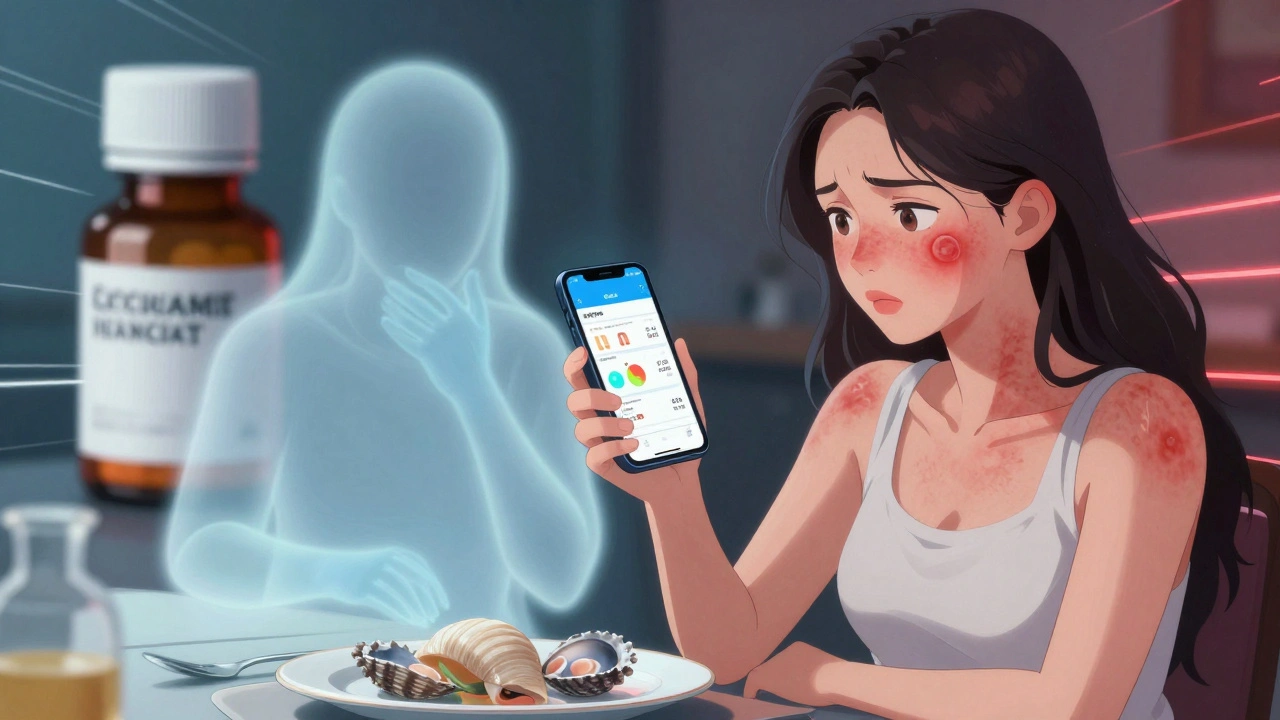
One woman in her 60s kept getting rashes after her arthritis meds. She thought it was the drug. Her diary showed the rashes only appeared after she ate shellfish. Turns out, she had a food-drug interaction. Without the diary, she’d have kept blaming the medicine.
Use an App or Paper? Here’s What Works
You can use a notebook, a spreadsheet, or an app. But not all options are equal.Paper diaries are cheap and simple. But 57% of people abandon them within 72 hours. Why? They’re tedious. You forget to write. You lose the notebook. You don’t remember to log symptoms until it’s too late.
Apps like Medisafe, CareClinic, and MyTherapy fix that. They send reminders. They auto-log the time. You can snap a photo of a rash. They generate charts that show if symptoms line up with doses.
Apps also meet FDA standards for electronic records (21 CFR Part 11). That means if you’re in a clinical trial, your data counts. Even if you’re not, they’re more reliable.
Best tip? Sync your diary app with your phone’s health app. That way, your medication times, heart rate, and sleep data all connect. One study found this cut timing errors by 82%.
What Not to Document
Not every little thing counts. Overloading your diary with expected side effects creates noise.For example:
- “Felt a little tired after taking statins” - That’s common. Don’t log it unless it’s new or worse than before.
- “Had a headache after drinking coffee” - That’s not drug-related.
- “Felt anxious after watching a scary movie” - Not the medication.
Focus on new, unexpected, or worsening symptoms. The goal isn’t to write everything. It’s to find the signals hidden in the static.
A 2022 study found that 41% of diaries were cluttered with irrelevant entries. That delayed real diagnosis by over 3 days. Don’t be one of them.
When to Take Action
Not every symptom needs a doctor visit. But some do.Call your doctor or go to urgent care if you notice:
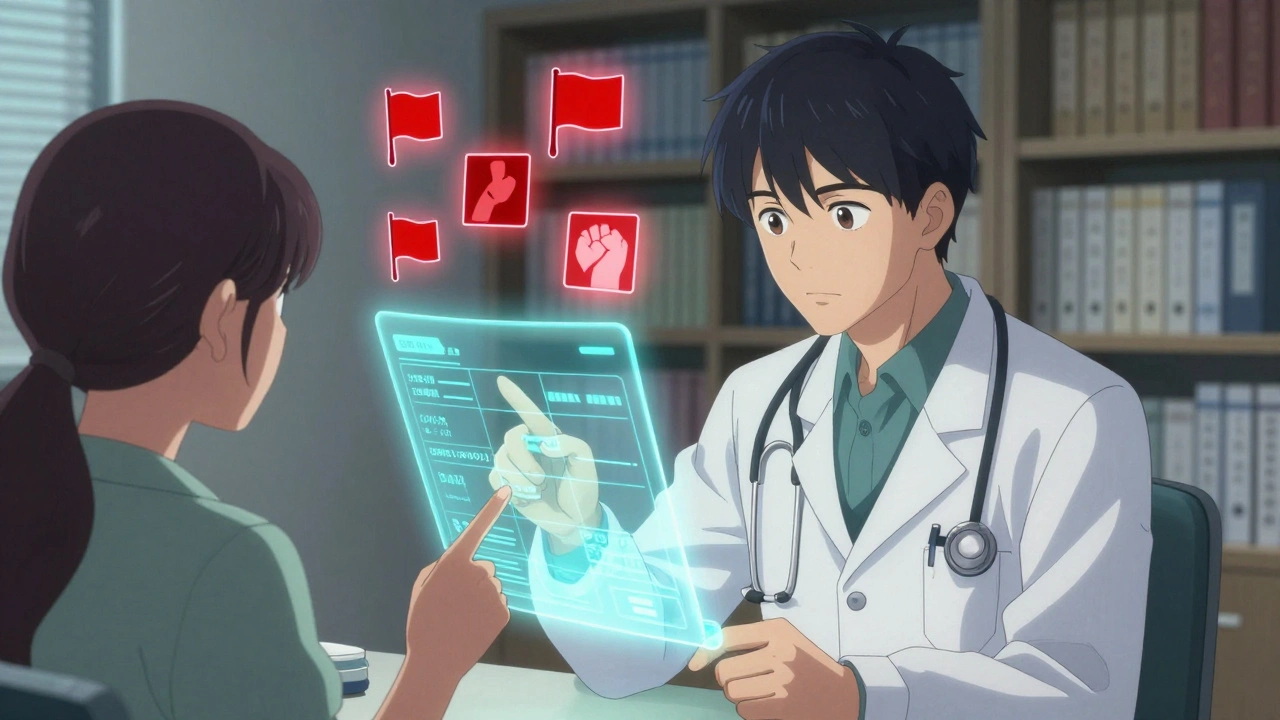
- Sudden swelling of face, lips, or throat
- Difficulty breathing or wheezing
- Chest pain or irregular heartbeat
- Severe rash with blisters or peeling skin
- High fever with confusion or vomiting
- Dark urine or yellow eyes (signs of liver damage)
These are red flags. Don’t wait for your next appointment. Call now.
For less urgent symptoms, keep logging. Review your diary every Sunday. Look for patterns. Does the dizziness always happen after lunch? Does the nausea go away after two weeks? That’s data your doctor can use.
How to Make It Stick
The biggest reason people stop? It feels like a chore.Here’s how to make it easy:
- Set a daily phone alarm: “Log symptoms” at 8 p.m.
- Keep your diary where you take your meds - on the bathroom counter, next to your pill box.
- Use pre-made checklists for common symptoms (headache, nausea, rash). Checkboxes are faster than writing.
- Review it with your pharmacist once a month. They see hundreds of these logs. They’ll spot patterns you miss.
- Don’t aim for perfection. Aim for consistency. Even 3 days a week is better than none.
One patient in Bristol used a simple paper template printed from the NHS website. She kept it taped to her medicine cabinet. She filled it out while brushing her teeth. She didn’t miss a day for 11 months. Her doctor changed her blood thinner based on her log. That’s all it took.
What Happens Next
Your diary isn’t just for you. It becomes part of your medical record. In the UK, the MHRA (Medicines and Healthcare products Regulatory Agency) encourages patients to report suspected reactions. Your diary gives them real-world data.Doctors use these logs to:
- Decide whether to stop, change, or lower your dose
- Rule out other conditions
- Report serious reactions to national safety databases
- Help other patients by identifying new side effects
And the system is getting smarter. The FDA is now testing AI tools that scan symptom diaries and flag possible reactions automatically. Your notes could help improve drug safety for everyone.
Final Tip: Don’t Wait Until It’s Too Late
Start your diary the day you begin the new medication. Don’t wait for symptoms to show up. Record the baseline. How did you feel before the pill? That’s just as important as what happened after.You’re not just tracking side effects. You’re taking control. You’re turning confusion into clarity. And in the end, that’s what saves lives.





Posts Comments
John Filby December 4, 2025 AT 17:59
I started using MyTherapy last month after my doc told me to track my blood pressure meds. Game changer. I didn’t realize my dizziness was always after lunch until the app showed me the pattern. Now I take it with breakfast and no more falling over. 🙌
Elizabeth Crutchfield December 5, 2025 AT 07:15
omg i just found out my rash was from grapefruit juice + my statin?? i thought it was laundry detergent 😅 i’ve been using a google doc now and it’s kinda messy but better than nothing
Ben Choy December 6, 2025 AT 10:55
This is so spot on. I used to think I was just ‘getting old’ until I started logging. My neurologist spotted a pattern with my Parkinson’s meds and my evening walks - turned out the heat was making the side effects worse. Now I walk in the morning. Changed my life. Also, paper diary taped to my fridge works for me. No app needed. Just pen and consistency. 📝❤️
Emmanuel Peter December 6, 2025 AT 17:37
You people are overcomplicating this. Why not just stop taking the damn drug if you feel weird? Why waste hours writing down every sneeze? I’ve been on 12 different meds in 5 years and the only thing that worked was quitting them all and going keto. Your ‘symptom diary’ is just a placebo for anxiety. Also, apps are surveillance tools. They sell your data. Wake up.
Ashley Elliott December 8, 2025 AT 13:08
I love how this breaks it down so clearly - especially the part about not logging every little tired feeling. I used to fill pages with ‘felt blah’ and ‘head foggy’ and my doctor just sighed. Now I only write when something’s new or scary. And I use checkboxes. It’s like a little daily victory. Also, syncing with Apple Health? Genius. My heart rate spikes always line up with my 3 p.m. pill. Who knew? 🙏
Chad Handy December 10, 2025 AT 06:27
Look, I’ve been on antidepressants for 11 years and I’ve had every side effect known to man - weight gain, brain zaps, dry mouth, night sweats, phantom smells, you name it. I kept a diary for 3 years. I logged everything. The time, the dose, the weather, whether I had coffee, whether my cat looked at me funny. I had spreadsheets. I had graphs. I had color-coded emojis. I showed it to five doctors. Four of them said ‘it’s probably just your brain adjusting.’ The fifth said ‘you’re obsessed.’ So I stopped. And guess what? I still feel like garbage. But now at least I’m not wasting my life writing down how I feel after taking a pill. You think your diary saves lives? I think it just makes you more anxious. And if you’re not gonna stop taking the meds anyway, what’s the point? You’re just training yourself to be a medical data entry clerk. And for what? So some FDA algorithm can say ‘maybe this drug causes sadness on Tuesdays’? I’d rather just suffer in silence. At least then I’m not delusional.
Augusta Barlow December 11, 2025 AT 14:38
I don’t trust any of this. The FDA? The NIH? They’re in bed with Big Pharma. Why would they want you to track side effects? So they can prove the drugs are ‘safe enough’? My cousin died after taking lisinopril. They said it was ‘rare’ and ‘unrelated.’ But she had logged every single symptom for 8 months - nausea, tingling, blurred vision - and her doctor ignored it. Now they’re telling us to use apps? Those apps are owned by pharmaceutical companies. They’re harvesting your data to bury reactions. You think your ‘CTCAE grades’ matter? They don’t. The system is rigged. Don’t log. Don’t trust. Don’t take the pills. Go to a naturopath. Or just eat turmeric. It’s cheaper and less evil.
Write a comment