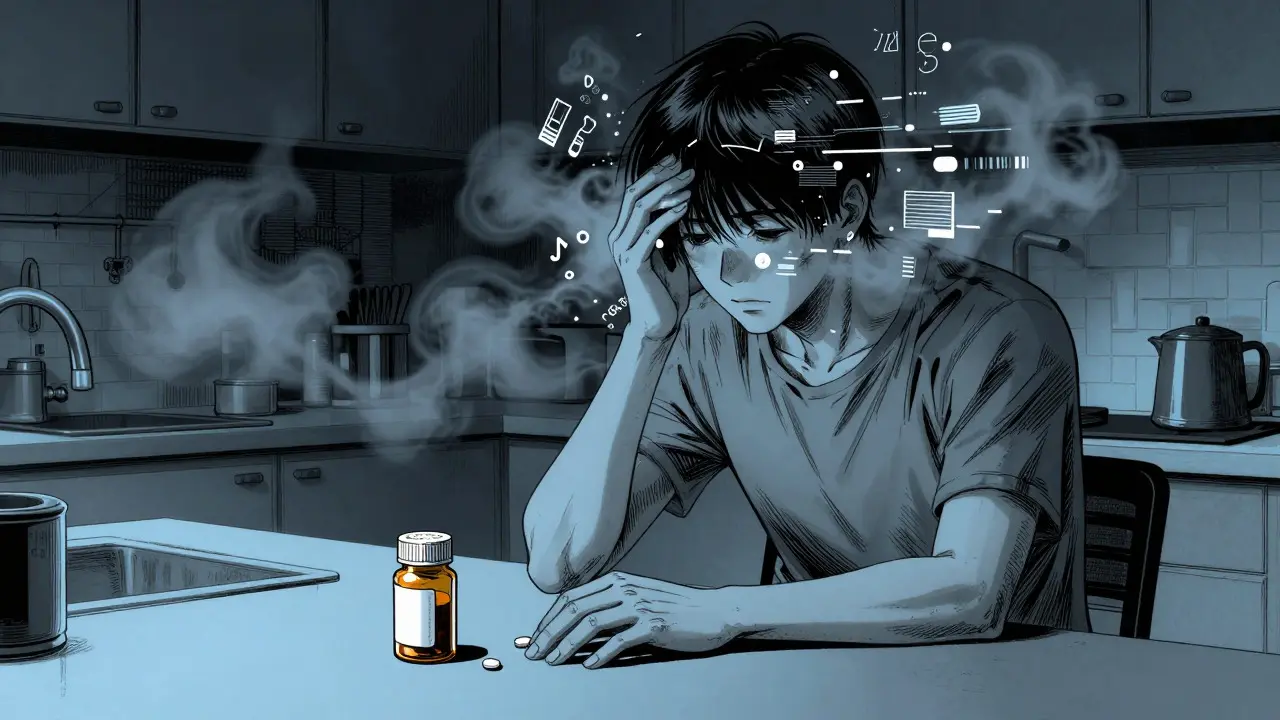
Imagine you are taking a life-saving pill every morning. It is simple enough. But lately, the bottle sits on the counter for days. You aren’t being stubborn. You aren’t even thinking about it. The weight of your mood has simply made the act of remembering feel impossible. This is not a failure of character; it is a known medical reality. Depression is a common mental health disorder that significantly impairs cognitive function and motivation, directly reducing the likelihood that patients will take their prescribed medications as directed.
If you are a clinician, a caregiver, or someone managing their own health alongside depression, recognizing this link is crucial. Depression does not just make you sad; it rewires how you handle daily tasks. Research shows that depressed patients with heart failure are 2.3 times more likely to report poor medication adherence compared to those without depression. That number holds true even when you account for age, education, or other illnesses. The goal here is not to judge why pills are missed, but to spot the patterns early so treatment can actually work.
The Cognitive Fog: Why Memory Fails First
The most obvious sign of depression’s impact on adherence is forgetfulness. But this isn’t the kind of forgetfulness where you leave your keys at home. It is a deeper cognitive block. Dr. Elena Pizzolorusso, lead author of a major systematic review published in PMC, explains that depression creates specific cognitive barriers. These include impaired concentration, memory difficulties, and decision-making challenges. When your brain is fighting depression, executing a complex medication regimen feels like trying to run software on an outdated operating system.
You might notice these signs:
- Dissociation from routine: A patient who usually takes meds with breakfast suddenly skips meals entirely because they lack appetite, and thus misses the dose associated with eating.
- Decision fatigue: Even choosing which pill to take first becomes overwhelming. Patients may delay taking medication until they have the 'mental energy' to do it right, only to never find that energy.
- Time distortion: Depression can warp the perception of time. A patient might genuinely believe they took their evening dose when they did not, leading to double-dosing or skipping.
In cardiac care, this cognitive fog has measurable consequences. Studies show higher depression levels predict non-adherence to critical drugs like ACE inhibitors (adjusted odds ratio 1.04) and beta-blockers (adjusted OR 1.05). If you see a patient whose condition is worsening despite a good prescription plan, look at their mood scores. The missing link is often cognitive overload, not intentional refusal.
Motivation Collapse: The Hopelessness Factor
Beyond memory, there is motivation. Professor John Geddes, Chair of Mood Disorders at the University of Oxford, notes that the energy depletion and hopelessness characteristic of depression directly undermine the drive for self-care. If a person believes their future is bleak, why bother protecting their heart or controlling their blood sugar today? This is not logic; it is the emotional reality of severe depression.
This manifests as 'passive non-adherence.' The patient doesn't throw the pills away. They just let them sit there. They might tell you, "I'll start tomorrow," but tomorrow never comes because the depressive state remains unchanged. In clinical settings, we see this clearly. For every 5-point increase on the PHQ-9 is a standardized nine-item questionnaire used to screen for and measure the severity of depression, where higher scores indicate more severe symptoms and correlate strongly with lower medication adherence rates. scale, clinicians should anticipate a 23% reduction in adherence probability. This is a steep drop. It means that as depression deepens, the bridge between knowing what to do and actually doing it collapses.
Recognizing this requires asking different questions. Instead of "Did you take your pills?" ask, "How much energy did you have to manage your health this week?" Or, "Do you feel like your health matters right now?" These questions uncover the motivational void that standard adherence checks miss.

Side Effects Amplified: The Physical Barrier
Depression changes how the body perceives physical sensations. Dr. Maria De las Cuevas emphasizes that the subjective experience of side effects is amplified in depression. A mild headache from a new medication might feel unbearable to a depressed patient. This leads to premature discontinuation.
Data supports this. In Turkey, Deniz et al. found that 83% of patients taking SSRIs reported non-adherence. Common culprits were drowsiness, dry mouth, fatigue, and decreased libido. In Ethiopia, Abegaz et al. documented 57.1% non-adherence among patients on antidepressants, citing weight gain and insomnia. These aren't minor complaints. To a depressed patient, feeling worse physically on top of feeling worse mentally is a dealbreaker.
A practical tool here is the GARSI scale. Research in the Canary Islands showed that non-adherent patients scored significantly higher on adverse drug reactions (0.87 vs 0.71 for adherent patients). If a patient complains about side effects with unusual intensity or frequency, consider that their depression is magnifying the discomfort. This is a red flag for impending non-adherence. Addressing the side effect-or switching the med-might be the only way to keep them in treatment.
| Barrier Type | General Population | Patient with Depression |
|---|---|---|
| Forgetfulness | Occasional, random misses | Frequent, due to cognitive impairment and memory deficits |
| Motivation | High value placed on health outcomes | Low value due to hopelessness and anhedonia |
| Side Effects | Tolerated if benefits are clear | Amplified suffering, leading to quick discontinuation |
| Routine Disruption | Adapts to schedule changes | Collapse of daily structure leads to total neglect |
Measuring the Gap: Tools That Work
You cannot fix what you do not measure. Relying on a patient's word alone is risky because depression distorts self-perception. You need objective tools. The gold standard is the Morisky Medication Adherence Scale (MMAS-8) is an eight-item questionnaire designed to assess medication adherence behavior, categorizing patients into high, moderate, or low adherence groups based on their responses.. A score below 6 indicates non-adherence. Only 6% of depressed patients in one Cambridge study achieved a perfect score of 8. Most fell into the moderate or non-adherent categories.
Combine this with the PHQ-9. Dr. Charles DiMaggio’s work at Columbia University showed that combining PHQ-9 scores with MMAS-8 assessments increases predictive accuracy for adherence problems by 37%. Here is a simple protocol:
- Screen Monthly: Use the PHQ-9 to track depression severity.
- Check Adherence: Use the MMAS-8 to check actual behavior.
- Correlate: If PHQ-9 is ≥ 10 (moderate depression) and MMAS-8 is < 6, intervene immediately.
Don't wait for the annual checkup. The American Heart Association recommends screening heart failure patients with the PHQ-2 at every visit, followed by PHQ-9 if positive. Apply this rigor to any chronic condition. Early detection of the mood-adherence link saves lives.

Early Warning Signs: The First Two Weeks
Timing is everything. The STAR*D trial analysis revealed a critical window. Patients with depression who missed more than 20% of doses in the first two weeks were 4.7 times more likely to experience treatment failure. This is your alarm bell.
Dr. George Alexopoulos advocates for 'side effect mapping' during this initial phase. Have patients chart both their mood and their side effects daily. Look for patterns. Did they skip the dose after reporting increased anxiety? Did they stop taking the pill when they felt drowsy? These small data points reveal the breaking point. If you catch the 20% miss rate early, you can adjust the regimen, add support, or treat the depression more aggressively before the patient drops out completely.
Practical Steps for Caregivers and Clinicians
Recognizing the problem is step one. Fixing it requires collaboration. The MAPDep study showed that involving both patients and physicians in monitoring increased therapeutic adherence by 28.5% over 12 months. Here is how to do it:
- Simplify the Regimen: Reduce the number of daily doses. Use combination pills if possible. Less complexity means less cognitive load.
- Link to Habits: Tie medication to an unavoidable action, like brushing teeth, rather than a vague 'morning' time.
- Use Technology Wisely: Smartphone apps that track mood and intake show 82% sensitivity in predicting adherence lapses 72 hours in advance. Encourage patients to use these tools.
- Validate Feelings: Acknowledge that depression makes this hard. Say, "I know your brain is making this difficult right now. Let's figure out a simpler way." This reduces shame and opens dialogue.
Depression is not a moral failing. It is a medical condition that interferes with the mechanics of healing. By recognizing the cognitive fog, the motivational collapse, and the amplified side effects, you can step in before adherence fails. The data is clear: treating the mood is part of treating the body.
What is the strongest predictor of medication non-adherence in depressed patients?
The severity of depression symptoms, particularly cognitive impairment and hopelessness, is the strongest predictor. Data shows that for every 5-point increase on the PHQ-9 scale, there is a 23% reduction in adherence probability. Additionally, missing more than 20% of doses in the first two weeks predicts long-term treatment failure with 4.7 times higher likelihood.
How does depression affect the perception of medication side effects?
Depression amplifies the subjective experience of physical discomfort. Side effects like drowsiness, dry mouth, or nausea are perceived as more severe and intolerable by depressed patients. This leads to higher rates of discontinuation, with studies showing up to 83% non-adherence in some SSRI populations due to side effect burden.
Which assessment tools are best for identifying adherence issues in depression?
The combination of the PHQ-9 (for depression severity) and the Morisky Medication Adherence Scale (MMAS-8) is most effective. Using both together increases predictive accuracy for adherence problems by 37% compared to using either tool alone. An MMAS-8 score below 6 indicates significant non-adherence.
Can digital tools help monitor medication adherence in depressed patients?
Yes. Recent studies indicate that smartphone apps tracking both mood and medication intake have an 82% sensitivity for predicting adherence lapses up to 72 hours in advance. These tools provide real-time data that helps clinicians intervene before a full relapse or discontinuation occurs.
Why do depressed patients often miss medications even if they want to get better?
It is rarely intentional defiance. Depression causes cognitive barriers like memory loss and decision fatigue, as well as motivational collapse due to hopelessness. The mental energy required to maintain a routine is depleted, making consistent self-care feel impossible despite the desire to recover.