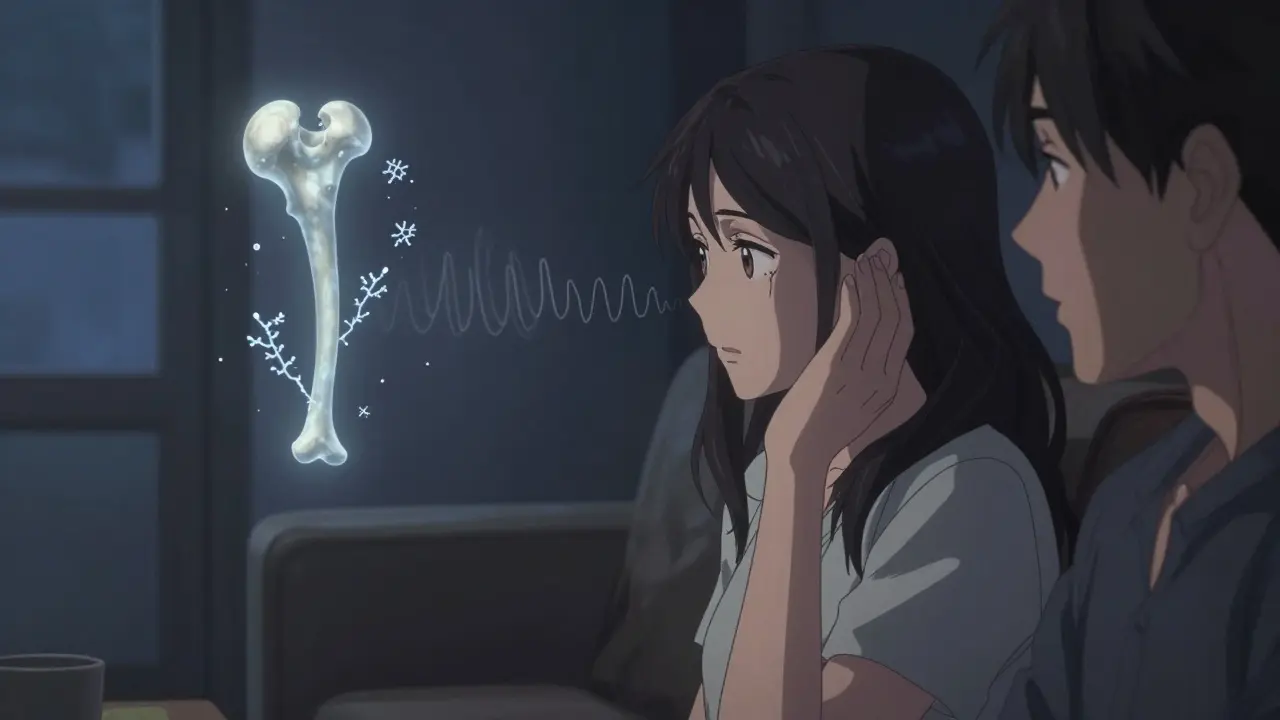
Imagine trying to listen to your partner speak, but their voice sounds muffled-like they’re talking through a wall. You keep asking them to repeat themselves, especially when they’re not shouting. You start avoiding phone calls. You notice you can’t hear the low hum of a refrigerator or the rumble of a distant truck. But when someone speaks loudly, you hear fine. This isn’t just aging. It’s not stress. It’s otosclerosis.
What Exactly Is Otosclerosis?
Otosclerosis is a condition where bone in the middle ear grows abnormally, locking up the stapes-the smallest bone in your body. This bone, about the size of a grain of rice, normally vibrates like a tiny piston to pass sound from the eardrum to the inner ear. When it gets stuck, sound can’t move properly. That’s why you lose hearing-not because your ears are damaged, but because the mechanism that carries sound is frozen in place.The condition usually starts between ages 30 and 50. Women are more likely to get it, especially during pregnancy, when hormonal shifts seem to speed up the bone growth. About 1 in 200 people in the UK have it, and it’s one of the top reasons for hearing loss in adults under 50.
How It Affects Your Hearing
Unlike age-related hearing loss, which hits high pitches first (like birds chirping or children’s voices), otosclerosis targets low frequencies. You’ll struggle to hear whispers, bass tones, or someone speaking softly from across the room. Audiograms often show a gap between air and bone conduction-usually 20 to 40 decibels. That means your inner ear still works fine, but the sound never makes it there.In 10 to 15% of cases, the bone growth spreads into the inner ear, damaging the hair cells. This turns conductive hearing loss into mixed hearing loss, which is harder to fix. Tinnitus-ringing or buzzing in the ears-is also common. One survey found 80% of people with otosclerosis deal with it, and 35% say it keeps them awake at night.
Why Does It Happen?
No one knows exactly why otosclerosis starts, but genetics play a big role. If a parent or sibling has it, your risk doubles. Researchers have found 15 different gene spots linked to the condition, with the RELN gene on chromosome 7 being the strongest. It’s also more common in people of European descent, less so in Asian and African populations.Some studies suggest past measles infections might trigger it in genetically prone people. Others point to hormonal changes during pregnancy as a catalyst. But the core problem is always the same: bone that shouldn’t grow, grows-and then hardens in the wrong place.
How Doctors Diagnose It
If you’ve had unexplained hearing loss for months, your GP will likely refer you to an audiologist. The key test is pure-tone audiometry. If your results show a clear air-bone gap-meaning you hear better through bone conduction (vibrations through your skull) than through air-you’re likely dealing with otosclerosis. Speech tests usually come back normal, which helps rule out nerve damage.CT scans can show the early signs: small, dark spots near the oval window where the stapes connects to the inner ear. These spots, 0.5 to 2.0 mm wide, are signs of active bone remodeling. But not everyone needs imaging. If your hearing test is clear and you’re young with no other risk factors, doctors may just monitor you for a few months.
How It’s Different From Other Hearing Problems
Many people confuse otosclerosis with Eustachian tube dysfunction or earwax buildup. But those cause temporary, fluctuating hearing loss. Otosclerosis is steady and gets worse over time. Without treatment, hearing can drop 15 to 20 decibels over five years.Compare it to Meniere’s disease: that one brings vertigo, pressure in the ear, and hearing that comes and goes. Otosclerosis? No dizziness. Just slow, silent decline.
And it’s not the same as presbycusis. Age-related hearing loss hits after 65 and starts with high pitches. Otosclerosis hits younger people and steals low tones first.
Treatment Options: Hearing Aids or Surgery?
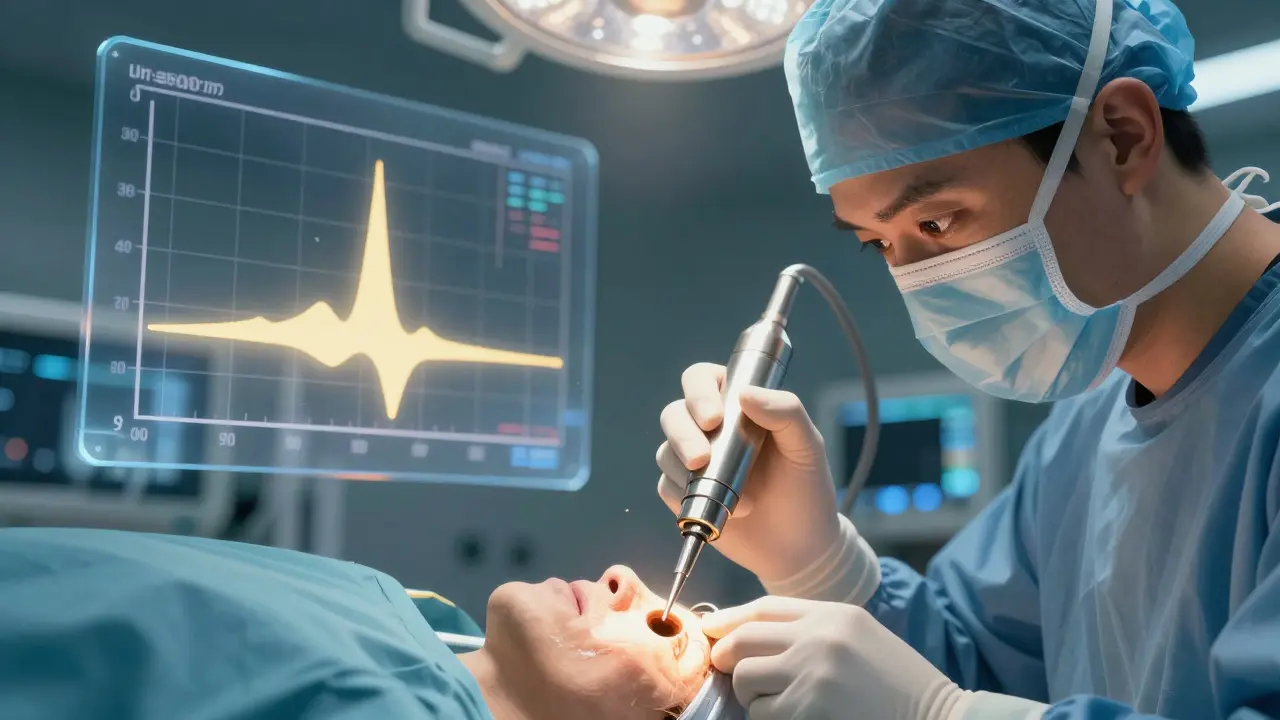
Most people start with hearing aids. They’re non-invasive and work well-especially for low-frequency loss. Modern digital aids can be programmed to boost the exact frequencies you’re missing. About 65% of diagnosed people choose this route first.But if your hearing drops below 30 to 40 dB, surgery becomes the better option. The gold standard is stapedotomy: a tiny hole is drilled into the fixed stapes, and a prosthetic piston is inserted to bypass the blockage. The procedure takes less than an hour, usually under local anesthesia. Success rates? Around 90 to 95% of patients regain functional hearing. One 2023 survey from Tampa General Hospital found 92% of patients said their daily life improved dramatically-teachers could hear whispers in the back of the classroom, parents could hear their kids’ quiet conversations.
A newer option, the StapesSound™ prosthesis approved by the FDA in March 2024, uses a titanium-nitride coating that reduces scarring. Early results show 94% success at one year-better than older models.
What About Medications?
There’s no cure, but sodium fluoride-yes, the same stuff in toothpaste-has been shown to slow progression. A 2024 study in the Journal of Otology gave 120 patients 50 mg of sodium fluoride daily for two years. Those on the drug had 37% less hearing decline than those on placebo. It’s not a replacement for surgery, but it might buy you time if you’re not ready to operate.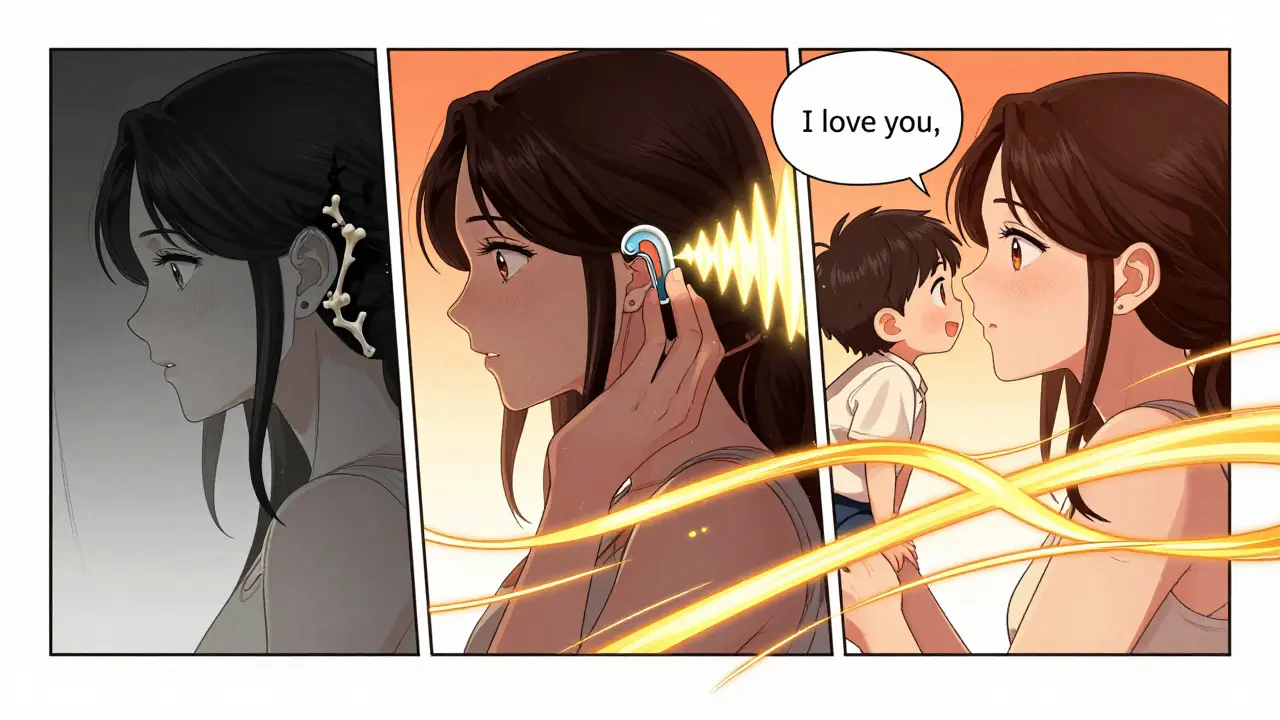
What You Should Know Before Surgery
Stapedotomy is safe-but not risk-free. About 1% of patients end up with sudden, permanent sensorineural hearing loss. That’s rare, but devastating. Dizziness, taste changes, and tinnitus flare-ups are possible too. That’s why informed consent is critical. You need to hear the risks clearly before signing up.And if you’ve had a failed surgery before, revision surgery is trickier. Success rates drop from 95% to 75%. That’s why choosing a surgeon with specific training matters. At Mount Sinai, surgeons need to complete 50 supervised stapedotomies before they’re allowed to do one alone.
Who Gets Left Behind?
Here’s the quiet crisis: fewer surgeons are doing stapedotomies now than ten years ago. Younger otologists are focusing on cochlear implants and advanced hearing tech. The American Academy of Otolaryngology reports a 15% drop in procedures since 2018. That means some patients wait longer for care-or get misdiagnosed. Tampa General found 22% of patients waited an average of 18 months before getting the right diagnosis.That’s why awareness matters. If you’re under 50, have progressive hearing loss, and struggle with low voices-ask your doctor about otosclerosis. Don’t assume it’s just aging. Don’t assume it’s earwax. Get an audiogram.
What’s Next?
Scientists are working on genetic screening to catch otosclerosis before symptoms appear. Within five years, polygenic risk scores might identify high-risk people based on DNA alone. That could mean early fluoride treatment or monitoring before hearing drops.For now, the message is simple: otosclerosis is treatable. It doesn’t lead to total deafness. Hearing aids help. Surgery works. And with the right care, most people get their hearing back-sometimes better than before.






Posts Comments
Allison Priole March 20, 2026 AT 00:51
my mom had otosclerosis and i had no idea it was even a thing until she started struggling to hear the TV. she was convinced it was just aging, but after the audiogram? total air-bone gap. we were shocked. she went with hearing aids first, then did stapedotomy last year. now she’s back to hearing her grandkids whispering secrets. it’s wild how something so small-a grain-of-rice bone-can mess up your whole life. glad we caught it early.
Thomas Jensen March 21, 2026 AT 15:57
ok but let’s be real-this whole thing is probably linked to 5g and fluoride in the water. i mean, why else would it hit women more? hormones? nah. it’s the government testing bone density manipulation on unsuspecting populations. and don’t get me started on the stapes prosthesis. titanium-nitride? sounds like a military tech repurposed for ears. who funded that? who BENEFITS? 🤔
matthew runcie March 22, 2026 AT 01:30
my cousin got diagnosed last year. she’s 38. thought she was just stressed. turns out she couldn’t hear the dog barking from the backyard. got hearing aids, they helped a lot. surgery wasn’t necessary yet. the doc said fluoride might slow it down. so now she’s taking it like a vitamin. no drama. just quiet progress.
shannon kozee March 22, 2026 AT 07:18
if you’re under 50 and losing low tones, get an audiogram. don’t wait. otosclerosis isn’t rare. it’s just ignored.
Solomon Kindie March 23, 2026 AT 04:06
so we’re just accepting that our bodies are defective machines now? bone growth? sounds like evolution’s glitch. why not just gene edit the RELN gene? why are we drilling holes in ears when we could stop it at the source? we’re treating symptoms like cavemen while the future’s waiting outside
Nicole James March 24, 2026 AT 00:02
...and yet, no one talks about how the ENT industry profits from this... the hearing aids, the surgery, the fluoride trials... it’s all so conveniently timed... and what about the 1% who lose hearing permanently? are they just... collateral? i mean, think about it. Who decides what’s 'acceptable risk'? and why is the FDA approving new prostheses so fast? is this really about healing... or about keeping the machine running?
Nishan Basnet March 25, 2026 AT 05:50
as someone from India, i never even heard of this until now. but the part about it being rarer in Asian populations? that’s fascinating. makes me wonder if there’s a genetic buffer we’re not studying. also, the fact that pregnancy triggers it-hormones are wild. my sister had sudden hearing loss after her second kid. no one connected it. she’s lucky she got tested. this post is a gift.
Timothy Olcott March 25, 2026 AT 07:26
AMERICA NEEDS TO FIX THIS. why are we letting other countries lead in stapedotomy tech? we invented the internet but can’t train enough surgeons? this is why we’re falling behind. get your act together, med schools. 🇺🇸💪
Desiree LaPointe March 26, 2026 AT 16:44
how quaint. you all treat this like it’s a medical mystery. but really, it’s just the inevitable collapse of modern diet and environmental toxicity. fluoride? please. it’s the processed sugar, the soy, the glyphosate. of course your bones grow where they shouldn’t. your body’s screaming. you just refuse to listen. 🤦♀️
Jackie Tucker March 28, 2026 AT 11:13
the fact that we’re still using 1970s surgical techniques for a 21st-century condition is laughable. and sodium fluoride? really? that’s the best we’ve got? someone wake up the bioengineers. this is like using a horse carriage to get to Mars.
trudale hampton March 30, 2026 AT 01:36
i had this. got the surgery. 95% success. no tinnitus. no dizziness. just better hearing. the hardest part? convincing myself i wasn’t being dramatic. everyone said 'it’s just aging'. but i knew. and i’m glad i listened to myself. if you’re unsure-get tested. no regrets.
Shaun Wakashige March 31, 2026 AT 22:07
stapedotomy? yeah. i had it. still hear ringing sometimes. but i can hear my cat purr again. worth it. 😌
Write a comment