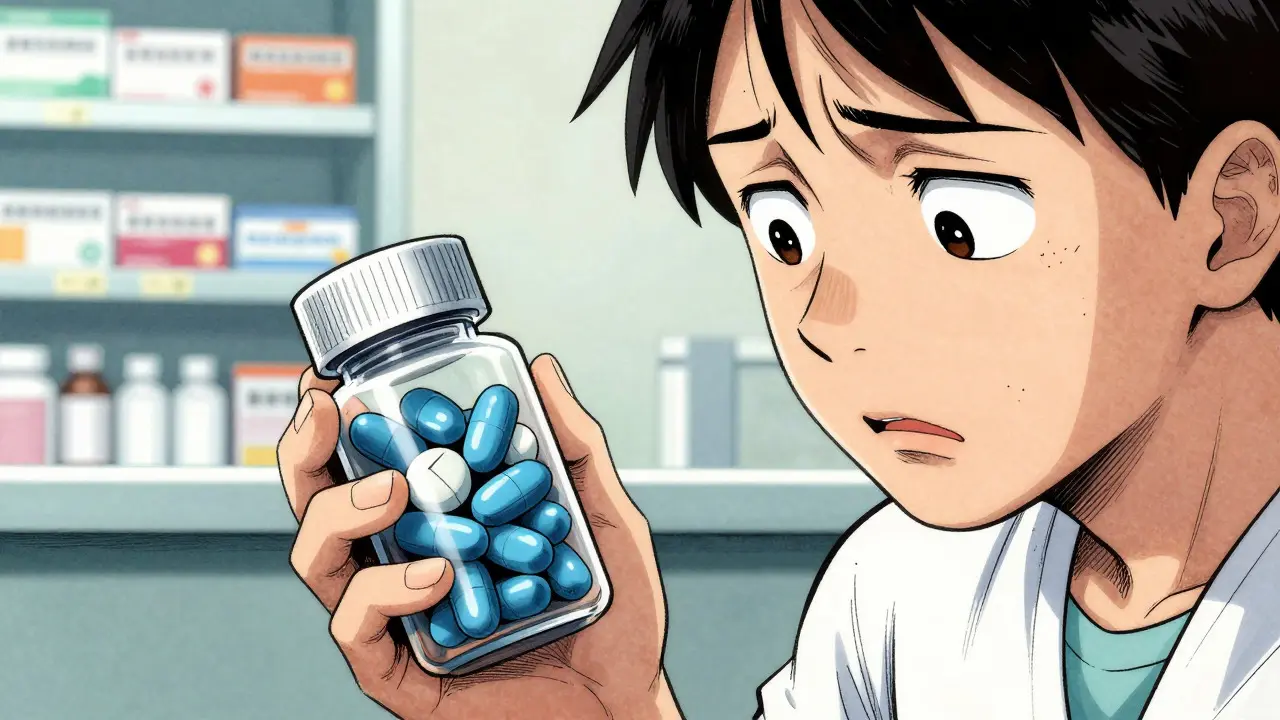
Have you ever picked up a prescription refill and noticed the pills look completely different? Maybe they’re a different color, a slightly odd shape, or even split down the middle when your last batch wasn’t. It’s a common moment of panic. You might wonder if the pharmacy made a mistake or if the medication is somehow weaker because it doesn’t look like the original.
The short answer is no, the pharmacy didn’t mess up, and the drug works exactly the same. The reason for the visual change isn’t about quality-it’s about the law. Specifically, trademark laws in the United States prevent generic manufacturers from making their pills look identical to brand-name drugs. This legal requirement ensures that while you save money on generics, the brand owner keeps their unique identity.
What Are Generic Drugs Exactly?
To understand why they look different, we first need to define what a generic drug actually is. A generic drug is a medication with the same active ingredient as a brand-name drug. Think of it like this: if a brand-name drug is the original designer handbag, the generic is a bag made with the exact same high-quality leather and stitching pattern, just without the famous logo.
When a pharmaceutical company develops a new drug, they spend billions of dollars and years of research. In return, they get a patent that gives them exclusive rights to sell that drug for a certain period, usually up to 17 years. Once that patent expires, other companies can step in and make their own versions. These are the generics.
For a generic to be approved by the U.S. Food and Drug Administration (FDA), it must meet strict standards. It has to contain the same active ingredient, have the same strength, and work in the body in the same way. The FDA requires scientific evidence proving bioequivalence. This means the generic drug must deliver the active ingredient into your bloodstream within a specific range-typically between 80% and 125% of the rate of the brand-name drug. In practical terms, a large study found only a 3.5% difference in absorption, which is clinically insignificant for most patients.
The Legal Reason for Different Looks
If the inside of the pill is essentially the same, why can’t the outside look the same too? The barrier here is intellectual property law, specifically trademarks. Brand-name drugs often have distinctive shapes, colors, and markings that serve as trademarks. These visual cues help consumers and doctors identify the product instantly.
Under U.S. trademark law, a generic manufacturer cannot create a product that looks exactly like another drug already on the market. If a generic looked identical to the brand-name version, it could confuse consumers into thinking they were buying the original, more expensive product. To prevent this "consumer confusion," the FDA enforces rules that require generics to have a distinct physical appearance.
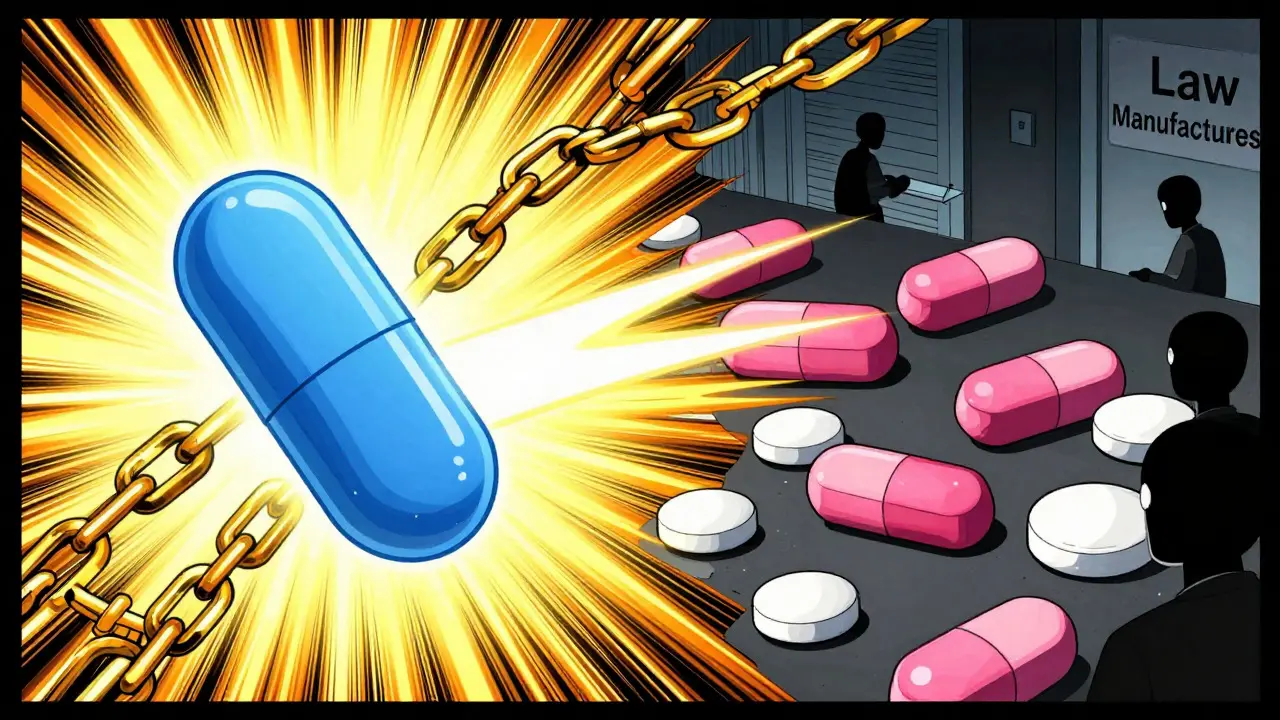
This means generic companies have to get creative. They can’t use the same blue oval shape if that’s trademarked by the brand owner. Instead, they might make a white circle, or a pink rectangle, or add a score line across the center. These changes don’t affect how the drug works; they just satisfy the legal requirement to keep the brands visually separate.
| Characteristic | Brand-Name Drug | Generic Drug |
|---|---|---|
| Active Ingredient | Original formulation | Identical to brand-name |
| Inactive Ingredients | Specific fillers, binders, colors | May vary (fillers, flavors) |
| Appearance (Color/Shape) | Distinctive, trademarked design | Must differ from brand-name |
| Price | High (covers R&D costs) | Low (80-85% less than brand) |
| Efficacy & Safety | FDA approved | FDA approved (bioequivalent) |
What Can Change and What Must Stay the Same?
It helps to know exactly which parts of a drug are flexible and which are fixed. The FDA mandates that certain core attributes remain identical between the brand and the generic. These include:
- Active ingredients: The chemical compound that treats your condition.
- Safety profile: The risks and benefits must be equivalent.
- Strength: The dosage amount per pill.
- Quality and Purity: Manufacturing standards must meet FDA inspections.
- Usage instructions: How you take it and how it should be used.
However, the following characteristics are allowed-and often required-to differ:
- Color: Generics can be any color except those trademarked by the brand.
- Shape: Circles, ovals, rectangles, etc., as long as they aren’t copies.
- Flavoring: Especially relevant for liquid medications or chewable tablets.
- Inactive ingredients: Fillers, binders, and preservatives may vary.
While inactive ingredients usually don’t matter, there are rare exceptions. Some patients may be allergic to specific dyes or fillers used in a generic but not in the brand-name version. If you notice new side effects after switching, it’s worth asking your pharmacist about the inactive ingredients list.
Does the Difference Matter for Your Health?
From a medical standpoint, the answer is generally no. The FDA states clearly that generic drugs use the same active ingredients as brand-name drugs and work the same way. They have the same risks and benefits. Dr. Janet Woodcock, former Director of the FDA’s Center for Drug Evaluation and Research, emphasized that generic companies must provide scientific evidence showing their active ingredient matches the brand-name medicine.
However, the psychological impact of the visual difference is real. When a patient sees a different-looking pill, it can trigger doubt. This is known as the "nocebo effect," where negative expectations lead to perceived negative outcomes. Some patients report feeling like the generic isn’t working as well simply because it looks cheaper or different.
Furthermore, there is a practical safety concern: medication confusion. If you switch manufacturers, your pills might change appearance again. UMass Memorial Health notes that this can lead to errors, especially for elderly patients or those managing multiple medications. To combat this, pharmacies often put unique labels on vials alerting you to appearance changes. Always check the label against the pill in your hand.
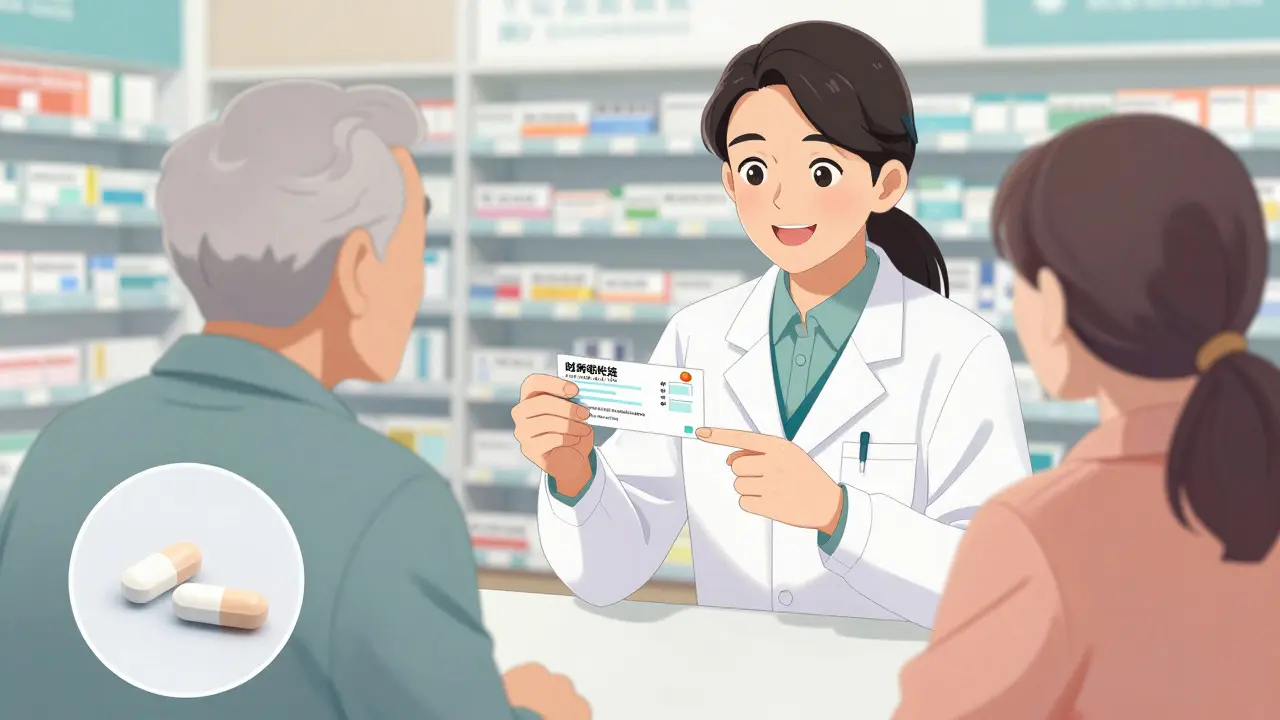
Navigating Changes at the Pharmacy
Since generics account for about 90% of prescriptions filled in the U.S., you will likely encounter them frequently. Here’s how to handle the situation smoothly:
- Expect Variation: Understand that different generic manufacturers produce the same drug. One month you might get pills from Company A, and the next month from Company B. Both are FDA-approved, but they may look different.
- Check the Label: The pharmacy label will always state the drug name and strength. If the pill looks different, compare it to the description on the bottle or ask the pharmacist.
- Talk to Your Doctor: If you feel a generic isn’t working as well as the brand, don’t just stop taking it. Discuss it with your healthcare provider. In some cases, they can write the prescription as "Dispense As Written" to force the brand-name version, though this will cost more.
- Ask About Inactive Ingredients: If you have allergies or sensitivities, ask your pharmacist if the generic contains any fillers you should avoid.
The FDA has recently recommended that generic applicants try to design drugs with similar size and shape to the brand-name product where possible, to reduce confusion while still complying with trademark laws. This is a nuanced approach trying to balance legal requirements with patient safety.
The Economic Impact of Generics
Why do we accept these visual differences? Because the economic benefit is massive. Generic drugs typically cost 80% to 85% less than their brand-name equivalents. This price drop happens because generic manufacturers don’t have to repeat the costly clinical trials that the original company did. They just have to prove bioequivalence.
This competition drives down healthcare costs significantly. While generics represent only about 23% of pharmaceutical spending, they make up nearly 90% of prescriptions filled. Without generics, many chronic conditions would be financially out of reach for millions of people. The trade-off-a slightly different-looking pill-is a small price to pay for such substantial savings.
Are generic drugs as effective as brand-name drugs?
Yes. The FDA requires generic drugs to be bioequivalent to brand-name drugs, meaning they deliver the same active ingredient into your bloodstream at a similar rate. Studies show negligible differences in absorption (around 3.5%), which does not affect therapeutic outcomes for the vast majority of patients.
Why can't generic pills look exactly like the brand-name ones?
U.S. trademark laws prevent generic manufacturers from copying the distinctive appearance (color, shape, marking) of brand-name drugs. This is to avoid consumer confusion and protect the brand owner's intellectual property. Therefore, generics must have a distinct look.
Can I request the brand-name drug instead of a generic?
Yes. You can ask your doctor to write "Dispense As Written" or "Brand Medically Necessary" on the prescription. However, insurance plans may not cover the full cost, and you will likely pay significantly more out-of-pocket compared to the generic version.
Do generic drugs have different side effects?
Generally, no, because the active ingredient is the same. However, generic drugs may contain different inactive ingredients (fillers, dyes). Rarely, a patient might be allergic or sensitive to one of these inactive components, leading to different reactions. If you experience new symptoms, consult your doctor.
Why did my pills change color or shape at the pharmacy?
Pharmacies often source generic drugs from different manufacturers based on availability and cost. Since each manufacturer designs their generic pill differently to comply with trademark laws, your refill might come from a different company than your previous one, resulting in a change in appearance.